Argentina

An ill wind in Buenos Aires: Portrait of Unknown Lady, by María Gainza, reviewed

How to review a book that pokes fun at critics? When the protagonist of María Gainza’s Portrait of an Unknown Lady reads reviews, she tends to ‘scan the first five or six lines, skip to the last two or three, and end up thinking, what’s with these people?’ When she becomes an art critic, she takes up the ‘language of the shyster, empty language, language just to occupy column inches’. And you can bet she has readers hanging on her every word – as we do in this story of the quest to find a legendary art forger who one day disappeared. It feels like the Argentine writer is having fun in the follow up to her dazzling debut Optic Nerve. A detective novel of sorts, this second novel is set in the Buenos Aires art world.

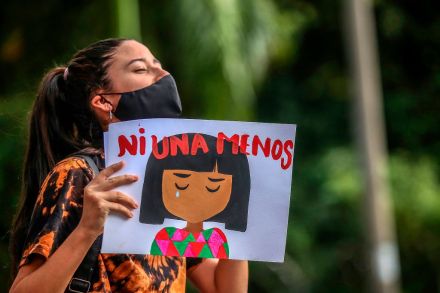
What’s behind the push for abortion in Latin America?

From our US edition

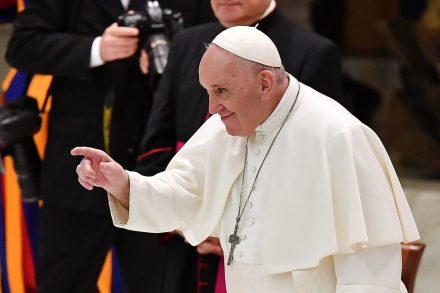
As the pro-life movement in the United States looks with optimism to the very possible overturning of Roe v. Wade by the US Supreme Court later this year, the tide seems to be flowing in a different direction down south. First came Argentina, where the Senate passed a highly contested bill in early 2021 legalizing abortion in the first fourteen weeks of pregnancy. The vote was preceded by months of protests, debate, and even a series of personal pleas from the world’s most famous Argentinean, Pope Francis. In September, Mexico’s Supreme Court struck down abortion bans in two states, effectively paving the way for decriminalization nationwide. Most recently, Colombia effectively legalized abortion in the first twenty-four weeks of pregnancy.

abortion

How Argentina conquered Malbec

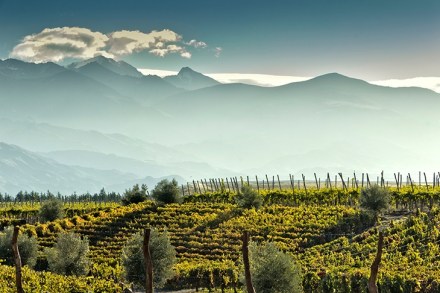
When Napoleon III proclaimed himself Emperor of France in 1852, he unwittingly kickstarted quality wine production in Chile and Argentina. A mass exodus of republicans ensued, one of whom happened to be a skilled agronomist from Tours named Michel Aimé Pouget. Pouget carried with him a cache of French grape cuttings that were to change the course of wine history and formed the basis for Argentina’s wine industry today. Because of the phylloxera plague, French wine production fell by 75 per cent between 1875 and 1889. Today the vines of Europe are still grafted on to phylloxera-resistant American root stock. In Argentina and Chile, which have no phylloxera, old ungrafted European vines are flourishing.

Diego Maradona, a god of football

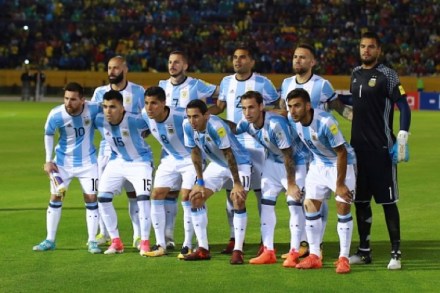
Argentina has announced three days of national mourning after the death of Diego Maradona. Take a second and think about that. Who in Britain, beyond the Queen, might command such nationwide grief? Despite his untimely death, Maradona will never truly die. Gods never do.  Naples is able to marry the divine and the devil like no other city; a rough, tough, crumbling beauty that seats opulence in the midst of teeming poverty. Fitting, then, that it became Maradona’s own home for so long. He arrived to the wild fanfare of 75,000 people when he signed his contract at the Stadio San Paolo in 1984. Maradona cut a mixed figure in the 80s. After starring for Boca Juniors, he arrived at Barcelona in ’82 for a world record fee. He was a rare talent.

The Pope really doesn’t like Republicans

From our US edition

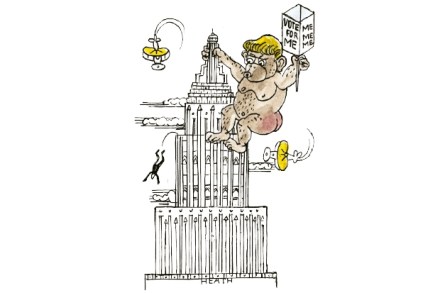
Last week we learned that Pope Francis has torn up the Catholic Church’s teaching that same-sex civil partnerships are gravely immoral. This week he will be rooting for the pro-abortion candidate in the US presidential election. These two surreal developments are causing distress bordering on spiritual despair to conservative American Catholics. Whether you feel any sympathy for them depends on your point of view. The Pope, it is safe to say, is unlikely to lose any sleep over the matter. Francis dislikes the United States in general and its president in particular. That’s not surprising; so do most Argentinians. What is surprising is the depth of his contempt for conservative American Catholics.

pope

Do cry for her, Argentina

From our US edition

This article is in The Spectator’s March 2020 US edition. Subscribe here. The odds of becoming a cult figure improve with the speed of departure. Among musicians, Jimi, Jim, Janis, Kurt and Amy played their last notes at 27. By dying at 33 and later becoming the subject of an Andrew Lloyd Webber musical, Eva Perón joined an even more exclusive club. ‘Half a million people kissed the coffin,’ says the Argentine novelist Tomás Eloy Martínez in Santa Evita (1995). ‘A million-and-a-half yellow roses, stocks from the Andes, white carnations, orchids from the Amazon, sweet peas from Lake Nahuel Huapi, and chrysanthemums sent by the emperor of Japan… were thrown from balconies.

argentina

A hero to worship

If you don’t know who Lionel Messi is you won’t enjoy this book much. If you do, you probably will. But if you know who Messi is and you’ve got at least a 2:1 in English, comp. lit. or similar, you are going to absolutely love it. This is definitely one for the football aficionado as well as for fans of fine writing. Messi is an Argentinian footballer who’s played for Barcelona for his entire professional career. He’s short. He’s modest. And he never takes a dive. Apart from his appalling tattoos, he’s the very opposite of what you might expect of the modern footballer — an Argentinian Roy of the Rovers.

Argentina, why not boycott the entire World Cup? | 6 June 2018

I am all for taking ethical stands, but if you are going to do so it does help to show a little bit of consistency.    Today, Argentina cancelled its World Cup warm-up game against Israel in protest, it seems, at Israel’s occupation of the West Bank.   According to striker Gonzalo Higuain, the players ‘have done the right thing’ in refusing to play – and have been warmly applauded by the Palestinian Football Association. So, the Argentinians will miss out their proposed stop in Israel and proceed directly to the World Cup in, er, Russia.

Goodbye to all that | 12 April 2018

Alberto Manguel is a kind of global Reader Laureate: he is reading’s champion, its keenest student and most zealous proselytiser, an ideal exemplar of the Reader embodied. And reading is not only his committed, devoted practice, but also the very subject of some of his best writing. His latest book to wander through this familiar domain was prompted by the traumatic experience of packing away his huge personal library, when he and his partner found themselves needing to downsize from a cavernous French barn (containing 35,000 volumes ‘in its prime’) to a small apartment in New York City.

Life in reverse

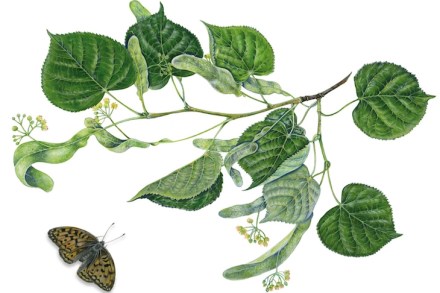
The publication of César Aira’s The Lime Tree in Chris Andrews’s assured translation is a reminder that much of the Argentinian writer’s massive literary output — now more than 70 books — remains inaccessible in English. In this novella, which teases readers with suggestions of the autobiographical, Aira has one eye on his country’s past and the social effects of Juan Perón’s regime, and the other on the literary legacies of Proust. For Aira’s unnamed narrator, it is not the taste of lime blossom tea that spurs his fluid reminiscences, but a particular tree itself, ‘grown to an enormous size’ and central to the small-town landscape of his childhood in Coronel Pringles, where Aira himself was born.

Voices of exile

During the military dictatorships of the 1970s, exile for many Latin American writers was not so much a state of being as a vocation. Some were given early warning of what might befall them if they stayed. The polemicist Eduardo Galeano remembered receiving an evening telephone call from the Argentine Anticommunist Alliance: ‘We’re going to kill you, you bastards.’ ‘The schedule for calling in threats, sir, is from six to eight,’ I answer. I hang up and congratulate myself... But I want to stand up and I can’t: my legs are limp rags. Other writers were not so lucky. Antonio di Benedetto was rounded up in the first wave of arrests in 1976 and sent to prison, where he was tortured over a period of 18 months.

Worming out the truth

In Delmore Schwartz’s story ‘In Dreams Begin Responsibilities’, a young man dreams he is watching his father and mother’s engagement onscreen from a seat in a cinema. Weeping at the certain knowledge of the pain to come, he’s patted on the back by a woman. ‘There, there,’ she says, ‘all of this is just a movie.’ In a way, this moment distils the challenge of all oneiric narratives — it’s a fiction within a fiction, one in which anything can happen, but without real-world consequences. In this dark, brilliantly controlled debut, the Argentinian Samanta Schweblin uses the fabric of a dream to weave a novel in which everything is at stake and at risk: identity, love and existence.

Falkland Islands’ pitch to Jeremy Corbyn falls on deaf ears

In a crowded field, one of Jeremy Corbyn’s more controversial suggestions during his time as Labour leader has been putting forward the idea of a ‘power sharing deal’ with Argentina over the Falkland Islands. That plan was called a ‘repugnant surrender’ by war hero Simon Weston, while Michael Fallon said Corbyn posed a bigger threat to the Falklands than the Argentine navy. Yet that hasn’t put off the Falkland Islands Government from turning up at Labour’s party conference this year with a stall. Alas, it seems, the Falkland Island Government’s hopes of speaking to Corbyn have so far fallen on deaf ears.

Writing on the fly

Bogotá airport, immigration form in hand. Tourist, migrant, businessman? Andrés Neuman ponders the descriptors, unsure which to tick. He opts for the second. ‘I’d like to be a migrant.’ The decision is telling, and frames much of what follows in this curious, delightful, if disjointed book. Neuman is hot property in contemporary Latin American literary circles. A former winner of Spain’s prestigious Alfaguara Prize and the National Critics Prize, he is tipped (by Roberto Bolaño, no less) to be one of a select ‘handful’ to take up where the ‘boom’ generation of Márquez, Cortázar, Fuentes and Borges left off.

I dream of Genie

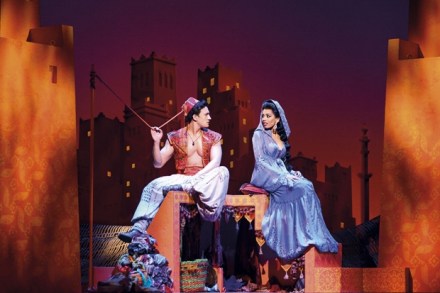
Gauche, perhaps, to complain about Aladdin but it slightly deserves it. The terrific Genie opens the show and then disappears for 45 minutes while the plot is explained. My squirmy ten-year-old kept whispering Aladdin-related trivia at me in order to occupy himself as the rags-to-riches storyline was laid out in far too much detail. Visually the show is impressive, despite minor flaws. The rangy architectural sets are intricate confections of teetering filigree but they look a little factory-fresh and unlived-in. Behind them the daylight skies are wrongly composed of a single hue (only the night sky has a single hue).

Portrait of the week | 31 March 2016

Home The Indian company Tata decided to sell its entire steel business in Britain, putting more than 15,000 jobs in jeopardy. The buy-to-let business was squashed by the Prudential Regulation Authority imposing more stringent borrowing criteria in parallel with an increase in stamp duty from this month. The Bank of England’s Financial Policy Committee said that ‘the most significant’ domestic risks to financial stability were connected to the referendum on EU membership. The French utility company EDF agreed to take on part of its Chinese partner’s financial risks from cost overruns in building the Hinkley Point nuclear power station. BHS, the department store chain, attempted to secure its future in the face of a £571 million pension deficit.

Dancing like a demon

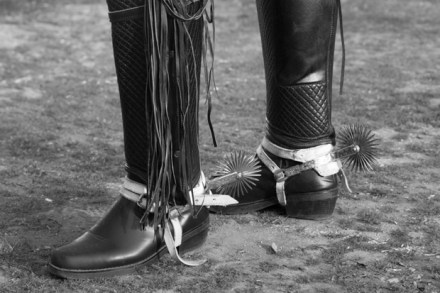
‘Anything becomes interesting if you look at it long enough,’ said Gustave Flaubert. He might have been talking about this slim volume, which takes a slimmer subject and inflates it to an epic of noble proportions. The subject is unpromising. ‘This is the story of a man who took part in a dance contest,’ runs the opening line. It’s hardly one to set many hearts racing, especially since the event in question is no glitzy Strictly Come Dancing, screened on television for millions. Instead, Leila Guerriero’s focus is the world championships in malambo, an obscure Argentinian dance, whose annual apogee takes place in Laborde, a town of 6,000 inhabitants in the middle of the flat, fertile pampas.

Sorry, America, but it looks like Joe Biden is your next president

I have a sinking feeling that Joe Biden might be the next president of the United States. In a brilliant essay published by the American Spectator in 2010, Angelo Codevilla of Boston University foresaw a popular revolt against ‘America’s ruling class’. What he calls ‘the Country party’ repudiates the co-option of the mainstream Republican party by the bureaucratic behemoth that is Washington, DC. You cannot understand the popularity of Donald Trump until you grasp the essential characteristics of this Country party. White, male, ageing Americans are sick of political correctness. They are sick of carefully calibrated talking points. They are sick of immigrants. They are sick of wars in faraway places of which they know nothing and care less.

Tree devotion

I have never written much about the one-acre shaw of native trees I planted in 1994, even though it is the delight of my heart, especially when the wild cherries flame in autumn. That’s because I am well aware that en masse tree-planting is a niche activity, open only to the fortunate few. But no one can have envied Thomas Pakenham when, in 1961, he unexpectedly inherited Tullynally Castle in County Westmeath in central Ireland, with its 1,500-acre ‘demesne’ — a third of it park and garden — since he was heavily burdened with death duties. It took nearly 30 years to pay off the debts, before he could begin to concentrate on the delight of his heart, which is planting, caring for and observing the ways of trees as well as travelling the world to look at them.

Peru’s Indians are repressed with more efficiency than blacks ever were in South Africa

In The Spectator of 21 March a column by Toby Young caught my eye. Discussing the pros and cons of selective schools, Toby found it hard to reach an emphatic conclusion; and for what it’s worth I find it hard too — but, then again, what do I know? It was his international comparisons that engaged me. It was not the point he was trying to make, but Toby quoted a statistic which speaks volumes about the continuing oppression of the indigenous peoples of South America. In educational attainment tests, Peru has the world’s worst ‘variance’ explicable by the children’s backgrounds, or so the OECD have found. ‘Variance’ means departure from the average.