Acting

In defence of Shakespeare’s Globe

Off to my old manor, the Globe theatre, to join a celebratory gathering of thems and theys for I, Joan, a non-binary telling of the Joan of Arc story. The show has caused no shortage of outrage in various communities on the left, centre and right, and has had the Globe labelled as misogynist by feminists of a certain generation. It is a great compliment to the Globe that even though it only opened in 1997, it is already held so dear that whatever happens there is quickly amplified into a broader debate. In my time as artistic director, we had one Sun front page ridiculing our engagement with foreigners; then later a concerted pile-on from left and right when we had the temerity to invite both Israelis and Palestinians to an international festival.

Michael Palin isn’t a ‘national treasure’

It's a well-known fact that Michael Palin is a 'national treasure'. Or so you are told just about every single time the travel presenter and writer appears on television or features in a newspaper interview. So it was with grim inevitably that a few days before the first instalment of his latest expedition, Michael Palin: Into Iraq, aired on Channel 5 on Tuesday, the Daily Telegraph and the Sunday Times both felt it imperative to describe him with this phrase. Never mind that he's no doubt utterly sick of this lazy cliché – objectively, it's a misleading misnomer.

In praise of character actors

The star system is a false hierarchy: the best rarely make it to the top. I thought of this recently when it was announced that David Warner had died. Few outside acting could name him, though you may have seen his head flying off in The Omen, a film in which heads are cheap. Warner was a Manchester-born jobbing actor: a character actor, better defined by what he is not, which was a star. I could write pages about why a star is a star, and a character actor remains a character actor, but the most significant reason is simple. Warner was brilliant but he was not handsome.

An actor’s recipe for insanity

I’m on the road, a very proper place for an actor to be. Never mind all those jokes about some people having tours de force and others being forced to tour – a tour gets the stuff out to the people. If they can’t come to us, we must go to them, each actor on his ass, as Hamlet smuttily tells Polonius. I fancy that my generation of actors was the last to assume that we would take our wares around the country. Personally, I’ve always enjoyed discovering all the different playhouses, with their different challenges and opportunities – a chance to rethink the thing. Standing in the same place, on the same West End stage night after night, peering out into the same auditorium, is a recipe for insanity or at the very least automatism.

Jonathan Bate weaves a memoir around madness in English literature

There is a trend for books in which academics write personally about their engagement with literature. Examples include Lara Feigel’s Free Woman, in which the author blends a memoir of her marriage break-up with a close reading of Doris Lessing’s fiction, and Sally Bayley’s Girl With Dove, which fuses an account of a traumatic childhood with sketches that focus on Bayley’s early love of books. Addressed to a wider readership, these works combine autobiography with literary criticism. They are carefully crafted, confessional and ask why literature matters.

Could today’s Hollywood stars have made it in ancient Greece?

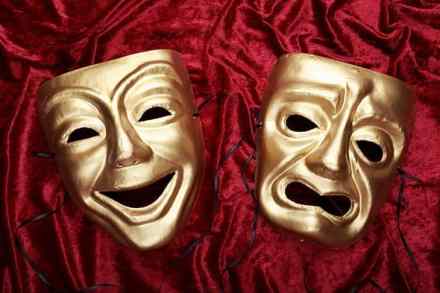
The Oscar frenzy spent, it is worth reflecting on how easy writers and actors have it these days. The ancient Greeks invented our idea of acted drama, and the conventions were tough. Here are the main ones. In myth-based tragedies, for example, all the speaking parts – young and old, male and female – were played, and occasionally sung too, by only three fully masked male actors (one play had 11 speaking parts – work that out!). There was also a ‘chorus’ – 12 or 15 actors, all masked, singing and dancing in unison between episodes, though the leader could converse with the main characters. Of low social status, they provided an alternative collective voice to that of their ‘heroic’ superiors.

Lasting infamy: Booth, by Karen Joy Fowler, reviewed

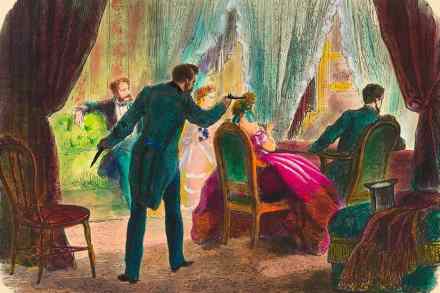
Were it not for an event on the night of 14 April 1865, John Wilkes Booth would be remembered, if at all, as an actor; brother of the more famous Edwin, and son of Junius Brutus – a footnote to the history of American theatre. But that night Booth leaped on to the stage of Ford’s theatre, Washington D.C., shouting ‘Sic semper tyrannis!’ before fleeing. He had just shot Abraham Lincoln. Five days earlier the Civil War had officially ended. Booth, a Confederate sympathiser, feared Lincoln would overthrow the constitution – he was already promising votes to freed slaves. The assassination was Booth’s way to ‘avenge the South’.

My thoughts on Helen Mirren’s casting

On Monday, I had a whinge-walk with Lizzie, my friend of 47 years. We met at breathing classes for our first babies and we gave birth on the same day in the now defunct Avenue Clinic in St John’s Wood. Our children grew up joined at the hip. Today my daughter Amy is a playwright in NW3 and Lizzie’s is a Buddhist monk in Nepal. Amy is with me at least twice a week, though her mother’s ability to make off-the-cuff remarks which generate front-page headlines makes her wish she was the one in a Nepalese monastery. I faced my daughter’s embarrassment and near cultural cancellation last week after I commented on the casting of Helen Mirren as Golda Meir. The papers rather gleefully framed it along the lines of ‘Lipman objects to Dame Helen playing Golda!’.

All successful spies need to be good actors

On 2 October last year, when he became chief of the UK Secret Intelligence Service (MI6, if you prefer), Richard Moore tweeted (tweeted!): ‘#Bond or #Smiley need not apply. They’re (splendid) fiction but actually we’re #secretlyjustlikeyou.’ The gesture’s novelty disguised, at the time, its appalling real-world implications. Bond was, after all, competent and Smiley had integrity. Stars and Spies, by the veteran intelligence historian Christopher Andrew and the theatre director and circus producer Julius Green, is a thoroughly entertaining read, but not at all a reassuring one.

‘You should see some of the other scripts that come through’: Robert Carlyle interviewed

‘I always feel slightly sick when I hear actors talking politics,’ says Robert Carlyle — that polished Glaswegian burr sounding no less arresting over a slightly patchy Zoom connection. ‘I mean we’re all entitled to an opinion,’ he continues, sounding for a second as though he might be about to opt for a more diplomatic track. ‘I just find that too many actors find it difficult to get theirs across without sounding like a twat.’ It’s a fair point, you might think. But for Carlyle, it’s also been a good professional move. Reflecting on his career, he credits this aversion to mouthing off with inspiring his long-term commitment to keeping his head down.

Why should we care whether an actor is gay?

In this woke age, we seem to have incredibly short memories. We feel the need to damn people today for holding views that were completely acceptable yesterday. But the memory of Russell T. Davies, the acclaimed British screenwriter, seems to be particularly short. In an interview for the Radio Times — promoting his new Channel 4 series, It’s A Sin, about young gay men in 1980s London — Davies has criticised the practice of giving gay roles to straight actors. ‘I’m not being woke about this’, he said. ‘It’s about authenticity, the taste of 2020. You wouldn’t cast someone able-bodied and put them in a wheelchair, you wouldn’t black someone up.

Fascinatingly weird – but not satisfyingly weird: Herzog’s Family Romance LLC reviewed

In the past Werner Herzog has given us a man pushing a ship up a mountain, a 16th-century conquistador going mad in Peru, Timothy Treadwell being eaten by a bear (who isn’t still recovering from that one?) and the 3-D documentary on cave paintings that ended with albino alligators, so there is never any saying what his next film will be about. Only that it’s likely to be quite weird. And Family Romance is quite weird. It’s real but fake (or vice versa) and filmed on the fly in the Japanese language even though Herzog doesn’t speak Japanese. And there’s more, so much more. It’s fascinatingly weird for sure. Even if, ultimately, it’s not satisfyingly weird. It’s fascinatingly weird for sure.

What are the new rules on race and performance?

What are the new rules on race and performance? In the world of TV, everyone is busy apologising, self-censoring and denouncing their previous work. Ant and Dec have deleted routines in which they imitated Japanese girls and people of colour. The comedian Leigh Francis has expressed contrition for satirising Craig David in Bo' Selecta! (which was nominated for a Best Comedy Bafta in 2004). Matt Lucas and David Walliams have withdrawn sketches featuring dark-skinned characters. A new order is being created. A new hierarchy of privileges and prohibitions based on ethnicity is taking root. We are strengthening the vice we sought to eliminate. The new rule appears to forbid actors from playing characters whose racial origins they don’t share. Or does it?

‘I’ve started talking to myself’: Tamsin Greig interviewed

C4’s Friday Night Dinner was the nation’s stop off point for feeling a bit better about ourselves. It featured the Goodman family. Every week the Goodman’s two sons returned to their parents’ home for Shabbat dinner. Every week, things didn't go to plan. Of course, the chaotic Goodmans stand in for all our chaotic families in these times. It is good to know that it isn’t only our own family that is a shambles. The guiding force, the everyday matriarch of that family, is Jackie Goodman – long-suffering mum, played by Tamsin Greig. ‘It is charming because it is all about coming home. I think that’s why people love it. The two boys come home every week to somewhere they know they are loved.

The revenge of the oldies

Entering my 54th day of quarantine, I recall how much I was looking forward to this spring in England. There were so many exciting events and celebrations planned. Several friends were throwing big birthday bashes; I was picking up a couple of awards, performing my one-woman show, going to Cannes, and most exciting of all, participating in a plethora of events surrounding the VE Day celebrations. All of the above have gone with the proverbial wind, except for, in a small way, the latter. The Queen’s Pageant Master, Bruno Peek, asked me if I could lead the nation’s toast to our heroes and heroines of the second world war. VE Day dawned sunny and hot. Percy and I festooned the balcony with Union Flags and bunting, and at 3 p.m.

There’s nothing normal about getting nude on set

I remember how I felt the first time I saw Daisy Edgar-Jones’ nipples. Sitting on my sofa at home during lockdown, watching the BBC Three adaptation of Sally Rooney’s prize winning novel, Normal People, my jaw dropped as Edgar-Jones casually stretched an arm above her head, her bare chest fully exposed towards the camera. “She’s so brave!” I shouted out of nowhere, at my boyfriend. “What?” he replied, eyes glued to the screen, lost in his own (potentially quite different) stream of thought. Whilst both Edgar-Jones and Paul Mescal appear in the nude throughout the series, it was Edgar-Jones’ full frontal nakedness in particular that shocked me.Having worked on film and TV sets when I was her age, I know how tough it is.

Welder, banjo player, comedian, actor, and now artist – Billy Connolly interviewed

We are in a basement gallery in London’s West End, and Britain’s greatest comedian is doing what he does best — sharing his delight at the daft absurdities of daily life. He remembers seeing a little boy wading into the freezing waters at Aberdeen. ‘You make a certain noise when the wave comes up. It’s a noise that you can only repeat by shoving a hot potato up a donkey’s arse.’ He is making this empty gallery feel as though it’s full of people — and a bunch of strangers laugh like old friends. ‘A lot of my stuff doesn’t have punchlines’. He doesn’t need them. ‘It’s lovely just making a big picture, and saying, “I was there, and I’d like to invite you to share it with me.

‘I feel compelled to be disgraceful’: Miriam Margolyes interviewed

I meet Miriam Margolyes in her large Victorian house in Clapham. She is very small and round, with a shock of grey hair, and the clear and open gaze of a curious child. There is an innocence to her, like someone who has not quite grown up. She has a wonderful voice, which bought this house. When it rests it is low and serious; but when she is telling a good story it takes flight. She is best known, now, for Harry Potter films and Blackadder; and for The Graham Norton Show which she dominates by speaking filth while looking delighted. This is deceptive though. When she wants, she can be very serious, although she struggles to be serious for long, which is why, I think, she does not have Janet Suzman’s career. When I say I find her serious she is delighted.

‘I merge into the background, me’

‘I live completely anonymously,’ whispers Jim Broadbent down the phone from Lincolnshire. Nonsense, I counter. You’re one of the most recognisable actors in this united luvviedom. ‘Am I?’ he asks gently. Oh come on. You’re Bridget Jones’s dad, Del Boy’s arch-enemy Roy Slater, Lord Longford campaigning for Myra Hindley’s parole, dotty antiques-shop owner Samuel Gruber in the Paddington films, Game of Thrones’s Archmaester Ebrose, testy but lovable W.S. Gilbert in Mike Leigh’s Topsy-Turvy, and the blackmailer who unacceptably shakes down Maggie Smith’s eponymous Lady in the Van.

Actress’s Notebook

Our upstairs neighbours are not the sort of people you want to have run-ins with. They have regular moped deliveries and I see packages exchanged through blacked-out BMW windows. I once knocked on their door to ask if I could borrow a potato masher. They looked at me as if I were mad. They seem to sleep all day and do all sorts at night. I usually go to bed to the sound of floor-board drilling. I wonder what they are hiding: are they supplying illegal stuff for the next generation of Tory leaders? The other night, at about 5 a.m., I heard a banging noise, followed by shouting at the front of the house: ‘POLICE, POLICE.’ What had I done? I peered out of the window. Officers were bursting into the house, heading for the upstairs flat.