20th-century history

Derided as ‘feminists’: the unsung witnesses of the Nuremberg trials

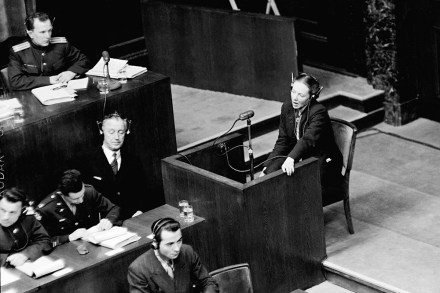
There are several things wrong with James Vanderbilt’s new film Nuremberg, least of all, some might say, the fact that it fails the Bechdel test. This 1985 metric assesses female representation in film by whether two named women have a conversation on screen about anything other than a man. If you are thinking, ‘So what? All the Nuremberg prosecutors were male, as was every defendant’, then you need to get hold of Natalie Livingstone’s revelatory book. While the public face of the trials was resolutely male, as were the indictments (there was no mention of rape, for instance, within the listed war crimes), the truth is that in the trials, as in the war, women played significant though often hidden roles.

Thrilling tales of British pluck

December 1917. For years the Ottoman Turks have been trying to spark a jihad of the world’s Sunni Muslims, hoping that Muslim subjects of the British Empire in India will rise in revolt. Now that Tsarist power in Russia has collapsed, the roads through central Asia are open and the war-weary British have virtually no resources left to prevent the Turkish empire from expanding into India.  Edward Noel, an aristocratic Catholic political officer who is supposed to be in Persia, sends a telegram to his betters from the city of Baku, perched on the western shore of the Caspian Sea and the source of half the world’s oil. He wants to plug the strategic gap in central Asia by raising a force of local troops.

Who started the Cold War?

Over a few short months after the defeat of Nazism in May 1945, the ‘valiant Russians’ who had fought alongside Britain and America had ‘transformed from gallant allies into barbarians at the gates of western civilisation’. So begins Vladislav Zubok’s thorough and timely study of the history of the Cold War – or, as he nearly entitled the book, the first Cold War. For the themes that underpinned and drove that decades-long global conflict – fear, honour and interest, in Thucydides’s formulation – are now very contemporary questions. ‘The world has become perilous again,’ writes Zubok, a Soviet-born historian who has spent three decades in the West: Diplomacy ceases to work; treaties are broken. International institutions, courts and norms cannot prevent conflicts.

When ordinary men did extraordinary things – D-Day revisited

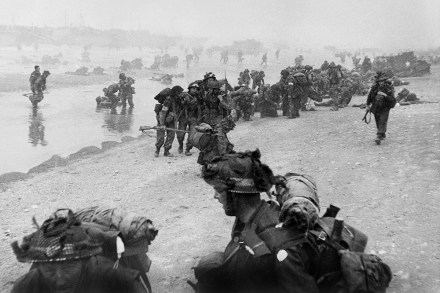
The ferry from Portsmouth to Caen is the most atmospheric way to visit the D-Day battlefields, if not always the most comfortable. As the Normandy coast emerges from the haze, the sand and shingle of Sword beach stretch away to starboard. This was the easternmost of five landing areas assaulted on 6 June 1944 with nearly 30,000 soldiers landed there that day. Over the port bow, on the far side of the River Orne, looms a ridge. Here the British 6th Airborne Division parachuted in by night to neutralise enemy artillery and guard the eastern flank. Out of sight ahead, some eight miles inland past the Pegasus Bridge, lies Caen, the largest city in the area and a strategic road junction.

Giles Milton retells the story of the Grand Alliance as a cinematic thriller

From our US edition

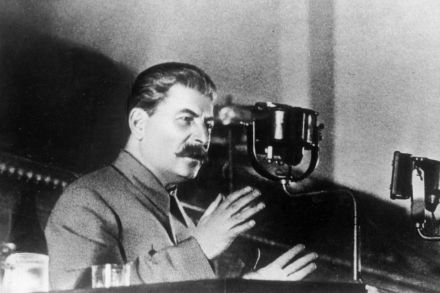
On June 22, 1941, the German army invaded the Soviet Union. Over the next four months, the Wehrmacht blasted through the Soviet defenses, taking millions prisoner and destroying thousands of tanks. By early December, German scouts were purportedly within site of the Kremlin. Even though the Wehrmacht was forced back from the gates of Moscow by the Red Army, the renewed German offensive in spring 1942 threatened to deliver the coup de grâce to the Soviet Union. That it didn’t was due to an unlikely alliance between British prime minister Winston Churchill, US president Franklin D. Roosevelt and Soviet dictator Joseph Stalin.

Alliance

Fighting every inch of the way: the Italian Campaign of 1943

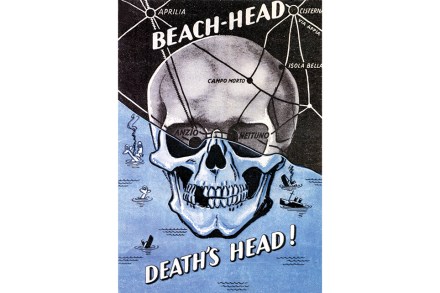
In Whitehall, visible to even the most short-sighted from the gates of Downing Street, stands an outsize statue of Lord Alanbrooke, the strategic adviser to Winston Churchill during the second world war. His job was to help the prime minister see the big picture and concentrate on the decisions that really mattered. This was no easy task. Churchill was both a tricky master and ‘tinkerman’, but Alanbrooke had Ulster blood and knew how to say no. One little village, San Pietro Infine, took more than a week and 1,500 American casualties to capture He also had a remarkable facility for explaining complex strategic problems in simple terms. There is good evidence of this in the BBC archive (and on YouTube) in a television interview he gave in 1957.

The phoney mystics who fooled the West

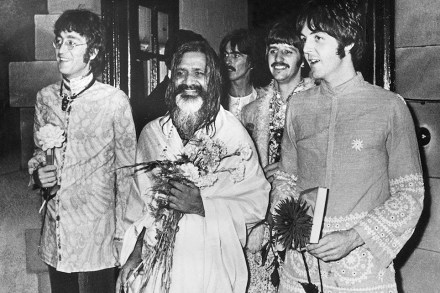
In recent years when we’ve talked about the relations between India and the West, we’ve gone back to stressing the impossibility of interchange. A hundred years ago, E.M. Forster ended A Passage to India with the certainty that Aziz and Fielding could not be friends. Forster thought things would be different after Indian independence, but the spectres of cultural appropriation and the assertion of ongoing imperialist guilt have discouraged equal exchange.  Meher’s spiritual energy was soon devoted to persuading Hollywood to make a massive movie about his life That may explain why the excellent story Mick Brown tells in The Nirvana Express has hardly been covered in the past.

Amsterdam explores friendship in a complicated world

From our US edition

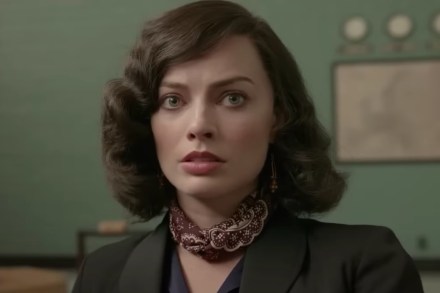
David O. Russell is one of a small handful of directors whose involvement with a project is enough to get me to see it immediately. From the offbeat energy of Silver Linings Playbook to the tangled period drama of American Hustle, his films are tightly edited and always thick with talented actors. Amsterdam, his latest, is no exception. While it’s thematically fluffy and periodically tends toward the indulgent, it's never anything less than entertaining. There are far worse ways to spend a few hours, especially in the midst of a cinematic drought. Picking up in 1933, Amsterdam is the tale of two injured World War I veterans, slightly disreputable doctor Burt Berendson (Christian Bale) and successful attorney Harold Woodman (John David Washington).

Our enemy’s enemy

From our US edition

After Nazi Germany attacked the USSR, Winston Churchill had no qualms about entering into an alliance with Stalin, whose regime he understood all too well: “If Hitler invaded Hell, I would make at least a favorable reference to the Devil in the House of Commons.” Similar thinking does much to explain the enlistment of former (and not so former) Nazis by the Western allies in intelligence work against the Soviets after 1945. With the Red Army in the heart of Europe, co-opting suitably qualified veterans of the fallen Reich — some of whom had very dirty hands indeed — made some sense, according to that Churchillian logic, but mainly when those selected were anti-Communist and now aligned with a democratic Germany.

fugitives

The horrors of 1922 included atrocities, assassinations and the rise of Mussolini

Sixty years ago the Daily Express ran a regular feature entitled ‘Just Fancy That!’ Each short segment highlighted some strange coincidence or weird incident that would hook readers’ interests. Human oddities, unlucky mischances, freaks of nature and improbable statistics were dealt out every day. It made for easy reading, but sometimes gave pause for thought. Nick Rennison has adapted the ‘Just Fancy That!’ formula to make a handy book for the bedside table in the visitors’ bedroom. In crisp and evocative snatches, he gives monthly summaries of global events, domestic episodes, newspaper sensations, sporting triumphs and cultural acclaim during 1922.

A divided city: the Big Three fall out in post-war Berlin

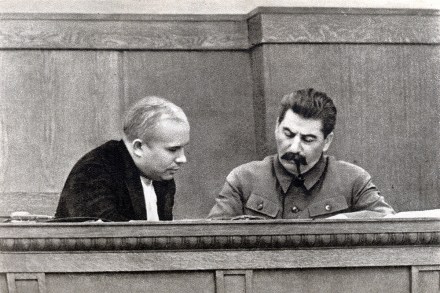
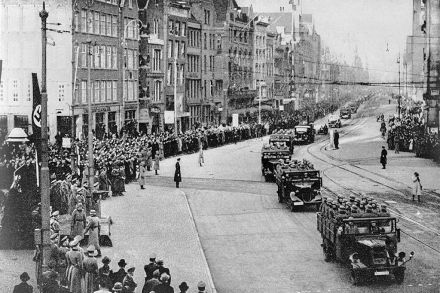
When did the Cold War start? Not when the second world war ended. There were many differences between the Soviet Union and its western allies, but they did not then seem insuperable. It was not obvious that the post-war world would be divided by ideology. On the contrary, the victorious United Nations hoped for an era of peace. The Americans planned to pack up and leave Europe as soon as possible. The future of Germany had been decided before a single Allied soldier had crossed onto German soil. Meeting at Tehran in November 1943, the Big Three — Roosevelt, Churchill and Stalin — had agreed that defeated Germany would be under military rule, divided into three zones of occupation, one each for America, Britain and Russia.

Berlin has always been a Faustian metropolis

From our US edition

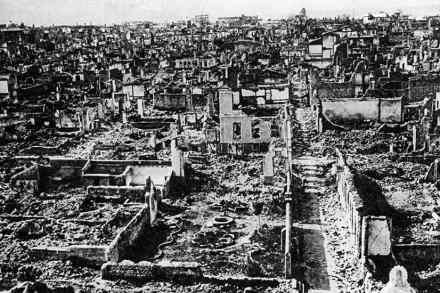
Each time I return to Berlin, the wonderful, awful city where I spent the best days of my misspent youth, I pay a sentimental visit to Grolmanstrasse, where my German grandparents used to live. There isn’t much left to look at. Their apartment block was destroyed in 1945 in the Battle of Berlin. The site where it stood is now occupied by a children’s playground. For me, that empty space seems to symbolize the way Berlin has changed — mainly for the better, but at enormous human cost. So much has vanished — not just the buildings, but also the people who inhabited them. For my children’s generation, Berlin is a party town. For me, it’s a city full of ghosts. It is these ghosts that keep bringing me back to Germany’s battered, bombastic capital.

berlin