John Ehrett

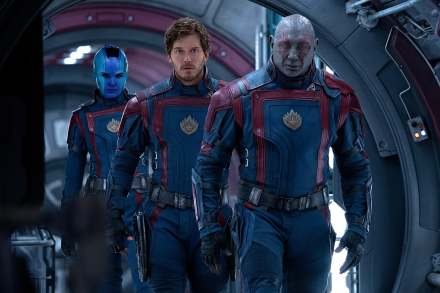
Guardians of the Galaxy Vol. 3 is a cry of pain

Long before he was helming multimillion-dollar franchises, director James Gunn made an indie movie called Super. Starring Rainn Wilson (of The Office fame), Super was a nasty little send-up of the superhero genre that deconstructed familiar motifs long before The Boys hit screens. It shoved audiences’ faces into the violence often underlying the genre’s tropes, with a depth of brutality not easily sanitized away. But times change, careers advance — and Gunn is now the power behind marquee events like The Suicide Squad and the Guardians of the Galaxy trilogy. He was recently tapped to lead DC Comics’ cinematic efforts in a new direction. Yet despite it all, Guardians of the Galaxy Vol. 3 has far more in common with Super and The Suicide Squad than its two forerunners.

guardians of the galaxy vol 3

How to Blow Up a Pipeline is an ecoterrorist heist movie

How to Blow Up a Pipeline begins with a land acknowledgement.  For those unfamiliar, this is a lengthy paragraph — often found at progressive meetings or on classroom syllabi — stating that the land upon which an activity is occurring was never formally ceded by the Native American tribe to which it once “belonged.” (Never mind that firstly many Native concepts of land management didn’t track what twenty-first-century Westerners mean by “ownership” and secondly the individuals making such acknowledgements clearly have no intention of actually returning the land they supposedly illicitly occupy.

A still from How to Blow Up a Pipeline (Neon)

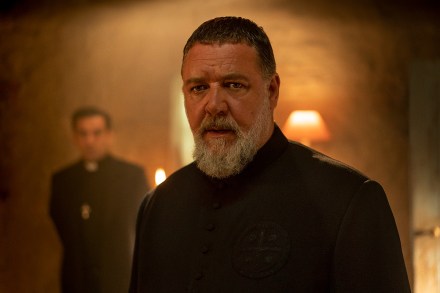
The Pope’s Exorcist isn’t scary enough

All worthwhile horror films are products of their culture. They distill its neuroses and fears, forcing protagonists to make value judgments with life-or-death stakes. And that’s why the genre continues to compel: beyond the adrenaline rush of jump scares, watching old chillers is like opening a metaphysical time capsule. They show how past generations understood their world. The exorcism subgenre tracks that pattern — only its questions tend to be explicitly religious. William Friedkin’s 1973 classic, arriving at the height of modernist theology, directly foregrounded the question of faith within a liberal world order.

Pope’s Exorcist

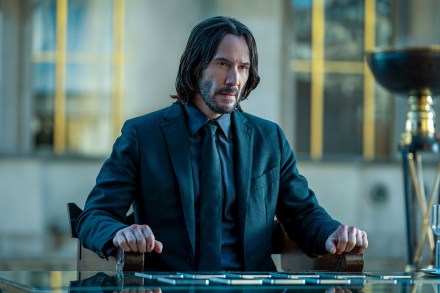
John Wick: Chapter 4 is the strongest installment yet

Fourth installments of mega-franchises don’t exactly have the greatest reputation — just think of The Phantom Menace, The Matrix Revolutions, Live Free or Die Hard and Jaws: The Revenge, to name a few. By this point, film sagas are usually bogged down by their own internal mythologies and find themselves replaying familiar beats in a bid to recapture the magic. But every so often, there’s that Mad Max: Fury Road, an utterly unexpected burst of wild creativity that outdoes its predecessors. And John Wick: Chapter 4 is such a triumph. As Chapter 4 begins, legendary assassin John Wick (Keanu Reeves) is at odds with the High Table, the governing authority of the assassin underworld.

john wick

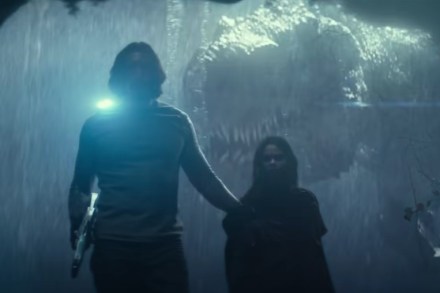
65 is a better B-movie than it has any right to be

Growing up, one of my favorite books was Gary Paulsen’s Hatchet, the story of a boy whose plane crash-lands in the Canadian wilderness and who must then fend for survival with only a single tool. 65 tries to pull off something similar, but with dinosaurs and sci-fi weapons. And bizarrely enough, it's a far better B-movie than it has any right to be. Yes, the setup of this film is seriously convoluted. Adam Driver stars as Mills, a long-haul space shipper who works for a spacefaring human civilization based on a planet other than Earth. When his vessel collides with an unexpected asteroid belt, he’s forced to crash-land on Earth — 65 million years before the present day. That’s right: this film takes place a long time ago, but in a galaxy not quite so far away.

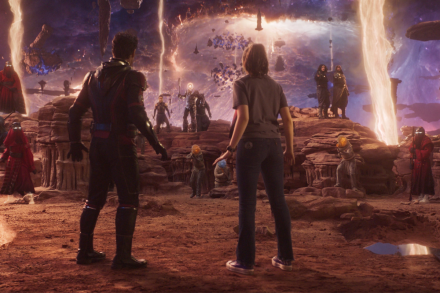
Ant-Man and the Wasp: Quantumania is Marvel losing the plot

For over a decade now, every new Marvel Cinematic Universe film has promised a visual extravaganza, and Quantumania is no exception. Alas, in a franchise that has produced some genuinely emotional moments, a grand spectacle may be all it is. Following the events of 2019’s Avengers: Endgame, our eponymous shrinking hero, played by Paul Rudd, has settled into comfortable domesticity with main squeeze Hope van Dyne and teenage daughter Cassie. With the world mostly safe, his biggest problem now is keeping the idealistic Cassie out of trouble. At least, so he thinks.

ant-man quantumania marvel

Knock at the Cabin is a better-than-average Shyamalan film

The thing about a new M. Night Shyamalan movie is that, going in, one never knows whether it’ll be “one of the good ones.” Few directors have quite as uneven a track record: in the wake of the much-loved The Sixth Sense, Unbreakable, Signs, and The Village, Shyamalan helmed a string of disasters, culminating in the big-budget catastrophe that was 2013’s After Earth. On the other hand, 2016’s Split and 2019’s Glass were both great. Knock at the Cabin falls somewhere in the middle. The film centers on a gay couple, Andrew and Eric (Ben Aldridge and Jonathan Groff, respectively), and their adopted daughter Wen (Kristen Cui), who are forced to confront a nightmare scenario. Holed up in a lonely cabin in the forest, they are accosted by a quartet of heavily armed outsiders.

Women Talking bludgeons itself with its message

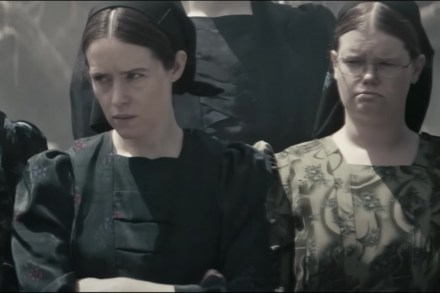
Sarah Polley’s Women Talking begins with a genuinely bone-chilling premise. Within a remote Mennonite “colony,” the women find themselves awakening from drugged slumbers, bearing the marks of violent sexual assaults in the night — blood, bruises, and mysterious pregnancies. Who’s responsible? Based on the promotional material, I expected this to be a story about secrecy and community. And that would be a very compelling story: women trapped in isolation form whisper networks among themselves, which finally reveal their common experience and allow them to bring their attackers to justice. Thematically, this would get at the intractability of human evil, even within “intentional communities,” and the harms of a subculture that treats bodies as shameful.

M3GAN is a biting satire of screen-obsessed parenting

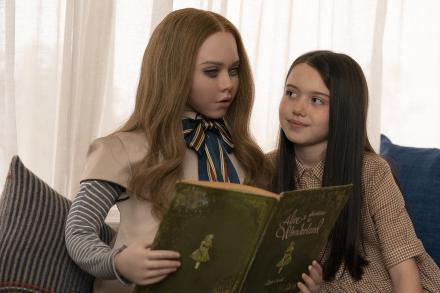
There’s a bit of moviegoing conventional wisdom that says January is the dumping ground for Z-list schlock films, all the genre fare not good enough for the holiday or summer seasons. And that’s why M3GAN — directed by Gerard Johnstone, and boasting story and production credits from legendary horror/thriller director James Wan — is such a pleasant surprise. It’s a nasty little cinematic bonbon packed with memorable images, and one that manages to say a few interesting things about modern life. After eight-year-old Cady (Violet McGraw) witnesses her parents’ deaths in a horrific auto accident, she’s sent off to live with her single aunt Gemma (Allison Williams).

The Whale is a story of grace

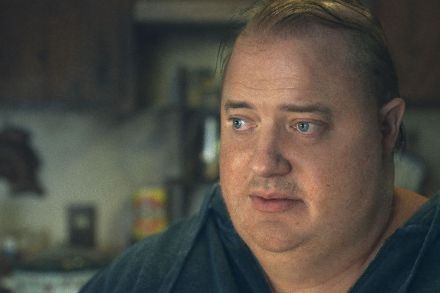
Auteur director Darren Aronofsky has never made the same film twice. From the grainy mathematical horror of Pi to the romantic fantasy-drama of The Fountain to the sprawling biblical vistas of Noah, each of his films sharply diverges in style and subject matter from the one before it, pressing forward into strange new genres. That said, his movies certainly share some common motifs — particularly a piercing sense of longing for transcendence, for the eternal. Every single film he’s ever directed has this quest at its center. Almost as ubiquitous across his work, though, are ferocious depictions of the body in pain, pressed to its limits and beyond in pursuit of the infinite’s perfection.

Violent Night is more than just Christmas carnage

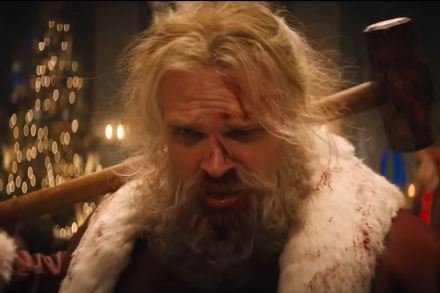
The pitch meeting for Violent Night must have been fun: why not make a big-budget film where Santa Claus himself (David Harbour) must protect a spoiled rich family from a home invasion? It might even settle the age-old debate about whether Die Hard is a Christmas movie: this is what a Die Hard-style Christmas really looks like! Violent Night largely delivers on that premise, serving up high-octane holiday mayhem for the grownup set. Here, we get a disenchanted (and borderline alcoholic) Kris Kringle, who’s grown tired of modern kids requesting only cash and video games and is contemplating hanging up his hat. We’re a long way from the jovial protagonist of The Santa Clause or even the crankier iteration of Elf. Years of munching Christmas cookies haven’t made this Santa soft.

The Menu serves up clever and tangy social commentary

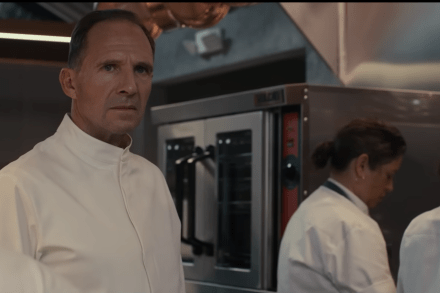
Several years ago, after I passed the bar exam, my wife and I went to dinner at Pineapple and Pearls — probably Washington, D.C.’s second swankiest restaurant. I recall eating some excellent duck, as well as imbibing a selection of craft cocktails served in ever-more exotic glasses and alembics. But what I remember most was dessert: a single gooseberry lacquered with honey. Yes, a single berry. (We ordered Domino’s when we got home.) The Menu is a lacerating bit of social commentary that doubles as a satire of this kind of fine dining — not all that surprising a blend, given the presence of Adam McKay on the production team.

Black Panther’s claws are still sharp

Heading into this film, director Ryan Coogler confronted a virtually impossible situation: the sudden, tragic passing of his franchise’s leading man. Chadwick Boseman’s untimely 2020 death casts a long shadow over Black Panther: Wakanda Forever. The fact that the movie is coherent at all is remarkable. That’s probably underselling things, though. From an action standpoint, Wakanda Forever is a serviceable — if somewhat less inspired than its predecessor — Marvel epic. Beneath all the CGI, it’s a surprisingly meditative passing of the torch. Following the death of King T’Challa (Boseman) from an unspecified illness, the cloistered Afrofuturist nation of Wakanda reels.

black panther wakanda forever

Halloween Ends succeeds because it’s barely a horror film

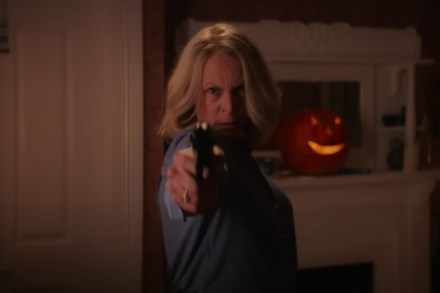
Michael Myers has always occupied a curious space among horror icons. “The Shape,” ever since he first appeared in 1978, has been silent and implacable, a killer who acts from no clear motivation at all. Whereas Freddy Krueger and Jason Voorhees and Leatherface all possess intricate, tangled backstories, Myers began as an avatar of something else: the presence of an evil that cannot be psychologized away. That sort of evil, as a concept, isn't really in vogue so far as modern horror goes. Rob Zombie’s 2007 reboot tried to retool Myers's backstory by blaming his murderous tendencies on bad parenting. And plenty of other contemporary horror flicks, from The Babadook to Smile, place psychological trauma and its consequences front-and-center.

Amsterdam explores friendship in a complicated world

David O. Russell is one of a small handful of directors whose involvement with a project is enough to get me to see it immediately. From the offbeat energy of Silver Linings Playbook to the tangled period drama of American Hustle, his films are tightly edited and always thick with talented actors. Amsterdam, his latest, is no exception. While it’s thematically fluffy and periodically tends toward the indulgent, it's never anything less than entertaining. There are far worse ways to spend a few hours, especially in the midst of a cinematic drought. Picking up in 1933, Amsterdam is the tale of two injured World War I veterans, slightly disreputable doctor Burt Berendson (Christian Bale) and successful attorney Harold Woodman (John David Washington).

Don’t Worry Darling was almost interesting

Olivia Wilde’s Don’t Worry Darling is a film more likely to be remembered for its offscreen drama than its substance. If only the final product that made it onscreen was as spicy: here, a promising premise and intriguing themes are let down by languid pacing, scattershot performances, and a willingness to lapse into preachiness that borders on misandry. Don’t Worry Darling is set in the planned community of “Victory” somewhere in the American West, a town led by self-help guru Frank (Chris Pine, playing a mixture of Joe Rogan, Jordan Peterson, and a televangelist — really, he wouldn’t be out of place on The Righteous Gemstones).

The Woman King is satisfying but it sanitizes African slavery

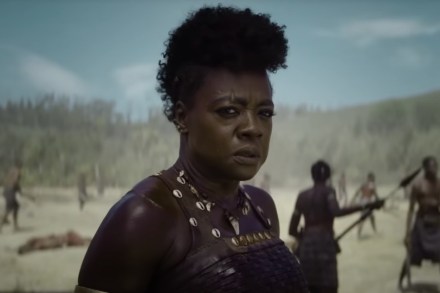
Every large-scale historical drama is a product of its time. The introduction to Cecil B. DeMille’s beloved The Ten Commandments explicitly outlines the film’s anti-communist agenda: “Are men the property of the state or are they free souls under God? This same battle continues throughout the world today.” Similarly, Gladiator, released in 2000 at the height of neoliberal dominance, anachronistically portrays the arc of Roman history as bending away from despotism towards democracy. 2022’s The Woman King is no exception to this rule. It centers on a fearless female leader who defends a pan-African, antislavery vision while reckoning with her own private traumas. Historically questionable? Yes. A satisfying movie? Also yes.

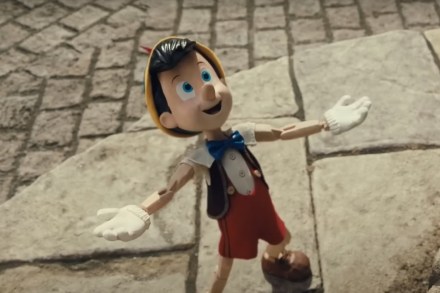
The new Pinocchio is straight up trash

With the possible exception of 2016’s The Jungle Book, none of Disney’s live-action repristinations of its animated classics have been a real success. Beauty and the Beast was too rococo for its own good. Aladdin obsessed over politics at the expense of romance. The Lion King traded elegant animation for dead-eyed CGI. And on it goes. None of these come close, though, to the disaster that is Robert Zemeckis’s Pinocchio — a turgid, nihilistic recreation of the 1940 classic that fails utterly to honor its source material. This month, it’s been dumped unceremoniously onto Disney+ rather than given a proper theatrical release; even the almighty Mouse knows when it has a stinker on its hands.

Beast is a throwaway summer thriller too tame for its own good

Let’s get one thing out of the way up front: yes, Idris Elba punches a lion in this movie, and yes, that part’s pretty great. If only the rest of Beast reached those heights. Director Baltasar Kormákur (no stranger to survival thrillers, after previously helming Everest and Adrift) has put together a late-summer actioner that’s entertaining enough, but probably a little too tame for its own good. Following the unexpected loss of his wife to cancer, American doctor Nate Daniels (Elba) brings his two daughters Mer (Iyana Halley) and Norah (Leah Jeffries) into the African bush to visit Nate’s old friend Martin (Sharlto Copley, in full great-white-hunter mode).

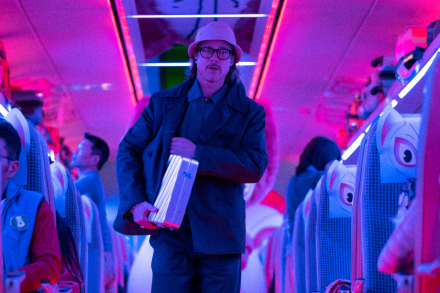
Bullet Train is a neon-washed delight

Based on the trailers, you’d be forgiven for thinking that Bullet Train was a gritty, serious-minded action thriller in the vein of John Wick. Nothing could be further from the truth: the best way to describe this movie is if Quentin Tarantino and Guy Ritchie co-directed a remake of Murder on the Orient Express. And happily, in the hands of director David Leitch — the talent behind Atomic Blonde and Deadpool 2 — it’s a genre mashup that mostly works. As the film opens, an enigmatic man codenamed “Ladybug” (Brad Pitt) boards one of Japan’s famous “bullet trains,” which travel at high speed and stop at each station for only a single minute. His mission: to recover a mysterious briefcase filled with ransom money and escape before anyone’s the wiser.

bullet train