More from life

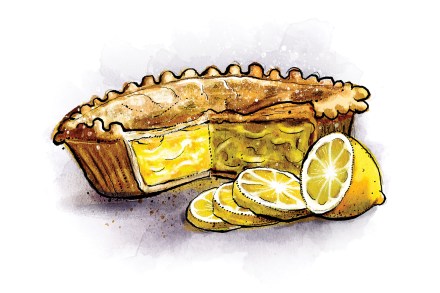
‘Unlike anything you’ve ever eaten’: how to make lemon Shaker pie

Cooking in January is a very different beast to cooking in December. I don’t just mean the flavours (the dried fruit and spice, and dark, boozy, rich flavours of the festive period are relegated to the backs of pantries and drinks cabinet) or even the sentiment, whereby many will look to lighter,simpler dishes to counteract the previous month’s excess. The process is different too. My January kitchen is quiet, the cooking or baking less frantic than that of the weeks that preceded it. It’s not performative, and there are no gargantuan grocery deliveries that require half an hour of fridge Tetris. There is no deadline and my days are less full, so baking is a pleasure which punctuates them, rather than an item on a to-do list. The baking becomes an end in itself.
‘Truly spicy and a delight to eat’: how to make Christmas gingerbread

The flavours of Christmas have changed a bit lately, haven’t they? If you wander around supermarkets right now, you’ll find peach bellini panettone, tiramisu mince pies, turkey gravy-flavoured crisps and Black Forest stollen. Even the classic Terry’s Chocolate Orange comes in a mint version this year. You could argue that Walkers crisps are standing up for tradition by selling a Christmas pudding flavour, but that might be pushing it. I’m all for innovation, but it does rather make me long for the traditional tastes of Christmas. I love peach bellini, tiramisu, and Black Forest gâteau – but I can enjoy these flavours at any time. The spice and warmth and booze that are prerequisites for our usual Christmas fare are really reserved for December.

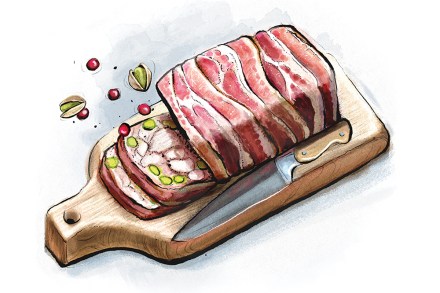
Why terrine is the perfect Christmas starter

When you’re planning Christmas, the big event is the easy bit. No, hear me out. It’s obviously a production – a feast! – more of an exercise in logistics than it is complicated cooking, making sure all the many elements come together at the correct moment. I’m not trying to underplay the amount of effort that it takes, but in terms of the constituent parts, it’s relatively straightforward. Most of us are turkey families, but if you’re a goose or rib of beef or nut-roast household, chances are that you’re fully aware of this as soon as you sit down to write your Christmas grocery list.

How doughnuts took over my life

For almost a decade, doughnuts ruled my life. When I first began baking professionally, I fell into doughnut-making. It was entirely my own fault: after graduating from culinary school, I decided the best thing I could do to improve my pastry skills was to bake regularly. So I knocked together a product and price list and went to my local café to tout my hypothetical wares. Unfortunately I offered up as one of my products big, fat, artisan doughnuts made from brioche dough and filled with custards and creams, jams and caramels, the kind that certain big bakeries are known for. You can guess which item on my natty little list caught the eye of the café owner.

The shame of Ian, the lockdown pup

The park we go to every day is Victorian – large, full of mock landscapes and extravagantly diverse settings, lakes, woodlands, formal gardens and tiny wildernesses. We went on a guided tour of Buckingham Palace’s gardens three years ago, and afterwards my husband said: ‘Well, it was very nice. But Battersea Park is nicer.’ Above all, it’s capacious – of different tribes, who only very occasionally meet. The woman owner was clasping her hands, and pink with shame. ‘Ian? Ian? Ian, why won’t you listen?’ It was a Sunday morning, and the anglers were in place in their sullen portable canvas caves, backs to the world, staring at the water. The lake isn’t their personal fiefdom, though; dogs are fascinated by it. Mine  will sniff at it, but never plunge in.

Grumpiness is a way of life

I used to be a terrible grump who would rant and rage against the 1,001 irritations of modern British life. And then one day I decided life was too short to be permanently enraged by everything and everyone.  ‘These kind people simply want to share their music with me! How thoughtful!’ For grumpy me, the sound of other people’s music in public spaces was agony. I’d seethe at the outrageous selfishness of such people. My quiet walks through the park would be shattered by the BOOM-BOOM-BOOM blast of music from a passing cyclist. And I’d shout: ‘Thanks for sharing your terrible taste in music!’   The new, cool me reacted differently. ‘These kind people simply want to share their music with me! How thoughtful!

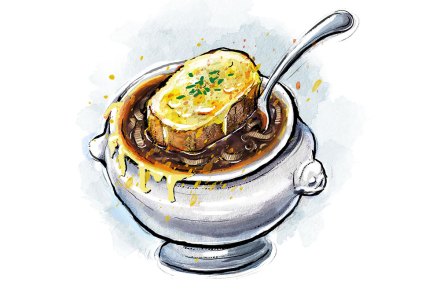
Be prepared to wait: how to make French onion soup like the French

Let me be clear: this week’s recipe is not a speedy little number. You can’t knock up a French onion soup for a quick supper. It’s not a 15-minute meal, or a roasting tray phenomenon that won’t require your input during its cooking. Just softening onions, despite what a lot of recipes tell you, takes up to 20 minutes in a pan. Caramelising them – really, truly caramelising them, bringing out their sweetness and complexity – takes literally hours. French onion soup is a labour of love. But if I lowball the cooking time, one of two things will happen: you won’t end up with the soup you signed up for, the soup you deserve; or you’ll have to ignore my timings, and never trust me again.

Why foreigners can’t speak Thai

For 12 years now I have been learning Thai from my maid, Pi Nong, who has been employed in our building for decades. It’s a much misunderstood relationship. Here the maid is an obligatory fixture, integrated into daily life for foreigners and Thais over the age of 45 and over a fairly modest income level. For foreigners the maid is a linguistic go-between, a bridge between two worlds, a portal into a new language. While she is making me dinner she gaily informs me that farangs cannot eat Thai food even though she is making it for me now and that, even more mysteriously, they cannot speak Thai – even though we are speaking it now. Her explanation is that our mouths are different and that we are malevolent.

How not to talk to builders

It’s week eight of the installation of a cheap Ikea kitchen in my flat, and an Albanian builder is slumped in an armchair in my sitting room. He’s shielding his face with his hand, Princess Diana-style, to hide the fact that he’s weeping. My kitchen sink drama began when I rang a firm of local builders and they sent round a chap called Dave with a twinkle in his eye and a plan to rip off his employers. ‘Here’s what you do,’ he said. ‘Hire me for a day, tell the boss you’ve changed your mind and sack me. Then I’ll come round after work, charge you half the original quote and we’re all laughing.’ I did sack him – but after five weeks, not one day, and there were no merry chuckles when I screamed down the phone that I wanted him out of my life, for ever.

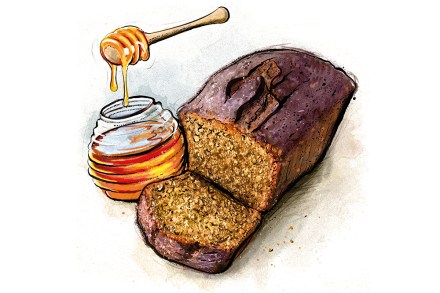
Dark, bold and perfect for autumn: how to make the perfect honey cake

I did not plan to cook a loaf cake when I embarked on concocting a traditional honey cake recipe. The original plan was to explore the Russian honey cake, or medovik, which dates back to the 19th century, and has a rich history. It is the War and Peace of the cake world: thick and a real undertaking. A long, careful assembly process, with up to a dozen layers of thin sponge – flavoured with honey and baked ever so briefly – interleaved with honey-flavoured buttercream, followed by a long chill, and then covered in more buttercream and cake crumbs. It is what we cookery writers like to euphemistically call ‘a project bake’.

The death of royalty

The cohorts of Hamas have invaded my neighbourhood. I was walking my dog, Maxi, in the afterglow of a shower that had lit the pavements with a pearlescence you normally see only in the piazzas of Syracuse, when I paused to look at the posters of kidnapped Israelis that someone had hung opposite Gail’s. I was thinking that I should have brought flowers, when they were upon us. Two women, their faces slack with the stupidity of hate, started tearing at the sad tributes with their carmine fingernails, screaming obscenities about Israel and the Jews. I didn’t know what the etiquette was on occasions like these, so I picked up Maxi, whose ears were back, and shouted obscenities at the women as they disappeared into the night like monstrous beetles.

They call me the ‘problem teetotaller’

My guts went on strike last July. I was staying in a hotel and I spent several days sprawled on the bed, vomiting occasionally, eating and drinking nothing and barely able even to wet my lips with water. Meanwhile, a bottle of Prosecco offered by the management stood untouched next to the widescreen TV. I started to wonder if this was my Frank Skinner moment. My farewell to booze. In his memoirs, Skinner describes how he gave up drinking by accident in his twenties when a virus confined him to his bed for a week and destroyed his interest in alcohol. Restored to health, he went back to the pub to meet his friends but he shunned drink because he’d realised it was superfluous. As rehab stories go, Skinner’s is bizarre because it’s so quiet and unassuming.

Glorious and nostalgic: how to make corned beef pie

A few weeks ago I was at the super-market juggling a toddler, several heavy bags and, it transpired, no pound coin to insert into a trolley. A kind employee came to my rescue: on her key ring was one of those little keys you use to open tins of corned beef, which she deftly inserted and released, and lo, the trolley was mine. What a nifty trick! I immediately resolved to add one to my own key ring, and then almost as quickly forgot. But also, what a peculiar thing: we’ve very much accepted ring pulls, or even just using tin openers, as the standard way to open tin cans. As a system it works very well.

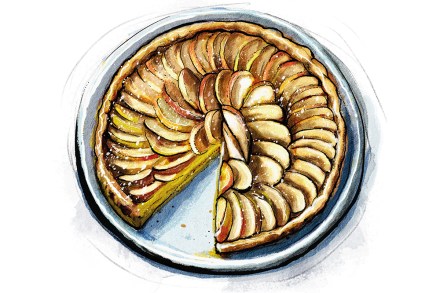
The timeless beauty of a French apple tart

There is, as the saying goes, more than one way to skin a cat. The same could be said – although rather more appealingly – about the number of ways to make a French apple tart. French apple tarts are ubiquitous in their home country but, despite the umbrella name, no two recipes are the same. Usually it is made without a recipe, seemingly without thought – just by muscle memory, passed down from family member to family member, an inheritance in pastry. It follows, therefore, that an apple tart is as individual as the cook who makes it.

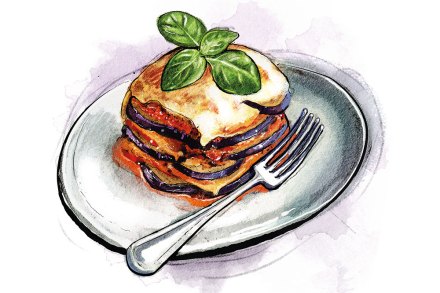
My two tips for perfect aubergine parmigiana

In the middle of an unpredictable Indian summer, here is a recipe from sultry southern Italy which is suitable for the changing seasons. While aubergine parmigiana (or parmigiana di melanzane) was born of hot Italian summers, it is also perfect for autumn, as the days shorten and darken. There is inherent comfort in the hot, almost-melting aubergine, covered in a rich sauce and blankets of cheese. Aubergines, tomato sauce, mozzarella and parmesan, all layered until they meld and transform The name is possibly a red herring, possibly not. Aubergine parmigiana is most associated with Naples, and is also beloved in Sicily and Calabria.

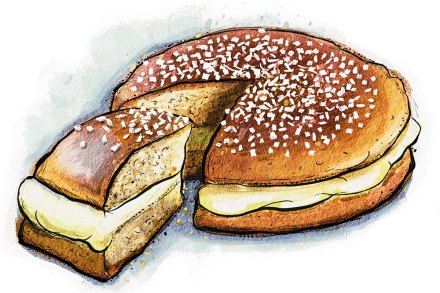
Tarte tropézienne, the glamorous dessert named by Brigitte Bardot

Is there a more glamorous piece of pâtisserie than the tarte tropézienne? Born in the inherently chic Saint-Tropez, named by Brigitte Bardot on the set of a film before becoming such a cult favourite that it  graces virtually every bakery on the French Riviera, the tarte tropézienne has star quality. But for some reason, it’s rarely found beyond its namesake town; I’ve never even seen it anywhere in the UK. There’s been a real resurgence in recent years of retro or comparatively unknown European pastries – the choux bun, the pain Suisse and the Kouign-amann have all become cool, widely available bakery favourites – but the tropézienne remains uncharacteristically low profile.

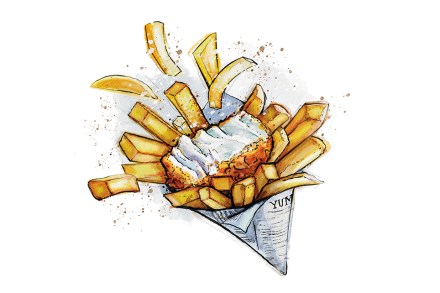
Fish and chips: the fast food that made me

The last meal my parents had before I graced the world with my presence was fish and chips, so I like to think it forms part of my origin story. Growing up on the coast, fish and chips featured in all its forms: bags of chips clutched on windy beach walks; takeaway fish suppers brought home by Dad, steam escaping from cardboard boxes; and the ultimate luxury, a sit-in experience at Colmans, the South Shields king of fish and chip restaurants, accompanied by a slice of bread and butter and a cup of tea. I was built on fish and chips; salt and vinegar course through my blood. Battered fried fish was brought over to London by Jewish immigrants coming from Spain and Portugal, via the Netherlands, as long ago as the 16th century.

Pavlova: the crumble of summer

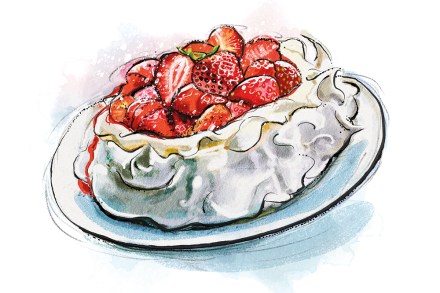
Whenever I tell someone that I’m making a pavlova the response is the same: sheer joy. Even the most fervent pudding-denier struggles to resist a slice of pav. It makes sense – fragile, crisp meringue with a tender, mallowy centre, soft waves of cream and some kind of fruit is such a brilliant combination. You can turn whatever you have to hand into a glorious, celebratory pav You don’t often see pavlovas on restaurant menus. There’s a good reason for that. A little like a trifle, part of the joy of a pavlova is that it arrives at the table looking unruffled: fruit perched perkily on clouds of cream atop a mountain of meringue. Then, as soon as the spoon hits it, it’s a mess.

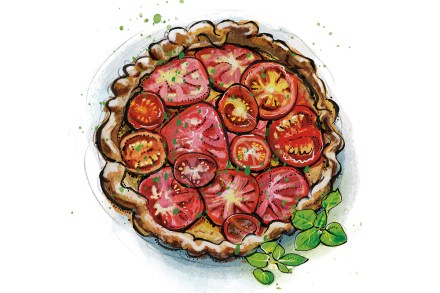
French tomato tart: a simple celebration of summer

Last year, we grew tomatoes for the first time. And we did so with our characteristic enthusiasm, lack of knowledge and ignoring of instructions. So inside our raised bed we planted out radishes and beetroot, chard and kale, tenderstem broccoli and Brussels sprouts – and one very busy row of tomatoes. We didn’t let this lack of real estate hold us back, oh no. We really went to town with the tomato seedlings. Crammed ’em in. ‘You should pinch those out,’ my father-in-law, a seasoned gardener, said more than once, with a hint of panic in his voice. We did not heed his advice.

How to make proper vanilla ice cream

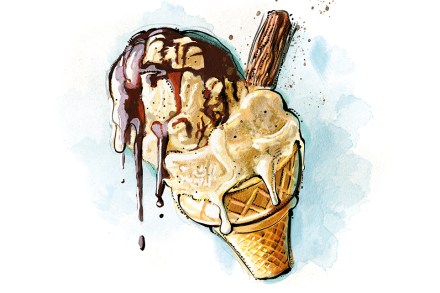
I could map out my life geographically and temporally in scoops of ice cream. From the oyster delights handed over in tracing-paper napkins from Minchella’s hatch in South Shields on the beachfront, to the little silver coupe bowls of ice cream we ordered every night on family holiday in France (always the same, one ball of pistachio, one of blackcurrant). The perfect brown-bread ice cream I had at Andrew Edmunds in Soho when I first moved to London. An elder-flower ice cream with a damson swirl that we ordered on honeymoon in the Cotswolds; a strikingly memorable blue-cheese ice cream which was the first thing I ate upon arriving in Bilbao. A red-bean ice bar we were handed as we stepped out of a sweltering day in Georgetown into a cool and calm hotel.