More from life

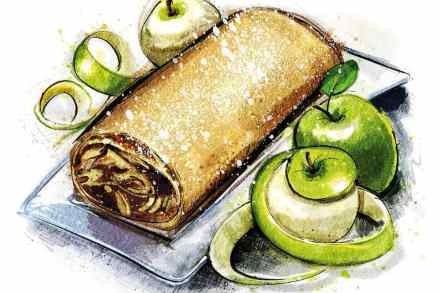
How to make a true apple strudel

It’s possible that, like me, your first encounter with the Grande Dame of the Austrian pastry world, the apfelstrudel, was not in fact in one of the famed Viennese grand cafés, but rather from the freezer aisle at the supermarket. If it was anything like mine, it was probably a latticed, puffed version; the one I remember from childhood had blackberries mixed into the apple, which peeked through the holes in the pastry. I have no interest in denigrating our Sunday lunch pudding staple. In fact I loved it, served with thick, cold custard, straight from the carton. But it is fair to say that a true apple strudel is a little different. Strudels – meaning a filled, enclosed layered pastry – can be sweet or savoury, but the apple version is by far the most famous.
Sole Véronique: there’s no need to fear fish and grapes

One of the joys of writing about old-fashioned food is coming across dishes that are new to me, and turn out to be such a delight that they gain a recurring role in my cooking. Of course, some I’ve encountered were already among my established regulars – boeuf bourguignon, coq au vin. Others were childhood staples – shepherd’s pie, proper rice pudding. But a few of the dishes I take into my kitchen to work with I’ve never even tried before. The first recipe I wrote for The Spectator was for blancmange. Having grown up during the brief period when milk jelly was fashionable, I’d avoided blancmange like the plague. I was sure it must be rubbery, flavourless and a bit, well, creepy.

How to poach peaches (and why you should)

I’ve never been very good at leaving things be. I tend to gild the lily. I may plan to do something simple, but I always find myself adding to it, primping, faffing. This is true in every area of life, but never more so than when I’m cooking. For that reason, this time of year can make me a little uncomfortable. When summer arrives in earnest – as opposed to those brief, misleadingly sunny weekends of late April and mid-May – we are inundated with beautiful fresh fruit. Right now, it’s strawberries, gooseberries, peaches and cherries; raspberries, blackcurrants and figs are just around the corner. And we are told over and over that it is impossible to improve on ripe, raw fruit, fresh from the tree.

Sundae best: how to make a knickerbocker glory

I grew up by the seaside. More precisely, I grew up near South Shields, on the north-east coast – somewhere which is British summer beach country for one, maybe two days a year, and salt-lashed and grey for the rest of it. But come rain or shine, ice cream is a permanent fixture. Ice cream was such an important part of life that the first school trip I ever went on, aged three, was to an ice-cream factory. I remember being handed an ice cream as big as my (admittedly then quite small) head, and vehemently declining the bright red sauce offered, known locally as ‘monkey blood’. A kindly nursery nurse reassured me it was just raspberry sauce, but I simply wasn’t taking the risk.

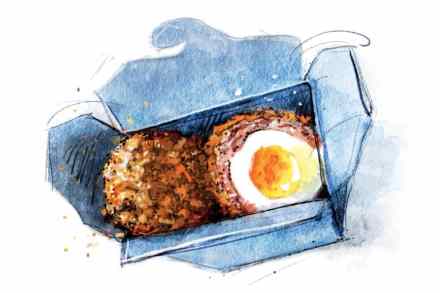
Why you should never buy scotch eggs

One of the perils of being a recipe writer is that people regularly ask me why I bother making things from scratch, because ‘You can buy that in the supermarket’. Now, let’s put aside the obvious question – do they think I’m not aware of supermarkets? – and engage with the issue. I love supermarket food. There are many products which are simply better shop-bought: baked beans, mango chutney, Jaffa Cakes. Countless chefs and home cooks have tried to improve on Heinz tomato ketchup; all have failed. There are also supermarket foods which, while not necessarily better-tasting, are simply radically more convenient. Oven chips, say, or filo pastry. But consider the Victoria sponge. A shepherd’s pie. The humble crumble.

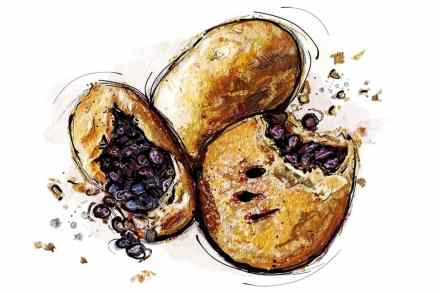
The ingredient that guarantees the flakiest Eccles cakes

When I first made Eccles cakes, I’m not sure I really knew where Eccles was. I certainly didn’t think I’d end up living there a few years later. The only Eccles cakes I’d encountered were at train station coffee kiosks, or at London’s St John restaurant, where they are a permanent fixture on the menu. Don’t tell my neighbours. In Eccles, the cakes are ubiquitous. They’re such a part of the regional identity that as far back as 1838, a guide to British railways journey stated simply: ‘This place is famous for its cakes.’ My kind of place. And today, whatever the season, Eccles cakes still line the entrances to the local supermarkets. Eccles is a small town in Greater Manchester, formerly part of the country of Lancashire.

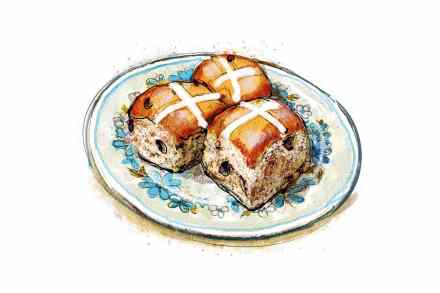
The secret to baking the fluffiest hot cross buns

What makes a hot cross bun a hot cross bun? Is it in the bun: the spice, the dried fruit and citrus peel, or even the type of dough? Is it the way you eat it – hot! – sliced in half, toasted and dripping with butter? Or is it the cross itself? Hot cross bun purists will tell you that it’s all of the above, and that any deviation from the classic is, well, deviant. And more-over, that the buns should be eaten only on Good Friday, never before or after. But if recent examples are anything to go by, the rules are very loose. Each year, as soon as Christmas is over, unorthodox hot cross buns line our supermarket shelves and cause opprobrium among the sticklers.

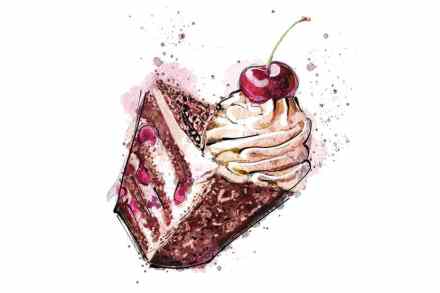
The magical kitschiness of Black Forest gateau

Kitsch is something of my stock-in-trade. And it doesn’t get more kitsch than Black Forest gateau. Pots of cream, pints of cherry schnapps, a storm of chocolate shavings and some very baroque decoration: it ticks all my old-school boxes. Of course, we are very familiar with the Black Forest gateau’s – BFG to its friends – punchy flavours. Chocolate, cherry, cream. What a trio! Now so classic that we barely give it a second thought. But where did this particular combination of ingredients first come from? I like the (unsubstantiated)theory that it harks back to a traditional costume worn by women in the Black Forest: dark chocolate for their black dresses, cream for their blouses, cherries for the red pompoms on their hats. But then I’m a sentimental soul.

Steak Diane: the perfect date-night dish

Cooking for romance is no laughing matter. The stakes are high. Get it right and woo the love of your life — lifelong happiness, marriage, kids. Get it wrong, and who knows what will happen? At best, you’re serving up a disaster sometime around midnight. You’re not getting lucky. You may be poisoning your intended. Romantic meals should be for all year round, not just for Valentine’s Day — but there are a few rules that it’s wise to follow. Date night is not the time to try shucking oysters for the first time (unless you’re willing to risk a trip to A&E). Chocolate fondants, as dozens of disappointed MasterChef contestants will attest, are hard to pull off in a panic. What you need is something fun, something fast, something flashy.

Lardy cake: a royal favourite

Lardy cake has a branding problem. We don’t mind puddings or cakes which explicitly announce their richness or decadence — death by chocolate, chocolate nemesis and devil’s food cake all remain popular. We actively embrace the hedonistic butteriness of croissants, along with brioche and puff pastry. Or consider the Betty’s Fat Rascal, which has achieved cult status despite (or because of) its unabashed fatty cheekiness. But attach the word ‘lard’ and it’s a different story — a horror story. Those who wouldn’t think twice about accepting a hot cross bun or a piece of shortbread recoil at the prospect of lardy cake. ‘Lardy’ sounds inelegant, lumpen and, well, fatty.

The sheer joy of a sherry trifle

Christmas brings out the best and the worst in me. It’s a chance to give in to my inclination to feed all my nearest and dearest at once, and also to show off a bit. I love the prep, from the shopping lists to the veg peeling, and I love the wind-down, from the leftovers to the decimated tins of chocolates. Am I controlling about Christmas? Yes, probably. But it all comes from a place of overexcitement. This year, however, Christmas looks a little different. On Christmas Day itself, I am likely to be 40 weeks pregnant with my first baby. This means that not only am I not masterminding Christmas dinner and all the rigmarole that comes with it, but neither will I be able to do a lot of the things that have always made Christmas for me.

Recipe: Lancashire hotpot

Nine months ago, after a decade spent in London, I moved to Lancashire. Although I’m a northerner born and bred, I’m from the northeast, between Newcastle and Sunderland, so this was new territory for me. Keen to assimilate, I was ready to get stuck into some of the dishes the area is famous for: Eccles cakes, Manchester tart and Lancashire hotpot. I was nervous. Regional dishes are integral to the character of a place, and often fiercely protected by those local to it. There are right ways and wrong ways to make them. As a newcomer, I didn’t want to get it wrong. Lancashire hotpot is a one-pot dish of lamb and potatoes, greater than the sum of its parts, and one of which its people are justifiably proud.

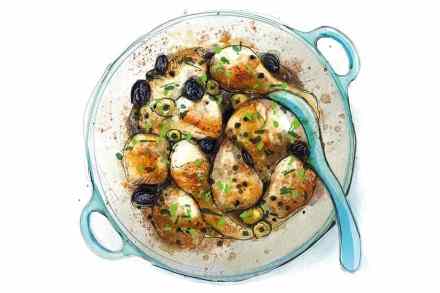
Recipe: Chicken Marbella

What is it about retro food? I don’t mean nostalgic food, from school dinner favourites to your grandmother’s signature dishes. I mean food you’ve probably never even tried. Thoroughly old-fashioned dishes that nevertheless light up your culinary imagination — or at least mine. I’m talking devilled eggs. Prawn cocktail. Beef stroganoff. Perhaps it’s because many of these recipes hail from the golden age of dinner parties. They speak of glamour, excess, a touch of kitsch, all washed down with a snowball. These are dishes that should be accompanied by shoulder pads and strong opinions about the royal wedding. Following a long period in which it was illegal to hold a dinner party, I crave retro food more than ever.

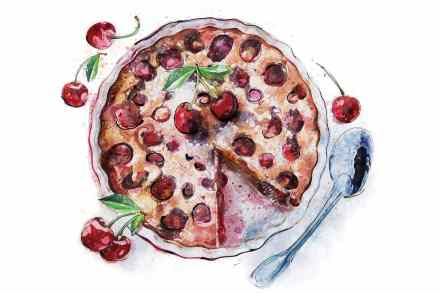
French connection: how to make cherry clafoutis

My daydreams at the moment follow a predictable theme. I am on holiday somewhere balmy, with a carafe of cold white wine in front of me. Someone handsome has just brought me a large bowl of salted crisps, unbidden but very welcome, and the greatest responsibility I have is finishing the book that I’m reading. The reality has been a little more prosaic. I am at my Manchester dining table, nursing a cold cup of tea, as the rain falls so heavily it’s like sitting in a drum. I’m sure I’m not alone: changing rules, quarantines, vaccination certificates, or simply the sheer weight of anxiety mean that the majority of us have spent this summer in the UK. I would give my eye teeth for a proper holiday. If I could choose, I’d be in France.

The battle for the future of Flat racing

The master plan in acquiring our flatcoat retriever puppy Damson was that as folk no longer with full-time jobs we would invest our time in producing a perfectly trained dog. On New Year’s Day the growing gap between intention and reality was acknowledged. Damson is affectionate, fun and beautiful — frequently admired by passing strangers. She is also a thief. We were hosting friends from the sadly deprived country of Italy where they are unable to purchase either chipolata sausages or pork pies, a liberal plateful of which we therefore provided for the lunchtime buffet.

Farewell to Australia’s greatest horse

Storm clouds may be rumbling over racing’s future financing in terms of gambling legislation but 2019 offered no shortage of happy memories. The emergence of the once-bumptious Oisin Murphy as a modest, articulate and thoughtful champion jockey. The pulsating battle between two previous winners in this year’s King George VI and Queen Elizabeth Stakes when Enable and Crystal Ocean provided the most thrilling racecourse duel since the gut-buster between Grundy and Bustino in 1975, with John Gosden’s mare taking it by a neck. Then there was the dominance of Pinatubo, surely the best juvenile since Frankel, in the Woodcote at Epsom, the Chesham at Ascot, Goodwood’s Vintage Stakes and the National Stakes at the Curragh.

Tsar quality: the charm of Tbilisi

‘These regions are not under the control of the central government,’ reads a warning on a map of Georgia in the bustling centre of Tbilisi. ‘Travelling to these regions is not advisable.’ One of these regions is Abkhazia, only a few hours’ drive away. The other is South Ossetia, barely an hour from here. Since 2008 both have been occupied by Russian troops, in defiance of the Georgian government, yet here in the Georgian capital tourism is booming, and many of these tourists are Russians. This neat irony encapsulates what makes Tbilisi such a fascinating city, a looking-glass metropolis in which nothing is quite what it seems.

Uzbekistan: where east meets west and past meets present

You realise what a rarity western tourists are when the locals ask to take selfies with you. I was standing under the mammoth ramparts of the Ark, Bukhara’s great palace fortress, when two women came up and asked if they could have their picture taken with me. One was dressed Uzbek-style in a colourful dress and matching trousers, with a scarf knotted around her head; the other in a western blouse and trousers. We lined up, beaming, in front of a haughty two-humped camel. Visiting Uzbekistan is a huge adventure. It’s the heart of Central Asia and the old Silk Road, a land of deserts and oases where you can still feel as if you’re stepping back in time. But it’s also unexpectedly safe, easy, inexpensive and welcoming.

The island where monkeys steal from your minibar

A short flight from Kuala Lumpur, the island of Langkawiis a wise choice for anyone seeking to shake off the woes of city life. The odd bit of tourist tackiness on roadside advertising signs aside, there’s no escaping the sheer, virtually unspoiled natural beauty of the place. Even my hotel, The Datai — which recently underwent a year-long $60 million refurbishment — feels like a traditional rainforest villa. When I step out on to the veranda, I revel in the ancient jungle just beyond the sun loungers. I’d heard before arriving that Langkawi was teeming with wildlife but that’s nothing to prepare for actually being there and experiencing nature in its full. Give or take, that is, some air-conditioning, room service and other modern conveniences.

Why Tuscany always beats Provence for me

A family of peacocks is sunning itself in our villa garden. They all look extraordinarily happy and composed, especially the baby one, for whom (like us, come to think of it) this is a whole new experience. But then, the 150 hens wandering in and out of their coops painted like beach huts don’t look exactly overburdened themselves; nor do the sheep, pigs and cows in their 220 acres of lush Tuscan terrain near the Merse river about 45 minutes southwest of Siena.