More from life

The glorious richness of rillettes

I admit to feeling a little intimidated by charcuterie. I have a clutch of books on my shelf all laying out in step-by-step detail how to craft your own salami or whip up a perfect pancetta. They’re well-thumbed, but not a single one has a cooking stain on it. I’m just too nervous when it comes to the scary stuff. I’m talking about the drying-sausages-hanging-from-the-rafters kind of charcuterie. I’m talking about jerry-rigging anti-pest guards to protect your hams. I can’t quite get past the fact that charcuterie requires hanging meat somewhere in my house, which feels at best frightening and at worst like I’m actively inviting botulism into my home. I’ll say it: I’m a charcuterie coward.

The magic of Danish dream cake

I am, for the most part, a rule follower and a people pleaser. It’s one of the reasons I love baking, which essentially amounts to a set of instructions designed to make something to be shared and bring joy. But if someone recommends something to me, I can be resistant to it for ages. The farcical element is that once I capitulate and try out the novel, TV show, restaurant or biscuit recipe, I inevitably discover that my tastes are extremely mainstream, and I love whatever it is. It took me years to listen to Taylor Swift before immediately accepting her greatness and becoming her no. 1 fan. There’s no good reason for this.

Salad cream is more than a poor man’s mayonnaise

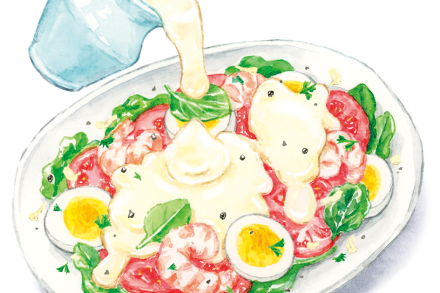
Salad cream makes me feel oddly patriotic. It’s one of those products that is so distinctively British that it has not travelled. Elsewhere, it is eschewed as a poor man’s mayonnaise. Its chief ingredients are hardboiled egg yolks, English mustard, vinegar and thick cream, and it was, in fact, the first product that Heinz produced exclusively for Great Britain, in Harlesden, north-west London, from 1914 onwards. The Heinz version is, frankly, a wartime mayonnaise, constrained by shelf life and made with the cheaper ingredients available at the time, a little looser and distinctively sweeter than its mayonnaise equivalent. It really came into its own in the second world war during rationing.

The key to a great American key lime pie

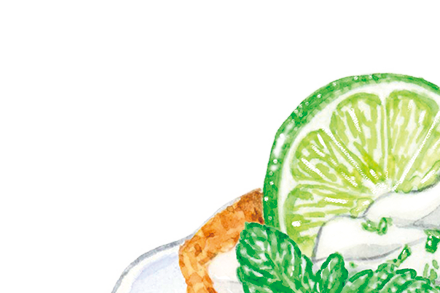
A few years ago, a friend wrote a cookery book for the UK market, full of gorgeous dishes, many of them esoterically British. It was snapped up by an American publisher who, as well as converting my friend’s careful metric measurements into loosey-goosey volume-based cup measures, queried a couple of her more British ingredients, one being golden syrup. My friend had a recipe for treacle tart which – as anyone who has made it knows – is just a whole tin of golden syrup held together with a handful of breadcrumbs and an egg. But golden syrup is hard to get hold of in the US. Her American publishers wanted to replace it with corn syrup. Now, corn syrup may look similar to golden syrup – they are both inverse sugars of a blond hue – but the taste is completely different.

I love sausages!

‘Sausages,’ my son says to me, leaning forward from the back of the car, with the authority and confidence only a three-year-old can truly muster. ‘Sausages?’ I reply distractedly, while navigating a particularly awkward roundabout. We’ve been talking about my job, but I assume his train of thought has taken a lunchier direction. ‘Yes, sausages. You write about sausages. And… things like sausages.’ He sits back, satisfied in his career analysis, probably contemplating whether lunch can indeed also feature sausages.

It’s time to reclaim tapioca pudding

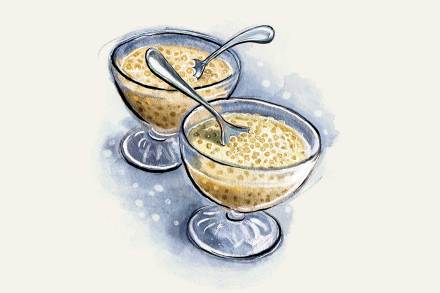
‘Nothing will surely ever taste so hateful as nursery tapioca,’ wrote Elizabeth David. She’s not alone in her hatred of the stuff: tapioca pudding has become a shorthand for those childhood dishes we look back on with horror. It’s exactly those dishes that I’m trying to restore to their former glory – if such a glory ever existed. In fact, the first recipe I wrote in these pages was about blancmange, an attempt to persuade readers that that school dinner staple was worth a revisit. From there, rice pudding was a similar challenge and made way for jam roly-poly, spotted dick and cornflake tart. Though I’ve had tapioca pudding on my dish list for some time, I haven’t been brave enough to give it a go.

Devilled kidneys: a heavenly breakfast 

Iam standing in my kitchen preparing kidneys for devilling. Snipping their white cores away piece by piece until they come free and I’m left with just the wibbly, burgundy kidney, ready for their spiced flour, I pause. There is no denying that even fresh raw kidneys can smell a little… challenging. And for one moment I consider skipping the whole thing and just having an unchallenging slice of toast instead. I’m so glad I didn’t. Because once cooked, kidneys are not challenging at all: they’re luscious and tender, with an earthy, gamey flavour which is almost compulsive. That robustness is actually their strength: kidneys can take bold flavours – feisty seasonings and rich sauces – which is why they are so suited to devilling.

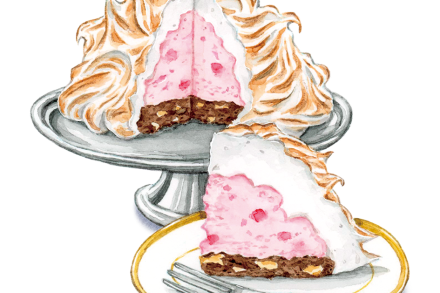
The gobsmacking brilliance of baked Alaska

I have never seen a baked Alaska in the wild. Have you? I knew what they looked like, of course, all meringue cheekbones and technicolor interior, but I haven’t actually come across one. For whatever reason, they seem to be an endangered species – so I took to making them myself. The pudding was invented in the 18th century by Sir Benjamin Thompson (also known as Count von Rumford), a physicist who invented the double boiler, the modern kitchen range and thermal underwear too. Thompson realised that the tiny bubbles created when you aerate egg whites to make meringue provided so much insulation that you could torch the meringue and leave ice cream intact, unmelted, beneath.

The simple elegance of fondant potatoes

In 1999, a relatively unknown American chef wrote an essay in the New Yorker uncovering the secrets of restaurants. ‘Don’t Eat Before Reading This’ lifted the lid on both the underworld of professional kitchens and the mentality of chefs. In it, the writer meticulously took down ordering fish on a Monday (old), eating steak well done (for ‘philistines’), brunch as a concept (despised) and vegetarians in general (‘Enemies of everything that’s good and decent in the human spirit’). The no-punches-pulled writing, which was both lyrical and graphic as well as funny and forthright, was the first published essay by Anthony Bourdain, who would go on to become one of the most influential and beloved personalities in the food world.

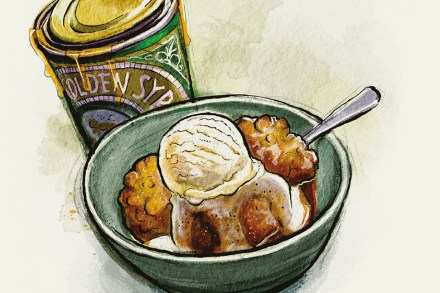
Golden syrup dumplings: the perfect comfort food

The Italians have a phrase: ‘brutti ma buoni’. It means ‘ugly but beautiful’, and it’s the name they give to their nubbly hazelnut meringue biscuits, which – as the name suggests – taste lovely but aren’t lookers. The phrase came to me the other day when I lifted the lid on my pan of golden syrup dumplings. Because they’re ugly little buggers. They look a little like soggy apple fritters, or even chicken nuggets – am I selling them to you yet? But focus on the buoni, not the brutti: they are absolutely delicious. Golden syrup dumplings sound as British as queueing.

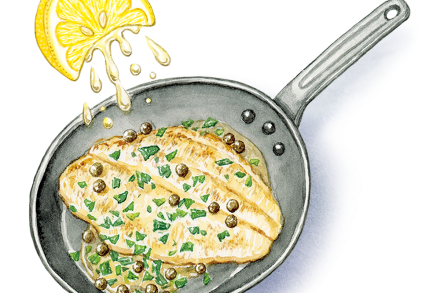
Sole meunière: simple one-pan sophistication 

Picture the scene. The year is 2004. The setting, a British field or maybe a beach. There is a small open fire burning with a single cast-iron pan perched on it. A male TV chef – dressed in a striped shirt, open at the neck, chinos, possibly red, leather shoes – is standing over it, reverently holding a fish. ‘This is a beautiful piece of fish,’ he says, ‘and we’re not going to do anything fancy here. It doesn’t need it! We’re going to keep it simple.’ There must have been a clause in the contract of any TV cookery show in the early 2000s to say that a beautiful piece of fish should be cooked simply.

In defence of red velvet cake

I will admit to having been dismissive of red velvet cake in the past, considering it to be bland in flavour and garish in colour. It tended to come in cupcake form with towering hats of super-sweet buttercream, which made it unpleasant and difficult to eat. The cult love for red velvet, inspiring scented candles and lip balms all smelling of synthetic vanilla, always struck me as a bit naff – the preserve of teenage girls queueing outside Instagram-bait bakeries. Why would you plump for a red velvet cupcake when you could have coffee and walnut or a lemon syrup-soaked sponge or a nobbly carrot cake? Red velvet was a cake for people who didn’t really like cake.

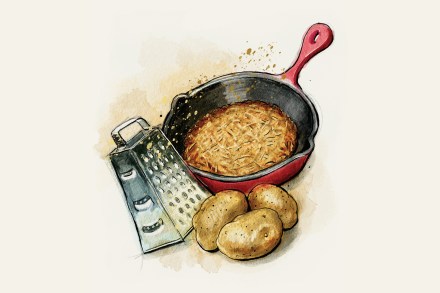
The secrets of the perfect potato rösti

You may be forgiven, if you are a regular reader of this column, for thinking that my primary motivation in cooking is showing off. I’m always banging on about lovely dishes you can serve to unsuspecting guests that will guarantee plaudits and amazement. But while there is more than a kernel of truth in this, I think that it’s actually simpler than that: what I crave from cooking is satisfaction. And I don’t mean satiation of hunger (although that too: I am greedy), but the sense of achievement that cooking – almost – invariably brings. True, this achievement can often be found in presenting a beautiful cake to an assembled group of people, or your new friend saying ‘You know, I think these are the best brownies I’ve ever tried’.

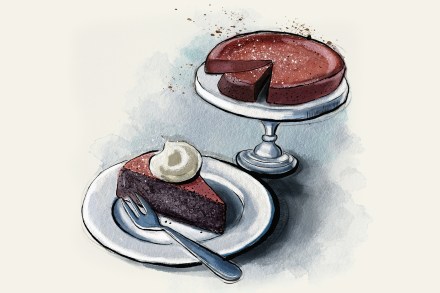
The time-poor woman’s perfect chocolate cake

Isn’t it awful that the older you get, the more you know yourself? It’s supposed to be a good thing, attributed to wisdom, experience and a deeper understanding of our place in the world around us. But good lord, self-awareness can be a cruel mistress. I have realised that my greatest culinary goal is simply unachievable. You see, I long to appear effortless. This is true throughout my life, but particularly so when it comes to cooking. Every time I invite friends round for lunch or dinner, I resolve that this is the time when everything will not only be easy but, crucially, I will make it look easy. That I will simply throw something together that everyone will adore; the gathered diners will be equally impressed by the food and by the nonchalance with which I’ve assembled it.

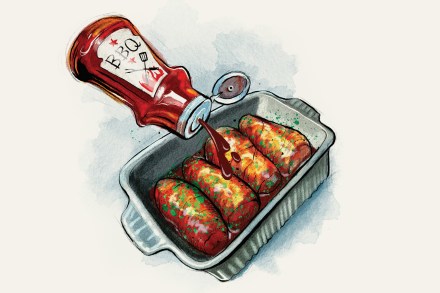
Hunter’s chicken: the ultimate cheer-me-up-quickly recipe

Pub food in Britain has had a mixed reputation over the years. For a long time, the most a pub would have to offer as food would be some pork scratchings or a pickled egg. There certainly wasn’t a brigade of chefs in white coats in a shiny chrome kitchen. This is midweek-teatime cooking, it’s sling-it-in-an-oven cooking, it’s cheer-me-up-quickly cooking Pub grub started to appear in the 1970s, but it was simple, filling and predictable. It was the sort of unpretentious, low-priced food that was suitable for a worker’s lunch break. So up and down the country pub menus all hit the same beats: steak and kidney pie, ham with egg and chips, chilli con carne, fish and chips, even lasagne – and hunter’s chicken.

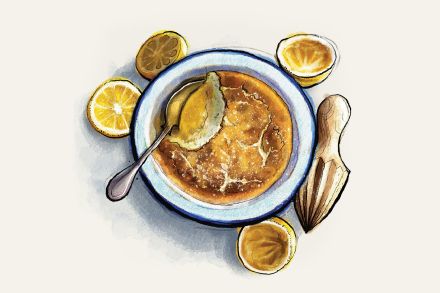
January deserves lemon pudding

January kitchens are my favourite. This isn’t anything against Christmas – I love the spice, the frenzy, the ritual of festive cooking, but I also love the aftermath. There’s something calming about the kitchen once it’s all over – nothing is made through obligation, or with a deadline. I embrace the cosiness of autumn and the sparkle of Christmas, but I find the bright, cool light of January reviving and renewing. At this time of year my kitchen is a place to take stock and make stock. To steady and sustain. Proper puddings, hot and sweet and served with cream, are a non-negotiable part of late winter It’s also full of puddings, among other things. Proper puddings, hot and sweet and served with cream, are a non-negotiable part of late winter for me.

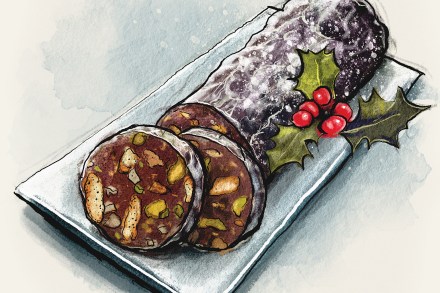
How to make chocolate salami

For as long as we’ve been serving food, we’ve been unable to resist a bit of culinary deception. Making one thing look like another thing – especially if it makes a sweet thing look savoury or vice versa – seems to have universal comedic value. There’s something Willy Wonka-ish about the visual wrong-footing, the surprise – we find it delightful. I’m not even going to stop you slinging some mini marshmallows in there – it is Christmas, after all There’s a long history here. At medieval and Tudor banquets, the food was entertainment as much as it was sustenance: huge pastries made to look like life-size stags and swans stood alongside carefully carved marzipan fruits, both imitating the real thing as closely as possible.

The glamour of the scallop

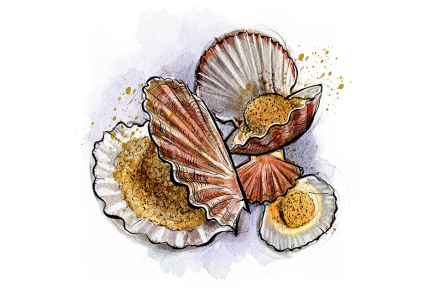
There is a gentle irony to the dish coquilles St Jacques: a decadent, rich preparation of one of our most luxurious seafoods takes its name from a saint who has inspired centuries of pilgrimage, and whose emblem came to symbolise modesty. The eponymous St Jacques is St James the apostle, or James the Great. The scallop shell has long been associated with him, one legend being that St James once rescued a knight covered in scallops; another that when the remains of the saint were retrieved from a shipwreck, the ship – or perhaps even the body itself – was covered in the shells.

Mince, glorious mince

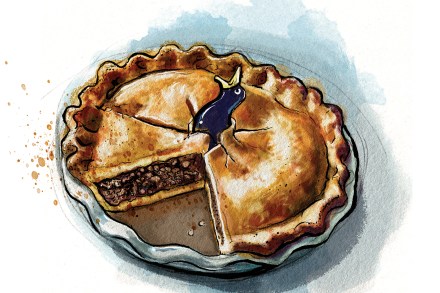
Sometimes, when it comes to culinary history, Britain is its own worst enemy. For a long time, British food has been seen as a joke among other nations, but also nearer to home. Even when the dishes are near indistinguishable, we’re still happy to poke fun at our own fare: we love panna cotta but laugh at blancmange; we cringe at stew but revere boeuf Bourguignon. They’re the same, but that doesn’t stop us. Where better to showcase the unsung hero braised beef mince than in a beautiful short-crust pie? Mince gets the worst of our inward-turned opprobrium, a leitmotif in our national food anthem. A pot of stewed mince speaks to all that is wrong with British food: staid, bland, brown, probably overcooked and definitely stuck in the 1950s.

Brown bread ice cream: a delicious use for stale bread

I often think of the first time I ate brown bread ice cream. I know how that sounds: it’s the exact sort of pretentious nonsense a food writer would say if they were about to press a recipe for brown bread ice cream on you. But it was long before I became a food bore, and it’s true. I really do think about that first time a lot. Using leftover bread or stale breadcrumbs is the basis for some of our finest puddings I had just moved to London to study law after university, and was about to train as a barrister. I was living in a small flat and surviving on pesto pasta, bowls of cereal and crisps. At that point, going out for dinner probably meant a McDonald’s at the end of a night out. I knew next to nothing about food.