More from Books

Strength in numbers

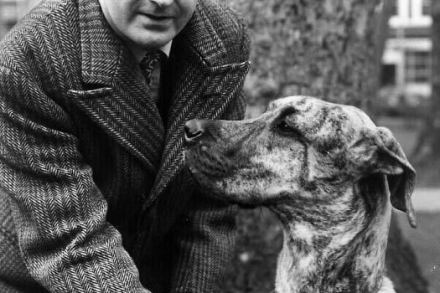
My Three Fathers, by Bill Patten The mother to match Bill Patten’s three fathers was Susan Mary Jay. The Jays were cosmopolitan and very grand: they sent their sons to Eton and hobnobbed with the likes of the Mouchys and Boni de Castellane. They would have considered their fellow-Americans of The Ambassadors or Portrait of a Lady dowdily provincial. When Susan Mary took up with Bill Patten senior it was felt that she was marrying, not beneath her socially, since Patten was connected with all the right people, but beneath what should have been her aspirations. Patten, affable, intelligent, a victim of asthma and almost entirely without ambition, could not provide either the glamour or the stature which a Jay might legitimately expect.

Tough love

A Prickly Affair, by Hugh Warwick At a time when most of his fellow-mystics deplored this sinful world and longed to leave it, 17th-century Thomas Traherne ecstatically celebrated the world and confirmed his religious faith by observing its wonders. ‘The Ant is a great Miracle in a little room . . . its Limbs and Members are as Miraculous as those of a Lion or Tygre.’ Of late there has been an astonishing number of books that advocate this enthusiasm, this particularity — a book about the behaviour of rooks, a book about a single, nearly tame rook, even ‘conversations’ with particular trees. Now it is hedgehogs.

Nine-year wonder

The Chicagoan: A Lost Magazine of the Jazz Age, edited by Neil Harris Think quiz. ‘A crescent-shaped town, 26 miles by 15, along a great lake. An unchallenged murder record — a splendid university — hobo capital to the country — and the finest of grand opera. Altogether the most zestful spectacle on this earth.’ Where are we? In case of doubt, the city’s short-lived house magazine spelled out the answer in 48 point type, ‘Chi - CA - go.’ Actually the emphasis should have been on the Chic, because as demonstrated by this elegant collection of covers, illustrations and stories from The Chicagoan, in its heyday Chicago was the most stylish, exciting and quintessentially American of all the cities that encircle the United States landmass.

Money? It’s only human

The Ascent of Money, by Niall Fergusson New from Niall Ferguson: the book of the film, or rather, of the series. At any moment now his financial history of the world will take to the small screen and emerge on Channel Four. Programmers and publishers have learned to synchronise these things. It will be a brave effort, all the same, because finance is not exactly popular just now and has always been unresponsive to film. When Bank Rate comes down, television news producers fall back on a stock picture of the Bank of England, looking like a cheese-mould with a graph imposed on it. Ferguson helps them out by setting scenes.

Books Of The Year

Sam Leith Richard Price’s meaty and fabulously enjoyable police procedural, Lush Life (Bloomsbury, £12.99), is a book I have pressed on a lot of friends. The new Robert B. Parker, Rough Weather (Quercus, £16.99), is bliss, too, because it has Spenser, Hawk and the Gray Man in it. Short stories from Kurt Vonnegut (Armageddon in Retrospect, Cape, £16.99), and Annie Proulx (Fine Just The Way It Is, 4th Estate, £14.99) were moving, funny and wise. In politics, Robert Kagan’s The Return of History and the End of Dreams (Atlantic, £12.

The Great Duke and others

Wellington, by Jane Wellesley There can never be too many biographies of the Duke of Wellington because, like Churchill’s and Nelson’s, his career path is so extraordinary, uplifting, chequered and involving that it reads more like (slightly overwrought) fiction than fact. The first thing you’d give your mildly implausible hero if you were a novelist or Hollywood screenwriter would be a miserable childhood, a sensitive nature and a sense of burning grievance. That way, the audience would like him, identify with him, and feel all the more happy when he triumphed over adversity. So it was with young Arthur Wellesley.

A prickly character

Hester, by Ian McIntyre ‘I must eat up my own heart & be quiet,’ confided Hester Thrale in her private notebook in the autumn of 1777. She was pregnant again, for the 11th time in 13 years. By then seven of her children had died, including her only and much loved son, and she was convinced that this child, too, would be taken from her. She had much to bewail. But Hester Lynch Salusbury Thrale Piozzi was indefatigable of spirit and merciless in her opinions. ‘Quiet’ was something she could never be — fortunately for us.

Enemies within

Fifty People Who Buggered Up Britain, by Quentin Letts As readers of the Daily Mail know, Quentin Letts leaves no turn unstoned. His withering parliamentary sketches have left the blood of wounded politicians over the walls of Westminster. Wearing his theatre critic’s hat, he swims against the prevailing tides to tease dramatists and directors, and for good measure he is the ventriloquist who pulls the strings of the choleric Clement Crabbe. Nobody is better equipped to nominate the 50 people who have damaged this country most grievously in the past five decades, and he discharges his duty with flair and tracer precision.

Turning back the pages

Magic Moments: The Books the Boy Loved and Much Else Besides, by John Sutherland Curiosities of Literature: A Book-lover’s Anthology of Literary Erudition, by John Sutherland John Sutherland’s life has been devoted to the enjoyment of books and the passing on of that enjoyment to others, whether through his columns in the Guardian and Financial Times or through his teaching to the literature students at UCL, or the rather less bookish science buffs at the California Institute of Technology. It is hard to imagine anyone better suited to bringing the pleasures of reading to those for whom it has never been an important part of life.

A rich harvest

Coda, by Simon Gray Were Simon Gray alive today, I could not have reviewed this book. Friends should not review each other’s work or reviewing becomes a form of puffery. But death changes everything. Coda, so named because it rounds off the trilogy of ‘Smoking Diaries’ (The Smoking Diaries, The Year of the Jouncer and The Last Cigarette), is a meditation on death, or rather dying, an account of living on borrowed time — how Simon would have pounced on that phrase, ‘borrowed time’, and subjected it to scrutiny: why borrowed? who from? can it be paid back? ‘and so forth’, as he might add.

Remembrance of girls past

Past Imperfect, by Julian Fellowes ‘But why should people want to read about us?’ exclaimed my cousin, a debutante of the season of 1968, which forms the backdrop of this new novel by Julian Fellowes, author of Snobs, winner of an Oscar for Best Original Screenplay (Gosford Park) and screenwriter of the new film, The Young Victoria. Fellowes, a ‘debs’ delight’ of that year, has set himself up as the chronicler of the more old-fashioned members of the upper classes and their hangers-on. Snobs, which featured a middle-class girl with a socially aspiring mother, was about choices; Past Imperfect is more ambitious, with many more characters and a time-span of several decades. Its plot cannot fail to grip the reader.

From pillar to post

The English House: The Story of a Nation at Home, by Clive Aslet Earlier this year a brave publisher republished in two volumes and nearly 800 pages the classic book on English domestic architecture, The English House, by Hermann Muthesius. It had first appeared in German as Das Englische Haus in 1904. Clive Aslet’s new book takes the same useful title for his much briefer account of some 21 dwellings that encapsulate for him the enduring qualities of the English home. Both Aslet in the 21st century and Muthesius in the 20th share the same strong sentiments about houses and the English. They both are convinced that domestic comfort and style has been perfected in England and that the intensity of our love of home and the homely virtues is unique in the world.

Ten minutes that shook Europe

Wrath of God: the Great Lisbon Earthquake of 1755, by Edward Paice Portugal in the 18th century was at once a mystery and deeply familiar to the British. Deeply familiar, as one of Britain’s most enriching trading partners, providing Brazilian gold in exchange for British textiles and other manufactured goods. A mystery, because Portugal appeared to be hundreds of years behind the rest of Europe.

A backdrop of beasts and losers

There’s this cow nuzzling a bunch of roses though floating belly up over a matchwood village where smoke springs from every blessed chimney and a po-faced couple issues forth, poised either to sink back among the onion domes or zoom to the far corner where the Eiffel Tower teeters on two legs in moonlit snow. This isn’t an actual Chagall but it could well be. A late concoction of heart-warming bits melded together and overlaid with memories of a chortling Topol, or the scene in Notting Hill when the Julia Roberts character goes and gives the Hugh Grant character a Chagall original, a love token that he all too understandably mistakes for a framed reproduction. The trouble with generic Chagalls is that their sticky profusion supplanted Chagall’s one-time originality.

Tales of the unexpected | 5 November 2008

The Atmospheric Railway: New and Selected Stories, by Shena Mackay In Waterstones bookshops there are little signs dotted among the fiction shelves, to prompt readers towards new purchases. The signs suggest that if you liked, say, Evelyn Waugh you’d also enjoy Nancy Mitford; or if Ruth Rendell is a favourite you might like to try Barbara Vine. Where the books of Shena Mackay are concerned, however, there could be no such proposition, because her work is quite unlike anyone else’s. Mackay has a slavish and devoted following: Julie Burchill has called her the world’s greatest living writer. So a new book from Shena Mackay is cause for celebration.

A choice of first novels | 5 November 2008

A Fraction of the Whole, by Steve Toltz Pollard, by Laura Beatty Chatto & Windus Inside the Whale, by Jennie Rooney Chatto & Windus Slaughterhouse Heart, by Afsaneh Knight Doubleday AFraction of the Whole, by Steve Toltz, was one of two debut novels on the Booker shortlist — and is, one could argue, a more distinguished offering than the other debutant, which won. A rambling and hilarious tale about perpetual failure, it takes the form of an immense anecdote from a father, Martin Dean, to his son, Jasper. Martin has lived his life in the shadow of his brother, Terry, Australia’s most notorious (and oddly popular) criminal. Terry began life as a sports star, but soon diverted his energies into less innocent pursuits, eventually becoming a modern-day Ned Kelly.

The divided states of America

A Mercy, by Toni Morrison You may or may not agree with the New York Times, which a couple of years ago voted Toni Morrison’s Beloved the greatest work of American fiction of the past quarter century. (What about Updike’s Rabbit novels, you might ask? Or Philip Roth’s American Pastoral? Or Marilynne Robinson’s Housekeeping? Or, or, or ...). And you may or not agree with the Swedish Academy’s citation, when Morrison was awarded the Nobel Prize for Literature in 1993, praising her ‘visionary force’. You may have struggled with the increasingly poetic and mystic drift of her recent novels, Jazz (1992) and Love (2003). But there is no denying that Toni Morrison is a writer to be reckoned with. Her new novel presents familiar challenges.

Surprising literary ventures | 5 November 2008

Ken Follett is a cult in countries such as Japan, Italy and Spain — in Spain, in fact, there is a statue to him, inaugurated in January this year, in the town of Vitoria-Gasteiz in the Basque country. In Britain he is also loved, but perhaps not with the fanatical devotion he deserves. Most people don’t even know that he wrote under the pen-name, early in his career, of Bernard L Ross. In fact, most people haven’t heard of Amok, King of Legend, a book widely known in Holland, France, Tibet, the Republic of Ireland, Ghana and Germany, where it appeared with the title Amok: Der Killer Gorilla. The plot is as follows. A film crew go to a hidden African valley where they find a giant ape.

Life & letters

Chesterton refuses to go away. You may think he should have done so. Orwell tried to show him the door: Chesterton was a writer of considerable talent who chose to suppress both his sensibilities and his intellectual honesty in the cause of Roman Catholic propaganda. In the last 20 years of his life … every book that he wrote, every paragraph, every sentence, every incident in every story, every scrap of dialogue, had to demonstrate beyond possibility of mistake the superiority of the Catholic over the Protestant or the pagan.