More from Books

Up

One of the reprinted reviews which make up the bulk of this book opens: ‘I vividly remember when I first read George Orwell. It was at Eton.’ How would it sound, I mused, if I began a review: ‘I vividly remember when I first read George Orwell. It was at Colchester Grammar School.’ It would lack, I feel, that enviable tone of Etonian ‘assurance’. True, a less self-assured person than James Wood might have slipped his educational credentials in parenthetically — in the style of David Cameron’s casual remark that he is ‘reasonably well off’. And Eton, one notes in passing, has produced many more prime ministers than great literary critics. Connolly, Orwell (at a stretch), and who else? Well, of course, James Wood.

Playing Possum

The contending versions of T.S. Eliot on display in the latest bumper instalment of his collected letters are practically legion. To begin with there is the hieratic, if not downright priestly, Eliot, soberly petitioning  Father D’Arcy, the correspondence columns  of the Church Times, or studious clergymen who may be flattered into taking charge of his pet project for a library of 17th-century theological classics. Next there is the sedulous Elizabethan scholar gravely conferring with Professor Grierson over textual complications in Marlowe, and circulating the results around the Cambridge combination rooms. Then comes a third Eliot, the deferential protégé of elderly men-of-letters such as Charles Whibley or J.M.

Going under

As someone slightly older than Al Alvarez, and also a regular swimmer — although not in the ice-edged Hampstead Heath pools into which he dived for over 60 years — I was initially disappointed by this book. For the first half it repeats too often the pleasures of extremity-numbing, cold, outdoor swimming when one is old. Alvarez’s outer and inner selves, in the first five or six years of this ten-year journal, rejoice with the ecstasy of swimming almost daily in water preferably just a few degrees above freezing, feeling the zing when he climbs out pink as a lobster and banters with the lifeguards. But then, slowly and horrifyingly, he charts the not-so-gradual collapse of his once super-fit body.

China’s second coming

It’s a new version of the Yellow Peril. The Chinese are taking over the world, starting with the nasty bits, like Burma, Sudan and Iran, which we are boycotting for all kinds of high-minded reasons. Two Spanish journalists, Juan Pablo Cardenal and Heriberto Araújo, have returned from an exhausting trip round the globe to tell us how it’s being done. After carrying out 500 interviews, the authors seem outraged by the corruption and environmental devastation they witness, but also awed by the sheer guts and industry that individual Chinese show in doing business where so many others fail. The authors believe that something is going on in the global economy that is altogether different, bigger and possibly uglier than anything seen before.

Electricity

It was a bolt from the blue, she said. You mean it was love at first sight? I asked. But no, she meant that they ran past the same tree in a storm and were flung to the ground side by side — an introduction of almost Biblical significance. Of course he helped her up and took her to the clubhouse and that was how it started, But now, she complained, the electricity’s off and we’re left lying down in the dark.

A woman of substance | 31 January 2013

Hermione Ranfurly wrote two books. One was called The Ugly One. The other, the first, was called To War with Whitaker. Its success came as a surprise to her, but to none of her legion of friends. It chronicled her war. Recently married to Dan, a Northern Irish peer whose father had lost almost everything, mostly on the green baize, she determined to pursue him, his horses and his yeomanry regiment to the Middle East, no matter that the army, the War Office and official Whitehall expressly forbade such camp following. She eventually reached Cairo and secured a job in SOE. She had already demonstrated her determination by getting there. Once in Egypt, she used her genius for diagnosing character and her infectious enthusiasm to get to know anyone who was anyone.

The twin certainties of baptism and burial

Can there possibly be anything new to say about the old subject of Shakespeare’s sources? As early as the 18th century, scholars realised that he made up very few of his own plots. Whether he was bringing to life Plutarch’s biographies of the noble Romans or rescripting a hoary old drama from the existing repertoire or turning a saucy Elizabethan novel into a stage comedy, Shakespeare was always a literary magpie or, as Autolycus in The Winter’s Tale describes himself, ‘a snapper-up of unconsidered trifles’. The shelves of the Shakespearean library groan with volumes on his uses of classical poets such as Ovid, of the Bible, of Montaigne’s essays.

Lost Soho afternoons

‘And what do you do?’ asked Francis Bacon. ‘Er, I’m a cartoonist.’ ‘You are a chronicler of our age, yours is the art that counts, yours is art made history, I salute you!’ Bacon then stumbled off, shouting, ‘Who was that cunt?’ That was the Colony Room. Dangerous! Fasten your seat belts. It’s going to be a bumpy night, reading Sophie Parkin’s history. I’d been taken to the club in the late 1950s by Jeffrey Bernard. I’d teamed up with him, eager to join his long downhill struggle, and he liked having around him people who were happy to self-destruct. I’d introduced him to Richard Ingrams, who had nervously taken him on as racing correspondent of Private Eye, dubbing him ‘Colonel Mad’.

The waiting-room of life

The decadence of at least two societies or cultures can be seen in Dave Eggers’ new novel, where some bored Americans wait for weeks in a giant cooled tent in Saudia Arabia for the chance to display the latest innovation in conference IT to King Abdullah at the unbuilt ‘economic city’ that bears his name. Considering current sophisticated video-conferencing and other technology, how vital is it that King Abdullah Economic City (or KAEC, pronounced ‘cake’) be equipped with a hologram device that enables colleagues walking and talking in London to appear to be striding the stage near Jeddah?  But perhaps something similar was said about mobile phones 20 years ago.

Telling tales out of school

The difficult thing about writing a memoir is this: how do you avoid numbing the reader with endless thumbnail sketches of the hundreds of characters who have crossed your path? It’s easier in a novel, where you might have seven to ten main characters and can take time to delve deeply into each one.  In a memoir which spans a long life from pre-war Eton to modern-day Yorkshire, you need to be a very good writer indeed to bring alive, for instance, Mrs Tedder, who did the washing-up at Sunningdale School in 1953. Are you interested? Well, I’m happy to tell you that you are. Wild Writing Granny is a book full of delight. It is shot through with love, anguish, light, darkness and fun.

When the Yankees came

From the London opening of Oklahoma in 1947 until the age of Andrew Lloyd Webber in the 1970s, stage musicals were regarded as an almost exclusively American art-form. Sometime after their opening on Broadway, the best of them transferred to London’s West End. Over half the musicals you have ever heard of and continue to see revived and performed in local operatic societies originated during this period — Annie Get Your Gun, Carousel, Guys and Dolls, Kiss Me Kate, South Pacific, The Pajama Game, My Fair Lady, West Side Story, The Music Man, The King and I, The Sound of Music and Cabaret to name some of the more famous.

A model of micro-history

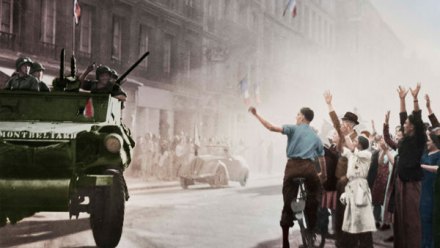
Adolf Hitler considered jazz a ‘racially inferior’ form of American black music, and banned it from the airwaves. Germany’s gilded youth flouted the prohibition by playing Duke Ellington in secret and greeting each other loudly in English: ‘Hallo, Old Swing Boy!’ Resistance was useless. The Brownshirts raided parties and even beaches in search of portable wind-up gramophones and gleefully kicked the shellac records to pieces. By 1942, Hitler’s police were arresting up to 50 people a day in Berlin alone. On learning of Hitler’s death in Berlin in January 1945, however, the Reich Chancellery staff put on jazz records and brought on the dancing girls.

Growing old disgracefully | 17 January 2013

Virginia Ironside’s novel, No! I Don’t Need Reading Glasses (Quercus £14.99) about a 65-year-old granny who belongs to a local residents’ association and does a fair bit of knitting may not sound like the most alluring reading. Then there’s the title — facetious and forgettable at the same time. It would be less embarrassing to ask for something saucy at the chemist than to enquire after this at your local bookshop. Don’t be put off, though, because Ironside knows what she’s doing. Her heroine Marie Sharp may be an OAP, but as her name suggests, there’s nothing muted about her.

The greatest puzzle of all | 17 January 2013

A few months before he passed away, responding to a question about his doubts and beliefs, Jorge Luis Borges offered a rapt and potted account of the many cultural and religious registers in which human beings have for centuries been telling themselves stories about their own deaths. He then posed the following question: ‘Where does this tendency of man come from, to try to imagine and describe something that he cannot possibly know?’ Though Borges’s words do not feature in The Undiscovered Country, the force of his question can be felt on almost every page. For what Carl Watkins offers is an account of how ‘ordinary people’, from the Middle Ages to the aftermath of the Great War, have imagined, limned, mourned and memorialised the dead.

Delish!

An English peculiar, the -ish feeling comes from arriving at eightish, peckish, giving one’s hostess a warm kiss, at home among Leticia’s crowd, sardonic, lusty and brisk. Between the lettuce and the liquorice, I talk to an egyptologist who dabbles in hypnosis; intrigued, I let her practice, and see my parents farming radishes on a precipice... out of the mist I emerge ...then pish! my boyhood vanishes, my new friend’s turned to someone in financial services – do you know, they both summer in villas in the Tamarisk? Raptly they discuss the likelihood of a zombocalypse... my napkin slips away, I languish, familiar with the interstice between the skating plates, the pause before a conversational hit or miss, the heat and sweat of sheepishness.

Bach, the Beatles and back

Leaping from Paleolithic cave paintings to Egyptian tombs to Gregorian chant in barely half a chapter, as Howard Goodall does in his breezy but effective The Story of Music, requires panache. He compresses several millennia into little over 300 pages with the first 40,000 years — when admittedly little happened beyond some inter-cave sonar-style singing — dispatched in a few paragraphs. Goodall, known as the composer of theme tunes for Blackadder, QI and Red Dwarf and also responsible for the music for the London 2012 opening ceremony, could never be called shy. For the past three decades he has enjoyed the limelight as one of those rare beings: a musician who can play, compose and evangelise.

Italy’s first Duce

There is something to be said for a bald-headed gnome with the power, according to his biographer, to seduce any woman he wanted, including the most celebrated and desirable actress of the day, despite being handicapped by red-rimmed eyes, bad breath and crooked teeth ‘of three colours, white, yellow and black’. And something more deserves to be said about the seducer’s rabble-rousing demagoguery that allowed him to pave the way for fascism, and for the nationalist hatred of democracy that blighted Europe after the first world war. But whether those deserts really require 200,000 words is another matter. The gnome was Gabriele d’Annunzio, who stumbled into the footnotes of history when he seized the Yugoslav city of Rijeka, or Fiume, in 1919 on behalf of Italy.