More from Books

About to cop it?

Rebus is back, in a novel long, meaty and persuasive enough to make up for the years of absence. Actually, he is only part-way back — on a civilian attachment to the Edinburgh & Lothian Police, and working on cold cases. However, the retiring age has been raised, and he has applied for re-instatement. He

Crying and laughing about it all

For many biographers of popular musicians, the obvious problem is that the only interesting bit comes when your subjects are in their brief creative pomp. For Sylvie Simmons, the situation is rather different — and not just because Leonard Cohen has been somewhere near his pomp for nearly 50 years. The real trouble is that

Tragically flawed

This is a story of impossible gifts. The Chancellor, George Gideon Oliver Osborne, stands to inherit a 17th-century baronetcy and a large fortune accumulated by his enterprising father. He was also blessed with intelligence, charm, ambition, eloquence and the mysterious ability to seek out power and use it for his own ends. His biographer, Janan

A ladykiller at large

Ever since Sergeant Cuff appeared in The Moonstone in 1868, we English have loved our detectives. Moody Scandinavian fiction might come and go, but Peter Wimsey, Poirot, Marple and of course Sherlock Holmes continue to delight us. In Simon Serailler, Susan Hill has created a detective that ranks alongside all these greats. Like Cuff, he

Exhibitions of narcissism

The summer exhibition at the Royal Academy, with its overstuffed galleries and motley collection of overblown portraits, twee still lifes and garish landscapes has become an event where you go to be seen rather than to see; it’s less about the art than the experience. But the first-ever public show of paintings, sculpture, architectural drawings

Bionic bore

After wading through 646 pages of narcissistic gush and breathtaking vulgarity in the accents of Dr Kissinger and Dr Strangelove, I am consoled by the thought that the ordeal has not been entirely a waste of effort. Frequently able to put the book down, yet obliged every time but one to lift it up again,

Homage to the Goddess Mother

Cometh the hour, cometh the many men (and women). The 2012 centenary of Captain Scott’s death inspired a series of heroic forays into print: glory-hungry (or just plain hungry) authors questing for something new to say about this much-described event. Next year is the 60th anniversary of the first ascent of Everest, and so we

The company of wolves

The 15th century is beginning to supplant the Tudor age in its allure for historians and novelists. It comes replete with regicide, civil war and — what seems a necessity to the modern market — a wealth of strong queens, or ‘she wolves’ behind every ruler. Sarah Gristwood’s sensitive approach marks out Blood Sisters as

Slippery slopes | 1 November 2012

Being sent to finishing school in Bavaria in 1936 was a dream for some English girls: there were winter sports and sachertorte, opera and sausages, and troupes of handsome Nazis in shorts. In Rachel Johnson’s new book, Daphne Linden and Betsy Barton-Hill, 18-year-old beauties who’ve never properly met any boys, find themselves at large in

Nan’s Advice After My Partner’s Breakdown

What did you know of love? You, who slept in a separate bed, separate room, who knew nothing of us. You told me to let him be, let him get on with it, let him alone. You gave me your harshest advice, told me what you’d done after Grandpa was discharged from the Navy; hiding

The worldling’s pleasure

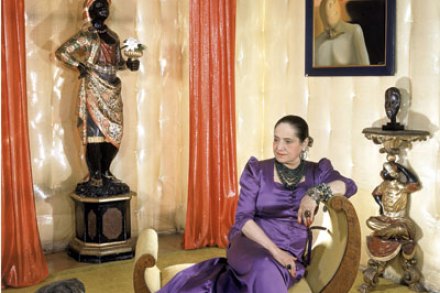
Two women are the only heroes of this book. One is Princess Margaret, whom the author points out was far more instrumental in the early years of Colin Tennant’s ramshackle creation of Mustique than merely lending it her unparalleled presence. Quite apart from insisting, after Tennant had fallen out with a slew of architects, that

The darker side of Dawn

I like Dawn French when she is playing a sinister nurse much more than when she’s a jolly vicar. As her new novel, Oh Dear Silvia (Michael Joseph, £18.99) is set in a hospital, her darker side is gloriously indulged. We are at the bedside of the comatose Silvia, who has fallen off a balcony.

Getting the knives out

It’s odd that this book should be about a cleaner, because it exactly conjures up the emotions I felt when I worked as a cleaning lady many years ago. Contemplating the grease-encrusted kitchen floor I was about to scrub, I’d cry aloud: ‘How long must I perform this thankless, gruelling task? Why me?’ These agonised

Divided loyalties

On his first day at boarding school in Kenya in the early 1950s, Ngugi Wa Thiong’o stood to attention as the Union Jack was raised on the school flagpole. Afterwards the boys sang Psalm 51 which contains the line, ‘Wash me Redeemer and I shall be whiter than snow.’ Then came a tour of the

The plight of the Poles

Was a nation ever so beset by calamity as Poland? During the second world war, Polish cities were bombed, fought over hand-to-hand and crushingly shelled. Beyond their ideological differences, Hitler and Stalin were united in a determination to destroy the country. Without the Nazi-Soviet ‘friendship’ treaty of 1939, Hitler would not have been able to

Disgusting, but not shocking

The joke doing the rounds in Beijing is that the Swedes gave the Nobel Literature prize to the wrong Chinese. It should have gone to the Communist Party’s propaganda department, for writing the enthralling fantasy about the Politburo’s wife who (supposedly) pours cyanide into the mouth of a British businessman (or spy, as most people

Hart-felt praise

‘I don’t profess this tome to be one of deep reflection or profound, serious thinking,’ writes Miranda Hart, which may or may not come as a surprise to her readers. ‘I am nowhere close to one of them French philosophers; I basically lollop through life like an amiable hound.’ If self-knowledge tends to be hard

Little house on the pampas

It’s hard to tell Argentina’s story without moments of despair. Even those who are fond of this country — like me — can struggle to identify the bright spots in its history. It’s been a tale of genocide, shrinking borders, pointless wars, hyper-inflation and vicious dictators. Even the end of the second world war brought

Mother of sorrows

This novella tells the story of the Crucifixion from the point of view of Mary. Contrary to art historical belief she was not, we are now told, kneeling at the foot of the Cross nor cradling her son’s broken body in her arms. Instead, she left the scene early, slipping away to save her own