More from Books

The Authors XI, by The Authors Cricket Club – review

We were never going to get ‘come to the party’ or ‘a hundred and ten per cent’ from The Authors XI by The Authors Cricket Club, with a foreword by Sebastian Faulks (Bloomsbury, £16.99). Instead there’s ‘Passchendaeleian’ and ‘Ballardian’ (of pitches), ‘burst-sofa torsos’ (of themselves) and the observation that the French revolutionaries’ cry of ‘Aux armes!’ sounds uncannily like ‘howzat?!’ The team of cricketing writers tackle a chapter each, combining match reports from their 2012 season with reflections on different aspects of the game (class, broadcasting, kit, youth and so on).

She Landed by Moonlight, by Carole Seymour-Jones – review

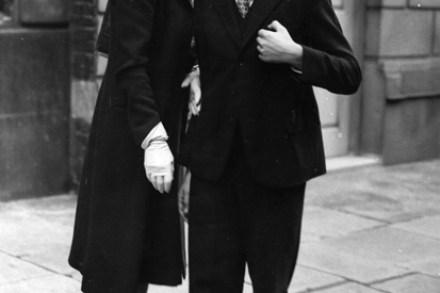
The subtitle of Carole Seymour-Jones’s quietly moving biography of the brilliant SOE agent Pearl Witherington is ‘the real Charlotte Gray’. As quickly becomes evident, the real thing was more than a shade superior. Like the fictional Gray, Witherington had determined to serve behind enemy lines in France with the dual aims of fighting the Nazi occupation of her adopted country, and being reunited with the man she loved, in Witherington’s case her fiancé, the escaped French POW Henri Cornioley. Unlike Gray, however, Witherington would quickly achieve both her public and private missions, meeting up with Henri within just days of her arrival.

Seaweeds, by Ole G. Mouritsen – review

On 14 April each year, nori fishermen gather on a hillside overlooking Ariake Bay on Kyushu in southern Japan to pay homage to ‘the Mother of the Sea’. There is a shrine and an altar for votive offerings but this is not a religious rite. The mother in question is Kathleen Mary Drew-Baker, a Lancashire- born algae researcher who, in 1949, discovered the life-cycle of porphyra umbilicalis.  Not, perhaps, front-page news in the occident, but this was the key to the cultivation of that dark green papery wrapping around the outside of sushi that is consumed in one form or another in every Japanese household: nori. Kathleen Drew-Baker died in 1956, unaware that her research had laid the foundations for the most valuable aqua-culture industry in the world.

The Charleston Bulletin Supplements, by Virginia Woolf and Quentin Bell

The Charleston Bulletin was a family newspaper produced between 1923 and 1927 by the teenaged Quentin Bell and his elder brother Julian — who soon dropped out, leading Quentin to recruit his aunt Virginia Woolf. At that time enjoying her most prolific period as a novelist, she collaborated with him on special issues which they called Supplements, for circulation at Christmas among the family and friends whose foibles and mishaps are chronicled in its pages. Professor David Bradshaw in his preface suggests that ‘it may not be ridiculous’ to link the ‘skittish abandon’ of the Supplements with the sense of liberation that Woolf felt in having found her fictional voice and critical recognition.

how to get a life

just to tell you there is nothing better almost nothing better than getting into bed in the middle of the afternoon when the sun shines down outside and you are perfectly well shedding your clothes one arm under pillow having no sense of ambition beyond this experiment with quiet having learned something from the cat herself curled up under a garden bush.

Rousseau and the Tiger

This is the Tiger and this is Rousseau. This is the picture I painted to show That this is the Tiger, so supple and eager. And this is the customs man, suited and meagre, And what do we wonder and what do we know? This is the Tiger and this is Rousseau. I am Rousseau and I painted the Tiger, The Tiger so fierce and the Tiger so free. This is the jungle, the terrible tangle, And these are the teeth that will torture and mangle, And all of it up on the wall as you see. This is the Tiger and this? This is me. This is the man and he works in an office, And this is the beast so unhuman and fine. This is the picture. I painted the picture. With cunning and craft I effected the capture, I conjured the colour, I dreamed the design, And I painted the Tiger. The Tiger is mine.

Building: Letters, 1960–1975, by Isaiah Berlin

This is the third volume of Isaiah Berlin letters; one more to go. Discerning critics have showered the first two with praise, and there is no absence of the laudable here. The plums are unforgettable, especially the brief character studies of Maurice Bowra, Enid Starkie, Randolph Churchill, Golda Meir and Stravinsky, should anyone want to know who and what these people were. Of course, Isaiah himself is the centre of attention, and a growing number of people have never heard of him. Those who met him in this period met an intellectual superstar, a celebrity courted by princes, politicians and plutocrats, thirsting for his company and his approval. Not so many philosophers — but, my! he was a big orange. Many of those taught by him were changed for life.

The Unwinding, by George Packer – review

The Unwinding is a rather classy addition to the thriving genre of American apocalypse porn. The basic thesis can be found online in Jim Kunstler’s The Clusterfuck Nation Manifesto, which runs to a few thousand words, but over hundreds of pages George Packer gives it the full literary treatment. He signals his ambition by taking as his model the USA trilogy of John Dos Passos, which spliced mash-ups of newspaper cuttings and pop lyrics, brief lives of public figures and longer episodic biographies of obscure ones, into an indignant portrait of America in the first three decades of the 20th century.

Jane Gardam on Barbara Comyns – essay

The Vet’s Daughter is Barbara Comyns’s fourth and most startling novel. Written in 1959 when she was 50 it is the first in which she shows mastery of the structures of a fast-moving narrative and a consistent backdrop to the ecstasies and agonies of the human condition. It was received with excitement, widely reviewed, praised by Graham Greene, reprinted, made into a play, serialised by the BBC, and adapted as a musical (called The Clapham Wonder) by Sandy Wilson of The Boyfriend. But although the book has been kept in print by Virago since 1981 its reputation has faded, probably because the shock of the magical realism of its final chapter has been swamped by the tsunami of fantasy and magic that has almost engulfed the later reading world in the past 20 years.

Adhocism, by Charles Jencks – review

Here, for time travellers, is the whack-job spirit of ’68 in distillate form, paperbound and reissued in facsimile (with some exculpatory, older and wiser material fore and aft). Adhocism (re)captures with magical realism the boldness and silliness of its day.  This was the day when ‘new media’ meant colour television. Younger readers may need more instruction on the nature of this spirit. Students in Paris hurled St Germain cobblestones at gendarmes in clouds of teargas and students at Hornsey College of Art sat in to protest I cannot quite remember what in clouds of pot smoke. The Parisians read Guy Debord on situationism, the Hornseyites drooled over nudes in the International Times.

Horace and Me, by Harry Eyres – review

After Zorba the Greek, here comes Horace the Roman. The peasant Zorba, you’ll remember from the film, releases uptight, genteel Alan Bates from his cage of repressed Englishness. Now it’s Horace, the Augustan lyric poet, releasing another repressed Englishman: Harry Eyres, Old Etonian scholar, Cambridge graduate, poet and author of the ‘Slow Lane’ column in the Financial Times. This charming, moving book calls itself ‘Life Lessons’, as if it were a general teaching guide for the reader. Really, though, it’s a personal guide for Eyres — who realises that the poet he first struggled to appreciate at school has valuable lessons to teach about love, wine and friendship.

Dark Actors, by Robert Lewis – review

No book about Dr David Kelly could start anywhere other than at the end. Kelly is found, dead, in a wood near his Oxfordshire home. A public inquiry, headed by Lord Hutton, concludes that Britain’s leading germ warfare expert has committed suicide. Those who question the procedure or the verdict are scorned as conspiracy theorists. Four years later, in response to a Freedom of Information Act request, the police reveal that there are ‘no fingerprints whatsoever’ on Kelly’s knife, on the tablet packets in his coat pocket or on the water bottle found nearby. This single stark fact — which was simply not mentioned at the public inquiry — seriously undermines the suicide verdict. There are countless other odd and perplexing aspects to the story.

Against Their Will, by Allen M. Hornblum – review

After the Morecambe Bay Hospital scandal a new era opens of compassion, -whistle-blowing, naming names and possible prosecutions. But what about 70-odd years of harming children in ‘care’ homes, and prisoners, with toxin injections, -radioactive blasts, electro-shocks to the brain and frontal lobotomies — all done in the interests of medical advance by leading American doctors and scientists, one of whom was -awarded a Nobel Prize? Furthermore, what if the CIA sponsored such work in the interest of defending the US against Soviet threats?

Laidlaw by William McIlvanney – review

Laidlaw was first published in 1977, 36 years back from now, 38 on from The Big Sleep. Like Chandler’s classic it has survived the passage of time. William McIlvanney did for Glasgow what Chandler had done for Los Angeles, giving the city its fictional identity. Hemingway used to say that all American literature came out of Huckleberry Finn; all Scottish crime writing — ‘tartan noir’ — comes out of Laidlaw. Two years before Laidlaw McIlvanney had won the Whitbread Prize for fiction with Docherty, a novel set in a mining community. This established him as the best Scottish novelist of his generation, and some of his admirers were dismayed when he followed it with a crime novel.

The Professor of Poetry, by Grace McCleen – review

Elizabeth Stone, English professor at UCL,  has long lived on ‘paper and words and thin air’. Single, friendless, dessicated, respected, she passes out during a faculty meeting and wakes to find herself ‘attached by a chain of spit to her own cardigan’. A brain tumour is diagnosed, and removed. Expecting death, Elizabeth receives the news that her treatment was apparently successful as a gift: ‘Time had been returned to her.’ She takes her bravest decision in 30 years and goes back to ‘the city of books’ where, as an undergraduate, she had the only profound emotional experience of her adult life.

An Englishman in Madrid, by Eduardo Mendoza – review

To Spaniards, the English must appear a highly contradictory people. The stereotype of the restrained, well-dressed gentleman (Spain’s largest department store is El Corte Inglés, ‘the English cut’) must contend with the binge-drinking phalanxes of tourists occupying Spain’s beaches every summer. Though generally thought to be fairly law-abiding, the English are still, mostly affectionately, referred to as pirates in Spain — a term dating back to Drake’s raids against Philip II. This dissonant, slippery persona is central to Eduardo Mendoza’s novel (winner of the prestigious Planeta prize), set on the eve of the Spanish civil war.

Hotel Pool

Twelve? Thirteen? She arrives in advance of her parents, fat as I was thin, wrapped in a towel, pattering to safety — a bench where she sits obscured before abandoning herself to the indecency of a walk towards water, (though who’s to see? To care? The retirees? Me with my puckered stomach?) My eyes meet hers, hers dart away like fish; this is not the place to say You’ll be all right, the body must become itself, nothing to do but swim out, follow.

Boliver, by Marie Arana – review

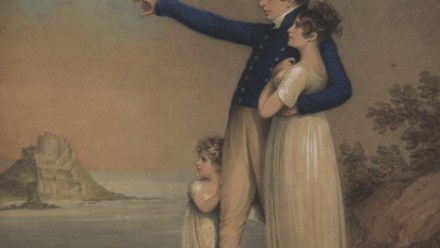
So here we go again into a heart of darkness:  the humbug and horror which is the history of Spanish South America ever since Columbus landed on the island of Hispaniola. Now modern Haiti and the Dominican Republic, the island’s population had within a few decades of Columbus’ arrival, through genocide and disease, been reduced to barely 200. And that was just the beginning. No Christian nation has ever trailed such a shameful colonial past, which is why the colonists must feel the need to assemble what they see as its glories. This, the 2,684th book about Simon Bolívar, is subtitled ‘The Epic Life of the Man Who Liberated South America’. But liberated it for whom?