More from Books

Vauxhall, by Gabriel Ghadomosi; Sketcher, by Roland Watson-Grant – review

At the grubbier end of my street in north London is the Somali mosque that was burned down earlier this month in an arson attack. The other day I asked at the police cordon if any arrests had been made. ‘Not that we know of’, said the duty officer. A smell of charred wood hangs over this dreary, out-at-elbow part of Muswell Hill. People complain that Somalis are heavily ‘welfare-dependent’, and have no wish to integrate into British society. It is true that immigrants today, with the internet, cheap flights and satellite television, are more likely to see themselves as members of a foreign country, hosted by, but not emotionally attached to, Britain. Diversity is here to stay, however, and many of us like it that way.

The Flamethrowers, by Rachel Kushner – review

This bright, burning flame of a novel takes place in the art world of 1970s New York. Our guide to this scene of glittering parties and eccentric characters — such as the White Lady, who wears white and goes to a grocery store to buy ‘milk, white bread, a can of hominy, and two jars of mayonnaise’ — is Reno, a young aspiring artist. Alone and new to the city, Reno asks herself, ‘How do you find people in New York City?’ She relies on chance: ‘Chance shaped things in a way that words, desires, rationales could not. Chance came blowing in, like a gust of wind.’ She chances her way around New York, falling in with a crowd at a bar, tagging along to parties, going home with a man whose name she doesn’t want to know.

The Spinning Heart, by Donal Ryan – review

Despite being so short, The Spinning Heart certainly can’t be accused of lacking ambition. Over the course of its 150-odd pages, Donal Ryan’s first novel introduces us to no fewer than 21 narrators living in or around the same small town in the west of Ireland. One by one, they reflect on their lives, past and present. Between them, though, they also tell us the story of a local kidnap and then of a local murder. This plot element is handled with considerable deftness — the various clues, perspectives, overlaps and contradictions duly coalescing into a single, comprehensible account. Yet, in the end, it only ever seems a handy framework (or completely acceptable excuse) for Ryan’s real concerns. For one thing, this is firmly a novel of the Irish crash.

Edwardian Requiem, by Michael Waterhouse – review

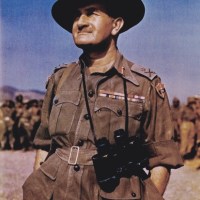
The photograph on the jacket, reproduced above, says it all — or at least all of what most of us think we know about Sir Edward Grey. Patrician, reflective, dignified, he stares into the future with the uncompromising honesty of one who has never even contemplated straying from the paths of rectitude. In fact, he was more interesting than that, but Michael Waterhouse’s thoughtful biography reveals that the image and the reality were not so very different. Grey’s private life was a little more chequered than might have been expected.  Though properly cautious about what can be no more than surmise, Waterhouse credits Grey with several extramarital affairs and at least two probable bastard children.

Constance, by Patrick McGrath – review

Patrimony and infidelity are defining themes of the Anglo-American relationship, as they are of Constance, a novel with alternating narrators: Sidney Klein is English, in his forties, and an authority on Romantic literature. Constance Schuyler is American, 22, and believes her father hates her. Their new marriage enters crisis when Constance’s family reveals her origins in a Lady Chatterley-like tryst between her English mother and the groundsman at the family’s Hudson Valley estate, who committed suicide before she was born. (Did her parents know that ‘Constance’ was Lady Chatterley’s first name?) New York in the 1960s hosts a tale dense in literary and historical allusion.

‘The Shakespeare of the lunatic asylum’ – review of The Dostoevsky Archive by Peter Sekirin

After you decapitate someone, might their severed head continue thinking? Prince Myshkin holds his audience spellbound with this macabre inquiry in The Idiot, a great novel whose author, Fyodor Dostoevsky, was once called the Shakespeare of the lunatic asylum. Each of his great novels concerns a murder (one a parricide); most also touch upon the sickening theme of the rape of a child. The writer Lafcadio Hearn warned that reading him might actually drive you mad: it can certainly invoke pity and terror, embarrassment and laughter. Dostoevsky’s life was even weirder than his fiction. He was born in 1821, the son of a surgeon whom he believed to have been killed by his own serfs.

Song Without Words, by Gerald Shea – review

At the age of six, Gerald Shea had scarlet fever. The sounds of birds passed into memory to be replaced by the sound of locusts. Not only had Shea developed tinnitus, he had lost the ability to hear high frequencies.   Broadly speaking, he could only hear vowels, not consonants. If you can hear vowels, you can grasp the intonation and the feel of what is said, but not get much meaning. He calls this his ‘language of lyricals’. Neither Shea nor his family realised that he was now partially deaf, and thus slightly out of sync with the world. My own experience of deafness is different: I was born deaf, so having ears that don’t work is ‘normal’ for me. And unlike Shea, I always knew that most people could hear, whereas I could not.

What Fresh Lunacy is This?, by Robert Sellers – review

Midway through this startling book, Robert Sellers asks himself a question with such apparent seriousness I barked with laughter: ‘Was Oliver Reed an alcoholic?’ A more pertinent enquiry would be: ‘Was the man ever capable of drawing a sober breath?’ What Fresh Lunacy is This? is the monotonous chronicle of a nasty drunk whose ‘explosions of pissed aggression’ filled every waking hour, culminating in a deranged session, while filming Castaway in 1986, when he attacked an aeroplane. Reed would gulp 20 pints of lager as a way of limbering up. He’d then switch to spirits and the cycle of fighting and carousing would begin.

Things I Don’t Want to Know, by Deborah Levy – review

In her powerful rejoinder to Orwell’s 1946 essay ‘Why I Write’, Deborah Levy responds to his proposed motives for writing — ‘sheer egoism’, ‘aesthetic enthusiasm’, ‘historical impulse’ and ‘political purpose’ — with illuminating moments of autobiography. Levy begins one spring when she was crying on escalators, ‘at war with my lot’. She flies to Majorca, where, stuck on a mountain the night she arrives, she takes comfort in ‘being literally lost when I was lost in every other way’. Reading her notebooks later, she alights on a Polish director’s advice to a young actress: ‘to speak up is not about speaking louder, it is about feeling entitled to voice a wish’.

Backing Into the Light, by Colin Spencer – review

Colin Spencer first came to my notice in the Swinging Sixties when a fellow undergraduate alerted me to his larky romp Poppy, Mandragora and the New Sex, the first novel since Woolf’s Orlando to treat of transexuality. It was published in 1966, two years before Gore Vidal’s Myra Breckinridge, and I associated Spencer with the ‘sexual allsorts’ group around the publisher Anthony Blond at that time. But he didn’t build on it and seemed to fade away. Now I know why: he never quite knew what he wanted to be — gay or straight, a family man or a rover, a writer, musician, painter or horticulturalist. The next time I came across him he was married to a friend of a friend and living in a Regency cottage in Hammersmith, writing food articles for the Guardian.

The Outsider, by Jimmy Connors – review

As a teenager in the 1980s I liked Jimmy Connors. This meant parking my not inconsiderable jealousy that he’d once had Chris Evert as his girlfriend. Magnanimously, I agreed to do so. Not only did the star respond to a shout of ‘come on Connors’ with ‘I’m trying for Chrissakes!’, he was also, you sensed, the real thing: a genuine rebel. John McEnroe played at it, but — like Ian Botham in cricket — always had a faint air of the knob about him. Connors’s anger, he reveals in his autobiography The Outsider (Transworld, £18.99), stems from the day he was eight and saw his mother beaten up on a tennis court by two yobs who wouldn’t turn their radio down. She lost her teeth, needing hundreds of stitches in her mouth.

A Time by the Sea, by Ronald Blythe – review

I first encountered Ronald Blythe at Benton End, a glowing oxblood farmhouse above the river Brett, poised on the edge of Hadleigh in Suffolk. This was the East Anglian School of Painting and Drawing, run by Lett Haines and Cedric Morris, and known locally as the ‘Artists’ House’ and for ‘every vice under the sun’. Ronnie describes the set-up brilliantly. I was a raw 15-year-old at the time, and the point of studying most subjects on the school curriculum had escaped me: painting alone had become my raison d’être. Indeed, art began for both of us in Suffolk. Its particular air, sea, sky and mud run through our blood — and possibly cause both our mops of curly hair.

Thirteen and a half

Have you looked across the Sound? On the other shore life lies. Can you see it over there? The palaces, the esplanade? It only takes a little while to cross, A year or two at most, sometimes just days. In clear weather you’ll see boats leaving the marina, The scarlet awnings of the shops And fortune-tellers on the steps; At night there are restaurant lights And houses glimmering on nameless slopes. Over there are parties you’ll attend, The masques and tattered carnivals And all the long white hours of getting wise. You’ll talk about returning here – You’ll say it’s where your heart is – But, knowing the tides, we won’t expect you.

Nijinsky, by Lucy Moore – review

The first biography of Vaslav Nijinsky, which appeared in 1934, was written by his wife Romola with the help of two ghosts — the young Lincoln Kirstein and Little Blue Bird, an obliging spirit called up by a psychic medium to provide information from beyond the grave. Needless to say, the book wasn’t entirely accurate; and nor, two years later, was her edition of Nijinsky’s confessional diaries, a stream-of-consciousness record of his descent into madness, which she censored, restructured and cut by over a third. It took Richard Buckle’s now classic life of the dancer (published in l971 and amended after Romola’s death) to sort fact from fiction and recreate the phenomenal impact of Nijinsky and Diaghilev’s Russian Ballet.

Flappers, by Judith Mackrell – review

I’m never quite sure what the term ‘flappers’ means. How did these creatures flap, and why? Where did they flap? Did they flap all day, or only at night? Were theyin a flap, or being flapped, sad-flaps or flap-happy? Did they open flaps, or close them? Did they flap Jacks, or flip Jills, or both? Reference books don’t help much. The OED says the word means a fly-killer, and you really don’t want to know the Dictionary of Slang’s definitions. So what was, in the accepted vo-deyo-do-ing, headache-band-browed, fancy-dress costume and Baz Luhrmanesque image, a ‘flapper’? One might assume that in this substantial, erudite and detailed, but oddly humour-free book, Judith Mackrell would set out to enlighten us.

Bedford Park, by Bryan Appleyard – review

Nothing in Bryan Appleyard’s Bedford Park betrays the fact that it is his first period novel: not its deft characterisations, its virtuoso dialogue, its dry and economical wit, or its choice of a narrator and material quite outside the author’s own experience. The 19th century is closing and the 20th is opening in a London seething with foreign sedition and the antics of its own wayward men of genius. The enchanted suburb of Bedford Park, a baroque gem created in 1875 as part of an architectural counter-revolution and renewal, houses W.B. Yeats and the novel’s narrator, Calhoun Kidd.  Kidd has fled Chicago and his domineering father. However, he enters London salon- society through the notorious Frank Harris, whom he knew as a hotel hop in America.

A Place in the Country, by W.G. Sebald – review

Within a few years, and in four books — The Emigrants (1996), The Rings of Saturn (1998), Vertigo (1999) and Austerlitz (2001) — W. G. Sebald achieved a reputation as a major international author. He was tipped for the Nobel, seen to supply heartening proof that ‘greatness in literature is still possible’ (John Banville) and that ‘literary greatness is still possible’ (Susan Sontag). Literary greatness it seemed, at times, was Sebald, and for a while after the publication of The Rings of Saturn, it was hard to find a work of fictive non-fiction that wasn’t riddled with grainy photographs of dubious quality integrated into the text.