More from Books

All you’ll ever need to know about the history of England in one volume

Here is a stupendous achievement: a narrative history of England which is both thorough and arresting. Very few writers could pull it off. Either they’d have an axe to grind, or they’d lose perspective, or they’d present a series of anecdotes, or they’d end up in a Casaubonish pursuit of other historians’ errors. In fact, to get it right, you’d ideally be a mature and accomplished author, steeped in the facts, who was nonetheless tackling English history for the first time. Which is more or less what Robert Tombs, a professor of French history at Cambridge, is. ‘A writer of history ought, in his writings, to be a foreigner, without country, living under his own law only,’ claimed Thomas Hobbes, adapting Lucian.

Juliet Townsend (1941-2014)

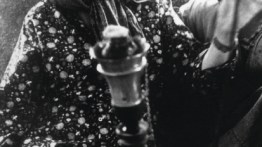
A new literary editor looks among his acquaintance for potential reviewers. There was no one I approached more confidently in 1985 than Juliet Townsend (who died on 29 November). She had been a friend for 25 years and run a bookshop since 1977 with her husband John. They had looked over my own books to see what could and should be sold and sighed heavily when The Ingoldsby Legends appeared — apparently there is a copy in almost every English country house and no demand at all. Townsend (pictured left in 1991) wrote an excellent children’s book on the Indian Mutiny, Escape from Meerut, and this neatly combined her two main subjects. On India, and in particular Rudyard Kipling, she had long been an expert (her father wrote his biography).

In the steppes of the ancients: travels on the Silk Road

It is difficult to fault this remarkable volume. The publishers have created a book of quality with stunning illustrations and lucid maps. It will, I believe, become a standard reference for all who study the complex history of Central Asia and the Silk Road. This is the second volume in Christoph Baumer’s projected four-book series on Central Asia and shows its author to be an extraordinary person, whose skills encompass those of an explorer, a geographer, a historian, an archaeologist and a photographer. Moreover, in each of these exacting disciplines he is no amateur. He displays the rare qualities of both an academic and a man of action. His sparkling prose ensures that the armchair traveller will not nod off.

In the Emergency School

We were registered as a form, and for the first day Left unsupervised alone in a distant room With empty desks to organise our own war. Using books and inkwells was the easy way Of creating bombardments — conkers and apple-cores came In useful also, and in the master’s drawer There were sheets of exercise-paper which would acquire, When neatly folded, the speed of darts to fly Sharply across to send warnings of attack. All the heads on the side of the classroom under fire Dipped for cover under desk-lids when this weaponry Rained down on them — to be picked up and fired back — Though I don’t recall any sort of hurt or harm Resulting from this conflict, which was allowed To go on uninterrupted, lasting throughout Our entire first day of secondary term.

German history is uniquely awful: that’s what makes it so engrossing

As I grew up half German in England in the 1970s, my German heritage was confined to the few curios my grandmother had brought here after the war: a signet ring, a cigarette case, a scrapbook with some missing pages.... She’d changed her name, she’d changed my father’s name, the nation she came from lay in ruins — but from this salvaged bric-à-brac I pieced together the story of my father’s German family, a story they’d done their best to bury in the country they’d left behind. Through a range of objects, large and small, from the Gutenberg Bible to the Reichstag, the director of the British Museum has done much the same thing for Germany as a whole.

Hiding in Moominland: the conflicted life of Tove Jansson

Tove Jansson’s father was a sculptor specialising in war memorials to the heroes of the White Guard of the Finnish civil war. He did not like women. They were too noisy, wore large hats at the cinema and would not obey orders in wartime. Tove used to hide to spy on his all-male parties, where everybody got astoundingly drunk and attacked chairs with bayonets. ‘All men are chums who will never leave each other in the lurch,’ she concluded. ‘A chum doesn’t forgive, he just forgets — women forgive everything but never forget. Being forgiven is very unpleasant.’ Father and daughter had such a strained relationship that she sometimes had to run to the loo and vomit.

Sunset Hails a Rising

O lente, lente currite noctis equi! — Marlowe, after Ovid.   La mer, la mer, toujours recommencée. —Valéry.   Dying by inches, I can hear the sound Of all the fine words for the flow of things The poets and philosophers have used To mark the path into the killing ground. Perhaps their one aim was to give words wings, Or even just to keep themselves amused, With no thought that they might not be around To see the rising sun: But still they found a measure for our plight As we prepare to leave the world of men. Run slowly, slowly, horses of the night. The sea, the sea, always begun again.   In English of due tact, the great lines gain More than they lose.

A treasure-trove of grisly Arab tales may appeal more to an Isis fighter than your average British reader

The marvellous tales of the title are not just confined to the contents of this book, for the travels and travails of the lone manuscript in which they were inscribed are also something of a wonder, and deserve to be told. The original collection appears to have been composed in the 10th century, and it is easy to imagine some of these stories doing the rounds of Cairo, Baghdad and Damascus while the crusaders were making trouble in the neighbourhood. This particular version of the stories was written down in the 14th century, probably in Cairo, for that is where the manuscript can be traced.

Grimms’ fairy tales: the hardcore version

Child murder, domestic slavery, abusive families, cannibalism and intergenerational hatred — what could be better for the festive fireside than a new edition of Grimms’ fairy stories? There hasn’t been a straight translation in English of the original 1812 edition; most retellers in English relied on revised versions by Wilhelm Grimm. Now Jack Zipes has produced the complete first edition of The Original Folk and Fairy Tales of the Brothers Grimm. It’s a good translation, faithful to the simple character of the originals. It’s been well received by the fairytale industry, writers and academics who like to remind us that the original versions were rawer than Wilhelm’s family-friendlier edition of 1857.

Wonder Woman: feminist symbol or the ultimate male fantasy?

It’s always interesting when people succeed in two different arenas — like Mike Nesmith’s mum, who gave the world both a Monkee and Tippex, or Hedy Lamarr, the beautiful film star who also helped develop wireless communication, or Paul Winchell, the voice of Tigger who also invented the artificial heart. (If only he’d played the Tin Man in The Wizard Of Oz!) William Moulton Marston created both the cartoon heroine Wonder Woman and the lie detector machine, though by the time I had finished this book I was wondering how he found the time or the energy to do either.

After the trilogy (and the hurricane): the likeable return of Frank Bascombe

The story of Frank Bascombe, a sports-writer turned estate agent but always a New Jersey homebody, has already taken Richard Ford nearly 30 years and three volumes to tell, totalling 1,300 pages — longer than War and Peace. But for Frank, aged 68 (and for Ford, aged 70), it’s not over. In the autumn of 2012, Hurricane Sandy ravaged the New Jersey shoreline. And though Bascombe is retired from real estate and living safely inland in Haddam (the town where his first-person chronicles began, in 1986, with The Sportswriter) he is not unaffected by the devastation. In the four long stories that comprise this fourth Bascombe volume, he learns that his former beach house has been destroyed. A woman made homeless by Sandy has retreated to Haddam and shows up at Frank’s door.

Seamus Heaney: no shuffling or cutting — just turning over aces

The impersonator — Rory Bremner, Steve Coogan — speaks, in different voices, to a single primitive pleasure centre in his audience. Counterintuitively, we like the imposition of imposture. We connive at deceit, at replication, for the release of neurotransmitters, the flood of endorphins — the brandies of the brain. I once heard Peter Ustinov on a chat show replicate the sound of an electric bell being pressed. Pleasure on a different, even more vertiginous level. The audience was convulsed. Unless a poet can produce this ungainsayable instant delight in the reader, this drench of dopamine, the poetry is automatically of the second order.

Transnistria: a breakaway republic of a breakaway republic

Transnistria is not an area well-served by travel literature or, really, literature of any kind. The insubstantial-seeming post-Soviet sandwich-filling between Moldova and Ukraine, it doesn’t have a bad reputation. It has no reputation. As Rory MacLean, the author of the ‘across-the-old-Iron-Curtain-in-a-Trabant’ bestseller Stalin’s Nose, explains: ‘Transnistria is a breakaway republic of a ba lot smaller than Devon. And it is recognised by no country in the world except itself. You could indeed be forgiven for thinking that Transnistria is a made-up place (and at times the author of this book almost treats it as if it is).

The quirkiest garden book Roy Strong has read in years

Incredulity is rarely a word that crosses my mind when it comes to garden writing. This genre can, of course, be quite straight-forward and descriptive, like Miss Jekyll’s rather boring volumes. It can equally be wildly funny, as when Anne Scott-James and Osbert Lancaster hitch their respective wagons to horticulture and produce a spoof history. But where, oh where did Sam Llewellyn’s exotic aberration spring from? Is it fact or fiction? I don’t think I ever decided which. This is one of those books where you spend the whole time worrying less about what’s happening in the kitchen garden in spring and more on trying to work out what the hell is this place and who on earth is this man with a less-than-house-trained duchess in tow.

Five of the best celebrity biographies of 2014

Cilla Black has become a strange creature during her 50 years in showbiz. When her husband Bobby was in hospital she found to her dismay that she didn’t now how to take the dogs for a walk. That was some time ago, for Bobby Willis died of liver cancer in 1999. ‘They lived their lives almost like Siamese twins,’ writes Douglas Thompson in Cilla, Queen of the Swinging Sixties (Metro, £7.99, Spectator Bookshop, £7.59). He is an old hand in Cillagraphy, having published Cilla Black: Bobby’s Girl in 1998 and Cilla: the Biography in 2002. He is not the author of this year’s Cilla: the Adventures of a Welsh Mountain Pony, which will disappoint fans since it makes no reference to the long-term hostess of Blind Date (1985–2003).

As No Art Is

The weekend’s on us, and no means of soothing it or kissing it away. The flat facades of mansion blocks curve towards silence. The sun gets everywhere in this canyon, but property holds its desperations in: the same flying ant is all that moves along the same trouser folds. I go to the park for late afternoon to arrive among the memorials in their set-back space, their immortality in the last century, their short life-spans. What settles on this time is not a haze or mist, but a half-visible moderation of the light among the trees in which appear the hour-long married with their picture-takers, from the distance down the long paths hurrying, where sunlight falls on patches between fallen leaves spread flat by sudden July showers.

Deng Xiaoping: following in Mao’s footsteps

Much has been written about Deng Xiao-ping (1904–1997), most recently by Ezra Vogel in Deng Xiaoping and the Transformation of China. But apart from his fondness for eating croissants and playing bridge, and the fact that his second wife left him for a party colleague — Michael Dillon records the divorce only — we still know little about Deng himself. Mao Zedong’s personality, on the other hand, was often remarked on — from Edgar Snow’s first meeting with him in 1936 to Henry Kissinger’s in 1971(both men swooned in his presence). Dillon rightly notes that Vogel compressed a large part of Deng’s life into a mere 30 pages. In this biography the entire life and career are given appropriate space.

Goodwill to Men

Overheard in advent was this complaint of a bus driver to a passenger, ‘Don’t call me brother! We’re not of the same mother.   And as the 24 passed Trafalgar Square, there by the giant Christmas tree were the police arresting a freak for disturbing the peace.   Yards from Westminster Abbey were sleeping bags of the shabby seeking sanctuary in shop doors as pedestrians ignored the sick, the lame, the poor, and stores implored, Spend more!