More from Books

Some animals are more equal than others

Here are two parallel books, both by Americans, both 260 pages (excluding indexes) long, both using ‘likely’ as an adverb. One looks at the history of the world through the story of the chicken; the other does the same through the story of the pig. Which would you prefer? I found the chicken one harder going — like ploughing through one of those brilliant but exhausting New Yorker articles that never seem to end, for which the journalist with too generous a budget has spent years interviewing hyper-specialist scientists in labs and ‘facilities’ across the USA — but I found the pig one sadder.

Confessions of a Fedhead

Good writing about sport is rare — and good writing about tennis is that much rarer — so it’s conspicuous that we’ve had so much of it about Roger Federer. The gold standard was set in 2006 with David Foster Wallace’s remarkable essay ‘Federer as Religious Experience’, in which the great novelist provided a dazzling analysis of the great player’s game. Then came Jon Wertheim’s Strokes of Genius (2010), an elegant account of the 2008 Wimbledon final between Federer and Nadal. In a letter published in Here and Now (2013), the correspondence between Paul Auster and J. M. Coetzee, the latter contributed an uncharacteristically lyrical bit of praise for the Swiss.

Sub-Aga saga

Lovely, gentle Isabel, just 40, makes masks. Her husband Dan, erstwhile ‘student of the Classics’ and playwright manqué, is ‘bored by the import-export business’. Enter long lost, lonely Bert, who ‘left soldiering, a distinguished colonel, and went to work for an oil company in New York’, plus Isabel’s unlikely friend and marriage-predator, thirtysomething Carlotta, who boasts a red dress, Mercedes coupé, unspecified high-powered job and ‘amazing (yes, amazing, I know) breasts’.

Message

A tiny fly is moving over the page of my dull book this sultry evening, and it is my conceit that it has a message for me. It pauses on Rigoletto and, skirting pronouns and prepositions, lingers on the hyphen of orang-utan before a significant pirouette over rhubarb tart. When I wake up it is still there, making no sense at all. Cruelly, I close the book on it.

A watershed moment in music history

In 1994 I was working in marketing at London Records, a frothy pop label part-owned by the Polygram Group — both long gone, swallowed up by Warner Bros. That summer some Americans came into our office to pitch us a project. Rather than unfurling some band or singer, they wanted to talk about technology, specifically the internet and what it would mean to our business in the future. They were looking for an investment of around 50 grand. They talked about how, in the future, kids would buy music on their computers and that they would be able to do it anywhere — on the train, in the street. ‘But where will the wires go? Where will you plug it in?’ we asked, back in those dial-up days. ‘There won’t be any wires,’ they said.

The traffic in human misery

When Sara discovers that her husband died in India, rather than being killed in Afghanistan as she was told, she travels to Delhi to uncover the circumstances of his death. On the surface, Invisible Threads is a novel about an English woman on a personal journey to India, and comes with many of the trappings we’d expect. Lucy Beresford describes the country’s assault on her protagonist’s senses and observes the seeming contradictions of poverty, such as when Sara sees a barefooted beggar — her ‘hair is matted, her turquoise sari filthy, but she is carrying a mobile phone’.

Bogs and fogs

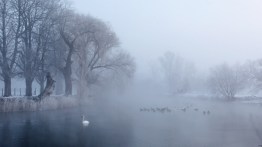
In his poem ‘Eden Rock’, Charles Causley conjures up a dreamy memory of a childhood picnic ‘somewhere beyond Eden Rock’. He reported later: ‘Somebody asked me the other day where Eden Rock is —I mean I have no idea, I made it up! “Dartmoor,” I said — that’s always a safe answer.’ As southern England’s largest expanse of unenclosed land, Dartmoor has always been a good place to lose things: dangerous prisoners, children on their Duke of Edinburgh’s Awards, military manoeuvres. It has also swallowed up voluminous amounts of parliamentary time, ministerial reports, public enquiries and arcane legislation — all of which centres on one simple question: what’s it for?

Celebrations of song and humanity

‘All my life, always and in every way, I shall have one objective: the good of Hungary and the Hungarian nation.’ Ask any musician for a one-sentence summary of Béla Bartók (1881–1945) and they will probably tell you that he is Hungary’s national composer — a musical modernist who passionately championed his nation’s folk music tradition. David Cooper’s new biography seeks both to enrich and complicate that statement, questioning the definition of musical ‘nationalism’ in a country of such pronounced ethnic heterogeneity, at a time when borders were being drawn and redrawn, peoples created and destroyed, across Europe.

The bravest of the brave

‘It is the task of a Patton or a Napoleon to persuade soldiers that bits of ribbon are intrinsically valuable. The historian’s job, in part, is to spot contradictions and unravel obfuscations, and the history of the VC is steeped in both.’ To this job of de-obfuscating, Gary Mead, former journalist and military historian, might well add ‘though the heavens fall’.

To Hell in a handcart — again

Despite the offer of joy proposed in the subtitle, this is a deeply troubling book by one of Britain’s foremost journalists on the politics of nature. Michael McCarthy was the Independent’s environmental editor for 15 years, and his new work is really a summation of a career spent pondering the impacts of humankind on the world’s ecosystems. The case he lays bare with moving clarity in the opening chapters is compelling stuff. Essentially he argues that the world of wild creatures, plants, trees and whole habitats — you name it — is going to Hell in a handcart as a consequence of what he calls ‘the human project’.

Beautiful, bedevilled island

The Arabs invaded Sicily in the ninth century, leaving behind mosques and pink-domed cupolas. In the Sicilian capital of Palermo, Arab rule was generally tolerant, its dolce far niente evocative of sultans, minarets, concubines and other jasmine-scented delights. Walking round Palermo today, however, one is assailed by less lovely smells. Parts of the city remain unreconstructed since the Allies bombed it in 1943: fire-blackened palazzi and rubble-strewn slumlands speak of the Mafia’s systematic ransacking of the public coffers. A still darker side of Palermo finds expression in the 19th-century catacombs of the Capuchin friary, situated near the Arab-Fatamid pleasure palace of La Zisa (‘the magnificent’).

Lulzfags v. moralfags

It is almost a century since the Michelin brothers had the brainwave of supplementing their motorists’ guide with information about fine-dining establishments. Their star-rating system had become a mainstay of lifestyle reviews long before the Internet came along. In the digital age, this work has been comprehensively crowd-sourced: the immense success of review sites such as Yelp and Amazon has been built on the voluntary input of users. In theory, it should have been a consumer rights utopia. But product reviews are big business — and where there is lucre, there are shenanigans.

Dizzying swirls of impasto

With a career of more than 60 years so far, Frank Auerbach is undoubtedly one of the big beasts of the British art world. His personal reticence, however, and the condensed, impacted idiom of his painting have contributed to his enigmatic, somewhat opaque reputation. Catherine Lampert, who has sat regularly and patiently for him since 1978, is uniquely qualified to throw light both on the man and his art, but the tactics she employs here are very different from those of Martin Gayford in Man with a Blue Scarf, his intimate, engrossing account of sitting for Lucian Freud. Matching Auerbach’s reticence with her own, she keeps herself largely out of the story, focusing instead on observations made by the artist over the many decades of his career.

Host

In eastern Congo years ago on a road logged into a hill I drove or was driven one evening to see pygmies who claimed they were being eaten. This was possible. I’d met a woman with my name who’d watched the fire on which her arm was cooked and then devoured. The pygmies turned out to be lying and this isn’t about pygmies. In the truck I argued with the driver about gays and the Bible as we lurched through the intestinal dark toward the safe haven of a Catholic priest who fed us the baby chimpanzee we’d seen fighting his tether on the father’s porch.

Something sensational to read on the train

Readers who have put in some time on the railways may remember the neat, brush-painted graffiti that appeared in 1974 on a wall facing the line just outside Paddington station: FAR AWAY IS CLOSE AT HAND IN IMAGES OF ELSEWHERE. Not until Banksy took up his spraycan did a piece of London graffiti make such a stir. The Telegraph’s Peter Simple column attributed the long-lasting inscription to the shadowy ‘Master of Paddington’ and the Oxford commuter-poet Roger Green mused on the hauntingly unspecific slogan in his journal Notes From Overground, a minor publishing hit of 1984. Another 20 years passed before the perpetrators were outed; it turned out that their declaration was a mash-up of the words of two other poets, Robert Graves and Ruth Padel.

A triumphant failure

I must be an idiot for pointing out the failings of a novel that’s so screamingly, self-denouncingly about failure. Steve Toltz’s Quicksand is a nutty, occasionally hilarious, flaccid carrier bag of a comic romp, all dazzling one-liners and no comic paydirt. Like his debut novel, A Fraction of the Whole (about a misfit philosopher and his troubled son), it is narrated by a pair of human catastrophes: a New South Wales police constable, Liam Wilder, who’s a failed novelist; and his best friend, Aldo Benjamin, who’s a failed husband, entrepreneur, everything. Toltz probably intended this novel to be a failure. It’s that difficult beast, his second book, after all (his first made the shortlists of the Man Booker and the Guardian First Book Award).

Lost in the telling

This is a thriller, a novel of betrayal and separation, and a reverie on death and grieving. The only key fact I can provide without giving away the plot is that Caroline, the film-making wife of Michael, the novel’s main protagonist, is killed in the badlands of Pakistan by a drone controlled from a facility near Las Vegas. Caroline is filming Taleban leaders when they and Caroline are killed. Michael, who is ‘an immersive journalist’, has spent some years on a project with gangs in the Upper West Side of Manhattan. It is dangerous but rewarding work, and after a few years his findings are published to some acclaim under the title of BrotherHoods. Now back in London, he falls in with Josh and Samantha, neighbours in the adjoining house and flat on Hampstead Heath.

There’s no substitute for human intelligence

Spying may be one of the two oldest professions, but unlike the other one it has changed quite a lot over the years, and continues to do so. During the quarter-century since the end of the Cold War, the main preoccupation of our intelligence agencies has not been with classic espionage by the Soviet Union, or with identifying new Philbys operating on their behalf. Espionage still goes on, but it is small beer compared to the terrorist threat that commands no less than 75 per cent of our agencies’ time and resources. Stephen Grey takes us through the transformation in the recent past experienced by MI6, MI5 and GCHQ, as well as their counterparts in the United States.