More from Books

Girl about town

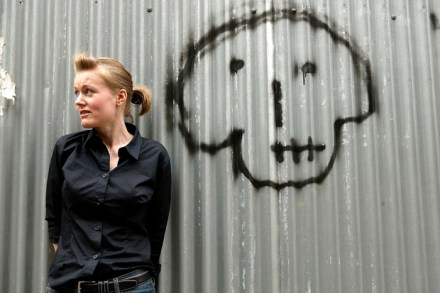
The old ditty got it wrong: it should have been ‘Maybe it’s because I’m not a Londoner that I love London so’. The capital’s biggest fans, I tend to find, are those who weren’t born there, and Emily Chappell is yet another example. Originally from Wales, she has written more than just an engaging account of her work as a London cycle courier: she has chronicled the way in which the capital provides a home for those who don’t fit in elsewhere. The job itself is a perfect fit for a restless soul: Chappell describes the sweet spot where my body became so attuned to the bike and road that all resistance seemed to melt away … experiencing a strange sense of stillness, as though I had gone so far into motion that I had reached its centre.

Drying out in the Orkneys

‘If I were to go mad,’ Amy Liptrot writes in her memoir of alcoholism and the Orkneys, ‘It would come as no surprise at all.’ One surprise of this book is its sanity, which is remarkable, given Liptrot’s beginnings. We open, unforgettably, with her parents passing each other on an island runway. Her mother is being flown home from hospital, holding the newborn Amy; her father, in the grip of a manic episode and a strait jacket, is heading the other way. Liptrot recalls another fit which drove him to smash all the windows of the family farm and hide with her, aged 11, from the police and doctors. ‘As his sedatives kicked in I crouched with my father in a corner of my bedroom, sharing a banana. “You are my girl,” he said.

Age cannot wither her

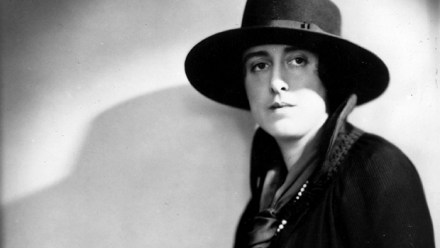
There’s something reassuring about 98-year-old Diana Athill. She’s stately and well-ordered, like the gardens at Ditchingham Hall in Norfolk, her grandparents’ Georgian house where she spent long periods of her childhood. Yes, she really is of that class, though she doesn’t trumpet it (she was presented at court in the brief reign of King Edward VIII) and, as is well known, she is of more than a certain age — born in 1917, towards the end of the first world war but, in social terms, a throwback to the Edwardian era, and half a decade before the publication of Ulysses and The Waste Land signalled the arrival of Modernism. One of the ten essays in this delightful collection is about her attitude to clothes.

One holy mess

This novel, John Irving’s 14th, took the sheen off my Christmas, and here are the reasons.   The comments on the back of the book (‘Irving is the wisest, most anguished and funniest novelist of his generation’ — Chicago Sun Times) made me feel lonely. He might have been wise, anguished and funny in The World According to Garp, 33 years ago. But never once in these 458 pages did I laugh, sympathise, or glean an ounce of wisdom. Instead, I lost confidence that reading novels could ever be a pleasure.   Take the main character, Juan Diego, a ‘dump kid’ growing up on one of the vast rubbish dumps on the edge of Oaxaca (‘Wahaca’). I enjoy reading about a dump as much as the next person, so was hopeful.

Revolution now and then

Maxim Gorky was trumpeted as ‘the great proletarian writer’ by Soviet critics, who considered his novel The Mother one of the most significant books of the 20th century. Completed in 1906, after Gorky had already been recognised internationally, it is based on the events of 1902, when the workers of Sormovo, a factory settlement near Gorky’s native city of Nizhny Novgorod, held what we’d now call a ‘mass anti-capitalist protest’. The demonstration was brutally dispersed and, after a trial that stirred Russia, six of its organisers were sentenced to life in exile. The October Revolution was still 15 years away. The book starts with a description of the settlement’s bleak life, filled with hard work and hard drinking.

A pitiful wreck

When I look at the black-and-white photograph of Julian Barnes on the flap of his latest book, the voice of Kenneth Clark floats up from memories of the black-and-white television of my childhood: ‘He is smiling — the smile of reason.’ Supremely ‘civilised’, thin-lipped, faintly superior, temperamentally given to aphorism, it is no surprise to discover that Julian Barnes is a Chevalier de l’Ordre des Arts et des Lettres. Yet Barnes in his fiction is unlike the simplified Voltaire of Clark’s Civilisation. His novels never proclaim the triumph of reason: instead, they explore the dark and disruptive, uncivilised emotions on the edge of words — love, certainly, but also jealousy, paranoia, inconsolable grief and the fear of dying.

A Day Off

Well, I’ll go window-shopping in Larousse for seeds of words. Strangely, they’re not for sale — you help yourself to what the worlds produce. Here are the conic sections, there the whales, the art, the musical instruments, the wigs.... My search is stopped by a picture of the sarigue, Didelphis, a marsupial of the west, with young. O Marianne Moore, come, look! She curves her ‘long prehensile tail’ right back towards her neck — it’s like the pantograph of an old tram — the little ones climb on, lift their own small prehensile tails, attach, and off they ride to bed. See, one’s still trying to get on. Wait! Wait for me!

Laughter and tears

The Yacoubian Building, the first novel of the Egyptian writer Alaa Al Aswany, sold well over a million copies in 35 languages, was made into a film, and turned him overnight into one of the most listened to voices in the Arab world. What followed — Chicago, set in the city in which Al Aswany did his masters degree in dentistry, and some short stories — did not have quite the charm of his sprawling houseful of driven, troubled, passionate characters trying to survive in a country of extreme social ills. The Automobile Club of Egypt is a second Yacoubian, a saga built around an institution, rich in absurdity and colour and at the same time an important social satire and a harsh criticism of modern Egypt.

Anatomy of a bestseller

Every four seconds, somewhere in the world, a Lee Child book is sold. This phenomenal statistic places Child alongside Stephen King, James Patterson and J.K. Rowling as one of the world’s bestselling novelists. But what makes the Jack Reacher books so successful? This is one of the questions Andy Martin, a lecturer in French and Philosophy at Cambridge, sets out to answer in this intriguing and uniquely unclassifiable book. Reacher Said Nothing, however, isn’t a work of literary criticism or a how-to guide. Martin contacted Child and asked whether he could observe the entire writing process for the 20th Reacher novel, Make Me. Amazingly, Child said yes. ‘So far I have no title, no real plot....

Of hearts and heads

Like most trade unionists in the 1970s and 80s I worked with a fair few communists. Men like Dickie Lawlor, Jock Cowan and Maurice Styles, postal workers for whom all events were viewed through the prism of ‘scientific socialism’. Communism gave them a philosophy by which to live their lives, and they were respected as men of principle even by those who abhorred their politics. Marx may have disparaged religion as the opiate of the people (and, in an even more memorable phrase, the sigh of the oppressed), but it was difficult to avoid the term ‘religious zeal’ when describing the way men like Dickie, Jock and Maurice approached their union work. By the time I knew them they’d long passed the stage of seeking converts.

Altar, font and arch and pew

John Betjeman, the patron saint of English parish churches, once warned against praising British buildings too much. Be careful before you call Weymouth the Naples of Dorset, he said. How many Italians call Naples the Weymouth of Campania? Saint John was spot on, of course. When it comes to the pure ideals of church architecture, London isn’t a patch on Rome or Florence. The Holy Redeemer Church in Exmouth Market, Islington, may be inspired by Santo Spirito in Florence, but it doesn’t match, let alone surpass, its beauties. Still, as Michael Hodges’s scatty book shows, my God, there’s an awful lot of beauty, and intrigue wrapped up in London’s 1,200 Anglican and Catholic churches. Even this hefty volume can only squeeze in 420 of them.

Act of Faith

This winter morning between seven and eight, half a white moon still present, a ghost not shining on plentiful frost and mid-January, in the weeks when Christmas might as well be a lifetime ago, distant as dreams or fate; when journalists shore up columns by defining all the factors converging annually to load some blue Monday with the most misery. And waiting on the landing a fortnight too long decorations, boxes of lights, bauble heirlooms, time-travellers tissue wrapped to be put aside, a loft storage act of faith that all will abide another year, one more Christmas, our rooms blessed with what’s known, fresh each time like a song, or the moon showing and hiding its changing face day and night in the same old, brand new place.

The painter as poser

Bernard Buffet was no one’s idea of a great painter. Except, that is, Pierre Bergé and Nick Foulkes. Bergé was Buffet’s original backer and boyfriend, later performing identical roles for Yves Saint-Laurent, turning the sensitive designer into a global ‘luxury brand’ and turning himself into one of France’s richest men with pistonnage to spare. Foulkes is the accomplished writer on style who, in this new book, aims to rehabilitate an artistic reputation which he feels has been dissed by the narrow prejudices of the art-historical establishment. To a degree, this is true.

The other glorious revolution

There was no science before 1572, the year that Tycho Brahe saw a new star in the night sky above him. To be sure, the Greeks had made efforts to present their knowledge of nature in a systematic fashion, but they lacked the tools — more specifically they lacked the ways of thinking — that have allowed investigators over the past 300 years to question the traditions that have preceded them, to probe the inner workings of nature, and in so doing to build increasingly informative accounts of the world that surrounds us. These ways of thinking were invented over the course of the 17th century: a period whose momentous significance for all that would come after amply justify naming it ‘the scientific revolution’.

Staying put

Publishing a ‘New York’ novel in the months after 11 September 2001 is a surefire, if accidental, way to make it immediately out of date. Especially one about parking. There’s certainly a parking novel to be written in the age of global terror and suicide attackers, but it will have a more security-conscious bent than the amusing small novel Calvin Trillin achieved that dreadful autumn, about a diffident late-middle-aged New Yorker looking for a spot to park from which, as the title suggests, Tepper Isn’t Going Out. Bollards and concrete impediments, armed assault teams, helicopters overhead and a discarded parking ticket or Syrian passport in the glove compartment: those are the sorts of details the novel for the new age will bear.

Carrots — and no stick

Never mind teaching children to cook: they need to be taught to eat. Obvious? Totally, but this is the choosing part of eating, not the chomping and swallowing we are born to do. Yet, terrific survivors that omnivores have proven to be, they do not know poison from medicine unless told so. So, if you were a cave baby all those eons ago, your cave parents would have pointed out the poisonous berries from the nutritious ones, and later on taught you which animals to hunt. Today’s infants face rather more complicated food lessons, and their parents a horrendous task if they are to bring up a brood with good eating habits and perhaps more importantly a relationship with food that is just as healthy.

The Lost Word

I know it cold, the scene in the woods, the grey-toned sky, and snow— the sudden clearing in the underbrush through which a fox now steps, her auburn brush a-ziggety-zagging, as if she would erase her trail, though her tracks in the snow are already lost in the layers of snow now spackling the hemlocks, the woodrush, the blackthorn and bracken, the half-seen woods, the snow-brushed woods.

Dancing like a demon

‘Anything becomes interesting if you look at it long enough,’ said Gustave Flaubert. He might have been talking about this slim volume, which takes a slimmer subject and inflates it to an epic of noble proportions. The subject is unpromising. ‘This is the story of a man who took part in a dance contest,’ runs the opening line. It’s hardly one to set many hearts racing, especially since the event in question is no glitzy Strictly Come Dancing, screened on television for millions. Instead, Leila Guerriero’s focus is the world championships in malambo, an obscure Argentinian dance, whose annual apogee takes place in Laborde, a town of 6,000 inhabitants in the middle of the flat, fertile pampas.