More from Books

Exotic and endangered: Madagascar in peril

Madagascar. There are so many delightful incongruities about the island. Despite being off the coast of Africa, because of the way the ocean currents work it was mainly settled by people from Borneo, 3,700 miles away — what Jared Diamond has described as ‘the single most astonishing fact of human geography’. For similar reasons, it is a biodiversity hotspot; more than 90 per cent of the wildlife is found nowhere else on Earth. And as one of the world’s largest islands, the sheer size can make it hard to assimilate. If ‘the Republic of Madagascar’, its formal title, were stretched out across Europe, the country would reach from London to Algiers.

Old men remember: reliving the horror of Tobruk

‘Old men forget; yet all shall be forgot,/ But he’ll remember, with advantages,/ What feats he did that day.’ Peter Hart quotes the St Crispin’s Day speech aptly, for as an oral historian at the Imperial War Museum, he’s done his bit over the years to record memories. By the 1980s the IWM’s sound archive had amassed an impressive collection of interviews with veterans of the first world war, and so began on those of the second.

‘There were no rules then’: Dana Gillespie’s 1960s childhood

Although I can understand why Dana Gillespie might choose to call her memoir after her most famous album, for the first 170 pages I remained convinced she should have taken a leaf from John Cleland and called it Memoirs of a Woman of Pleasure. For hers has been an extraordinary life (or perhaps half life, as the trail of hi-jinks runs its course by the end of the 1970s). And so, despite reading at times like a cross between Terry Southern’s Candy and Confessions of a Window Cleaner’s screenplay — but with A-listers the ones shaking their sticks — as an evocation of the 1960s SW7-style, Weren’t Born a Man rings wholly true.

House of horrors: Girl A, by Abigail Dean, reviewed

If the last quarter of 2020 saw a glut of novels published, of which there were winners (Richard Osman) and losers (in a just world, Piranesi would still be at number one), January is a less frenzied time for new writers to launch. Even so, there are often hyped and hot new books — among which this year Girl A is one. It comes with excitable reports of huge international sales and an insistence that it will be everywhere. The accompanying blurb also manages to mention repeatedly that the author got a double-first at Cambridge, which, frankly, in these days of being ruled by Oxbridge inadequates who think that being there for three years means everything must be immediately handed to them, I would probably have skipped: the novel is better than the entitlement suggests.

Born out of suffering: the inspiration of Dostoevsky’s great novels

A death sentence, prison in Siberia, and chronic epilepsy. The death of his young children, a gambling addiction, and possible manic depression. Few writers endure such dark lives or possess such bright creativity as Fyodor Dostoevsky. His incomparable experiences inform many of his novels’ most powerful scenes, from accounts of innocent suffering and crazed revolutionaries to nightmarish epileptic fits. He intended to reflect on his traumatic life by writing a memoir but, aged 59, he died of a pulmonary haemorrhage. In 1867, Dostoevsky had four months to write two novels (which amounted to 752 pages) Noting this literary vacuum, Alex Christofi challenges himself to write a sort of third-person memoir for Dostoevsky.

Murder most casual: why Patricia Highsmith’s thrillers are so chilling

Patricia Highsmith’s life was filled with more eccentric, disturbing brilliance than most readers can normally handle; and so the chief attraction of this third biography in 18 years (released to commemorate her 100th birthday) may be its brevity. From the time Highsmith was born (after a failed abortion attempt by her parents), her story starts off dark and then gets much, much darker. Raised in Fort Worth, Texas by the granddaughter of former slave owners, she survived the Spanish influenza to become a smart, hard-drinking student at Barnard, where she exploited, at every opportunity, her affections for pretty, well-bred girls.

Whitewashing Bismarck just won’t wash

The reviewer’s first duty is to declare any skin he may have in the game, so here goes: I write this in a bone-chillingly old house filled with portraits of Prussian Junkers, ancestors of my third son, the oldest of them still wearing steel plate about chest and shoulders, the more recent armoured only by expressions of ineffable superiority. What a lot of them there are. Somehow their Lutheran Prussia — dirt poor by the standards of France and Britain but uniquely militarised, its spiritual heart so far east as to be now in Russia — managed, in the second half of the 19th century, to annex the entire human and industrial strength of wealthy, advanced, largely Catholic western Germany for their ancient ‘drive to the east’.

Family secrets: Life Sentences, by Billy O’Callaghan, reviewed

Despite innovative work by younger writers, there remains a prominent strain in Irish literature of what we might call the ‘sad but nice’: tales of desperation elegantly unfolded, popularised by William Trevor and John McGahern and refined by Colm Tóibín and Mary Costello. A newcomer in this lane is Billy O’Callaghan, whose previous books have been so orgiastically praised by the Booker Prize winner and former literary editor of the Irish Times John Banville that I began to think O’Callaghan might be another of his pseudonyms. And if there’s one feature in Irish novels that shouts louder — or with more forceful quietness — than others, it’s the family and its secrets.

The burden of guilt: The Living Sea of Waking Dreams, by Richard Flanagan, reviewed

Thanks to the Booker Prize, Richard Flanagan is probably the only Tasmanian novelist British readers are likely to have heard of. His reworking of the life of the Australian hero ‘Weary’ Dunlop, a doctor who became a prisoner of war on the notorious Burma Death Railway, in The Narrow Road to the Deep North was a winner of a traditional kind of literary storyteller that has recently become extinct. It seems appropriate that his eighth novel, The Living Sea of Waking Dreams, is also about extinction, both personal and environmental. Tasmania is burning, and as its cornucopia of flora and fauna is wiped out, three children gather to decide whether to let their exhausted 86-year-old mother Francie die, or demand intervention by modern medicine.

‘Mother Volga’ has always been Russia’s lifeblood

‘Without this river the Russians could not live,’ remarked Robert Bremner in his work, Excursions in the Interior of Russia. The year is 1840. The river in question, the Volga, the 2,000 mile-long meandering waterway stretching from the forests of north-west Russia to the steppes by the Caspian. At the time of Bremner’s survey, half of the Russian empire’s fish was caught in the single stretch of river by Astrakhan, the Volga’s final pit stop before flowing out to sea. Since the earliest days of medieval Rus through to the Soviet and post-Soviet eras, the Volga has not simply fed the mouths of its population but has been crucial to Russia’s commercial, cultural and imperial development.

Scenes from an open marriage: Luster, by Raven Leilani, reviewed

One of Barack Obama’s favourite books of 2020, Raven Leilani’s debut comes acclaimed by a literary Who’s Who that includes Zadie Smith, the author’s teacher at New York University. Five months after Luster became an instant New York Times bestseller, it hits British shores on a tsunami of hype that might grate if the novel weren’t so blindingly good. A feat of narrative voice and supple, rhythmic prose, Luster plunges us into the acerbic psyche of Edie, a millennial New Yorker wading through the early-twenties quagmire: student debt, primitive flatshare, artistic ambitions on hold. At the publishing house that pays her meagre wage, grateful diligence is expected of a ‘token’ black hire, yet Edie’s has worn thin.

Paradise regained: how the world’s wastelands are regenerating

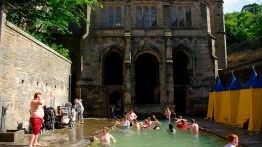
Ignoring the padlocked gate, my six-year-old son Nicholas and I climbed through a break in the metal fence and pushed into the mesh of undergrowth. This was the site of Ducker, the open-air swimming pool that once belonged to Harrow School. Here the young Winston Churchill romped (naked, since trunks were for prefects), as, in his day, did my dad. When I arrived at Harrow in the 1980s, the pool — far bigger than Tooting Bec Lido, which is now the UK’s largest — had just been abandoned. It was covered with graffiti, the haunt of skateboarders. Returning in 2021, I looked for changes wrought by three decades of neglect. Google Maps showed a J-shaped artificial lake, 30m by 150m.

The roots of humanity remain obscure

To comprehend ourselves and the future of humankind we have to understand where we came from. Unlike the approximately 350,000 known species of beetles on Earth, there is just one existing species of human. It is hard to imagine how our bodies and minds might have been constructed along different design principles or generated even a fraction of such diversity. With our growing ability to manipulate human genomes using gene editing, and the emergence of technologies that may enable human genomes to be rewritten in their entirety, the question of what we might become is no longer theoretical. Should humankind decide to redesign itself, the crapshoot of design by Darwinian evolution may become as redundant as taxi drivers in an age of driverless cars.

The criminal code of Rotwelsch deciphered

When Martin Puchner was a child, tramps would turn up at his family home in Nuremberg to be fed by his mother. His father explained that they were drawn by a zinken (sign) associated with Rotwelsch, a language spoken by vagrants and criminals whose name is derived from two terms: Rot (beggar) and Welsch (incomprehensible). The zinken, a cross within a circle carved into the house’s foundation stone, told them that lechem (bread) could be had there. Rotwelsch became Puchner’s key to unlocking a cupboard of family skeletons. His grandfather, Karl, the director of the Bavarian State Archive, was one of many unrepentant Nazis who benefitted from the swift changes in the status quo that followed Germany’s defeat in 1945 and the new threat from Soviet Russia.

The aesthetic prejudice towards white classical statues

In the 1930s curators at the British Museum, under orders from Lord Duveen, a generous donor, scoured and hacked at the friezes and statues of their Parthenon collection. They were trying to remove the smudges and stains thought to be discolouration, to restore the marbles to their original colour — white. But it wasn’t discolouration; it was paint. Though the idea was rejected for years, an arsenal of new technologies — infrared, ultraviolet, X-ray and chemical analysis — has since established that classical sculpture was slathered with the stuff. Though polychromy — the art of painting statues and architecture — was finally accepted in the 1970s, it was proposed over a century before Duveen’s men picked up their chisels.

Murder in Richmond Park: House with No Doors, by Jeff Noon, reviewed

It’s 1981 in Richmond, south-west London. Detective Inspector Henry Hobbes is called out to a rundown house where the octogenarian Leonard Graves has killed himself. There’s vodka, pills, a cut on his arm and a note in his pocket to a woman called Adeline. But who is she? Searching the house, Hobbes and his sergeant, Meg Latimer, discover dozens of identical dresses, each one cut open at the stomach, the gash lined with blood. Despite Hobbes’s sense that something terrible has happened among the faded theatrical memorabilia and musty rooms, it’s not immediately clear what it might be. Then Graves’s son is brutally murdered in Richmond Park, and the case begins to take grip.

Does William Barents deserve to have a sea named after him?

Narratives of frozen beards in polar hinterlands never lose their appeal. Most of the good stories have been told, but in Icebound Andrea Pitzer fills a gap, at least for the popular reader in English, with the story of the 16th-century Dutch mariner William Barents. He sailed further north than any man before him and lives still, on the map, with an eponymous sea off the northern coasts of Norway and Russia. In 1594, during the third decade of his country’s war with Spain, Barents voyaged to the unknown Nova Zembla (‘New Land’ in Dutch), planning to find a route to the fabled riches of Cathay. The notion of a navigable northern ocean had tantalised explorers since the Ancient Greeks, and geographers in Amsterdam thought the North Pole would be warm.