More from Arts

Bitter sweets

Happy Christmas, New End The Seagull; King Lear, New London A blast of seasonal cheer at the New End Theatre. Paul Birtill’s bitter and hilarious family satire, Happy Christmas, starts like a subversive salute to The Homecoming. Upwardly mobile John introduces his posh fiancée Mary to his dysfunctional all-male family. The script is crammed with offbeat gags. ‘Strange taxi-driver,’ giggles Mary as she enters; ‘do you really think his granddad was on the Titanic?’ She refuses to be cowed by John’s ghastly brothers. Kenny is a workshy alcoholic — ‘There’s an art to being on the dole’ — who immediately bums a tenner off her and later rifles through her purse.
Sound and fury

I went out on the razzle with a bunch of reformed drunks last weekend. God, it was fun. The aim was a serious walk, eleven and a half miles, kicking off from Eastbourne, walking over Beachy Head and the Seven Sisters, before doing a sharp right for the final slog to the village of Alfriston and supper. As I motored down to Eastbourne, listening to dear old Brian Matthew’s delightful Sounds of the Sixties on Radio Two, the sun was shining, the sky was an eggshell blue, God was in his heaven and all was right with the world. We met up at Eastbourne station, eight of us in all, though one was a driver ready to rescue anyone incapable of finishing the route. As it turned out, this proved to be everyone.

Breaking hearts

The Rake’s Progress, Royal College of Music; The Turn of the Screw, English National Opera The Royal College of Music’s Britten Theatre is the ideal size for Stravinsky’s The Rake’s Progress, indeed the ideal size for almost every opera I can think of until the first third of the 19th century. What must make it appealing for young singers is that they can sing without straining, that every word can be heard, and that their expressions are visible to everyone in the audience — but of course that deprives them of excuses, too. Not that there was much need of excuses for the second cast of the Rake.

Prepare and reflect

The onset of Advent in the last days of November is supposed to be the herald of great joy at the jollities to come, but for most of us who have left childhood behind it seems to have become a season of dread. How to get through all that shopping and scribbling of cards with the same old time-worn message, ‘Another year gone and still nothing done’? Worse still, all those dreadful parties, fuelled by gassy champagne and greasy snacks. All I want to do, as soon as the leaves fall and the nights draw in, is to go into hibernation, and it requires a superhuman effort to venture out after dark. (I’ve always suspected that my earlier incarnation was as a dormouse.

Dark doings in the suburbs

No doubt one reason why British people like Kath & Kim (often on BBC2, now on Living, Thursday) is that it takes the mick out of Australian suburban life. That makes those of us who lead British suburban lives feel superior. But it’s more than that. It’s very funny. It’s worth watching just for the strangulated, aspirational accents (‘pul-oyse’, ‘luck at moy’), which are a source of delight to Australians, too, as you’ll see on their website, kathandkim.com. On the surface it’s just another family sitcom, but it’s more subtle than the norm, and at times rather dark.

Conquests and coffins

On Tuesday Chiwetel Ejiofor and Ewan McGregor take on Othello at the Donmar. If the show hasn’t sold out already, it soon will. Doubtless the starry cast will help shift a lot of tickets but so will the play’s peculiar ‘self-rationing’ effect. Of Shakespeare’s four great tragedies, Othello is the least often revived. The play has always been particularly problematic, not because it’s bad — though in parts it is — but because it’s so outstandingly good. The final act is perhaps the finest piece of pure theatre ever written, a sublime blend of nail-biting suspense, heartbreaking pathos and triple-fortissimo lyrical effects.

Sex with no appeal

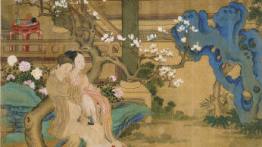
What has come to be known as the Sex Show at the Barbican has received mixed reports. Some people dismiss it out of hand (and unseen) while others profess to enjoy it immensely. One painter I know loved it, but then he is a voyeur both by profession and inclination. I approached it with an open mind, ready to be seduced (if need be, and strictly for the sake of my readers) but found myself all too soon turning judgmental, as critics tend to do. I also found myself thirsting for an oasis of subtlety among the deserts of brashness: thankfully, there are real works of art here interrupting the tasteful or not-so-tasteful pornography, which provide some respite from the overweening lubricity.

Blast from the past

Percy Wyndham Lewis 1882–1957, Design Centre, Rugby School, until 8 December In the 1915 Vorticist Manifesto, published in the movement’s magazine Blast, Wyndham Lewis (he dropped Percy) wrote: Lewis is one of them, as this first-rate exhibition at his alma mater — he was a pupil for two years from 1897 — amply demonstrates. It is the sole commemoration of the 50th anniversary of the death of this artist writer, who is comparable only with that other double-yolked exception to the rules, William Blake, one of his heroes, born 250 years ago this 28 November.

Last farewells

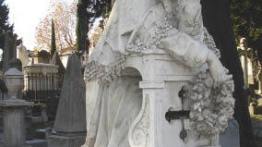
Just outside Florence’s city walls, marooned in the middle of a huge great ring road, lies a foreign field that is for ever England. Well, it’s really for ever Switzerland. The English Cemetery of Florence is owned by the Swiss Reformed Evangelical Church and is officially called the Protestant Cemetery of Florence. But, because the English presence looms so large in Florence, the Florentines call it the Cimitero degli Inglesi. Certainly, most of the 1,700 dead interred since the cemetery’s foundation in 1827 are British, with many fewer Swiss, Americans, Russians and Protestant Italians. There are still 70 x 70 cm plots for urns available, now open to anyone of any religious persuasion. Most of the epitaphs, too, are in English.

Present thoughts

’Tis the season to be cheerful, especially if you like shopping. Which, obviously, as a heterosexual white middle-class male in his forties with no money, I don’t much, unless it’s for books or CDs. But at this time of year those of us of a non-shopping persuasion must bury our prejudices, venture out into the madness of pre-yule consumerism and buy lots of books and CDs for our friends and relatives. Or for ourselves, just to cheer us up. So here are a few seasonal recommendations. Such is the profoundly subjective appeal of all pop music that these recommendations may turn out to be completely useless to you — in which case, I should probably apologise now, just to save time.

Shine on you crazy diamond

The ambulance creeps to a halt outside the Brixton Academy at 9.15 on the evening of Amy Winehouse’s second London gig on Friday and is greeted with a ripple of excitement by the crowd. ‘She’s arrived’ is the whisper through the queue. And whether by this means or another, Amy does indeed arrive, beetling on to the stage in drainpipe jeans and a T-shirt, her embonpoint fabulous, her hair leaning crazily like an exotic fruit somewhat behind the rest of her. She pats her chest, perhaps for comfort or to see if it is still there, takes a swig of a big drink, and her smoky sexy treacle-dark voice vaults into ‘Addicted’. As easy as that, and the audience is hooked. Yes, she was late, but so what?

Traditional fare

As the holiday season is all but upon us, I thought I would take a moment to reflect on Christmas movies of the past and the standards that have been set. There was one called Jingle All the Way that I liked very much indeed. It was about a man of foreign heritage who spoke in a heavy accent and had to go shopping for a Turbo Man toy for his son. This man was most amusing as he kept falling over into a fountain and even dropped a pile of packages on to a lady’s head and broke her hat. There was also a postman in the film who chased the man, and they both made fools of themselves. There was another excellent film, Elf, in which a man wore a green tunic and yellow tights in Manhattan and got arrested!

Good humour, bad taste

L’Elisir d’amore; Das Wunder del Heliane After not seeing Donizetti’s L’Elisir d’amore for years, I went to two new productions of it in five days. The Glyndebourne one, which I reported on last week, is admirable, but the Royal Opera production is in some ways better still. That surprised me, because the director is Laurent Pelly, who also designs the costumes, with Donate Marchand, and the sets are by Chantal Thomas. That was the team responsible for La fille du régiment, the enormous success at the beginning of the year which I found so irritating, though almost everyone else left holding their ribs from an evening of unmitigated hilarity.

Lunatics at large

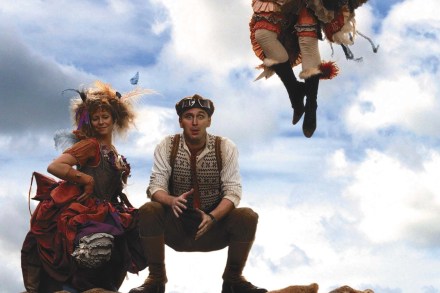
The Dysfunckshonalz!; Some Kind of Bliss; William Blake’s Divine Humanity The spirit of punk and its exhilarating lunacies are brilliantly captured in a new show at the Bush. Mike Packer’s affectionate satire tells the story of The Dysfunckshonalz, a major punk band of 1977, who 30 years on are approached by an American bank eager to use their best-known song to promote a new credit card. Bribed with a mountain of cash, the middle-aged stars fly to America to reprise their act. But at the debut gig their singer, Billy Abortion, reverts to his punk roots and sabotages the show by stabbing himself on stage and collapsing in a pool of blood yelling, ‘Three cheers for bin Laden.

Radical prophet

It’s not what you think, we were warned by Jenny Uglow, the far-seeing biographer of Hogarth and Elizabeth Gaskell. Those ‘dark Satanic mills’ and ‘mountains green’ of William Blake’s epic poem were never intended as an anthem in praise of England’s democratic virtues. Blake was neither a conservative, nor nostalgic for an imaginary golden past. On the contrary, he was a republican and a dissenter; an ardent believer in the necessity for personal, social and sexual liberty. In the verses that have become known as ‘Jerusalem’ he was provoking his readers, warning them that the England of their time was anything but a pleasant land for the vast majority of its people.

Royal treatment | 1 December 2007

On the very night that Monarch: The Royal Family at Work (BBC1, Monday) was being broadcast whom should I bump into at the Pen International quiz at the Café Royal in the queue for the coats but Stephen Lambert. Lambert, you may remember, was the head of the independent production company RDF who personally edited that dodgy reel preview which seemed to show the Queen walking out in a huff from a photo shoot with Annie Leibovitz, when in real life she hadn’t. As a result, he had to step down at RDF, while Peter Fincham lost his job as controller of the BBC, and dark things were muttered about the documentary being doomed never to see the light of day. Well, that would have been stupid, wouldn’t it?

Screen saver

Igor Toronyi-Lalic on the important role opera played in the early days of cinema In 1978, the Swiss impresario Rolf Liebermann picked the veteran American director Joseph Losey to direct a film adaptation of Mozart’s opera Don Giovanni. At that point they hadn’t yet met or spoken but Liebermann, having passed over Franco Zeffirelli and Patrice Chéreau, must have felt pretty confidant that Losey was the right man for the job. When they finally came together, Liebermann was horrified. Losey had never heard Don Giovanni and considered Verdi and Wagner boring. To prove to him it wasn’t, Liebermann dragged Losey to the Paris Opéra where he was director. Before the lights were out, Losey was asleep.

Domestic harmony

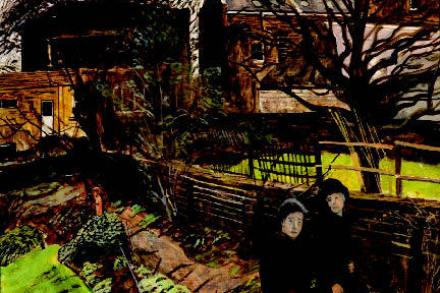
Home and Garden: Domestic Spaces in Paintings 1960–2004; Geffrye Museum, Kingsland Road, E2, until 4 February 2008 The final part of a quartet of exhibitions devoted to the subject of Home and Garden, competently supported by a useful catalogue, is currently enlivening the Geffrye Museum in London’s East End. It’s a pleasure to visit: the Geffrye’s permanent display of period rooms is always worth looking at, there’s a garden and restaurant, and downstairs is the still newish space for temporary exhibitions.