More from Arts

Caught napping

Sleeping & Dreaming Wellcome Collection, 183 Euston Road, London NW1, until 9 March 2008 ‘To sleep, perchance to dream...’. If only. We are supposed to spend one third of our lives asleep, but many find getting their regulation quota a losing battle, and others don’t even want to. Sleep is beleaguered in our busy world, fighting a slow battle of attrition against the massed pressures of modern life. And why do we sleep, and dream? It is still a mystery, although the scientific community is awash with different theories. For those of us who toss and turn nightly, armed with a fistful of heavily rationed sleeping pills (or a slug of Night Nurse, if desperate), that elusive and desirable realm enlivened with often baffling imagery takes on added fascination.

Reasons to be cheerful | 5 January 2008

I am an idiot. Last month, in this space, I proffered the usual random selection of favourite albums of the year, not a single one of which had actually been released in 2007, for, like many people (I’d like to think), I can be a little slow on the musical uptake. A day or two after the column had been filed, I was listening to Wilco’s Sky Blue Sky (Nonesuch) for maybe the 78th time when I suddenly thought, ‘Hang on, this came out this year. And it’s as good as anything I’ve heard this year as well.’ Thus proving that I am appreciably slower on a far wider range of uptakes than I had previously suspected. To be fair, though, Wilco’s album could be an easy one to disregard.

Amid the mudflats

If you’ve been waking up at 3 a.m. after yet another nightmare about climate change, there’s been a well-timed antidote on Radio Four this week. On The Estuary (made by the wildlife team, Chris Watson as sound recordist, Mike Dilger as naturalist and Stephen Head as the landscape historian), we heard how The Wash on the east coast of England has ebbed and flowed through the centuries. Maybe we are entering a new meteorological phase where sea levels will rise and what were once silty fields and verdant pastures will disappear under water. But what’s new? The estuary of the fenland rivers has changed radically over the last 12,000 years since the icecap melted and the North Sea became a huge tundra plain.

Lies and humiliation

Extras (BBC 1), Parkison: The Final Conversation (ITV), Sense and Sensibility (BBC 1), David Cameron's Incredible Journey (BBC 2), The Hidden Story of Jesus (Channel 4)  We said goodbye to Michael Parkinson and Andy Millman over Christmas. Andy Millman was the hero of Extras, whose finale went out on BBC1 on 27 December. This was what I think of as a sit-traj, a comedy with more misery than laughs. It was mainly about humiliation: Andy’s doll, based on his character in his grisly sitcom, is outsold by a Jade Goody doll that screeches racist abuse. A harridan from the Guardian (I genuinely have no idea which of my colleagues was meant) harasses him into admitting he’s been lying. The Ivy has no table for him.

Flemish tour de force

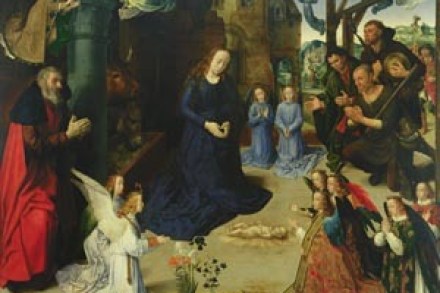
Some years ago I was walking through the closed galleries of the Uffizi with a group of journalists, when we passed the Portinari Altarpiece. In those spaces, free for once of jostling crowds, it was suddenly obvious what a wonderful work of art this mighty triptych was. With paintings, as with people, you often get an instantaneous impression — in this case of force, density, presence. In comparison, the big Botticelli pin-ups looked flimsy. Despite the surrounding competition (which is hot, to say the least), here clearly was one of the greatest pictures in Florence. And it is not a masterpiece by a Florentine, or even an Italian, but a Fleming: Hugo van der Goes.

Carnival of crassness

Stephen Bayley on why he despises December’s tawdry and sentimental retail landscape Christmas balls. This is a season to be forced into jollity. And one of mixed messages, dark ambiguities. Ghosts of Christmas past make me shudder. There is an old story about a Tokyo department store which, anxious to demonstrate its easy familiarity with sophisticated Western tastes, arranged for a vitrine to have an illuminated tableau of Santa Claus busy being crucified. Perhaps some similar installations on high streets and malls would have an admonitory effect on the sewers of avarice, cupidity and unreflective sentimental tosh that comprise Britain’s retail landscape in December. Then again, maybe not.

Victorian virtues

The fight has gone out of Victorian- bashing as a pastime. The high moral aims and low double standards of so much 19th-century culture, characterised by unsmiling portentousness and once regarded by Evelyn Waugh, Nancy Mitford et al. as a ‘shriek’, pale alongside the emptiness of modern celebrity worship. ‘Victorian’, which once meant ugly, silly or undesirable, has come to suggest the opposite — and so a harmlessly malicious parlour game falls by the wayside. But the massive swell of the 19th century continues to throw up genius oddities. Take Henry George Alexander Holiday, who died 80 years ago this year after a career that embraced notable successes as both a painter and a designer of stained glass.

Smoke signals | 15 December 2007

The indulgences of Christmas in the forms of food and drink are fairly well represented in the operatic canon but less socially acceptable indulgences, such as smoking and even drug abuse, don’t feature quite so frequently. Hardly surprising, really, as singing doesn’t seem naturally to combine with snorting a line or the long, luxurious inhalation of nicotine-rich smoke deep into the lungs. Surprisingly, however, back in the days when smoking was considered to be positively beneficial — ‘Craven A: for your throat’s sake’ — a number of opera singers actually advertised for tobacco companies.

Subverting Wagner

Presumably Bernard Haitink took, or was administered, a huge overdose of Valium before he began conducting Parsifal at the Royal Opera last week. What else could explain this fairly experienced Wagnerian’s conducting so featureless an account of Wagner’s last, most subtle and all told perhaps greatest score? Even the opening bars, unaccompanied melody with telling inflections which prefigure what will happen to it later, gave the impression of being a first run-through by players who had been told just to perform the notes — the exact opposite of how it sounded six years ago, when Simon Rattle inflected virtually every note separately. And because there was no emphasis, colouring or the faintest hint of rubato, there was no tension.

Night of disaster

Honestly, Polish films. They come over here, open in cinemas — our cinemas; your local Odeon — and, if that weren’t enough, they are smart and they are funny and it shouldn’t be allowed. What is the government doing about this? Does the government even know exactly how many Polish films are actually coming over here, and stealing our audiences? It’s obscene. Why doesn’t someone put a stop to it? I, for one, would not be recommending The Wedding if I could help myself, but I can’t. Alas, self-discipline has never really been my thing. The Wedding is, thankfully, no My Big Fat Polish Wedding, which would be very tiresome indeed. Even the Greeks couldn’t pull that off.

Scholastic mystery

Doubt: A Parable is a small intriguing play set in a New York Catholic school. When a 12-year-old boy is caught getting smashed on altar wine, the fanatical head teacher, Sister Aloysius, starts to investigate. She’s convinced that the lad has been corrupted by a charismatic and handsome young priest Fr Flynn. Outraged, Fr Flynn claims that his closeness to the boy is innocent and that her groundless accusations have torn their friendship to pieces. This is a highly unusual play. Tedious and slow to start with, it consists of nothing but seated characters talking to each other.

Embracing Grainger

What can it be, this squat semicircular structure nestled inconspicuous yet peculiar amid the faculties and offices along the leafy university stretch of Royal Parade, Melbourne, Victoria, Australia? Looks like a bus station without passengers, a public lavatory without users; perhaps still more (being windowless save for a high band of opaque glass bricks) a wartime bunker or bomb shelter. There’s a front door, tightly sealed; the bell yields no answer; the inscription gives nothing away — except to those who already know what they seek. For this singular building houses the inheritance of the most plural composer who ever lived: Percy Grainger, Melbourne’s greatest son and the 20th century’s most maverick musician.

World winner

Seventy-five years ago this coming Thursday the ‘Empire Service’ was born, just in time for George V to announce its arrival in his very first Christmas broadcast to the nation. He sounds remarkably un-pukka on the archive recording. (You can hear a snippet from it on the BBC World Service website: just log on and look for the Free to Speak 75th anniversary logo. There are 75 one-minute selections, one for each year; a great party game for the family once Dr Who is over.) The King promises salvation by shortwave to the men and women ‘so cut orff by the snows, the deserts, or the seas that only voices out of the air can reach them’; with not a trace of RP except for that giveaway ‘orff’.

Seasonal shortcomings

Sorry, you’re not getting your Christmas present this year. Yes, I know what you want: one of those columns where I avoid TV altogether and just rant madly about myself for 800 words. Well, tough. It’s been one of the crappest, most hateful years of my life and, though I’m not holding you all totally responsible, I do think you must bear your share of the blame. You have not adored me enough. You have not showered me with sufficient — indeed, any — gifts. You have not bought nearly enough copies of Coward on the Beach or How to Be Right as perfect Christmas presents for all your friends. So all I’m going to do for the rest of this column is talk about TV. TV TV TV boring TV. Until you’re sick of it.

All points East

Serendipity is the best aspect of travel — the chance encounter, the unexpected discovery — and a journey overland to China by rail can throw up all sorts of surprises. In Moscow we bumped into the countertenor Michael Chance, who was there for the first of a series of recitals with the Soloists of Catherine the Great, and who whisked us off to their rehearsal in the city’s Catholic cathedral. This celebrated ensemble was founded in 2001 by Andrey Reshetin, a former violinist in a radical, agitprop Russian rock band, but classically trained and now dedicated to the authentic performance of baroque music.

Drawing on experience

Theatres of Life: Drawings from the Rothschild Collection, The Wallace Collection, Manchester Square, London W1, until 27 January 2008 Pop Art Portraits, National Portrait Gallery, until 20 January 2008, Sponsored by Lehman Brothers Waddesdon Manor, the stately home of the Rothschilds near Aylesbury now managed by the National Trust, is lending for the first time a group of master drawings for outside exhibition. London’s Wallace Collection is the fortunate recipient, and some 75 high-quality drawings (mostly French 18th-century) are currently on display in the basement galleries of Hertford House in Manchester Square. Here is yet another example of the current fetish for subterranean galleries devoid of natural light.

Marital tensions

Bauhaus 1919–1933, Middlesbrough Institute of Modern Art, until 17 February With all the ‘boundary-blurring’ going on in contemporary art, the old distinction between art and craft ought to be history. But snobbism is apparently so hard-wired into our aesthetic psyche that the distinction has managed to survive by appealing to the Wildean doctrine, ‘All art is quite useless.’ If something has a use, the theory seems to go, it isn’t art: if it’s useless, it’s in with a chance. The new Middlesbrough Institute of Modern Art — mima for short — set out with a mission to show arts and crafts under the same roof.

Insight denied

Mark David Chapman killed John Lennon on 8 December 1980 as he returned to his New York home after a recording session. As Lennon entered his apartment building, Chapman drew a pistol, called out to Lennon, then shot him several times. This film, based on Chapman’s own journals as well as various transcripts, is told almost entirely in Chapman’s own words, beginning with an opening, raspy voiceover that goes: ‘There was no emotion in my blood, there was no anger, there was nothing. It was dead silence in my brain; dead cold quiet. He looked at me, he looked past me. And then I heard a voice in my head. It said “Do it, do it, do it” over and over again.