More from Arts

The unstoppable rise of television-rewatch podcasts

Talking Sopranos — a new weekly podcast which launched this month— is another example of a seemingly unstoppable sub-genre occupying an ever-growing slice of the podcast market: the television-rewatch podcast. The format is simple: take any much-loved yet expired television series (the kind usually prefaced by words like ‘I can’t believe you haven’t seen…’) and scan the cast list until you find some former stars willing to work for an affordable rate. Record them giving an audio commentary on each episode and, bingo, you’ve got yourself dozens of hours of podcasts — and a massive fan base waiting to be converted to listeners.

The importance of sadism in writing a great screenplay

How do you tell a great story? According to Craig Mazin, you have to be a sadist. ‘As a writer, you are not the New Testament God who turns water into wine,’ Mazin chuckles on his long-running podcast Scriptnotes. ‘You are the Old Testament God who tortures Job because, I don’t know, it seems like fun.’ Mazin wrote HBO’s horrifying, incandescent miniseries Chernobyl, and so knows of what he speaks. In the episode of this podcast titled ‘How to Write a Movie’, he describes how screenwriters build plot out of suffering. He outlines a scenario, making the stakes higher each time. Suppose our main character is a single father desperate to protect his child. Not good enough.

The artist who left no physical record of her work

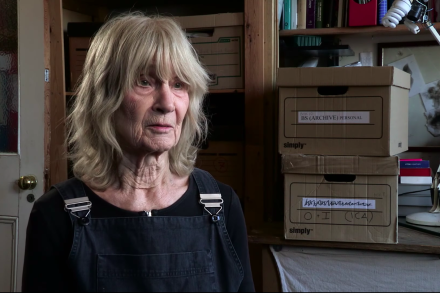
While locked-down galleries compete to keep their artists in the public eye — or ear — by uploading interview podcasts, a treasure trove of earlier recordings is being overlooked. Artists’ Lives, part of the British Library’s oral history archive, is a collection of interviews with 370 artists, 200 of which are available on the British Library Sounds website. As an account of British art of the past century they are more comprehensive than Vasari’s Lives and more reliable, coming as they do from the horse’s mouth. They are also exhaustive. But for those who haven’t got all day to follow the fascinating career of Guyanese-born Frank Bowling RA through 17 hours of recordings, edited extracts are now available as Voices of art.

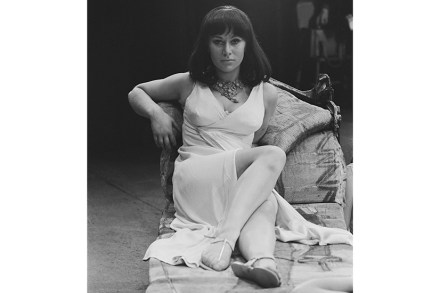
How The Spectator discovered Helen Mirren

One of the first jobs I ever did for The Spectator was to find out if professional wrestlers fixed the outcome of their fights in advance. This was 1965. The editor who wanted to know was Iain Macleod, a future chancellor of the exchequer filling in time while his party was out of office by dabbling in journalism. He turned out to be an addict of the professional wrestling screened on Saturday afternoon TV. In spite of the spinal disease that had immobilised his back and neck, he mimed what he meant by throttling himself without getting up from his chair in an Indian deathlock. His deputy editor, his political editor and I watched this unnerving performance in horrified silence. ‘Wouldn’t it be better if we sent a man?’ asked the deputy editor after a long pause.

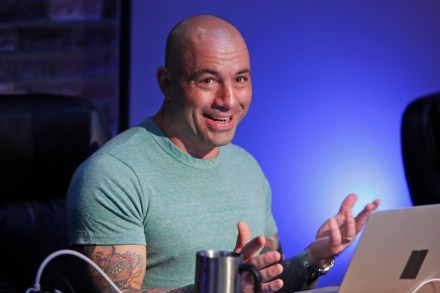
The genius of Joe Rogan

Last month, just before coronavirus conquered the airwaves entirely, millions of Americans gave up two hours to hear a professor of epidemiology discuss the emerging pandemic. Despite its huge reach, not to mention its quality, the interview wasn’t broadcast on any of the news networks. Rather it was the work of a former martial-arts pundit and hallucinogenic-drug enthusiast who also happens to be one of America’s most popular — and influential — podcasters. Although it racks up some 190 million downloads a month, The Joe Rogan Experience tends to fly somewhat under the cultural radar — particularly in Britain. Even worse, his brash style and predominantly male fan base means that Joe Rogan is sometimes unfairly labelled an arch-reactionary.

How to succeed in sculpture (without being a man)

Whee-ooh-whee ya-ya-yang skrittle-skrittle skreeeek… Is it a space pod bearing aliens from Mars? No, it’s a podcast featuring aliens from Venus: women sculptors. If the intro music to Sculpting Lives: Women & Sculpture sounds like Dr Who, its two jolly presenters — Jo Baring, director of the Ingram Collection of Modern British & Contemporary Art, and Sarah Turner, deputy director for research at the Paul Mellon Centre for British Art — come across as younger, slimmer, artier versions of the Two Fat Ladies. ‘Jo can talk about Liz Frink’s work until the cows come home,’ Sarah informs us at one point before warning Jo: ‘You’re going to have to convince me a little bit.

Are there ways in which virtual exhibitions are better than real ones?

Six months ago I published a book about travelling to look at works of art. One such journey involved a round trip of about 6,000 miles to contemplate minimalist sculptures in the Texan desert. But the point wasn’t so much the distance as the importance of standing physically in front of the works themselves. Seeing the actual thing, I argued, was fundamentally different from looking at it in a book or on a screen. Nowadays, of course, unless you live within walking distance of a notable sculpture, that’s really all there is. A week ago my inbox was flooded with messages announcing that the art institutions of the world were closing until further notice. A few days later there was another deluge of announcements, but this time it was online exhibitions.

You’ll keep saying ‘I’m sorry, did I hear that correctly?’: Fiasco reviewed

Kevin Katke was quite a man. He had no military training, no political background and no espionage experience. Nonetheless, his hatred of communists and can-do attitude made him the pre-eminent idiot savant of private American intelligence throughout the Reagan administration. It was a peripatetic career that culminated with him spearheading a bungled plot to oust a leftist regime in Grenada while holding down a full-time job at Macy’s. Call it the American dream. I learnt this — along with dozens of other things to make you say, ‘I’m sorry, did I hear that correctly?’ — listening to Fiasco (Luminary), a political-history podcast whose second season retells the bizarre and shambolic story of the Iran-Contra scandal.

Oracles, perverts and the Dirtbag Left

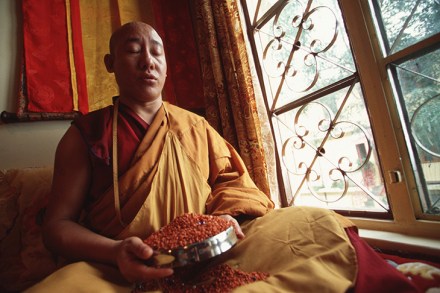
For 500 years the State Oracle of Tibet has worked as a kind of angry immortal advisor to the Dalai Lama, a Tibetan hybrid of Dominic Cummings and John Dee. The current incumbent, like all previous ones, alternates between his human incarnation and his spirit version. ‘In Tibetan Buddhism, the unseen parallel world of spirits is not to be taken lightly,’ explains anthropologist David Sneath on Heart and Soul (BBC World Service). ‘There are so many other living species,’ the Minister of Religion and Culture tells Sneath, ‘many of which we don’t even see.

An Al-Qaeda double agent explains what’s really going on in Middle East

When will the definitive history of the modern Middle East be written? For 20 years and more, a continent has been torn apart by invasion, upheaval and civil war. It took hundreds of years for balanced histories to be written of the Reformation, European history’s most obviously comparable period. If you want the whole story of the modern Muslim world, written from a dispassionate, God’s-eye view, you may be waiting a long time. For the moment, more personal accounts will have to suffice, and Conflicted, a series of amiable hour-long conversations between the Middle East expert Thomas Small and former jihadist Aimen Dean, makes a strong case for just this kind of opinionated, idiosyncratic history. ‘There is no one on planet Earth like Aimen Dean,’ says Small.

Chilling: Arthur Pita’s The Little Match Girl at Sadler’s Wells reviewed

Did your feet twitch? That’s the test of The Red Shoes. Did your toes point? Your ankles flex? Your arches ache to dance all night? I defy you to watch Powell and Pressburger’s film of The Red Shoes (1948), inspired by a Hans Christian Andersen story, and not feel the sinister magic right down to your last metatarsal. First staged in 2016, Matthew Bourne’s riff on The Red Shoes is a show about show business. In spirit it is closer to Singin’ in the Rain than the weird Technicolor glamour of Powell and Pressburger. This is a fairy tale about stage flats and spotlights, cigarettes and fur coats, about ballet masters, wardrobe mistresses, sheet music, leotards, bouquets and the barre.

Alfred Dreyfus is being erased all over again

In London to promote a book, I received an invitation to a secret screening of An Officer and a Spy, Roman Polanski’s new film about the Dreyfus affair. I boarded public transportation to a clandestine destination, somewhere in England, to view what recalled for me the samizdat literature once produced in Communist eastern Europe. I looked over my shoulder several times to see if anyone was watching me; if the possibility of exposure wasn’t real, my anxiety certainly was. My emotional reflexes still echo the trip I took to Prague in 1983 to meet dissident writers during which I was followed. But why all the cloak-and-dagger dramatics now? Why can’t I reveal where I went? An Officer and a Spy is untouchable in the Anglo-Saxon world.

How to make a Christmas ballet hit: behind the scenes at Scottish Ballet’s Snow Queen

Ballet, like bread sauce and green chartreuse, is often just a Christmas thing and the UK’s national companies plan their schedules accordingly, surrendering to the cold fact that a Christmas hit can cross-subsidise less bankable sections of the repertoire. The Nutcracker is the safest choice — English National Ballet’s unbroken run began in 1950 when sugar rationing was still in force — but Christopher Hampson, director of Scottish Ballet since 2012, is committed to the ‘Five in Five’ programme that marks the company’s golden jubilee: five new full-length productions in five years. Hampson’s The Snow Queen will be the second in the series and is touring with 57 performances, half of his company’s annual output.

The Queen, and indeed the British public, deserve better than The Crown’s lies

The Duke and Duchess of Cambridge recently met with survivors of national disasters. They were attending the launch of a new charity. The Duke made a short, supportive speech. But much more important was the private time he and the Duchess spent with the survivors. As Lord Dannatt, who was hosting the public meeting said: ‘Their empathy with those affected demonstrated the vital link between the royal family and people of this country.’ That vital link is indeed one of the key strengths of the monarchy. Countless (and almost always unsung) hours are spent every year by royal family members with people needing recognition or comfort, as they visit schools, factories, charities, people’s homes.

How Nova revolutionised women’s magazines

Batsford has just brought out a huge tome on Nova — ‘one of the most influential magazines in history’ — compiled by two of the magazine’s star art directors, David Hillman and Harri Peccinotti. It covers the ten years that the magazine existed, 1965 to 1975, and focuses on the brilliant and groundbreaking layouts it introduced. But somehow it is not quite the Nova that I loved when I went to work there as assistant editor in 1967. For me, Nova was its editor, Dennis Hackett, who had been brought in to save the failing magazine soon after its launch. I don’t know what genius first thought of putting a tough Yorkshire newspaperman in charge of a women’s magazine but he had already made a name for himself on trendy Queen.

The cult of Trifonov is doing the pianist no favours

Grade: B– Deutsche Grammophon have decided that Daniil Trifonov’s new Rachmaninov piano concertos with the Philadephia Orchestra and Yannick Nézet-Séguin are a railway journey. The video trailer offers no explanation — but, boy, they certainly threw some cash at their conceit. The pianist is dressed like a Russian anarchist, wandering wild-eyed through a railway carriage. Is he fleeing a ticket inspector? Apparently not, because later he’s playing on the train, presumably in the compartment reserved for grand pianos. Those were the days! Last year we had the second and fourth concertos, entitled Destination Rachmaninov: Departure. Now it’s Arrival — the first and third.

Unsettlingly faithful to the spirit of Schiele: Staging Schiele reviewed

‘Come up and see my Schieles.’ Those were the words that ended a friend’s fledgling relationship with an art collector. One evening looking at Egon Schiele’s skinny naked scarecrows was enough. Staging Schiele, a one-act dance piece by choreographer Shobana Jeyasingh, is unsettlingly faithful to the spirit of Schiele’s art. If the skin creeps, if the stalls recoil, then the dancers — one man and three women — have done their job. The opening solo is danced by Dane Hurst stripped to his pants in a powerful display of athletic narcissism. His only partner is a small hand mirror at which he lunges and thrusts. Hurst sprawls and crawls and scratches and writhes and bends his body into double-jointed spider shapes.

The man who built Britain’s first skyscraper

In 2011 Britain’s first skyscraper was finally given Grade I listing. The citation for 55 Broadway — the Gotham City-ish home of Transport for London, which sprouts up from St James’s Park Station — said that the building was important in a number of ways: its architect Charles Holden, the designer of Senate House and a range of breakthrough modernist Tube stations in the 1930s, was increasingly recognised as major. The building’s scale and structure were pioneering for London in 1929. And the sculpture on its otherwise plain façades was by important artists including Jacob Epstein, Eric Gill and the young Henry Moore (his first work on a public building and a rare figurative human-in-motion figure).

Woke slogans welded to incompetent grunge: Neil Young’s Colorado reviewed

Grade: B- Horribly woke boilerplate slogans welded inexpertly to the usual incompetent Crazy Horse grunge. Young and his pick-up band of now 50-years standing usually work well together — as on Zuma, Everybody Knows This is Nowhere and even Ragged Glory. But that’s when there were a few decent songs in the mix, stuffed with compelling ideas and interesting imagery. That sort of thing is in terribly short supply here. ‘She Showed Me Love’ staggers along for an unendurable 13 minutes: ‘I saw old white guys trying to kill mother nature.’ Just old white guys? How about you check out the Indonesian and Brazilian loggers for a second? Then the tuneless thud of ‘Shut it Down’ — ‘shut the whole system down!

Patently insincere: Kanye’s Jesus is King reviewed

Grade: B– Kanye West has found Jesus Christ. Lucky old Christ. If I were Christ I’d have hidden out a while longer, frankly, but there we are. The most lauded (mysteriously) performer in the world right now wishes us to believe that he has been reborn, as a kind of cross between Billy Graham and the Revd Ian Paisley. The man who previously requested his girlfriend to perform oral sex upon him so that he didn’t get ‘spunk on his mink’ is now instructing people not to have premarital sex. The man who recently described himself as ‘beyond all doubt’ the greatest artist in the entire history of the world is now suffused with humility, as befitting a Christian proselytiser. You can believe this latest schtick if you want; I don’t.