More from Arts

The woman who invented selfies

It took a while for Brigid and I to get to know each other, not to mention like each other. But then it was total lifelong devotion. At first, when I started out at Interview, in 1970, Brigid would give me The Glare, which was the negative equivalent of Nancy Reagan’s The Gaze. One or two seconds of that killing look were enough to put across Brigid’s message: stay away. But a few years later, she gave up speed, moved to a proper apartment on East 22nd Street, and took a steady job as receptionist and transcriber of Andy Warhol’s tapes at the new Factory at 860 Broadway. That was when we bonded.

Stuck on stucco

Whenever the words ‘stucco house’ appear in the newspapers, you can be certain the occupiers have been up to no good. The Russian kleptocrat in his stucco palace in Mayfair. The shamefaced prime minister seeking refuge in the stucco mansion of a party-donor chum. The disgraced wife-throttler with a stucco terrace in Eaton Square. In each case, it is miscreant stucco, offshore-trust stucco, stucco hiding corruption and foul play behind whiter-than-white, butter-wouldn’t-melt façades.

Will the real Van Gogh please stand up

Vincent van Gogh spent a remarkably short span of time in the southern French town of Arles. The interval between him stepping off the train from Paris on 20 February 1888 and his departure for the asylum at Saint-Rémy on 8 May the following year was a scant 14-and-a-half months. For some of this time the painter was hospitalised and seriously ill, yet in this brief period he produced not just one, but several of the greatest pictures in the history of art. It might be thought that there was nothing more to discover about Vincent in Arles, a subject that has been so discussed, investigated, dramatised and filmed over the years. But this year a flurry of fresh information has appeared.

Napoleon dynamite

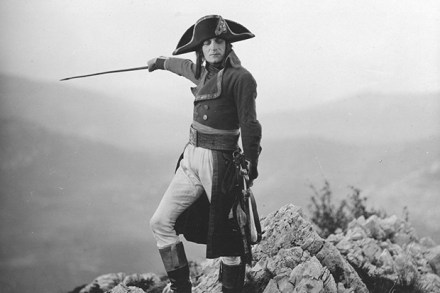
I shall never forget my first encounter with Abel Gance’s Napoleon. I saw it under the most unpromising circumstances — fragments of the great original, shown on a home projector, 25 years after its original release. Yet those fragments changed my life. I was 15, still at school in Hampstead, and already obsessed by the cinema. My parents had given me a projector for my 11th birthday. Since the only films available to me were silent films, I found myself immersed in the rarefied atmosphere of a forgotten art. As home movies were being abandoned in favour of television, I found a surprising number in London’s junk shops. Among the best were the French silent films. My admiration for them, however, was subject to the occasional shattering blow.

Mistaken identity

The Romanovs were a hot topic in 1967: it was the 50th anniversary of the Russian Revolution, memories of Ingrid Bergman’s Oscar winning Anastasia were still fresh and Robert Massie’s Nicholas and Alexandra was on every bestseller list. Kenneth MacMillan was ‘sick to death of fairy tales’ and his one act treatment of the Anna Anderson story, with its groundbreaking use of archive film and uncompromising Martinu score, was a ballet for grown ups that wrestled with the very nature of human identity. Lynn Seymour, the greatest dance actress of her generation, created the role of the mental patient who might (or might not) be a Grand Duchess and the production, made for Berlin’s Deutsche Oper, was an immediate critical and popular success.

March of the makers

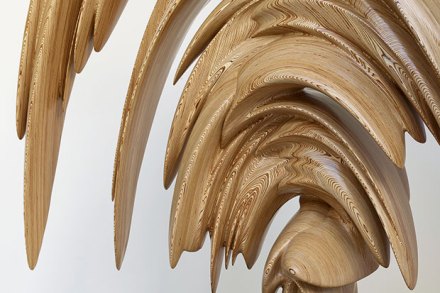
Until earlier this year, a squat sculpture nestled rather unobtrusively outside 20 Manchester Square in Marylebone, an address once made famous by the cover of a number of albums by the Beatles. The building has since been renovated into smart, slightly anonymous offices and the sculpture suited it. Few knew that it was a work by Tony Cragg, who towards the end of the 1980s was one of Britain’s best known artists, winning the Turner Prize in 1988 and representing the country at the Venice Biennale the same year. Last winter the sculpture, titled ‘Under Circumstances’, was taken away. There was no fanfare or report as to why, or where, it had gone. It would have been easy to conclude that this was fair enough.

Yes, he Khan

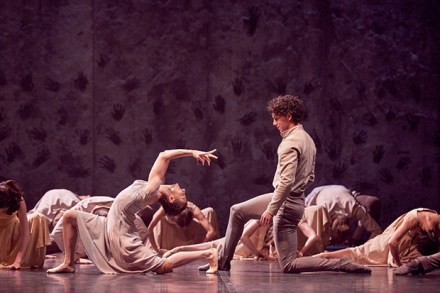
Giselle endures in the collective imagination as a charming, sorrowful, supernatural love story. Premièred in Paris in 1841, this keystone romantic ballet concerns a peasant girl whose trust in a disguised nobleman destroys her fragile mind and heart. Little wonder, given the ballet’s mixture of sunniness, deception, spooky woe and redemption, that it retains a timeless grip or that the title role has become the ballerina equivalent of Hamlet. English National Ballet will be at the London Coliseum in January performing Mary Skeaping’s Giselle, a chilling and historically accurate version originally mounted by the company in 1971. But first comes Akram Khan’s brand new take, another savvy commission by ENB’s artistic director Tamara Rojo.

Kate Tempest

Kate Tempest, a 30 year old dramatist and poet, has an appeal that’s hard to fathom. Is it all in the elbows? Like most performers raised on hip hop, she recites with her upper limbs flapping and wiggling as if by remote control. For emphasis she uses that impatient downward flicking gesture, beloved of rappers, like a countess at a buffet ridding her fingers of unwanted guacamole. Few would describe the south Londoner’s poetry as ‘moreish’. Less ish, perhaps. She sates the ear too rapidly because her technique has an obvious and easily corrected fault: no variety. Tempo and mood never change, so she can’t create expectation, uncertainty, surprise or relief.

Nicholas Serota

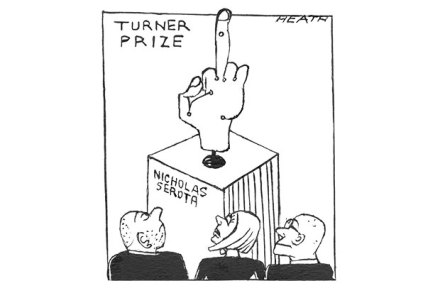
In this week of toadying obsequies after the (rather late) retirement of Sir Nicholas Serota from his imperial throne at Tate, an alternative narrative (briefly) enters the minds of the mischievous. Alone, aloof, fastidious, austere, he is sitting, suited darkly, in his office surveying, with a basilisk stare, the spreadsheets and data-sets his cowering elfin helpmeets have presented him. They step backwards towards the door bowing, afraid to meet his eyes, as he shoots freezing glances towards them. His lips soon purse in cool satisfaction. He is maybe even stroking a furry white cat. Or perhaps a PVC balloon pussy by Jeff Koons. The numbers on his spreadsheets are all about attendances. And they are big numbers.

Making history | 22 September 2016

‘A fool’s errand’. That is how Lonnie Bunch, founding director of the Smithsonian’s National Museum of African American History and Culture, wryly characterises the decade’s work it took him to get the museum built. It opens in Washington DC this weekend. A talented fundraiser, he and his team matched the $270 million from the federal government (Oprah Winfrey donated $21 million, Michael Jordan $5 million), and travelled the country sourcing artefacts. Most difficult of all has been convincing critics that such an institution — devoted as it is to the history of black America — is necessary and not divisive, that it will tell a story, not of one culture for that culture, but of America.

Belly of an architect

Depending on your point de vue, Haussmann’s imperial scheme for Paris created townscape of thrilling regularity or boring uniformity. Whatever; against a backdrop of serene haute-bourgeois perfection, intrusions have always been controversial. Eiffel’s tower of 1889 was attacked by the intellos of the day. Maupassant, Gounod and Dumas fils thought it a hideous construction of riveted tin. Le Corbusier’s unrealised 1925 Plan Voisin, replacing monuments with motorways, was designed as a shock to the system. And the 1973 Tour Montparnasse, central Paris’s only tall building, is, by general agreement, brainless. The Centre Pompidou of 1977 was a test for taste while the 1989 Bastille Opera is grossly ham-fisted, the last and worst of les grands projets.

Let the good times roll

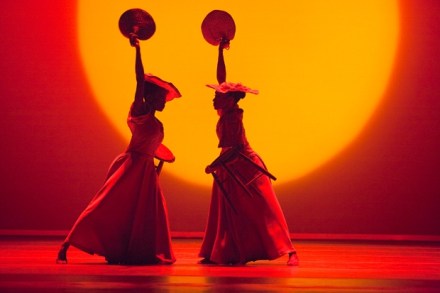
For a regular dancegoer in New York City, the Alvin Ailey American Dance Theater seasons arrive with the comforting predictability of a Christmas Nutcracker. Superb dancers, Ailey’s sublime Revelations, jubilant audiences, stirring evocations of African-American identity: it’s easy to begin to take these things for granted. When you haven’t seen the Ailey company for a while, a season packed with these riveting dancers is a newly wondrous thing, a fresh discovery of the particularity that makes the troupe both a cultural and historic phenomenon. The company’s Sadler’s Wells Theatre season, which opened on the 6 September and runs through to the 17th, is the start of a six-week UK tour.

Estate agent

A big misunderstanding about art is that it excites serene meditation and transcendent bliss. But anyone who has worked in a public museum or a commercial gallery knows that this is untrue. The moral climate of the contemporary art world would embarrass the Borgias. Art excites peculation, speculation, back-stabbing, front-stabbing and avarice while fuelling nasty spats about attribution and ownership between heirs, relatives, executors and collectors. Nowhere is this more comically apparent than in the matter of artists’ estates. Once a private concern of family and lawyers, the ‘artist’s estate’ is becoming recognised as a tangible and valuable entity that needs professional management just like any other financial asset.

What’s the buzz?

Crystal Pite, the Canadian dancemaker who combines intellectual, emotional and physical intelligence in rare degree, is classically trained, but her work is most often made for and performed by contemporary companies. Hence the attraction of this Edinburgh International Festival programme. Scottish Ballet, in the European premiere of a piece Pite made for the National Ballet of Canada in 2009, offered a rare chance to see how her distinctive sensibility plays on the refined bodies of a classical company, and promised to whet the appetite for her upcoming creation for the Royal Ballet in March next year. Emergence confronts explicitly the tension between Pite’s experiences of working with contemporary dancers in egalitarian companies and the strict hierarchy of classical ballet.

Where new is good

On Saturday night, the City of Birmingham Symphony Orchestra makes its first appearance at the BBC Proms under its new music director, the 30-year-old Lithuanian Mirga Grazinyte-Tyla. It’s all a bit sudden. Grazinyte-Tyla only conducted the CBSO for the first time last July, and she’ll have made her debut as official successor to Simon Rattle, Sakari Oramo and Andris Nelsons at Symphony Hall, Birmingham, the previous night. The programme comprises Mozart, Tchaikovsky, and the London premiere of Hans Abrahamsen’s Grawemeyer Award-winning song cycle let me tell you. That’s right, the ‘London premiere’. It says so on the BBC website. Auntie has blessed the venture; the metropolis is poised to give its imprimatur.

Young at heart

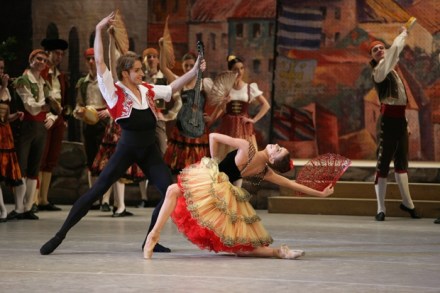
The second half of the Bolshoi tour brought much fresher fare than the first: following the ubiquitous warhorses Don Quixote and Swan Lake, we got three jolly nights of Moscow speciality: an iffy Shakespeare comedy nailed by superb performing, a giddy rewrite of Stalin’s favourite ballet and a breathtakingly fruity restoration of a 19th-century ballet entertainment, with pirate ships, dancing gardens and a vision of the hedonistic life of abducted women somewhat at odds with Boko Haram’s. The sexual politics of Shakespeare’s The Taming of the Shrew are potentially tricky for ballet since the woman is physically dependent on the man.

The Capability controversy

In a piece of light verse from the 1770s ‘Dame Nature’ — out strolling ‘one bright day’ — bumps into the great landscape designer, Lancelot ‘Capability’ Brown. Immediately the goddess lays into him for plagiarism. How, she wants to know, does he have the impudence to show his face? All the items he claims to have created — ‘the lawn, wood and water’ — were made in fact by her. Brown, for his part, is not at all disconcerted. He admits that Nature has provided him with good raw materials. But the beautifying refinements? Those are all his. ‘The swell of that knoll,’ he points out, ‘is mine... the ridges are melted, the boundaries gone.

Poetry in motion | 4 August 2016

For almost 60 years, whatever the political weather, Russia and Britain have maintained mutually assured respect as far as ballet is concerned. In October 1956, the Soviet Union finally allowed its Bolshoi troupe to appear in the west, in London, a state cultural exchange that should have entailed the debut of the comparatively green Sadler’s Wells Ballet in Russia within weeks. Owing to the inconvenient appearance of Soviet tanks in rebellious Hungary, it wasn’t until 1961 that the renamed Royal Ballet turned up in Moscow. (Khrushchev gushed admiringly, ‘Look at those girls — they might be Russian!’) I looked up The Spectator’s October 1956 review of that Bolshoi debut: some things really haven’t changed. A.V.

Heavenly bodies | 28 July 2016

Initially it must have been a nasty surprise. On 16 August 1972 an amateur scuba diver named Stefano Mariottini was fishing in shallow waters just off the coast of Calabria. At about noon he was poking around some rocks when he saw part of an arm protruding from the sand. His first thought, a natural one, was that he had found a cadaver. On closer examination, it became clear that there was not just one body but two — and that they were made not of flesh but of metal. Mariottini’s discoveries are world-famous now, taking their name — the Riace bronzes — from the little resort near which he was swimming. In terms of classical sculpture, he had hit the jackpot. Bronze was the medium of choice for many of the most admired artists of the ancient world.

All in the mind | 21 July 2016

Mark Morris, the most musically communicative and naturally lyrical of choreographers of the past 30 years (and an absentee from London theatres for too long), made L’Allegro, il Penseroso ed il Moderato, a dance masterpiece of a Handel oratorio using John Milton’s words. It was a miracle of pastoral sweetness, in rustic, human, amorous dancing, bodies singing the words and all the orchestral folderols too. It came unhelpfully to mind as I watched Mark Baldwin’s new creation for Rambert to Haydn’s oratorio using Milton’s words, The Creation. I have a lot of time for Baldwin.