More from Arts

An American in Paris

Paris Opera Ballet plays hard to get. It doesn’t deign to travel all the way over here, thanks to a combination of exorbitant expense and a languid disdain for the little Britons with their Johnny-come-lately ballet tradition (not even one century old, let alone three and a half). So if the mountain won’t come to Mahomet, it behoves Mahomet to go to the mountain. And now is the time to do it, with the ructions brought on by the arrival last year and the departure this of Natalie Portman’s husband as ballet artistic director. Benjamin Millepied is French but spent his career as a leading dancer in New York City Ballet, whose values are broadly the antithesis of the institutionalised, hierarchical Paris Opera Ballet.

Black magic

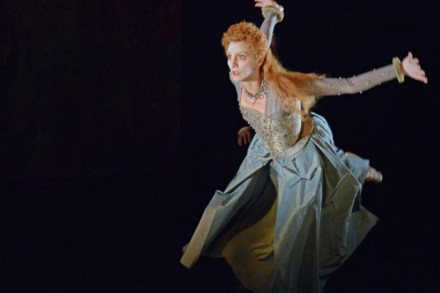
Ballet’s romantic mantra could be summed up by John Keats’s ballad ‘La Belle Dame sans Merci’, in which a young man remembers his terrible encounter with a supernatural ‘fairy’s child’. Beguiled to sleep with this ravishing fantasy creature, he dreams of a ghostly corps of other chaps similarly beguiled, who warn him that she was a witch who would leave him forever haunted, sick and bereft. You can remodel this fantasy this way and that, switch the genders, reconfigure death, sleep and hallucination, and come up with Giselle, La Sylphide, Swan Lake, La Bayadère in the 19th century, and then find Fokine, Balanchine and Ashton developing it into the 20th in Les Sylphides, Symphony in C and Ondine.

Second thoughts | 17 March 2016

You revisit an old love with wariness. Time’s passed for both of you — sharp edges have been smoothed, and reputations built. But seeing Kaash again last week, Akram Khan’s tremendous debut ensemble work, made when he was 26, revived at Sadler’s Wells now that he is 41 and a world name, I felt the earth move just as before. Like Athene, born fully armed from Zeus’s head, Kaash leapt astonishingly out of the modest, watchful mind of Khan, then a superb classical Indian soloist embarking on his first choreography for other dancers. One of the great pleasures of this past fortnight for a veteran dancegoer has been seeing his dazzling piece again days before the latest creation of his former mentor, Belgian choreographer Anne Teresa De Keersmaeker, now 55.

Paranormal activity

In 1896, a group of five young Swedish women artists began to meet regularly in order to access mystical zones beyond the confines of mundane everyday reality. Every Friday, they would gather in order to contact the incorporeal beings they called ‘spirit world leaders’ or ‘High Masters’; among these were five named Ananda, Clemens, Esther, Gregor and Amaliel. In 1904, during a séance, Amaliel instructed one of the artists, Hilma af Klint, to make paintings ‘on the astral plane’ representing the ‘immortal aspects of man’. Many of the results of this occult commission are on display in Painting the Unseen, a new exhibition at the Serpentine Gallery.

What’s love got to do with it?

The setting for Il tabarro, the first drama in Puccini’s 1918 triptych of one-act operas, is not the Paris of tourists and honeymooners, nor even the Paris of impoverished poets and painters. On a bend in the Seine a Dutch barge is moored at a soot-blackened wharf. A tableau of stevedores and seamstresses unfreezes. Sirens blast through the oily haze of muted violins. A tart touts for trade. There is no romance here: no first love, no new love, no true love. Just ordinary sadness and ordinary yearning: a marriage bruised beyond repair, a dead child kept alive in his father’s memory, and a futile and fatal affair. The first revival of Richard Jones’s Il trittico sees a new conductor at the helm, Nicola Luisotti, and several key cast changes.

Sex on legs

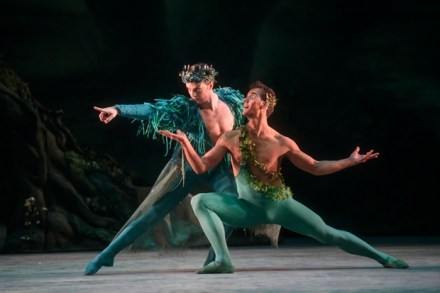
That joke about the young bull who tells the old bull, ‘Hey, Dad, see all those cows — let’s run and get one of them,’ and the old one replies, ‘Let’s walk and we can have the lot,’ is of course far too politically incorrect to tell these days. But it did creep into my mind last week watching Birmingham Royal Ballet’s double bill of Frederick Ashton’s masterworks, The Dream and A Month in the Country. He’s the old bull, and after the Duracell rogering in Christopher Wheeldon’s Strapless the other week, the serene, sly, ceaselessly sensuous way Ashton seduces you in those ballets, with choreography that never stoops to representing sex itself, comes like a caress after a grunt.

Dying of the light | 25 February 2016

Finding St Peter’s is not straightforward. I approach the wrong way, driving up a pot-holed farm track between a golf club and a wood until a fly-tipped sofa blocks my way. Beyond the sofa, behind padlocked security fencing, stands an old stone bridge. Someone has sprayed ‘Go Home’ on the pillar. I prowl through the wood, hoping to find a way in, and scramble across a gorge to the rear edge of the building. More security fencing, through which I see tantalising glimpses of brutal, and brutalised, architecture. Two workmen appear, dressed like crime-scene investigators in blue hooded overalls, and I lean nonchalantly against the fence and talk about the site. I propose a quick tour of the interior but receive an emphatic response, ‘Not a chance, hen.

On the trail of Piero

Piero della Francesca is today acknowledged as one of the foundational artists of the Renaissance. Aldous Huxley thought his ‘Resurrection’ ‘the best painting in the world’. His compositions marry art and science with cool precision and a sophisticated grasp of perspective — he was, after all, a mathematician. But he was only rediscovered in the mid-19th century after centuries of relative obscurity. Following his death in 1492, his artistic achievements faded in the memory and he became known chiefly as a geometer (his numerous writings include an innovative treatise on solid geometry and perspective). This is not wholly surprising.

Sweet and sour | 25 February 2016

Dear, good, kind, sacrificing Little Nell. Here she is kneeling by a wayside pond, bonnet pushed back, shoes and stockings off, while she rests her blistered feet. She scoops a palm of water with cupped hands and tenderly washes those of her grandfather: her feckless, gambling, on-the-lam grandfather. It is an old Oscar Wilde chestnut, but one would have to have a heart of stone to look at William Holman Hunt’s portrait of Charles Dickens’s saintly ‘Little Nell and her Grandfather’ (1845) without laughing. Likewise Arthur Hughes’s ‘The Woodman’s Child’ (1860), a portrait of a tousle-haired country mite sleeping in the woods, attended by a squirrel and robin, their red coat and breast so sweetly matching her own little ruby socks.

Notes on a scandal

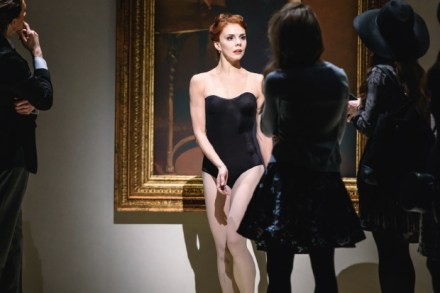
How could it possibly go wrong? The magnetic, seething Russian star Natalia Osipova playing the tragic woman in John Singer Sargent’s magnetic, enigmatic portrait of Madame X, all alabaster skin, black dress and arrogantly sexy profile. A Mark-Anthony Turnage-commissioned score, a top-prestige Bolshoi co-production, and enough scenery to rebuild Canary Wharf. If only Christopher Wheeldon’s new Covent Garden ballet Strapless were a scandal, like the portrait itself when originally unveiled in Paris in 1884, or like Kenneth MacMillan’s Manon at its première. If only it could be dubbed a tasteless exhibition of an undesirable type of female. Instead, it’s just a polite little flop, vastly over-decorated, overcomplicated, and with a whiff of evasion about it.

Unforgettable fire | 4 February 2016

How much of a compromise does a fashionable choreographer loved by all have to make with his paymasters? When he’s unfashionable, it’s only the Arts Council he has to please. When the world wants a piece of him, he has London’s Sadler’s Wells and the Roundhouse, Grenoble, Paris, Luxembourg, Montreal, Hong Kong, Taipei, Wolfsburg, Brighton, Amiens, Bruges, Amsterdam, Rheims and Leicester producers all tugging at his sleeve, offering support for the quasi-divine creation but wanting to get their spanner into the works somewhere. In which light I take my hat off to Khan.

Turkish delight

I’ve seen some people saying that English National Ballet’s Le Corsaire is so out-of-date it’s risible to see it staged in the 21st century. Sex trafficking, men in black with scimitars in Istanbul, pirates trading slaves across the Mediterranean, rich fat men rubbing their jewelled paws over fresh young bodies — pshaw indeed! But I’d like to have heard Tamara Rojo, ENB’s artistic director, pitch to her board and sponsors to get the shiploads of doubloons she needed to stage it with the bling and panache its spectacle requires. An even tougher sell might have been getting her multiracial dancers on board with playing slaves and slave-dealers. So yes, I reckon Le Corsaire is bang-on current as a project.

Off the page

Dance has its own archaeological periods, and 2016’s schedules are confirming what 2015 indicated — that the era of dances with scientists is over. If you’ve an aversion to digital fidgets and have felt left out in recent years, you will wallow in stories galore this year. There are big new ballets coming about The Odyssey, Frankenstein, Jane Eyre; of which Mark Bruce’s boldly miniaturised The Odyssey, launching into Britain’s county theatres next month before fetching up at Wilton’s Music Hall, is a most alluring prospect. Last year we saw from both Wayne McGregor and Christopher Wheeldon, the Royal Ballet’s master-stylists of crisp abstract ballet, an enthusiastic rush to reinvent old-fashioned narrative.

Eurovision

Before cheap flights, trains were the economical way to discover Europe and its foibles. Personally, I enjoyed the old fuss at border crossings. By the time I was 18, I had memorised those warning notices in the carriages: Nicht hinauslehnen; Defense de se pencher au-dehors; E pericoloso sporgersi. Those three different ways of saying ‘don’t stick your head out the window’, one bossy, the other pedantic, another gently pleading, summarised the nice subtleties of national borders that were philosophical as well as political. Europe is a marvel.

Lessons from Utopia

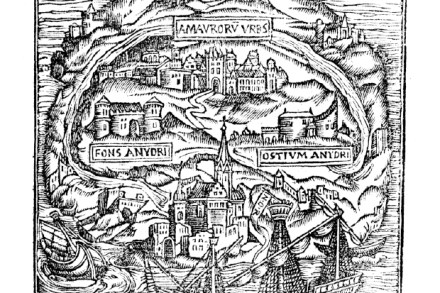
As anniversaries go, the timing could hardly be more apt. As Europe braces itself for the next Islamist attack, the next assault on our civilisation, a season of events marks the 500th birthday of a book that outlined an enlightened vision of the ideal society. Utopia 2016 is a year-long celebration of Thomas More’s Utopia at London’s Somerset House, where the Royal Society and the Royal Academy used to meet. Somerset House is a building that encapsulates the free-thinking values of the Enlightenment, and More’s Utopia is a book that encapsulates the Renaissance sensibilities that built it. We all know what sort of society Isis wants (the clue’s in the name), but what sort of society do we want? What rights are we defending?

The Heckler: those who doubt the brilliance of Phil Collins are snobs

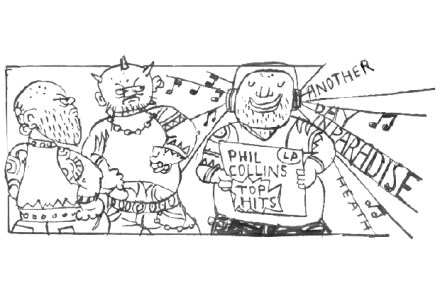
Three boos for those rotten spoilsports who started an online petition against Phil Collins coming out of retirement (there’s already enough suffering in the world, they said). Fools. Don’t they realise pop music is supposed to be naff? It’s the soundtrack to our tawdry lives. How could it be anything but schmaltzy? Don’t they know there’s nothing quite so uncool as a bloke with really cool taste in music? Like a large penis, a large record collection is something that only impresses other men. Phil Collins fulfils all the basic job requirements of a middle-aged, middle-of-the-road rock star. He writes undemanding songs about falling in and out of love. He can carry a tune. He can bash out a few chords on the piano.

Why did a Russian ballet dancer throw acid in his boss’s face?

The 16th June 1961 and 17th January 2013 are two indelible dates in the annals of Russian ballet. Two events that left the world gobsmacked — the escape of a Cold War fugitive and an acid attack by a subordinate on his boss — all enhanced in strangeness and sensational interest because they came out of the ballet world, a world largely closed to the rest of us. By a coincidence that’s as informative as it is lucky, two gripping documentary films emerge right now which tell these stories with dramatic effect, but also suggest a cultural link between the defection of the Kirov’s bad boy Rudolf Nureyev and the ghastly assault upon the Bolshoi Ballet artistic director Sergei Filin.

The rise and fall of Sony

Here is a Japanese fairy tale for Christmas. An allegory of insight, opportunism and a fall from favour. It is 1945. Japan is devastated and disgraced, but two bright young men, Akio Morita and Masaru Ibuka, the first a salesman, the second an engineer, have a plan to turn toxic ashes into precious metal. They have discovered a curious typewritten document published by the Civil Information and Education division of the US Occupation Forces. It is called ‘999 Uses for a Tape-Recorder’. In those days, people needed to be told these things. Inspired, they form a company called TTK and Ibuka writes in its Purposes of Incorporation that it will make ‘imaginative use of technology ...to help restore national culture’.

Bird brained

For all the billing and cooing on public forums about the Royal Ballet’s The Two Pigeons revival, there’s a silent majority out there who daren’t speak for fear of the Twitter ordure that would fall on them. The box office and the empty seats attest to them. You’ll have not the smallest difficulty in booking coachloads in for any of the 11 performances remaining as I write. The curious thing is that the revival of this ballet some 30 years after it last fluttered in Covent Garden came about because of overwhelming public demand, says the Royal Ballet’s artistic director Kevin O’Hare.

Lost in space | 19 November 2015

In a converted barn in Dorset, not far from the rural studio where she made many of her greatest sculptures, Elisabeth Frink’s son Lin is showing me his incredible collection of his mother’s work. More than 20 years since his mother died, he’s kept the vast bulk of it together. ‘I owe it to mum,’ he tells me. ‘I’ve been very close to her.’ We’re surrounded by maquettes and plaster casts — shelves and shelves of them. Enormous figures loom over us, like Easter Island statues. Drawings and paintings (many never before seen in public) are stacked against the walls.