More from Arts

Revolutionary road

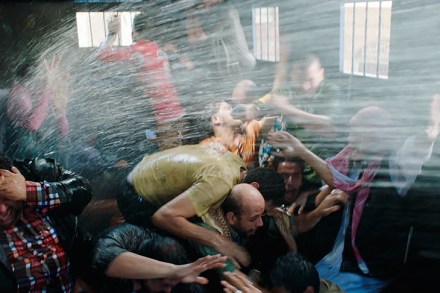
Cairo is deceptively calm, says Egyptian film-maker Mohamed Diab. ‘People were so scared from the fighting in the streets that now all they want is stability at any price,’ he explains. ‘But if you look closely at the situation, it’s worse than it was with Mubarak in charge when it comes to freedom of speech, freedom of the press and human rights.’ It’s not turned out quite how Diab had hoped. In 2010 he directed Cairo 678, a riveting film that in hindsight seemed like a premonition of what was to come.

Pleasure boats

There isn’t a luxury ship that wouldn’t look better for having sunk. Barnacles and rot bring such romance to the lines, like spider webs in the sea. Even the decay Damien Hirst has applied to his Treasures from the Wreck of the Unbelievable is quite appealing. It crawls over many of the objects that he claims to have salvaged from a shipwreck of the 1st or 2nd century ad. A mouldering Mickey Mouse. A bronze portrait of the artist encrusted in faux-coral. It’s Trimalchio meets Disneyland meets Twenty Thousand Leagues Under the Sea. It so happens that Hirst’s exhibition at the Punta della Dogana and Palazzo Grassi in Venice (until 3 December) coincides with a search for another wreckage, this one truly ancient.

First Bourne

‘Modern’ dance was no laughing matter in 1987. Harold King, director of the now-defunct London City Ballet, cattily typified it as ‘lesbians in bovver boots playing a mouth organ and banging a drum on the banks of the Thames’. Camp, funny and unashamedly ‘accessible’, even Matthew Bourne’s earliest efforts were a far cry from the earnest output of his more contemporary contemporaries as his 30th anniversary retrospective, Early Adventures, reminds us. Bourne’s early pieces were conceived on a modest scale with taped music and only a handful of dancers, but the works in the current triple bill show that his gift for creating character and narrative was evident from the start.

Bob Dylan: Triplicate

Having seen Bob Dylan play live a few years ago, I’m pretty sure he is not the first person I would choose to cover three albums’ worth of American jazz-age standards. The sound which came out of his mouth on that occasion resembled that of a demented, elderly dog. ‘Just Like A Woman’ had a chorus which went: ‘Grassum, grassum — rassum rassum rassum’, a neat twist on the original lyrics. It was joltingly inhuman. However, he has been on the Benylin, I think, because his voice here is not quite so gratingly hilarious.

Dazzled by Balanchine

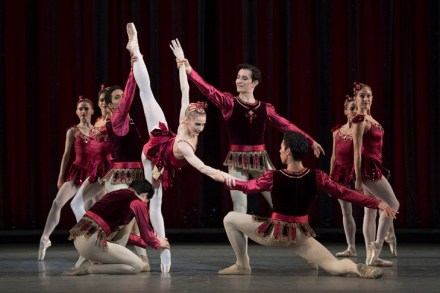
A trio of dazzling scores, the soft clack of gemstones on hips and collarbones, a glittering parure of solos, duets and ensembles: George Balanchine’s Jewels returns to the Covent Garden repertoire to celebrate its 50th anniversary. The ballet’s three plotless elements celebrate the various facets of classical dance. ‘Emeralds’, set to snatches of Gabriel Fauré, pays lyrical homage to ‘the France of elegance, comfort, dress, perfume’. The American-accented ‘Rubies’ riffs on Stravinsky’s 1929 Capriccio for piano and orchestra, and ‘Diamonds’ joins forces with Tchaikovsky in an exultant hymn of praise to the classical ballerina (a role shared on Saturday by Lauren Cuthbertson and a sublime Marianela Nuñez).

What’s That Thing? Award for bad public art 2017

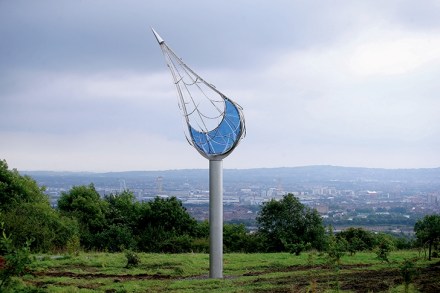
Imagine climbing the hills that surround Belfast and stumbling upon this 11-metre-high steel bollock. ‘It will be visible from a number of different points throughout the city,’ coos the Arts Council. Haven’t the people of Northern Ireland suffered enough? ‘Origin’ is the winner of our second What’s That Thing? Award for the worst new public art of the past year. The creators claim the six-metre ‘raindrop’ stuck on top of a five-metre pole represents the ‘elegant flow’ of the Farset River and ‘appears to hover’. Hover? Do you think they know what the word means? Clumsy, aggressive, cheap-looking (despite costing £100,000), it’s the very opposite of a raindrop.

Bravura bling

There was a nasty sound of pens being sharpened last week as Royal Ballet runaway Sergei Polunin prepared to unveil his latest venture. The reviews were as dire as the show but the overriding mood was one of regret that so great a talent should have lost its way. Project Polunin’s triple bill was cannily timed to coincide with the release of the documentary film Dancer, which follows the young Ukrainian prodigy’s progress after his snap resignation from the Royal Ballet in 2012. The film’s director, Steven Cantor, had no dance background and was a pushover for all the bravura party tricks that dominate the movie’s dance footage.

Mirror, mirror | 16 March 2017

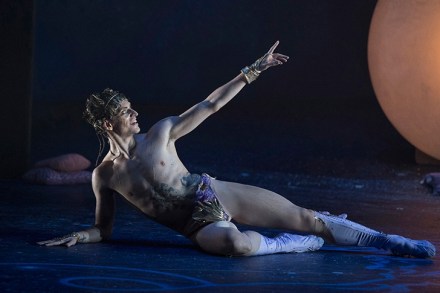
The exit signs were switched off and the stalls were in utter darkness. One by one, 15 invisible dancers, their joints attached to tiny spotlights, began to colonise the far end of the hall, forming fresh constellations with every pose. The audience smiled in wonder, like tots at a planetarium. Tree of Codes, which had its London première at Sadler’s Wells last week, was originally commissioned in 2015 for the Manchester International Festival. It combined the talents of Wayne McGregor, resident choreographer of the Royal Ballet, mixer and DJ Jamie xx and the Danish/Icelandic artist Olafur Eliasson.

Tail-end Terry

It is often said that Terence Rattigan’s ‘thing’ was his homosexuality and that his disguising of it coloured everything he wrote. But he had, I think, another secret up his sleeve that is still little known. He was a tailgunner in the RAF. Indeed the service was his family and a thread of blue serge runs through his career. He died in 1977, aged 66. After Harrow and Oxford, the war rudely interrupted his dazzling entrée as a dashing young Thirties playwright. After basic training, Rattigan was assigned as a wireless operator and airgunner to a squadron of Sunderlands, hunting enemy submarines in the Atlantic. One moment he was banking nice fat royalties from West End hits such as French Without Tears.

His dark materials | 16 March 2017

The enticingly subversive films of Paul Verhoeven were very tempting to me as a schoolboy. When I hit 14, the Dutch director released RoboCop and the excitement among me and my friends at catching two hours of unmitigated ultra-violence reached fever pitch. He did not disappoint. That was in 1988 and it was interesting later on to read several newspaper articles accusing Verhoeven of having made a fascistic screed in favour of zero-tolerance law enforcement. This was not something any of us had considered up to that point, but satire, yes, even back then we had an inkling of what that was and RoboCop seemed to fit the bill nicely. Verhoeven’s latest movie Elle (reviewed by Deborah Ross last week) shows the old powers haven’t waned.

Sleaford Mods: English Tapas

It’s all beginning to wear very thin indeed. Ten years ago this already addled Nottinghamshire duo captured the attention with bellowed, caustic and often astute observations delivered in an ur-rap monotone above cheapo punky laptop beats. The message then, humorously enough, was: everything is shit. Total shit. You’re shit, I’m shit, the country’s shit. This briefly entertaining and frequently obscene working-class nihilism was gratefully received by a music press that, desperately looking for something ‘edgy’, found itself confronted by the mimsy and anodyne public-school folk of Mumford & Sons and Stornoway and Laura Marling. Fair enough: it was, for a while, enlivening and a certain kind of antidote.

Comic effect | 23 February 2017

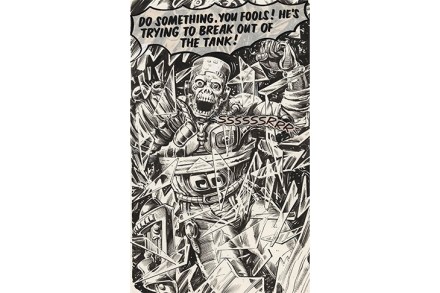
Borag Thungg, Earthlets! If those words mean something to you, then congratulations — you are leading a good life. If not, then you owe it to yourself to pay attention. They are the words of greeting that Tharg the Mighty, the extraterrestrial editor of 2000AD, has spoken to the British sci-fi comic’s readers for the past 40 years. And 40 years is right. 2000AD enters its fifth decade this year, and various celebrations have been planned to mark the occasion. Among them is an exhibition at the fantastic Cartoon Museum in central London, where 85 pieces of original artwork are on show for our delectation. It’s an exhibition that does exactly what it should: show off the great variety of 2000AD.

Building block | 23 February 2017

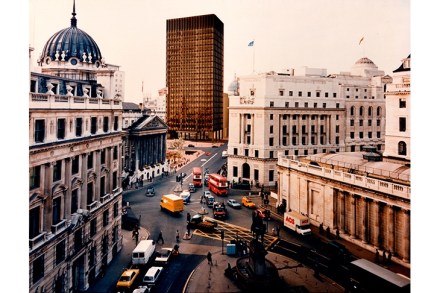
What a strange affair it now seems, the Mansion House Square brouhaha. How very revealing of the battle for the soul of architecture that reached maximum ferocity in the late 1980s and which still echoes today. Where developers now jostle to build ever taller, fatter and odder-shaped City skyscrapers, this was a time when it took 34 years to get just one building built. An ambitious bronze tower and plaza by the German-American modernist pioneer Mies van der Rohe was finally rejected in favour of an utterly different post-modern corner block (with no plaza, but a roof garden) by Sir James Stirling. Both were shepherded by a man in search of his personal monument: the property developer Peter, now Lord, Palumbo.

Raising the roof

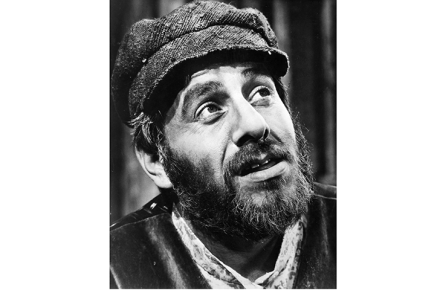
It is a ‘fantastic night out’, insists the theatre’s artistic director. Gemma Bodinetz is right, of course, but it is easy to see how those unfamiliar with Fiddler on the Roof might take some convincing. The first act ends with a pogrom, the second with the village’s Jews being expelled from the country. This doesn’t immediately suggest an evening of joyous, life-affirming entertainment. ‘It’s the story of people being forced to leave their homes by the powers that be, and that scenario, sadly, is still playing itself out all over the world today. But it’s also about family and joy and love and it has terrific songs,’ says Bodinetz. It opens the first season of Liverpool Everyman’s new repertory company later this month.

Wall eyed

Any impressively long wall is bound to cause us to recall the midfield dynamo and philosopher John Trewick. In 1978 Big Ron Atkinson took his bubble-permed West Bromwich Albion team to China on some sort of goodwill tour. The lads’ diplomacy evidently rested in their feet, for when Trewick was asked by the BBC crew documenting the tour what he thought of the Great Wall, he replied: ‘When you’ve seen one wall you’ve seen them all.’ Good try, John, but not quite accurate. He would, however, have been on the money had he alluded to the common state of mind among men who commission immense walls (paranoiac) and to the loss of life that is, without exception, occasioned by the construction of the things (considerable).

The Bourne identity

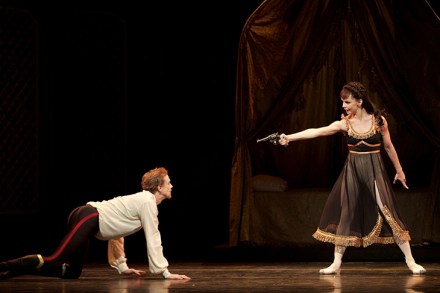
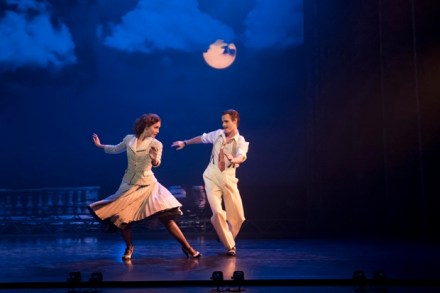
From a film about ballet to a ballet about film. In reworking the 1948 Powell and Pressburger classic The Red Shoes for his latest show, Matthew Bourne pays homage to far more than the unforgettable story of a budding ballerina and the bloody toll of her choice between love and career. With the glee of George Lucas recreating second world war dogfights in space, Bourne, a cinéphile since childhood, stuffs his Red Shoes with images from Hollywood’s Golden Age: a French Riviera coast here, a battered old piano there, fur coats and train whistles and sequin-and-feather tap-dancers. The problem with this love letter to cinema is that it blunts the edge of the story’s cruelty towards Victoria Page, the wearer of the titular shoes.

All about my father

My father had many faces. There was much that made up the man. If you think you ‘know’ John R. Cash, think again. There are many layers, so much beneath the surface. First, I knew him to be fun. Within the first six years of my life, if asked what Dad was to me I would have emphatically responded: ‘Dad is fun!’ This was my simple foundation for my enduring relationship with my father. This is the man he was. He never lost this. To those who knew him well — family, friends, co-workers alike — the one essential thing that was blazingly evident was the light and laughter within my father’s heart. Typically, though his common image may be otherwise, he was not heavy and dark, but loving and full of colour. Yet there was so much more....

The descent of man

Why do humans want to build robots? It seems, on the face of it, to be a suicidal endeavour, destroying jobs and, ultimately, rendering our species redundant as more intelligent and effective beings take over. Lacking, as we now do, an agreed metaphysical justification for human specialness — for example, the soul — it must only be a matter of time before we submit to the machine ascendancy. So far, it has been a subtle, incremental process that conceals any wider significance. Take satellite navigation. This was first introduced in the 1980s and is now more or less universal. Maps have become quaint. As a result, we walk or drive without a visual model of where we are. This may be a small loss of human agency but it’s a loss nonetheless.

Making America crass again

Elsie de Wolfe was the pioneer interior designer whose motto was ‘plenty of optimism and white paint’. She banished brown Victoriana from America. And her work on Henry Clay Frick’s private apartments introduced new American money to old French furniture. If only she were with us today. For his first television interview as president-elect, Donald Trump appeared, imperiously, sitting on a golden throne in the style of Louis Quinze. My vision may well have been blurred by circumstances beyond, but I think there were period-incorrect wall and ceiling paintings on classical-allegorical themes in the background. All of this on cantilevered decks behind mirrored glass about 200 metres above Fifth Avenue.

Lessons from the front

Christmas, for many people, begins at exactly 3 p.m. on Christmas Eve. It’s the moment when everything stops, frantic present-wrapping, mince-pie making and tree-decorating ceases and calm briefly takes hold. The reason? A single boy treble whose voice, clear and fragile as glass, pierces through the chaos with those familiar words: ‘Once in Royal David’s city/ Stood a lowly cattle shed...’. The service of Nine Lessons and Carols from King’s College, Cambridge, and its annual broadcast on BBC Radio 4 is as essential a part of contemporary Christmas folklore as stockings and Santa Claus, plum pudding and presents.