More from Arts

Swan upping

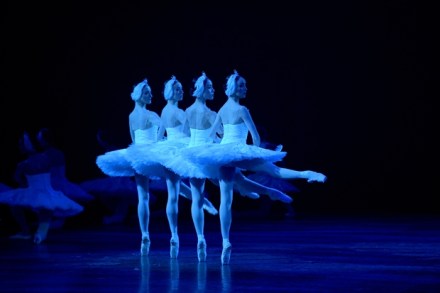
Was Tamara Rojo, when she danced Swan Lake last Saturday at the Albert Hall, thinking as she shaped each phrase, ‘This will be the last time I dance this …and this …and this’? I wonder. She told me a few years back that she had a five-year diary to cover the rest of her dancing

Doing bird

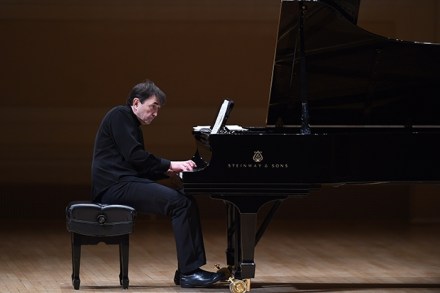
A decade ago, the French pianist and poly-math Pierre-Laurent Aimard announced that he was ‘very bored to live in a world that contains so much music that wants to please the masses’. It was a remark that might have dropped from the lips of the late Pierre Boulez, the part-pseud, part-genius who presided over an

Emotional intelligence

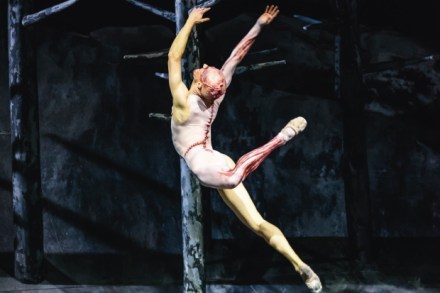
The difference between a poor ballet of the book (see the Royal Ballet’s Frankenstein) and a good one — indeed two — was cheeringly pointed up by Northern Ballet last week, when it unveiled an intensely imagined new Jane Eyre in Doncaster and gave the London première of the efficiently menacing 1984 that I reviewed

Royal Court Theatre

If there were an Eddie the Eagle award for theatre — to recognise large reputations built on minuscule achievements — it would go to the Royal Court. Sixty years ago the English Stage Company arrived at ‘the Court’ determined to amaze the world with a new generation of thrusting young geniuses. It won instant notoriety

Giving Tate Modern a lift

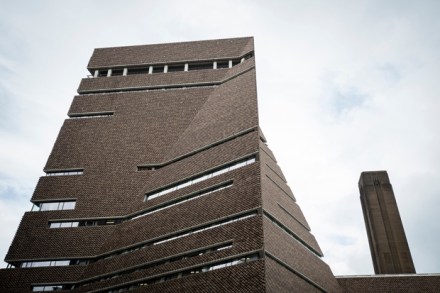
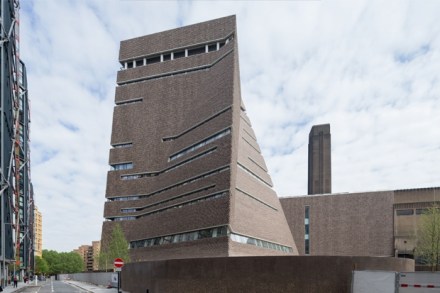
Tate Modern, badly overcrowded, has built itself a £260 million extension to spread everyone about the place more. This means that there are more galleries and other big rooms for various modish activities — 60 per cent more space, they say. It opens on 17 June with a total rehang throughout. But having been shown

Losing the plot | 19 May 2016

If a football manager produces a string of losses, the writing is on the wall and out he goes. He’s accountable — to shareholders, to the fans. The director of the Royal Ballet is not a football manager. Nor is it easy to see to whom he would account for his plans and outcomes. The

First Lady of Pop Art

In 1961 the Venezuelan-American sculptor Marisol Escobar made a startling appearance at the New York artists’ group known as the Club that would set the tone for her unconventional career. The Club was where the alphas of contemporary American art met. Franz Kline, Robert Motherwell, Willem de Kooning and their ilk gathered there to take

Happy ending

‘In many ways,’ Georg Baselitz muses, ‘I behaved against the grain of the times I grew up in.’ The era was 1960s Germany; in that context, Baselitz feels he was subversively respectable. ‘For example, I never took any drugs. I have been a very faithful husband, I just wanted to hold on to my wife,

Fade to grey

Every ballet company wants a box-office earner. But why Scottish Ballet’s leader Christopher Hampson kept on at David Dawson until he agreed to do a new Swan Lake is difficult to understand given the meh results. Dawson is a polite, undemonstrative choreographer, and his lack of enthusiasm has rather predictably produced an asthenic result. Obviously,

Paul McCartney

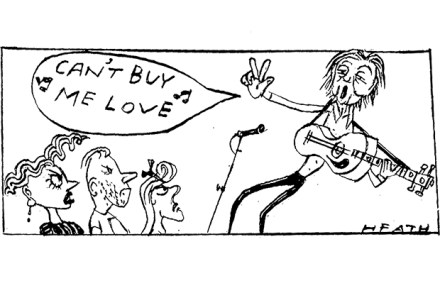
It’s slightly galling, after years of sticking up for Paul McCartney, to read a new biography of the bloke and realise that you don’t, in the end, really like him that much. But that’s how good Philip Norman’s book is — Macca has no agenda, it simply lets you make up your mind. And for

BBC Proms

BBC Proms 2016 is about as exciting as my sock drawer. But it’s unclear who exactly is to blame. The new head David Pickard claims only half the stalest socks are his — the rest inherited. The festival enjoys an incredibly privileged position. Some might even say it’s dangerously spoilt. Free from commercial pressures, free

The female gaze

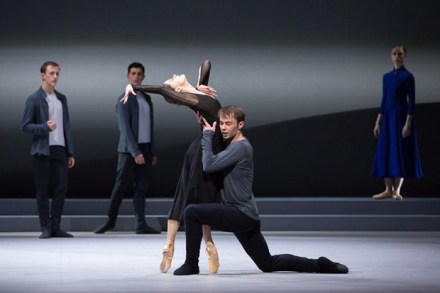
Tamara Rojo programmed three female choreographers for her English National Ballet spring bill because, she said, she had never danced a ballet by a woman, and wanted to see what women would produce. Just the two begged questions here. First, that female choreographers are being stifled by institutionalised sexism in the ballet establishment. Second, that

Shakespeare400

The feeding frenzy over the 400th anniversary of William Shakespeare’s death has reached its peak. Recently we’ve had Shakespeare’s complete works performed through the puppetry of kitchenware. On books pages, you can read about everything from Edward Wilson-Lee’s Shakespeare in Swahililand (surprisingly beguiling) to Simon Andrew Stirling’s Shakespeare’s Bastard: A Life of Sir William Davenant

Death and the Bard

[audioplayer src=”http://feeds.soundcloud.com/stream/260046943-the-spectator-podcast-obamas-eu-intervention-the-pms.mp3″ title=”Lloyd Evans and Dr Daniel Swift discuss how Shakespeare died” startat=1008] Listen [/audioplayer]How did the Bard kick the bucket? The 400th anniversary of Shakespeare’s death reignites interest in a great literary mystery. All we know for sure is that he was buried on 25 April 1616 in Holy Trinity Church, Stratford, and it’s

An American in Paris

Paris Opera Ballet plays hard to get. It doesn’t deign to travel all the way over here, thanks to a combination of exorbitant expense and a languid disdain for the little Britons with their Johnny-come-lately ballet tradition (not even one century old, let alone three and a half). So if the mountain won’t come to

Black magic

Ballet’s romantic mantra could be summed up by John Keats’s ballad ‘La Belle Dame sans Merci’, in which a young man remembers his terrible encounter with a supernatural ‘fairy’s child’. Beguiled to sleep with this ravishing fantasy creature, he dreams of a ghostly corps of other chaps similarly beguiled, who warn him that she was

Second thoughts | 17 March 2016

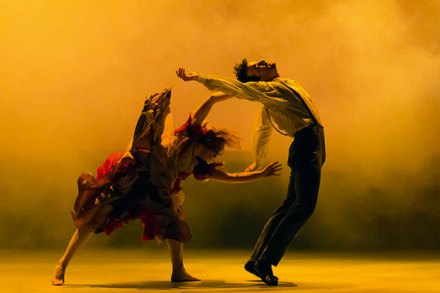
You revisit an old love with wariness. Time’s passed for both of you — sharp edges have been smoothed, and reputations built. But seeing Kaash again last week, Akram Khan’s tremendous debut ensemble work, made when he was 26, revived at Sadler’s Wells now that he is 41 and a world name, I felt the

Paranormal activity

In 1896, a group of five young Swedish women artists began to meet regularly in order to access mystical zones beyond the confines of mundane everyday reality. Every Friday, they would gather in order to contact the incorporeal beings they called ‘spirit world leaders’ or ‘High Masters’; among these were five named Ananda, Clemens, Esther,

What’s love got to do with it?

The setting for Il tabarro, the first drama in Puccini’s 1918 triptych of one-act operas, is not the Paris of tourists and honeymooners, nor even the Paris of impoverished poets and painters. On a bend in the Seine a Dutch barge is moored at a soot-blackened wharf. A tableau of stevedores and seamstresses unfreezes. Sirens

Sex on legs

That joke about the young bull who tells the old bull, ‘Hey, Dad, see all those cows — let’s run and get one of them,’ and the old one replies, ‘Let’s walk and we can have the lot,’ is of course far too politically incorrect to tell these days. But it did creep into my