More features

The Spectator’s Mission

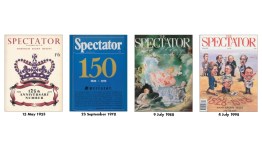
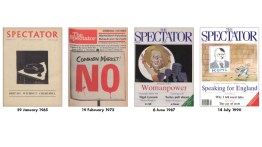
190 years of The Spectator   5 July 1828   The principal object of a Newspaper is to convey intelligence. It is proposed in The Spectator to give this, the first and most prominent place, to a report of all the leading occurrences of the week. In this department, the reader may always expect a summary account of every public proceeding, or transaction of interest, whether the scene may lie at home or abroad.

Ideas in the cinema

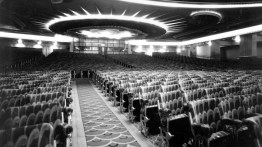
190 years of The Spectator   19 November 1937 Not even the newspapers can claim so large a public as the films: they make the circulation figures of the Daily Express look insignificant. The voice of Mr Paul Muni [who stars in The Life of Emile Zola] has been heard by more people than the radio voices of the dictators, and the words he speaks are usually a little more memorable. The words of dictators do not dwell in the brain — one speech is very like another: we retain a confused impression of olive branches, bayonets and the New Deal. But does reaching the public necessarily mean reaching the biggest, most amorphous public possible? Isn’t it equally possible to reach a selected public with films of aesthetic interest?

The honour of the Brigade

190 years of The Spectator   11 December 1915   The road was full of troops. Columns of infantry slogged along at the side. Guns and ammunition-wagons thundered down the paved centre. Motor despatch riders flew past with fresh orders for those in rear. The men sucked their pebbles in grim silence. It was no time for grumbling. This meant business. They forgot their fatigue, their thirst, their hunger. Their minds were full of the folk at home whom they might not see again, and of the struggle that lay before them. So they marched, silently, and with frequent halts, most of the morning. At length they left the road, and took to the fields. They were going back whence they had come, by a circuitous route. Shrapnel burst overhead.

Spice girls back sceptics on Europe

190 years of The Spectator   14 December 1996   The Spice Girls were at the time the biggest girl group in the world, their debut album selling 23 million copies. The interview brought the magazine its highest sales figure for a generation Interview the Spice Girls, I thought. But the Spice Girls are interviewed all the time. My interview, however, would be different. I would ask only questions that I would ask Mr Major, Mr Blair, Mr Heseltine or any other politician. Only one thing worried me about this plan. What if they weren’t interested in politics? It was a needless worry. They were completely political. Politics was really their subject. ‘We Spice Girls are true Thatcherites. Thatcher was the first Spice Girl, the pioneer of our ideology — Girl Power.

Are Trump’s tariffs a good idea?

Yes Supporters of the global free-trade regime that has been built up over the past 25 years like to think of themselves as capitalists. Benevolent capitalists, perhaps — ones who have only the interests of the world’s poorest workers and their own nations’ least wealthy consumers at heart — but capitalists nonetheless. So why is the biggest beneficiary of their world order in fact the last of the great, deadly serious Communist states — the People’s Republic of China? Trump’s tariffs, far from being the end of the liberal economic order, may be the one thing that can save it. That order, after all, to an embarrassing degree depends upon America’s dominant position in the world.

Here We Come A-Wassailing

Andrew Michael Hurley’s debut novel, The Loney, was an unsettling gothic horror story set on a bleak stretch of the English coast. It was first published in October 2014 by Tartarus Press, a tiny independent publisher. It won the Costa First Novel Award in 2015 and went on to be named Debut Fiction Book of the Year and Overall Book of the Year at the British Book Industry Awards. Stephen King called The Loney ‘an amazing piece of fiction’. His new novel Devil's Day is just out from John Murray.   Getting older, he felt more and more like a passenger trapped on a fast-moving train Peace. It had been a rare thing all day. Ian and Jane had come with their other halves and all seven grandchildren, who, after handing over their gifts and cards, had been split by gender.

Theresa May has no one else to blame for this chaos

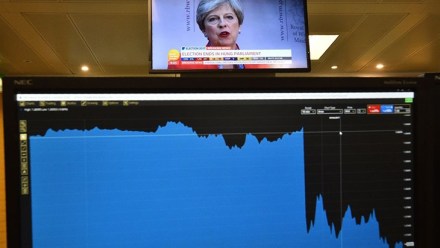
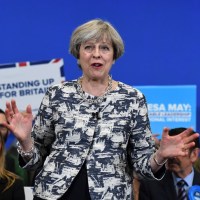
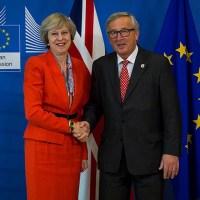
If there is ever an inquest into who torpedoed Theresa May’s chances of winning the 2017 election outright, the answer should not be in doubt. The Prime Minister was the author of her own destruction – or, at least, the staggering and needless destruction of her party’s majority. The decision to hold an early election was taken not in political cabinet, but on a walking holiday with her husband. None of her cabinet colleagues advised her to personalise her campaign to such a bizarre extent; her disastrous manifesto was as much of a surprise to them as it was to the public. Theresa May did all this herself, with a few handpicked aides – and if she had triumphed, she’d have governed in this way.

May’s Irish bailout

If the election result has severely weakened Theresa May, it has correspondingly strengthened another female politician – Arlene Foster, the Democratic Unionist Party leader, who could be seen beaming with delighted party colleagues at the election count in Northern Ireland. After a stormy year there — in which the devolved Assembly collapsed amid allegations that Foster was to blame for a costly renewable heating scandal — the Westminster election has restored the DUP’s fortunes beyond its wildest dreams: with the ten seats it has won, the party could now take on the role of ‘kingmakers’ in a minority Conservative government.

Nicola Sturgeon, the second biggest loser

Comeuppance is a dish best served scalding hot. That’s the first thing to be said about this glorious election result. Like Ted Heath, Theresa May asked ‘Who governs Britain?’ and received the answer ‘Preferably not you’. Her election campaign — a word that grants it greater dignity than it merits — will be remembered for decades to come as a classic example of what not to do. Until yesterday we had thought her victory would be tainted by the fact she had only beaten Jeremy Corbyn; now we might reappraise our view to note that poor Jeremy Corbyn has been such a hapless leader of the Labour party he couldn’t even beat Theresa May. One lesson is clear: never, ever, take the voters for granted. Never, ever, presume only one result is possible.

Boris Johnson is not the answer

I would direct you to Liddle passim for why we are now in this state of chaos. Even if Theresa May hadn’t run the worst election campaign in living memory (again, passim) she still wouldn’t have increased her majority by much at all. I knew that as a fact, an absolute certainty, on the day the election was called, and explained why, no matter that the polls were showing a landslide. The decision to call an election was arrogant and complacent — and so was the subsequent campaign. None of us may want the additional chaos of a leadership election, but nonetheless, there should be one. She is, as I said two weeks ago, undone. Come apart. And dead meat. I see the odds have shortened on Boris Johnson becoming leader and thus PM. I like Boris. He was even a friend.

Generation wars | 8 June 2017

British general elections have often evolved from contests between parties into battles between two opposing themes or ideas. In 1964, it was modernity vs the grouse moors; 1979, trade unionism vs individualism; 1983, Cold War strength vs unilateral nuclear disarmament. This year was supposed to be the Brexit election, yet instead developed into something loosely associated with that, but at the same time quite different: it became the intergenerational election. Jeremy Corbyn was never supposed to have had a shout. Way to the left of any Labour leader who had ever won a general election, his economic policies were considered by many to be simply incompatible with the values of the modern, aspirational British population.

To survive, the Tories must compromise with Remainers – and Corbynism

Regardless of who leads it, the Conservative party now has the opportunity to cling to office, possibly even for the rest of this five-year Parliament. They’re the biggest party and a deal with the DUP is the basis for forming a new government. But that’s only the start. To remain in office, the Conservatives are going to have to accept a lot of compromises. They’re going to have to compromise on Brexit, and thus on immigration. They’re going to have to compromise on economic policy (spend more, cut less) and markets (intervene more). They’re going to have to compromise with the Scottish voters who threw them a parliamentary lifeline by endorsing Ruth Davidson’s humane, moderate Conservatism.

Is boarding school cruel?

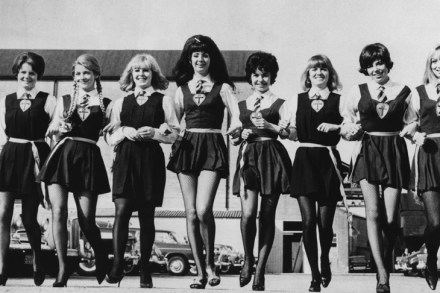
Yes Alex Renton Last week some 20,000 children under the age of 14 packed their bags to return to boarding school for the summer term: a migration unique in anthropology. The habit was born of necessity for the rural gentry in the 18th century, and it became customary for the wealthy and aspirational in the 19th century. But what possible need for boarding is there in the 21st? Some parents say they have no choice. ‘She literally made me do it,’ one mother told me of her eight-year-old, residing at a very smart prep in the Midlands. ‘I was in bits. Still am. But she’d read Harry Potter and Malory Towers and her mind was made up.’ I pointed out that neither J.K.

The Dwelling

Charlie Zailer wasn’t sure if she’d won or lost. On the victory side of the equation, she’d managed to avoid spending Christmas Day with her sister, and she’d successfully blamed it on work. Her ‘Sorry, but I have to go in for at least a few hours’, delivered in a tone that suggested it was the fault of someone intransigent in a position of authority, had been accepted without question. On the defeat side, here she was: at work, by choice, with a cold steak-and-potato pasty in her bag as a Christmas dinner substitute, struggling to communicate with a stranger who’d judged her to be not worth speaking to. Was it her karmic comeuppance for avoiding her so-called loved ones at Christmas?

Have you ever had a prayer answered?

Justin Welby Archbishop of Canterbury There have been lots of wonderful answers to prayer over many years, including recently. One I remember was as a 15-year-old sitting in chapel with the prospect of three frightening tests that day, for which I had done no preparation, and praying that if I got through it then I would do anything for God. I did get through and did nothing about it, except forget about God. Another was praying about whether I should ask my future wife to marry me: I was sitting alone by a canal in Holland. I felt I should, did, and she said yes. It was a wonderful decision. The most recent was when I was going to see some incredible work done by a group of young women helping trafficked sex workers.

Julia’s Baby

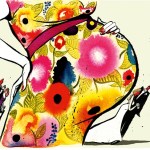
Julia should not have come to the wedding. That much was clear as soon as she arrived. Late, she was, and massive in belly. Her hat festooned with tropical fruit; her dress — hideously colourful. She made the hinges shriek on the great church door and winced, as it slammed shut, with a shudder. Puffing out her cheeks, she waddled slowly towards the nearest pew. She had a fist jammed into the small of her back, as if she were expecting to give birth at any moment. Everyone turned round to stare. The vicar got confused, forgot his lines, began to stammer. The bride stood at the altar, in an ill-advised orgy of organza and tulle, said something no one heard. The groom started coughing and the best man also.

Can the NHS afford the healthcare we want?

The NHS is rarely far away from a crisis. Even so, the last few months have been particularly tough. The junior doctors’ strikes have grabbed the headlines, but perhaps even more worrying for the future of the NHS is the state of its finances. Trusts are falling deeper into debt, yet the biggest budget squeeze is still a year away. It may be time, then, to rethink the way the health service is funded. The subject was tackled by a panel of eminent doctors and journalists at a recent Spectator lunch. The question was: ‘Can the NHS afford the healthcare we want?’ a strong consensus held the answer was no and that the NHS needed more money to cope with dramatically rising demand. That was the easy bit. The harder question was how the money should be raised.

Mrs Badgery

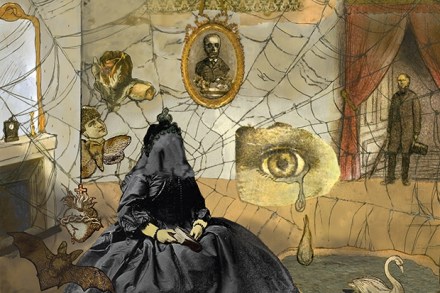
Wilkie Collins’s ‘Mrs Badgery’, rarely seen since its first publication in Dickens’s Household Words magazine in September 1857, is an enchanting little chip off the block. Like a lot of British short stories, it is absurd, very funny, and in uproarious bad taste. British writers have often enjoyed stories of making a home, and also the theatrical trappings of grief. (George Bernard Shaw commented on the national enthusiasm for requiems). Here they collide, with richly enjoyable results. The narrator is clearly stuck withMrs Badgery for ever. In time, he might even regard her as a picturesque addition to his home, like an indoor and rather saline water feature. Philip Hensher Is there any law in England which will protect me from Mrs Badgery?

Social Media: Enjoy the food, not the Twitter feed

Sriracha, for the uninitiated, is a chilli sauce, thicker and sweeter than Tabasco, with a garlicky tang. They eat it in Thailand and Vietnam, though the world’s top brand is made in California with a distinctive rooster on the bottle. Once you have Sriracha in the fridge, you find yourself adding it to many ad hoc meals: fried eggs, falafel, corn fritters. It’s ketchup for grown-ups: a comforting dab of something sweet and spicy that makes everything taste familiar. I’m fond enough of Sriracha, as mass-market condiments go. But mere fondness does not cut it in this age of social media. Sriracha is one of many foods — see also pulled pork, avocado toast, popcorn, kale, and custard doughnuts — that are now the objects of lunatic devotion on Twitter.