Features

The difficult decisions that come with downsizing

I’m perched on the bed reading an old Mothering Sunday card. It’s just one item in a box of miscellanea that I must sort and prune and I really can’t afford the time to linger. That box contains a fraction of what I have to deal with before I move house and I need to crack on. But I am sweating the small stuff. I’m sure I’m not alone in this. One of the legacies of lockdown has been a longing for more space. Across the UK, families with children are falling over themselves to find bigger places. It’s a downsizers’ market right now for those of us who feel ready to let go and to set about the sorting and binning of things. It’s good for us, they say. It’s liberating, they say. My home-moving history is not an unusual one.

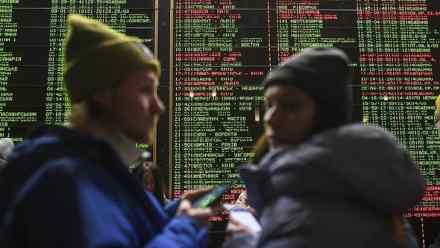
In the pipeline: would Germany side with Russia in a conflict?

If Russia were to invade Ukraine, would Germany side with the Russians? For most of our post-war history, that would have been an absurd question, but things are changing fast in Europe. In the wake of recent events, it would not be irrational for Vladimir Putin to bet that if push came to shove, he could count on German neutrality — or even support. The Ukraine crisis continues apace, with up to 100,000 Russian troops now gathered near its border. The obvious question is: what would happen if Putin were to invade? It would split the EU, exposing its energy dependence on Russia, ruin what is left of transatlantic relations and force Germany to choose sides.

‘If it goes to a vote he’s finished’: the battle to save Boris

Two years ago, Boris Johnson had British politics at his feet. He had won the largest Tory majority since Thatcher, broken the Brexit deadlock and forged a new electoral coalition. Yet Johnson now finds himself on the verge of a vote of no confidence by his own MPs, and this turnaround hasn’t been triggered by some great ideological divide: this isn’t like old Tory arguments over imperial preference, the poll tax or Europe but by Johnson’s own behaviour and the way No. 10 is run. Downing Street had hoped that Sue Gray’s report would come out later this week, and they presumed it would give them the opportunity to launch a fightback.

The collapse: how Red Wall MPs turned on Boris

On Tuesday night, Boris Johnson loyalists were desperately trying to halt a spate of letters of no confidence going to Graham Brady, the chairman of the 1922 committee of backbenchers. They had thought there was plenty of time, that no MPs would move until Sue Gray’s report into the ‘partygate’ scandal was published. ‘Wait for the Gray report’ had become the answer to every awkward question. But it turned out that almost two dozen MPs from the 2019 intake were about to break ranks.

What really happened to Politics For All

On 2 January I woke up late to the sound of my phone buzzing continuously and a sense that something had gone badly wrong. The first message was from a friend. ‘Having a nice holiday?’ he wrote, above a screenshot of my political Twitter account covered in block letters: ‘Suspended.’ My reaction was to swear in just the way my dad does whenever he crashes his car. Politics For All was a news aggregation service I started two years ago when I was 17. It took the most salient lines from news articles and posted them across social media, always pointing readers to the original publication. The aim was to engage a younger audience in politics by summarising stories in a more accessible way.

Road to Reform: is Richard Tice’s party a threat to the Tories?

When I meet Richard Tice, the leader of the Reform party, in St Ermin’s Hotel in Westminster, he is sporting an upside-down Union Jack lapel badge on an otherwise immaculate navy suit, looking like the quintessential Tory he hopes to displace. There was a time when the Tories were complacent about challengers on their right. When David Cameron became Tory leader, he dismissed complaints that he was not Conservative enough. Who else would his critics vote for? Would they really join the ‘fruitcakes, loonies and closet racists’ of Ukip? In the end, Nigel Farage was an opponent supremely capable of stealing his voters and turning British politics upside down. Is Tice the next threat? It doesn’t take long for him to start holding forth about the shenanigans at No. 10.

What Norman Mailer’s ‘cancellation’ reveals

New York Recently a story about my father, the writer Norman Mailer, getting ‘cancelled’ tore across the internet. What started the hoopla was Random House, Mailer’s long-standing publisher, suggesting that his estate bring a proposal for a book. The book was to contain excerpts from several of his political writings and interviews in which he presciently laid out the fragility of democracy. The collection was intended to honour his centenary next year. Random House received the proposal favourably, but then weeks later declined to publish it. The reasons are hearsay. One suggestion is that there were objections by junior executives to the use of the word ‘negro’ in Mailer’s essay ‘The White Negro’.

The hypocrisy of actors

I’ve been keeping a journal for nearly 60 years. There are piles of the damn things in archives and covered with shoeboxes on high closet shelves. I’ve never looked back at one word in them. Being a vain sinner, I’ve entertained the fantasy that others would but, as it seems I’m not going to be remembered as a national treasure, I must conclude the journals have served their purpose. This was to get me to write things down. The physical act of transcription forced me to place half-formed thoughts upon the paper, making them concrete; a delusion, or obsession became a fact, and, as such, could be addressed as independent of my mental processes — that is, as other than the vapourings of a madman. Nancy Mitford loved diaries.

Why we still need the BBC

My first posting as a BBC foreign correspondent was Belgrade in the mid-1990s. Serbia was led by Slobodan Milosevic, practically the only Communist ruler in eastern Europe not to have been overthrown. He survived by reinventing himself as a nationalist, though he kept the Communists’ secret police. Our secretary was accosted one day by a couple of them, nasty-looking thugs in black leather jackets. ‘State Security,’ said one, pushing her into a doorway. They wanted her to inform on me. If she didn’t, they would see to it that her elderly father stopped getting his pension. She told them to get lost, a brave thing to do. To Serbian State Security, I had to be a spy, or at least on the UK government payroll.

Is it over?

Throughout his political career, Boris Johnson has defied all odds. He has been defeated, written off, mocked. At one stage, he left the House of Commons completely. Yet no matter how down-and-out he has looked, how bleak his prospects have appeared, he has always managed to recover. His party chose him as leader partly for this ability to pull off the seemingly impossible. Yet now he faces the gravest peril of his premiership. For the first time, his fate is out of his hands. His excuse for attending a drinks party in the garden of No. 10 after passing such restrictive lockdown laws is that he ‘believed implicitly that this was a work event’ — even though his private secretary had convened the event via a mass email asking staff to ‘bring your own booze’.

My strange encounter with foot fetishists

Around five years ago I started to receive requests online for photos of and details about my feet. I’ve been asked for foot pictures intermittently ever since. Most of the gentlemen are upfront about what they’re after (‘send foot pic plz’), but one man went above and beyond in his pursuits. Posing as an academic, he sent several emails to my work account claiming dozens of women in the British media had submitted their shoe size to help him with a research project. He was just waiting for my details to finish his ground-breaking study. Although I never responded, I commend his efforts. I was never able to work out what triggered this attention from foot fetishists, but now I think I’ve figured it out.

Haunted: the spectre of revolution is stalking Putin

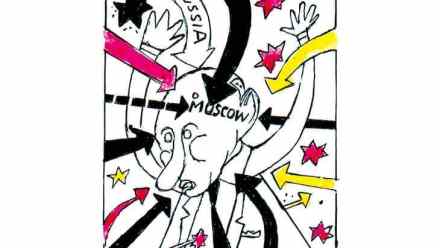
A spectre is haunting the former Soviet Union — the spectre of people power. Every time it appears, Vladimir Putin leads an unholy alliance of all the reactionary autocrats of the former Soviet space to try to exorcise it. Last week, Putin sent 3,000 Russian paratroopers to Kazakhstan at the request of its president to crush a sudden revolution that left at least 160 protestors and 12 security officers dead. For the time being, it looks like Putin’s timely intervention — as well as an internet shutdown that paralysed protestors’ ability to coordinate — has successfully quelled the flames.

Why legalising cannabis is safer than decriminalising it

I hate weed. Week after week, I see the tragic effects of this substance and how it destroys the minds of the young. I work on a mental health ward which, like many around the country, is home to some of the victims of our current lackadaisical attitude towards cannabis. This drug is particularly dangerous to the developing brains of young people and yet we know that this age group are the most likely to be experimenting with it. Despite protestations from the powerful pro--cannabis lobby, it has been proved beyond doubt that cannabis use is associated with depression, anxiety, psychosis and avolition (poor motivation).

Can anyone beat Berlusconi to the Italian presidency?

Silvio ‘Bunga Bunga’ Berlusconi was a populist before the word became all the rage. An almost comically divisive figure, he makes spectacular off-the-cuff remarks which thrill his supporters and leave his enemies apoplectic. He called Barack Obama ‘tanned’. He advised a teenage girl that her best bet in life was to ‘marry a rich man’, and once said it is ‘better to stare at pretty girls than be gay’. In an interview with Boris Johnson and me in The Spectator in 2003, he insisted that the fascist dictator Mussolini did not kill his opponents, merely ‘sent them on holiday to the islands’. I wonder if Boris remembers that now.

I’m sharing my boyfriend with 60,000 other people

I fell in love with a social media influencer. I could say there are three people in our relationship but I’d be lying. There are 63,423. Imagine a world in which your partner’s private life is his professional life: with thousands of fawning acolytes all vying for his approval, all competing for online traction — a traction that comes from your other half’s thumbs. His fingers hover over the phone rather a lot, giving updates into whatever he’s up to. It’s a little disconcerting. Life with an influencer can be challenging. Every trip must be documented, every meal photographed prior to consumption.

Why should I be sacked for refusing the vaccine?

A few months ago, Sajid Javid was asked how he could justify sacking unvaccinated care home workers if they had been infected with Covid and had natural immunity. The Health Secretary replied as if such people were plainly idiots. ‘If they haven’t taken a vaccine — despite all the effort that’s been made to persuade them, encourage them, provide them with information, introduce them to trusted voices — then at some point you have to move on.’ By ‘move on’ he meant thousands of them should be fired. NHS staff are next in line: we have until 1 April to get jabbed or get out. On a recent visit to King’s College Hospital, Javid asked some of us what we thought of this.

The grim reality of being a ‘model Uighur’

I left China a decade ago when life there as a Uighur simply became too difficult. People know about the ongoing genocide of the Uighurs, but it didn’t come out of nowhere: it followed years of smaller scale persecution, which I experienced daily. I first grew aware of how bad things were in 2009, when I got a job in an inland city that required me to travel — a role that became impossible because hotels would refuse to let me stay. Receptionists would see my identity card, which bore my ethnicity, and curtly reply that there were no rooms available. Once, one smiled kindly and told me to wait in the lobby. Ten minutes later, the police arrived, whereupon she pointed at me and said: ‘That’s the Uighur, sitting there.

The EU’s new emperor: what would Macron’s second term look like?

Montpellier Emmanuel Macron, with eagle eyes, is staring at Europe like stout Cortez. Elected president of France almost five years ago aged just 39, he dreams beyond the renewal of his lease on the Élysée Palace in the April election. Now Angela Merkel has left the world stage, Macron’s ambition is to replace her as Europe’s de facto leader and to father a European federation, a United States of Europe, with France and himself at its centre. On New Year’s Day, France assumed the rotating six-month presidency of the European Council, the supreme institution of the European Union, an organisation some might think besieged by unresolved crises and policy conflicts and perhaps best advised to be modest.