Features

Yoga has become a hot cultish mess

Ommm… are you in the lotus position? Then I’ll begin. The studio was literally Hades, four industrial heaters blasting in each corner. We were crouching on our knees, sweat dripping, foreheads to the floor. It was a weekday morning. Then our instructor said the six words I can never unhear. ‘Flower your anus to the sky,’ he ordered all the middle-aged WFH men in shorts and yummy mummies in crop tops in this crunchy-granola bit of north-west London. He jutted his rock-hard buns heavenwards as an exemplar of the uttana shishosana pose or, as I prefer to call it, ‘kneeling’. When did the lines blur and yoga become a hot cultish mess of sex and spirituality?

The argument that found its way into The Forgiven

I moved to Bangkok ten years ago in order to be in a place where nothing happens, where no one knew me and where nothing cost very much. A decade on, after a military coup, running street battles between protestors and soldiers, a ceaseless social life and costs reaching about the same levels as Brooklyn, I have retained at least one of my original reasons for leaving New York: radio silence relative to events in my far-off ‘career’ on the other side of the world. This month my novel about Hong Kong, On Java Road, came out, and so did the film version of an earlier novel, The Forgiven. The principal response outside of reviews has been three death threats postmarked China. It is monsoon here, the rains coming in at 5 p.m.

Why I still love the Edinburgh Festival

When I was in my twenties, exactly 50 Edinburgh Festivals ago, Frank Dunlop directed the first professional production of Joseph and the Amazing Technicolor Dreamcoat which Andrew Lloyd Webber and I had written for a primary school concert in 1968. In the first four years of the work’s existence, it began to burrow its way into educational musical syllabi at a modest pace. This we appreciated, but in 1970 we stumbled into overnight success with our double album of Jesus Christ Superstar, and we did not thereafter give our earlier piece the attention it perhaps deserved.

Is Giorgia Meloni the most dangerous woman in Europe?

Rome Giorgia Meloni’s spacious office, on the top floor of Palazzo Montecitorio – Italy’s House of Commons – has large French windows that adjoin its own huge rooftop terrace with spectacular views of the Eternal City. You could hold the party of the century up there if you were so minded. Perhaps she will, if she wins. The polls suggest that Meloni, 45, is on the verge of becoming Italy’s new prime minister in next month’s snap election, which follows the collapse of Mario Draghi’s unelected national unity government.

The petty cruelty of the GMC

Doctors make mistakes. We mess up, have lapses in judgment, do stupid or downright wrong things. Some break the law, some violate trust. Patients place their wellbeing, and sometimes their lives, in our hands. So it’s only right that we are held to account. All good doctors want scrutiny. Our regulator, the General Medical Council (GMC), is supposed to be there to uphold the standards of the medical profession. It’s meant to help maintain the trust that the public places in us. This, of course, gives it an extraordinary amount of power: it can take away livelihoods. But the GMC has lost our trust. Many doctors feel that the organisation is now out of control, hellbent on pursuing petty indiscretions above all else.

The hidden harms in the Online Safety Bill

Weighing in at 218 pages, with 197 sections and 15 schedules, the Online Safety Bill is a clunking attempt to regulate content on the internet. Its internal contradictions and exceptions, its complex paper chase of definitions, its weasel language suggesting more than it says, all positively invite misunderstanding. Parts of it are so obscure that its promoters and critics cannot even agree on what it does. Nadine Dorries, the Culture Secretary, says that it is all about protecting children and vulnerable adults. She claims it does nothing to limit free speech. Technically, she is right: her bill does not directly censor the internet. It instead seeks to impose on media companies an opaque and intrusive culture of self-censorship – which will have the same effect.

My holiday from the news

We are all supposed to remember where we were when we heard that Mrs Thatcher had resigned (my mother rang me while I was having a late breakfast). But I will always have a much more vivid memory of where I was when I heard Boris Johnson had called it a day. I was at a mountain refuge in Andorra when a Dutch hiker told me: ‘I’ve just spoken to my wife and she tells me your Boris Johnson has resigned.’ It turned out to be four days after the actual event. Between Boris appearing at his Downing Street lectern and me hearing about it I had managed to walk 100 miles across three countries, scale nearly a Mount Everest-worth of mountain passes and survive in my skimpy tent the foulest thunderstorm I have ever known.

What I’ve learnt from editing a newspaper letters page

Letters to a daily newspaper have a curious power to gain an impetus of their own. ‘I owned a Triumph Herald many decades ago,’ wrote Robert Brown of Crosby to the Telegraph in January. ‘She was my first love. On cold winter nights I would keep her warm with an old mackintosh thrown over her engine under the bonnet. Perhaps it was this that protected her from a thief one night. She was driven off our drive on to the road but steadfastly refused to go any further.’ It soon became clear that we’d hit a seam of experience in recent history, when lives and loves were expressed through small British cars of doubtful reliability.

Water woes: who’s to blame for the shortages?

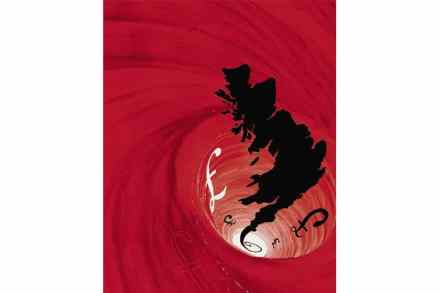
For residents of the London borough of Islington whose homes were flooded this week by a burst water main, Thames Water’s decision to announce a hosepipe ban the following day must have come across as a sick joke. Just a few days before the flood, the company sent out an email asking its customers to be a ‘hot spell hero’. ‘Every drop you save really is another drop more in your local river or reservoir.’ But Thames Water seemed unable to follow its own advice: five million litres of water were lost during the leak. The episode neatly encapsulated much of what is wrong with Britain’s water industry: crude, 1940s-style rationing on the one hand and a failure to prevent much of the product leaking away on the other.

The high life of stonemason James Preston

The impact had shattered the churchyard path. Chunks of asphalt and mortar lay in the surrounding grass. Just next to the path, like a broken chess piece, lay the remnants of the church’s 150-year-old spire. A few hours earlier, it had stood at the very top of the church, towering over the churchyard. Mercifully, the Victorian construction had fallen to earth rather than through the church roof. For reasons now lost, St Thomas’ in Wells is one of the very few English churches with a spire to the north-east corner. The list of people one can call for such emergencies is not long. In the event it was 37-year-old James Preston who picked up the phone.

I took my son to Drag Queen Story Hour

The nice young man in the library had told us he was worried about protests when I booked tickets for Drag Queen Story Hour. We only began to hear the chants halfway through the show; they drifted up from the courtyard in front of St John’s Hall, the council building that houses Penzance library, through the window behind where my son and I were sitting. They got louder and louder – the children started looking round, puzzled, and the drag queen gesticulated at me to close the window. It took me a few moments to realise what the gestures meant – I had assumed that it was what they call ‘vogueing’ – but I eventually pushed the sash closed. But not before I heard what they were chanting: ‘Drag! Is! For! Everyone!

It’s time for Tory socialism

The Conservative leadership contest has descended into a low-tax auction, which is not a good thing. The implication is that the Conservatives think government should be minuscule at the very moment when private enterprise is letting us down – the energy companies are raking in cash and spending it on stock buybacks – and the state seems to be on its knees. We live in a country where it’s become widely accepted that if you call an ambulance, it won’t show up for several hours; the borders are wide open; social care is under-funded; and the police have ceased investigating certain crimes. If anything, this is a moment to rediscover an older Tory tradition of state-building.

Liberté, égalité, nudité: France’s new sexual politics

Montpellier France is going through a sexual civil war. After the great carnal outburst of the free-loving soixante-huitards, some have reverted to abstinence and prudishness, while others are pushing sexuality to new extremes. The crisis in French sexuality has exposed itself this summer as the clothes have come off. It’s not always a pretty sight, and not just because it isn’t true that French people don’t get fat. Major confusion on the shifting boundaries of corporal and sexual expression has grown into a peculiar conflict, exposing a national sexual neurosis.

Going bananas: Biden’s America is fast regressing

It’s hardly surprising that China feels emboldened. Xi Jinping must look at America and see not just a superpower in decline but a gerontocracy that has lost its marbles.Last week, Nancy Pelosi, the 82-year-old Speaker of the House of Representatives, visited Taiwan as a gesture of solidarity, in spite of China’s fierce warnings that her arrival would be treated as a grave provocation. Presumably Pelosi felt that, by not being cowed, she’d shown China who’s still global boss. And other photo-opportunistic politicians are expected now to imitate her. What for, though? In the following days, China intensified its military drills around the Taiwan Strait.

Baby bust: China’s looming demographic disaster

This week, the world is gripped by the risk of conflict between the US and China. The People’s Liberation Army has fired live missiles into the Taiwan Strait in retaliation for US House Speaker Nancy Pelosi’s visit to Taipei and those who fear that China vs America is the next world war see Taiwan as a flashpoint. Some analysts imagine a repeat of the Cold War: two countries, two rival political systems, vying for world economic supremacy. China’s dominance is inexorably linked to the size of its population. It has long been the world’s most populous country. A technologically advanced society, with a great army of young workers and soldiers, is inevitably a power to be reckoned with.

How to be PM: ten rules for the next Tory leader to live by

You’ve just become prime minister. The public finances are in a mess, the Bank of England has stoked inflation, cutting taxes may make it worse, energy prices are through the roof, people are hurting so you can’t cut social spending, the Health Service is lengthening its waiting lists despite record budgets. What can you do? Given that you will be hearing a lot from people who do governing all day, here are ten things to remember on behalf of the rest of us – the governed: Assume all public bodies have the same goal – and it isn’t what it says on the tin. You might think the Committee for the Promotion of Postage Stamp Collections is obsessed with postage stamps, or the Sewage Treatment Works Agency is fascinated by sewage.

What foreign policy would look like under a PM Truss

When Tom Tugendhat announced he was backing Liz Truss for prime minister, his former supporters were dismayed. He was the candidate for the ‘One Nation’ caucus of moderate MPs, who defined themselves against the Tory right. ‘Anyone but Truss’ was their mantra – and they lined up behind Rishi Sunak. Yet here was their former poster boy supporting their nemesis. What could Truss and Tugendhat possibly have in common? The answer can be summed up in a word: China. For better or worse, Truss is an instinctive politician. On foreign affairs, she was held back by Boris Johnson, who was more cautious on China. If she becomes prime minister, which looks likely, she would spend more on defence and take a more muscular stance against aggressors.

Sanctions are working – whatever Putin says

Don’t believe Vladimir Putin’s hype. The Russian economy is not OK. With western sanctions jeopardising up to 40 per cent of the country’s GDP, Putin’s assurances of an economic pivot to the East are a sham. And his weaponising of gas supplies to Europe is the financial equivalent of strapping on a suicide vest. That, roughly, is the message of a major new study published last week by the Yale School of Management about the impact of sanctions on Russia. Yale, working with a team of international economists, has looked past a wall of Russian obfuscation and used real-world data from retailers, energy traders and investors to reveal a picture very different from the rosy image presented by Putin at the St Petersburg Economic Forum in June.