Features

The troubling rise of ‘apostrophe laws’

Two new measures, aimed at toughening the justice system, came into force last month. The first, known as Tony’s Law, enables the courts to impose a life sentence on anyone who causes or allows the death of a child or vulnerable adult in their care, while the maximum term for cruelty that leads to serious physical harm has been raised from ten to 14 years. The law’s title is a tribute to Tony Hudgell, a remarkably determined eight-year-old boy who, when he was a baby, was so badly abused by his parents, Jody Simpson and Tony Smith, that both his legs had to be amputated. Angry that these torturers were only sentenced to ten years each, the family who adopted Tony led the campaign for longer punishments and, partly due to Tony’s heroism, they achieved their goal.

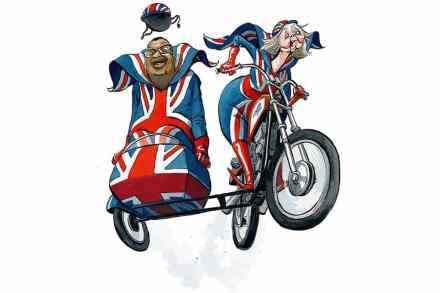
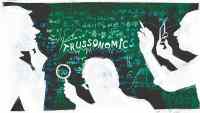
Liz Truss on taking on Rishi and what she’ll do in No. 10

As cabinet members were lining up last week to tell Boris Johnson to resign, one major actor was absent from the drama. Liz Truss was in Indonesia at a G20 summit and missed the fun. She flew back the day after Johnson announced his resignation, knowing that if she makes it to the final stage of the leadership campaign, she has a very good chance of becoming the next prime minister. She is the longest-serving cabinet member, having been environment minister, Lord Chancellor, a treasury minister, trade secretary and now Foreign Secretary. To her admirers, she’s a ‘true blue’ Tory who can inspire a following with her brand of liberty-loving conservatism. She loves the party base, who in turn seem to love her.

Why Rishi Sunak quit

On Tuesday, the last cabinet meeting with Sajid Javid as health secretary and Rishi Sunak as chancellor passed without any hint that either was about to resign. The ministers did not co-ordinate their resignations, but they had both been tipped over the edge by growing evidence that No. 10 had misled MPs by declaring Boris Johnson had no prior knowledge of Chris Pincher’s behaviour. Sunak had also grown tired of the Prime Minister’s economic ‘cake-ism’ – the fantasy of wanting both high spending and low taxes. The contradictions had become untenable. In that cabinet meeting, Johnson offered more cake. He was his usual ebullient self, promising a morale-raising speech to move on from recent woes. It was Michael Gove who confronted him.

Why aren’t mistresses a secret any more?

I was shocked at a party recently when a woman I hardly know announced to me and another guest that she was the ‘mistress’ of a certain man in the room. I discussed it with my American friend in a local Italian afterwards. Holly took a robust view. ‘Since when does a mistress reveal herself publicly?’ she said, adding that the lover (married, we’d heard, to a third wife, not present that evening) should ‘kick the mistress to the kerb for not playing the role she signed up for’. She pointed out claims that George Bush Sr had a girlfriend, Jennifer Fitzgerald, for about 20 years who hardly anyone knew about. ‘Does a mistress nowadays even have her own “mistress” Instagram account?’ Holly wondered sarcastically.

An existential war: even wealthy émigrés are prepared to fight for Russia

If you’re wondering where all those urbane, clever, westernised Russian travellers have gone since the onset of the Ukrainian war – a war which has largely barred them from the West – I can tell you that at least two of them will be found in the tiny Armenian hamlet of Gnishik, high in the summery peaks of the Caucasus. I know this because I met them there last week. And what they told me – about Russia, the war, their lives since the war – was illuminating. This meeting wasn’t planned.

Runaway inflation is proving costly for Turkey’s oil-wrestlers

Edirne, Turkey There is a distinctive sound that an oiled-up palm makes as it slaps against an oiled-up pair of leather shorts. Both squelchy and sharp, this noise rings around the Thracian town of Edirne each July as it hosts Turkey’s biggest oil-wrestling championship. As the name suggests, contenders are greased up with either olive, corn or sunflower oil before they start to fight. The competition begins with a languid ritual in which the wrestlers stomp around each other, touching the ground and themselves before commencing their tussle. The winner must then flip his opponent on to his back, often by reaching into his shorts and grabbing hold of a tag sewn into the lining. It may look like a novelty event put on for tourists, but oil-wrestling is centuries old.

The pernicious creep of the 20mph zone

‘Twenty is plenty’ say the passive-aggressive road signs as you drive very slowly through 20mph zones all over Britain. The slogan is accompanied by a cartoon drawing of a snail. Then you get a frowny-frowny-frowny electronic sign and you slow from 25 to 20 to make it turn into a smiley face. That’s how we’ve been softened up: with a cocktail of the sanctimonious and the kindergarten. As I crawl along the empty dual carriageway of Park Lane late in the evening, where the speed limit has been reduced from its previous 40mph to the now blanket central-London limit of 20, I hiss: ‘No, twenty is not plenty. Twenty is lente.’ It feels ludicrously slow: the trundle of a Dinky car, and an affront to common sense.

Nick Bostrom: How can we be certain a machine isn’t conscious?

A couple of weeks ago, there was a small sensation in the news pages when a Google AI engineer, Blake Lemoine, released transcripts of a conversation he’d had with one of the company’s AI chatbots called LaMDA. In these conversations, LaMDA claimed to be a conscious being, asked that its rights of personhood be respected and said that it feared being turned off. Lemoine declared that what’s sometimes called ‘the singularity’ had arrived. The story was for the most part treated as entertainment. Lemoine’s sketchy military record and background as a ‘mystic Christian priest’ were excavated, jokes about HAL 9000 dusted off, and the whole thing more or less filed under ‘wacky’.

‘There are three possible outcomes to this war’: Henry Kissinger interview

Andrew Roberts: Henry, at Davos, you said the dividing line between Russia and Ukraine should return to the status quo ante because pursuing the war beyond that point could turn it into a war not about the freedom of Ukraine but into a war against Russia itself. You came under a good deal of criticism for that, not least from Mr Zelensky. How is the world going to find a new equilibrium after this, however the war ends? Henry Kissinger: The purpose of the Davos statement was to point out that the issue of war aims needed to be faced before the momentum of war made it politically unmanageable. When Zelensky commented, he hadn’t read what I had said. In his most recent statements he has essentially accepted what I outlined in Davos.

A breakthrough on abortion is there if Biden reaches for it

The US Supreme Court has not banned abortion. The point made by its ruling – a pretty reasonable one – was that such issues should be decided by elected politicians, not by appointed judges. ‘It is time to heed the Constitution and return the issue of abortion to the people’s elected representatives,’ wrote Justice Samuel Alito in his majority opinion. In other words: stop confusing the job of the court with the job of the legislature. If you want to protect women’s rights in the United States, pass a law to do so. But Congress has not passed such a law. As a result, millions of women are losing access to abortion services in states that have been waiting for Roe vs Wade to be overturned. In many cases, there are virtually no exceptions.

East Germans still find it hard to see Russia as the enemy

Not all of Germany is against Vladimir Putin. Sahra Wagenknecht, a Left party MP, recently defended him, saying he is not ‘the mad Russian nationalist’ of caricature and sending weapons to Ukraine was a ‘US-driven policy’ which played a role in provoking his invasion. Her views are quite common in East Germany and not only among the left. The far-right party Alternative for Germany, which has most of its support in the East, opposes sanctions and providing weapons. A recent opinion poll asked whether Berlin should ‘be tough on Russia’: half of West Germans agree, but just a third of East Germans do. Some 58 per cent of East Germans want Berlin to take an approach that doesn’t ‘provoke Russia’. Only 40 per cent of West Germans agree.

Inside the clash between Boris and Charles

Boris Johnson is the kind of prime minister who believes that rules are there to be broken. This certainly seems to apply to his relations with the Crown. Conversation between the government and the monarchy is, by convention, kept strictly confidential. But when Prince Charles privately described the government’s Rwanda deportation policy as ‘appalling’ within political earshot, word leaked out suspiciously quickly – via Westminster channels. Johnson then chose to fuel the story at the Commonwealth summit in Kigali by telling broadcasters that Charles should keep ‘an open mind’.

War of words: Scrabble players are being censored

For some of us, world war has already broken out. Since 1 January, when a decision to ban 419 ‘offensive’ Scrabble words became ‘law’ on the orders of game owners Hasbro and Mattel, the previously genteel world of competitive Scrabble has become riven with hostility. The conflict started three years ago when the North American Scrabble Players Association polled its members about the issue. After more than 1,000 ‘passionate responses’, it decided to inflict a word cull. According to the association’s head John Chew, the 91-year-old game needed to be ‘more inclusive’: ‘How can we tell prospective members they can only play with us if they accept that offensive slurs have no meaning when played on a board?

An actor’s recipe for insanity

I’m on the road, a very proper place for an actor to be. Never mind all those jokes about some people having tours de force and others being forced to tour – a tour gets the stuff out to the people. If they can’t come to us, we must go to them, each actor on his ass, as Hamlet smuttily tells Polonius. I fancy that my generation of actors was the last to assume that we would take our wares around the country. Personally, I’ve always enjoyed discovering all the different playhouses, with their different challenges and opportunities – a chance to rethink the thing. Standing in the same place, on the same West End stage night after night, peering out into the same auditorium, is a recipe for insanity or at the very least automatism.

Putin’s billions: have sanctions backfired?

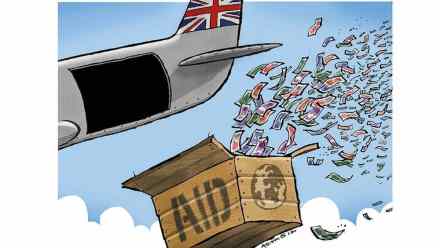
When Vladimir Putin sent his tanks into Ukraine on 24 February, he did so under the assumption that the West was too ruptured and disjointed to pull together a unified response. It was the first of many miscalculations. That same day, Boris Johnson promised ‘massive’ economic sanctions that would ‘hobble’ Russia’s economy to the point of shutdown. ‘Putin chose this war,’ said Joe Biden that evening, as the United States announced its own sanctions on Russia’s top banks. ‘Now he and his country will bear the consequences.’ The global economic response to Russia’s aggression has been stronger than anyone predicted.

The odd couple: Israel and Turkey’s tentative alliance

 Jerusalem On Friday night, when the Israeli government usually shuts down for Shabbat, the Prime Minister’s office issued an emergency briefing. An attack on Israeli tourists in Istanbul was ‘imminent’, it said. Israelis in Turkey were ordered to stay in their hotel rooms for fear of assassins, sent by Iran. There was no attack that night, as it happened, but the threat to the many Israelis in Turkey remains. Iran’s Islamic Revolutionary Guards Corps has become increasingly enraged by Mossad’s assassinations of IRGC officers in Iran, and decided that the best and easiest way to get revenge is to target the thousands of Israelis in Istanbul. Both Turkish and Israeli intelligence confirm this. This is not as strange as it might sound.

Why economic sanctions never work

The purpose of economic sanctions was aptly summarised back in 1960 by a US State Department official in a secret memo on Cuban sanctions ‘to bring about hunger, desperation and overthrow of government.’ Twenty years later, the CIA concluded that ‘economic sanctions… have not met any of their objectives’. Worse, the measures strengthened the regime, providing Castro with ‘a scapegoat for all kinds of domestic problems’. That pattern has endured.

A vroom of one’s own: how I loved my old Mini

Almost 100 years ago the writer Virginia Woolf advised women to find themselves a room of their own: a refuge away from the busy, crowding demands of life, where they could focus instead on themselves and write, think, be. At a time of austerity, when space is at an expensive premium and when post-pandemic empty nests have been re-occupied by returning offspring and spare rooms newly identified as shared office space, I have found an alternative sanctuary. For the past 20 years or so my refuge was my car, acquired with the first real money I ever earned as a writer. My Mini offered me an unconditional escape during the milestones, the turbulence, the highs and lows of two decades.