Features

How Rishi Sunak won over the Tories of West Suffolk

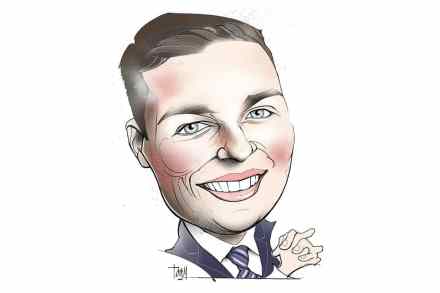
‘I’ve cancelled my exercise class for this! I hope he’s worth it,’ said Selina in the hotel lobby. Rishi Sunak was coming to West Suffolk to meet members of our Conservative Association. Would he be worth a listen? Clearly our members thought so. More than 90 of us rocked up at one day’s notice to meet Rishi (or Sushi, as one of our older members kept calling him). Rishi wanted to pitch for our votes. His strategy is to introduce himself to as many members as possible. Last weekend, he met 2,000 activists in constituencies where 10,000 Tory members are based. He needs every single one of our votes if he is to overtake Liz Truss, and currently the odds are against him. One doubtful member told me at the beginning: ‘He can’t beat Truss.

Why must my mobile provider harass me all through my holiday?

We have been on a family holiday to Tangier, Morocco, and of course my mobile phone came too. Not that I was intending to use it much – minimum impulse roaming; I would mostly wait until we had wifi for the purposes of Instagram and the rest of it. And I don’t tend to use the telephone bit at all. We had been at the villa two days when the barrage began – text after text, email after email, all from O2. I can’t pretend I am someone who can tell one service provider from another, but I know I am ‘with’ O2, and suddenly they were all over me. ‘Hello,’ their texts began. ‘From the way you have been using your phone, it looks like you might be abroad. Call us straight away so we can make sure your phone isn’t lost or stolen.

What we can all learn from Jim Corbett’s tiger tales

‘The word “Terror” is so generally and universally used in connection with everyday trivial matters that it is apt to fail to convey, when intended to do so, its real meaning.’ Thus begins the third chapter of The Man-Eating Leopard of Rudraprayag (1947), part of the Man-Eater series by the great Anglo-Indian hunter and naturalist Jim Corbett. I was reminded of Corbett and his wonderful books when reading last week that human-assaulting tigers are once again on the prowl in Nepal, with 104 attacks and 62 people killed in the past three years. Conservation efforts have seen tiger numbers rise three-fold since 2010, but with that good news comes the bad news of increased danger to humans.

Rishi’s mad dash: can he catch up with Truss?

Just a couple of weeks ago, Rishi Sunak was the clear bookies’ favourite in the Tory leadership contest. He had the largest parliamentary support and was set to top every round of MPs’ voting. He had 20,000 volunteers, a well-organised team, a slick launch – and (he thought) all of August to convince party members that he was the real deal. His strength, his supporters argued, was a firmer grasp of policy and better verbal dexterity than his opponents. So the final format – a dozen head-to-head debates – would give him time to win. Then, disaster. The Tories became paranoid that the unions could sabotage the process with a Royal Mail strike, so Conservative campaign headquarters announced they would send out the voting papers almost as soon as the final two had been selected.

The China threat our politicians don’t seem to have noticed

The Chinese Communist party can congratulate itself on another sign of its rise: for the first time it has become a factor in deciding the fate of British politics. During Monday’s televised leadership debates, Liz Truss and Rishi Sunak tried to appeal to Tory members by outdoing each other on their commitment to protect our national security, economic prosperity, data privacy and values from the CCP. They both referred to Chinese theft of our science and technology, but the problem is much, much wider than that. What is more serious is our blithe willingness to import Chinese control into the most sensitive areas of our economy and society. Neither aspiring prime minister mentioned the most crucial area – more crucial than 5G and Huawei.

The small NHS failings that let down patients like my mother

I would be the first to admit that the NHS has done a lot for my mother this year. It gave her the emergency blood transfusion that undoubtedly saved her life, followed by several iron infusions and umpteen scans and tests. It has treated a series of infected leg ulcers and provided consultations with senior medical figures and countless more outpatient appointments. It has supplied her with swanky new hearing aids and nursed her through Covid. During her four months in hospital, in two separate stays of nine and seven weeks, it came up with three meals a day, not all of them involving ravioli, mash and gravy, and a regime of (almost) daily physiotherapy. If my mum were American, I have reflected more than once, her money would have run out several rounds of ravioli ago.

Is technology killing nostalgia?

The latest trend among the scions of Generation Z – those born between 1997 and 2012 – is posting ‘throwback videos’ on TikTok. Talk about a snake eating its tail. Having reached the ripe old age of, say, 11, Generation Z is digging through their archives to offer a wan critique of that embarrassing haircut they sported in the dim and distant past of, say, 18 months ago, or reminiscing with friends about ‘Snapchat filters we all used to use’. That’s silly, but it’s also a little sad.

The toxic cult of the superhero

‘We don’t need another hero,’ sang Tina Turner back in the sexy-greedy 1980s. How times have changed. These days we have Superheroes Are Everywhere, a children’s book written by the Vice-President of the USA, Kamala Harris. Puffs tell us that ‘the book teaches that superheroes can be found everywhere in real life, from family members, to friends, to teachers at school and college’ and that it is an ‘encouraging, uplifting book [which] inspires kids to recognise the super-heroes all around them and promise to be, like them, brave, kind, helpful, and more’.

The Singapore model: lessons for the new PM from Lee Kwan Yew

Labour has sneered at talk of ‘Singapore-on-Thames’ as a post-Brexit economic model, while the tax-cutting wing of the Conservatives has embraced it with a passion. But neither seem to know much about how Singapore actually achieved its remarkable prosperity. Lee Kwan Yew, the country’s prime minister from 1959 to 1990 (and one of the greatest national leaders since 1945), transformed Singapore from corruption, division and poverty by moral, fiscal, social and market acts of genius which gave people a new sense of hopeful purpose. First, the moral genius. The population of Singapore was bitterly divided by racial and ideological antagonisms that had left the country isolated from its neighbours.

What’s behind Africa’s love affair with country music?

Kenya Life in the poorest continent is so hard you get a lot of knowing laughs with the joke: ‘What happens when you play a country and western song backwards? Your wife comes home, your children suddenly respect you, you get sober and your dog wakes from the dead.’ In Kenya and other parts of Anglophone Africa, country and western music is a cultural obsession for both young and old. ‘We all relate to the problems they sing about,’ says Jeff Koinange, host of the wildly popular Smokin’ Country radio show on Kenya’s Hot 96 FM. ‘Four hungry children and a crop in the field – this is everyday life for us Africans.

My debt to Boris Johnson

Back in 1997 when I was narked on by a fellow journalist (Simon Walters, currently of the Times, then of the Express) for taking class As on the Prime Minister’s press plane, I sought to restore my reputation by giving an interview to a maverick young libertarian on the Telegraph. Boris Johnson wrote up our encounter favourably, along the classic out-of-Alexander-Pope-by-way-of-William-Rees-Mogg lines of ‘Who breaks a butterfly on a wheel?’ and ever since then I’ve found it hard to think altogether badly of him.

Where does a mother’s history end and a daughter’s begin?

In the grim locked-down winter of 2021, I drove three hours to Wales where I sat in an isolated cottage and wrestled with a memoir I could not figure out how to write. While I was there, my mother sent me a link to a two-page personal essay she’d published in a tiny but venerable magazine called the Literary Review of Canada. It was entitled ‘This Story is Mine’. After a preamble about feminism and #MeToo, she cuts to the chase: ‘In June 1964, a few weeks before my thirteenth birthday I was raped by a man old enough to be my father.’ My mother then went on to tell her life story, or the story she understands to be her life. It’s a story I’d heard many times before, one she’d published other versions of in other places.

Is the world ready for another Trump presidency?

Is Donald Trump going to run in 2024? And if he does, will the world go even more completely crazy? These are questions that almost nobody wants to answer. Many of us are in denial. President Trump broke something in the global political psyche the first time round, which is why so many commentators struggle to admit the obvious: that, by the end of January 2025, Bad Orange Man could well be back in the White House, trolling the universe. The last, best hope of liberal sanity is that Trump will decide not to stand again. He is 76. He knows that running for the White House, and then being president, is one of the most stressful and exhausting things any human being can do. ‘He doesn’t want to end up like Biden,’ says a Republican operator who knows Trump well.

The death of bad-taste humour

The recent heatwave inspired many people to bring out their stories of the summer of 1976. I have a memory of it which has nothing to do with the temperature, but which I think could be even more relevant to our times. It happened in the baking, crammed, nicotine-steeped ballroom of a holiday camp. I was eight. The campers were gathered for the night’s fun, provided by the camp’s resident comic. On the dot of 8 p.m. he told the audience it was time for the kiddies to head to bed. We were handed over to the care of a redcoat (about 20, unvetted, just some bloke – there is an entire vanished world in that) and led back en masse to our chalets. It felt so unfair. I could stay up for hours yet! I wasn’t a baby any more! Why was this happening?

Blue murder: the knives are out in the Tory leadership fight

To Ronald Reagan, it was the 11th commandment: thou shalt never speak ill of a fellow conservative. Tories tend to observe the opposite rule: anyone ambitious enough to stand for party leadership needs to be targeted and weakened – ideally, destroyed. Attack dossiers will be drawn up, rumours concocted and poison darts blown. Fighting for leadership does not mean articulating a positive message or agenda nearly as much as it means trying to crush the other guy. And whoever can survive such attacks might – at a push – deserve the job. The Conservatives ought to be having a period of reflection.

Home remedies are good for us – and the NHS

Today’s medical treatment for major ills is unrecognisable, in sophistication and efficacy, from anything available during the immediate post-war period. We all live longer, pain is far better controlled, and antibiotics save lives – though fewer than they once did because of the cavalier way they have been overused. I did not take any at all until I was 20, and that was penicillin prescribed by a dentist. My children were brought up on it. But I am not sure we are better off for minor conditions. Ambulances are demanded for what only needs a sticking plaster and it is estimated that more than half of those waiting five hours in A&E don’t need to be there at all.

How humans may populate the universe in the billions of years ahead

I’m old enough to have viewed the grainy TV images of the first Moon landings by Apollo 11 in 1969. I can never look at the Moon without recalling Neil Armstrong’s ‘One small step for a man; one giant leap for mankind’. It seems even more heroic in retrospect, considering how they depended on primitive computing and untested equipment. 20 July 1969 (NASA/AFP via Getty Images) Once the race to the Moon was won, there was no motivation for continuing with the space race and the gargantuan costs involved. No human since 1972 has travelled more than a few hundred miles from the Earth. Hundreds have ventured into space, but they have done no more than circle the Earth in low orbit.

Is Biden ready to let MBS get away with murder?

President Joe Biden will have only himself to blame if he feels a little uncomfortable this week when he sits down with the man who runs Saudi Arabia, Crown Prince Mohammed ‘Bone Saw’ bin Salman (MBS). After the CIA accused MBS of ordering the murder of the dissident journalist Jamal Khashoggi – dismembered with a bone saw – Biden said Saudi Arabia had ‘no redeeming social feature’ and should be made ‘a pariah’. This was a satisfying bit of moral posturing during a presidential election campaign, but costly now, in a world where Americans are paying $5 a gallon for gas and Russia is funding its war in Ukraine by selling oil at $100 a barrel. The US needs the Saudis to crank up production.