Features

The James Webb Space Telescope and the search for life in the universe

The James Webb space telescope, the most powerful telescope ever built, has gathered some extraordinary images since it was launched by Nasa just over a year ago. There have been shots of stars on the cusp of death, of stars violently colliding together, and even of ancient galaxies that have challenged our very understanding of the cosmos. But it’s the study of exoplanets – planets outside our solar system – that, for me, really justifies the telescope’s $10 billion price tag.

The killer next door: growing up in the murder capital of Wales

It was about this time last year when I stopped receiving the daily messages. At first, I had replied politely. He was from my hometown, so it felt weird to ignore him. A man who knew all of my friends, had even dated some of them, and would often walk past me in the pub couldn’t be that bad, right? The messages started with the usual: ‘How are you, Kara? Do you fancy a drink?’ When I began to reject him, making it clear that I wasn’t interested, he became manic. He would ask me if I wanted to meet him in a forest not far from where I lived, and, when I didn’t reply to that, his demands became darker and more sexual. While his messages were a bit alarming, at the time I wasn’t really concerned. Like many young men in my town, he was obviously using hard drugs.

What economic crisis comes next?

As we come to the end of an era in which money was practically free, the big question is what the fallout will be from rising interest rates. It isn’t difficult to spot possible problems. Many governments look vulnerable. There are concerns about the UK, where the national debt is now equivalent to roughly 100 per cent of economic output. But what about Italy, where national debt is 150 per cent of national income? Might it succumb to a new vicious circle of rising debt and borrowing costs? How long can its bonds be propped up by low interest rates in the eurozone and backstops provided by the European Central Bank? For Japan, government debt sits at 260 per cent.

Crash test: the new era of economic uncertainty

Why did nobody see it coming? When the late Queen asked this question about the crash of 2008, on a visit to a London business school, no one had a clear answer. Why, in a financial world crawling with regulators, did no one spot that subprime mortgages were toxic, on the brink of falling apart?  The simple answer is that we got too comfortable. We assumed that times had changed and dropped our guard. It looks as if we’ve dropped our guard again. On the way out of the financial crash, we seem to have simply and blindly assumed another set of false beliefs: that ultra-low interest rates, designed to help tackle recession, were here to stay. Entire business models were built on this premise. But then inflation returned – and interest rates shot up.

The truth about single motherhood

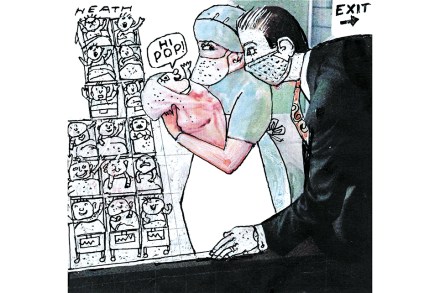
If you believed Hollywood, you’d think the world was madly in love with harried, struggling single mothers. I mean, who doesn’t love Erin Brockovich? Or Renée Zellweger’s character in Jerry Maguire? But in real life, that’s not how it works. In recent months, I have unexpectedly found myself the sole-care single mother to two young sons. This has changed my life in unfathomable ways but the main thing it’s altered is my relationship to work. There’s just way more of it – the unpaid kind. For all our talk of progress and equality, single mums are held to higher account than single dads In October, I went from being a partner, wife and co-parent to the only responsible adult on deck. My parental responsibility doubled, and my resources were halved.

Sexual politics is damaging young men

Masculinity has been in crisis for as long as anyone can remember. The usual explanation is that post-industrial society doesn’t much care for brawn. We’re all office dwellers now, mutely churning out spreadsheets for other spreadsheet producers. The theory makes sense as far as it goes. But something else has changed much more recently: a rejection of the very concept of masculinity. The polling company YouGov found that just 8 per cent of people have positive views of white men in their twenties, by far the lowest of any ethnicity or age group. Males are routinely presented as inherently dangerous, aggressive and animalistic, incapable of controlling their own instincts. You can see it on public transport, where government adverts announce that staring is sexual harassment.

Confessions of a class tourist

Pundits writing for a young audience are always telling readers to ‘stop pretending to be working-class!’ and stop ‘fetishising the working class’. They seem more angered by the imitation of class than the iniquities of class itself. Singer Lily Allen and the rap star Yungblud have both been denounced on Twitter for – to paraphrase E.P. Thompson – the faking of the English working class. Personally, I don’t understand the fuss. For most of my youth I pretended to be working -class – and so did most of my middle--class mates (sorry, friends). And we were not alone. Throughout the 1960s and 1970s the voices of youth all sounded working--class, especially the middle-class ones like Jagger, Bowie and, yes, that faux working-class hero himself, John Lennon.

How Britain can help keep the peace in Taiwan

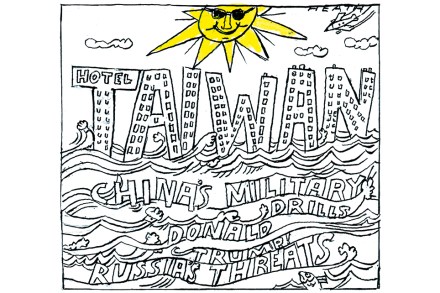
During a recent trip to Taipei, I sat down with several retired Taiwanese national security officials to talk about the possibility of war with China. Their responses were sobering: most agreed an outright war is likely this decade or in the early 2030s – whenever Beijing thinks it can outmuscle the US and Japan. They wanted the world to know the situation’s severity. ‘I lived to see Taiwan’s rise,’ one elder statesman told me. ‘Now I fear I will live to see its fall.’ If Xi is committed to attacking, no military capability Taiwan could acquire would make a difference Officials in the Pentagon are laser-focused on the western Pacific. They see Vladimir Putin as little more than a distraction.

Innovators driving economic renewal

The Spectator’s Economic Innovator of the Year Awards 2023 in partnership with Investec are open for business. We’re looking forward to hearing from entrepreneur-led high-growth businesses across the UK and we’re especially pleased to welcome back our partner Investec – an international banking, wealth and investment group with an extensive UK regional network and a deep commitment to supporting entrepreneurship. These prestigious awards, now in their sixth year, are well recognised in entrepreneur and investment communities in every region of the UK and it has been a joy to see the number and breadth of entries grow year by year.

Don vs Ron: the fight for the American right

When Donald Trump ran for the presidency in 2016, he took on a very well-funded politician who had been a successful governor of Florida. And he destroyed him. Trump humiliated ‘low-energy’ Jeb Bush, son of one president and brother of another, and trashed his family’s legacy so comprehensively that the Bush-era Republican party is now widely regarded as a disaster. Political experts tend to forget what a canny campaigner Donald Trump is Jeb messed up again last week. Speaking to Fox News, he semi-endorsed Ron DeSantis, the current Florida governor and Trump’s strongest challenger for the 2024 Republican nomination. ‘I think we’re on the verge of a generational change, kind of hope so,’ said Jeb.

The Lockdown Files are a historian’s dream

For all that the Lockdown Files, as reported in the Telegraph, sometimes read like the screenplay of The Thick of It, they will be a wonderful resource for historians. Whatever one thinks of the morality of Isabel Oakeshott’s actions vis-à-vis Matt Hancock, we now have 2.3 million words of WhatsApp messages that offer a rare psychological profile of ministers acting with emergency powers in a swiftly unfolding global crisis.

Michael Caine: no, Zulu doesn’t incite far-right extremism

Michael Caine is 90 this week, and he offers to accept questions by email, which he will then answer by email, as if we are communicating between galaxies. Normally this would bother me – gah, actors – but it is Michael Caine, so I can’t mind. Maurice Micklewhite’s invention Michael Caine – he named himself after The Caine Mutiny – is as luminous a piece of 20th-century British culture as Eleanor Rigby. There are some people you want to be happy. They deserve it.  He replies quickly: this is a functional man. What did I expect? He has been nominated for an Academy Award six times in four separate decades, and won twice, and he is still working. This is work.

My case against Russia’s war criminals

Lviv My favourite hotels in Lviv were all booked out over the weekend. The world’s justice elite were in town for a gathering on how to hold Russia accountable for its crimes. The US Attorney General and the Chief Prosecutor from The Hague, as well as President Volodymyr Zelensky, were there. It was an apposite location. In the early 20th century Lviv was home to the lawyers Raphael Lemkin and Hersch Lauterpacht, who later gave us a language to define modern evil by coming up with the concepts of ‘genocide’ and ‘crimes against humanity’ respectively.

Sweden’s street gangs are gaining power

Stockholm Barely a day goes by in Stockholm without a shooting or a bombing. In one part of the city, housing estate residents have been informed about what to do if their building is a bombing target. For all too many Swedes, this is the new normal. Under Swedish law, children under 15 cannot be sentenced to any criminal punishment and older teenagers are seldom given more than four years in ‘compulsory care’. So mobsters now recruit young people, arm them with thermos-flask bombs or guns and send them out as soldiers in their gang wars. The country’s liberal criminal justice system and the fact that the police were never trained for such problems have made life comfortable for new gangs in immigrant neighbourhoods.

Meet the architect behind ‘Putin’s palace’

Lanfranco Cirillo, architect and interior decorator to the Russian elite, is shaking his head in horror. ‘Absolutely not. No.’ He is answering my question about whether he put a gold toilet and even a gold toilet brush into a villa he built that the Russian opposition says belongs to President Vladimir Putin – and which they call ‘Putin’s palace’. At one time, protestors used to taunt Putin by waving gold-painted toilet brushes. Cirillo says the whole thing is a calumny. ‘I don’t like gold, first of all, I like marble. And I’m Italian. For an Italian to make a toilet in gold is really anti-historical, anti-cultural. No, no gold toilet, no gold toilet brush.

My search for London’s cheapest flat

Maternal nocturnal worry number 57a: how are our offspring going to get their toes on any rung of the property ladder if they want to carry on living in London? I’m sure thousands of us mothers of young adults lie awake at 2.30 a.m. contemplating the fact that a one-bedroom flat in Leytonstone now costs £375,000. We curse ourselves for not having bought the whole house next door to us in 1989 when it was for sale for a third of that amount.  What makes these properties cheap is not only that they’re tiny, but also that they’re hard to get to Last week I set out to find the cheapest flat for sale in Greater London.

Is Putin winning? The world order is changing in his favour

‘This is not about Ukraine at all, but the world order,’ said Sergei Lavrov, Russia’s foreign minister, a month after the invasion. ‘The unipolar world is irretrievably receding into the past … A multi-polar world is being born.’ The US is no longer the world’s policeman, in other words – a message that resonates in countries that have long been suspicious of American power. The West’s core coalition may remain solid, but it has failed to win over many of the countries that refused to pick sides. Moscow’s diplomatic mission to build ties and hone a narrative over the past decade has paid dividends. Look at Africa.

The lucrative business of war

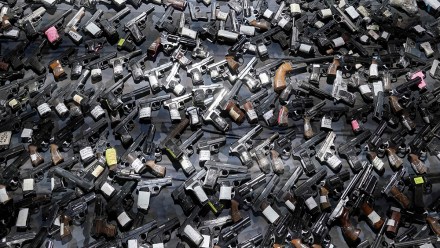
‘Yalla! Yalla! Yalla!’ shouts a Saudi man. There are arms dealers, fixers, military men and gun geeks; tanks, assault rifles, mortars and drones. Jets do aerobatics overhead and a band plays Maroon 5. A Chinese robot dog bangs into delegates. Welcome to the International Defence Exhibition in the United Arab Emirates. Business is booming. On the conference floor, Erik Prince is talking to the Emirati President, Mohamed bin Zayed. People are taking photos of MBZ, who smiles out from a dark robe and aviator sunglasses, but no one seems to recognise Prince. He’s an ex-Navy Seal who sold mercenaries to the Americans in Iraq, trained Somalis to fight pirates in the Gulf of Aden, and allegedly broke arms-trafficking laws shipping weaponised agricultural planes to Libya.