Features

The lewdness and lyricism of ancient Roman graffiti

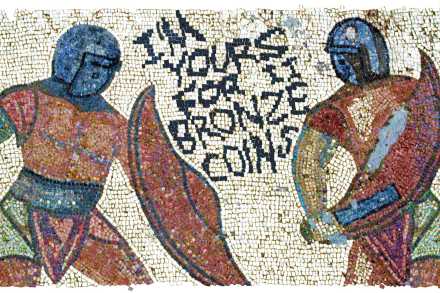
Throw him to the lions! That’s what I thought when I saw the video of a grinning moron desecrating the walls of the Colosseum with the words ‘Ivan + Hayley 23’. He must have been referring to his girlfriend, standing by his side – and the year. It wasn’t just the fact that he’d defaced the greatest of all Roman buildings. It was that he’d written something so depressingly banal. He could at least have written the year in Roman numerals – MMXXIII. And he could have borrowed some themes from the Romans – the rudest graffiti artists ever. ‘Ivan’ could at least have borrowed some themes from the Romans – the rudest graffiti artists ever We like to think of the Romans as highfalutin, high-minded gods. But they swore like us. They were obsessed with sex, like us.

The march of Europe’s right-wing women

The British Conservative party may be hopelessly behind in the polls, yet all over Europe the right is surging ahead. Everywhere you look, the left is losing – in Italy, Spain, Sweden, Finland, Poland, Hungary and now, following an election victory for the New Democracy party on Sunday, Greece. In France, the Rassemblement National (the renamed Front National) keeps rising in the polls and now vies for top slot as the country’s most popular party, as does the Freedom party in Austria. And in Germany this week, the radical and increasingly popular right-wing Alternative für Deutschland won a district election for the first time.

The ‘professional liar’ at the heart of Prince Harry’s hacking claim

In the summer of 2019, Prince Harry and Meghan Markle were visiting their friends Elton John and David Furnish in the south of France when they were introduced to the barrister David Sherborne. This ‘chance’ meeting would be a massive coup for the man known as the ‘barrister to the stars’ (he represented Coleen Rooney in the Wagatha Christie trial and Johnny Depp against Amber Heard, among many others. Many years ago, he also acted for Harry’s mother, Princess Diana). The encounter led to Prince Harry becoming the star witness against three newspaper groups. ‘It was partially down to Elton and David,’ Harry later wrote in Spare.

Home truths: the crushing reality of the mortgage crisis

In December Jeremy Hunt hosted a mortgage summit, attended by lenders and the Financial Conduct Authority, to discuss rate woes. At the time, the numbers were at least moving in the right direction. During Liz Truss’s 49-day premiership, the FCA expected interest rates to rise to 5.5 per cent, an increase which was forecast to put 570,000 people into mortgage payment difficulty. Once Rishi Sunak and Hunt undid Truss’s mini-Budget, things looked calmer: a 4.5 per cent peak was expected, and 356,000 people were due to be in difficulty. Hunt was still struck by the figure. Horribly high, he thought. The Chancellor used the meeting to lay the foundation for regulatory changes that could be used in the future to help struggling mortgage-holders.

Imran Khan: The conspiracy against me

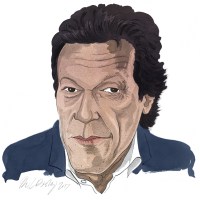
Pakistan is familiar with political unrest. No prime minister in its independent history has completed a full term in power; some of its most popular leaders have been assassinated or executed. Even so, the events of last month were extraordinary. On 9 May, in response to the arrest of former prime minister Imran Khan on corruption charges, thousands of protestors stormed buildings belonging to the country’s all-powerful military and set the army headquarters alight. More than 40 people died in the clashes with the army and police, and approximately 10,000 officials and supporters of Khan’s party, Pakistan Movement for Justice (PTI), were arrested. The country was on the edge of anarchy.

Can Kyrgyzstan’s nomads survive?

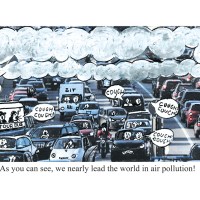
On the day I arrive in Bishkek, Kyrgyzstan’s capital, it’s almost impossible to see the mountains that loom behind the city because of the smog. By the late morning, they have started to appear. Second-hand cars from around the world jam the four-lane highways that make up the city’s post-Soviet grid. Left-hand-drive cars (the correct side for Kyrgyz roads) are prized. My driver is on the right. He swerves to avoid a container lorry covered with Chinese symbols. ‘If you’re walking, you’re poor. The car is like the new horse,’ explains Anton Usov, chief spokesman for central Asia at the European Bank for Reconstruction and Development.

How instant communication killed conversation

We live in an age of instant communication. But communication has never been less certain. Once in a while, WhatsApp takes several days to deliver a message to me. The first I know that someone contacted me on Friday is when my phone pings on Tuesday. Like when a friend let me know he and his partner were getting engaged. ‘Congratulations,’ I began, before noticing he’d sent the message four days previously. So then I had to add an apology to my response. Text messages can also fail. Another friend recently changed phones, and realised after a few days that some (though not all) of his contacts’ texts were going to the old phone, whose battery was drained. His theorising about why this might be included such phrases as ‘SIM card lag’.

The men who fell to earth: the tragedy of Sheen’s stowaways

Early one Sunday in 2012 a man fell out of the sky over Sheen, an affluent suburb of south-west London, and landed in the middle of a quiet residential road. ‘I heard a monstrous bang. I thought someone had been hit by a car,’ one resident told a local newspaper. ‘Two fellows going to church said there’s a dead body in the street.’ The man was José Matada, a 27-year-old from Mozambique, although it would take several months for the police to discover his identity. Matada had a small sum of cash in his pocket and a mobile phone. The only message the police were able to extract from it was a single text: ‘I need a favour.’ Matada’s was not the first body to fall on Sheen, which lies directly underneath the Heathrow flight path.

The moral case for becoming a foster carer

Three months ago I travelled with my wife to Ireland’s west coast for a reunion with our first foster placements, now settled with their new family. The two sisters, then aged five and two, had been removed by police from their home in pyjamas and driven to our house in 2017. I remember trawling around shops the next day, panic-buying clothes and pushchairs while my wife fed them, read to them, bathed them and administered nit treatments. The five-year-old stayed with us for two years. Her younger sister left us after a few months for another temporary foster family. Both now sail, ride horses, play rugby and are about to get Irish citizenship.

My pilgrimage to Lourdes

‘Will someone steal my coat?’ ‘No, you’re on a holy pilgrimage,’ my son’s Irish carer-companion Rosemarie reassured him. We were going to Lourdes, where in 1858 a poor peasant girl, Bernadette Soubirous, had 18 visions of the Virgin Mary. At Stansted I’d lost a tooth. I had a bad knee and an ancient foot injury. Should I not be in a wheelchair myself, instead of being a helper? Our group was BASMOM, the British Association of the Sovereign Military Order of Malta. I was a bit dubious about Lourdes (Rosemarie’s idea). Wasn’t the Order full of recusant Catholics who my father, a Knight of Malta himself, always claimed were ‘interbred’?

The plot against the PM

After the implosion of Liz Truss’s premiership, Boris Johnson and Rishi Sunak met to discuss which of them should succeed her. Neither wanted to back down to make way for the other. Late one Saturday night, they discussed whether a way could be found that would suit them both. It could not. As they walked out of the room to meet their aides, Johnson joked that Sunak had agreed to be his chancellor (again). Sunak then patted his former boss on the back telling him: see you at the debates. ‘Sparking a needless by-election when we are 15 points behind is close to a defection’ But there were no debates.

Men don’t belong in women’s sport

Olympic leaders say there’s no such thing as male advantage in sport. Here’s a simple question for them: if that were true, why not just scrap sex-based categories of men and women altogether? We all know why. Men run faster, jump higher and are stronger than women. In my sport of swimming, men are on average 11 per cent quicker than women. In boxing, their punches are 160 per cent more powerful. Such advantages mean that, on gender transition, mediocre male athletes are rocketing up the rankings, winning prizes and taking women’s places for one simple reason: whatever their feelings and life choices, they are biologically male. So, faster, higher, stronger – but not better. Different. Human biology dictates it. In sport, sex matters.

Where’s Putin? The Russian leader is losing control

‘Does Putin even still exist? Where is he anyway?’ asked Igor Strelkov, former minister of defence of the self-declared Donetsk People’s Republic last month in one of the regular video rants he publishes on his Telegram channel. It’s a good question. Since 3 May, the Kremlin has been struck by two Ukrainian drones while up to 30 more have fallen among the billionaire dachas of Russia’s elite along the exclusive Rublevo-Uspenskoe highway. Anti-Putin Russians attacking from Ukraine have seized at least eight villages in Belgorod province, capturing Russian soldiers and sending drones to hit the regional capitals of Belgorod, Voronezh and Kursk.

Can I be a woman?

I have a friend who describes me as an ‘uptight boring old straight heterosexual’ – simply because I don’t use porn or prostitutes, don’t swing both ways and have no interest in orgies and dogging, or any desire to be tied up and flogged by some fat dominatrix in a ‘torture den’ in Pimlico. He is always on the lookout for a new kink or a fresh fetish to try, and one of his latest passions is autogynephilia – that is, experiencing sexual arousal at the thought or image of oneself as a woman. This means he can find a woman sexually attractive only when he thinks not of her but of himself as that woman. He used to call himself a transvestite; now he calls himself an autogynephile. ‘Do you feel anything?

The search for the next pope is turning ugly

The Portuguese poet José Tolentino Mendonça is a handsome man in his fifties with a shaved head and meticulously trimmed beard. In one photograph he’s wearing an ultramarine blue polo shirt; in another, a lovely beige cashmere sweater that matches his tan. His poems depict emotional pain in cryptic language. In ‘The Last Day of Summer,’ unable to ‘choose attention or choose forgetfulness’, he recalls ‘your impatient and inconceivable eyes/ here with me now/ as I dance alone/ in the empty city’. But then Mendonça has no choice but to dance alone. He is a cardinal of the Catholic Church – and just possibly the next pope. Pope Francis has been in office for ten years and he’s spending more and more time in hospital.

Cooking the books: the rise of fake libraries

There is a growing fashion for fake books. Not fake as in written by a series of AI prompts, but fake as in things – cleverly painted empty boxes, or a façade of spines glued to a wall – designed to mislead the casual onlooker into thinking that they are books. A recent New York Times article highlighted the trend. It featured various interior designers offering spurious arguments in favour of fakes over real books: they can be a practical solution for hard-to-reach shelves; a smart example of upcycling unwanted volumes destined for landfill; useful and humorous storage boxes. Neat, quirky design solutions are, however, the least of it. This fashion signals a profound shift in our attitude to books.

Harry’s crusade: the Prince vs the press

Self-pity is one hell of a drug. On Tuesday, a day late, Prince Harry appeared in the High Court to ‘give evidence’ against the Mirror. The only testimony he was willing to provide, however, was his familiar gloop about the pain he suffered growing up rich, famous and royal. He can’t help himself, poor boy, and we should probably stop indulging him. We won’t, though. In a 49-page witness statement, the Duke of Sussex tried once again to make peace with himself by blaming the press for everything. ‘You start off as a blank canvas while they work out what kind of a person you are and what kind of problems and temptations you might have,’ he declared.

Is it time for Britain to leave the WHO?

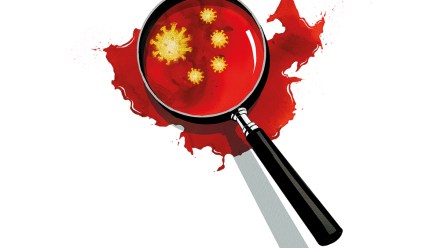
Since declaring Covid-19 to be ‘over as a global health emergency’ early last month, the World Health Organisation (WHO) has made it very clear that it has no intention of reforming. At its World Health Assembly two weeks ago, North Korea was among ten nations elected to sit on the WHO’s Executive Board, thereby giving Kim Jong-un’s totalitarian state the power to appoint WHO regional directors and potentially vote for the next director-general. The World Health Assembly did not censure North Korea for its countless human rights abuses, which include starving its own people. Instead it singled out Israel for criticism.