Features

The tyranny of World Book Day

‘Dear parents, a reminder that we are dressing up for World Book Day! Don’t forget your child should come to school in costume as their favourite character tomorrow…’ It’s the email every parent dreads receiving. (Or one of them, anyway.) It tends to be opened at eight o’clock the evening before World Book Day, to be met with feelings of exasperation, desperation and guilt. Dressing up is, in fact, the antithesis to reading for pleasure How is it that the charity World Book Day, founded by Unesco in 1995 with the laudable mission ‘to promote reading for pleasure’, has morphed into yet another occasion for parents to buy stuff?

How Giorgia Meloni is remaking Europe

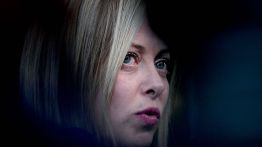
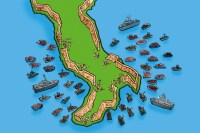
Ravenna, Italy Italy’s first female Prime Minister, Giorgia Meloni, is steadily becoming the most important political leader in Europe. Some are even saying that it is her destiny to be the next Angela Merkel. If so, that would mean a dramatic change in direction for the European Union towards what she calls a confederal, instead of a federal, Europe – a Europe of sovereign nations rather than a superstate which, she told Italy’s most famous talkshow host Bruno Vespa, would ‘do less, do better’.

South Africa’s energy crisis is becoming a political one

Cape Town South Africa is falling apart. Blackouts of up to ten hours a day are bringing businesses to a halt, making teaching harder and turning traffic lights dark. Food is rotting in warm fridges. There were more than 200 blackouts last year and they have continued every day so far in 2023. ANC strategists question whether any party can survive the public anger over the mismanagement of the grid A country that once saw itself as Africa’s industrial powerhouse is now regularly without power. The cause is a debt-ridden and run-down fleet of power stations, which have been starved of repairs and regularly break down. Electricity supplies have to be switched off to stop the grid collapsing.

How Labour can win: Bridget Phillipson on childcare, Brexit and faith

On 12 April last year, Boris Johnson’s fixed penalty notice was dominating the news. Few noticed another, perhaps equally seismic political story in Bournemouth: a member of Keir Starmer’s shadow cabinet was being booed by the unions. Speaking at the National Education Union’s annual conference, shadow education secretary Bridget Phillipson faced a revolt. She had reneged on a Corbyn-era pledge to abolish the schools inspectorate, Ofsted. ‘It began with heckling and then it became louder and there was a mass walkout. They continued the demonstration outside the conference hall,’ Phillipson says nonchalantly. Was she put off? ‘I was taken aback by the degree of hostility. If they are not prepared to listen then that’s rather disrespectful – but that’s on them.

How did modern sex get so unsexy?

On hearing the rumours that the boxer David Haye is in a ‘throuple’ – a three-person romantic relationship – with Una Healy from the Saturdays and a model named Sian Osborne, I felt a rare flicker of carnal pique. Apparently Victoria Beckham is off her feed (a prawn and two capers) with worry that her baby boy Brooklyn might be in a throuple with his wife Nicola Peltz and singer Selena Gomez, while Rita Ora is still denying that she and her now-husband Taika Waititi were in one with the attractive actress Tessa Thompson a couple of years back. They were papped having what appeared to be a three-way snog on a hotel balcony. You wait ages for a throuple – and then three come along at once!

Farewell to arms: Britain’s depleted military

Ayear ago on Friday, President Vladimir Putin unleashed blitzkrieg on Ukraine. It was an unprovoked assault that has so far led to more than 200,000 people being killed or wounded, but has failed in its intention of establishing Russian hegemony over its democratic neighbour. The West and much of the rest of the civilised world were shocked by the invasion, as well as being horrified and disgusted by the brutality of the Russian armed forces.    So it was with undisguised adulation that Ukraine’s President Volodymyr Zelensky was greeted by a standing-room-only crowd of parliamentarians in a freezing Westminster Hall this month, giving one of the most inspirational addresses to be heard in the 900-year history of that room.

Shamima Begum is no victim – and I should know

I am a 56-year-old dad of four. I live with my wife and dog in Surrey, where I run a successful building firm. But I also know Shamima Begum, who this week lost her appeal to have her citizenship reinstated, perhaps better than anyone else in Britain – apart from her family. I’ve visited her six times, travelling across thousands of miles and warzones to meet the jihadi bride. That’s because I’m one of the world’s foremost extreme tourists. My holidays have taken me to Iraq, Syria, Afghanistan, Chechnya, Somalia, North Korea and Chernobyl. I have infiltrated the KKK, was the first westerner to visit the Black Hawk Down crash site in Mogadishu and have embedded myself with Kurdish militias fighting Isis.

My meeting with Europe’s new Iron Lady

‘Look at the dates.’ That’s what I am told as I enter the State Elders Room in Tallinn. I’m here to interview the woman dubbed Europe’s new Iron Lady – Estonia’s Prime Minister Kaja Kallas. The walls in the room between her office and the cabinet room are lined with portraits. A small plaque beneath each one records the dates of their birth and, more significantly, death. The first shows that its subject died in 1941. The next I notice also reads 1941. So too the third. And the fourth. The story is soon clear. Each of those elders of this now proud independent wealthy European state died fighting in what they call here the communist terror. This country is haunted by its past and the refusal of so many around the world to believe it could, it would, happen again.

Faith belongs in the public square

Everyone approaches life with a particular set of values. Atheists and secularists live by an ethos, although they do not stick a label on it in the same way that we Christians do. Perhaps that’s why some people are particularly nervous about Christians in high office. We can all point to people who proudly wear their faith casting judgment or being intolerant, so it is inevitable that Christians will be asked tough questions. As a Christian, I don’t get offended when I see Christians in politics treated differently by those who consider themselves progressives. After all, it will always be countercultural to hold to the Bible’s teachings on how we live. However, as a liberal, this peculiar treatment of Christians troubles me.

Who really discovered DNA’s structure?

Tuesday 28 February marks the 70th anniversary of – in my view – the most important day in the history of science. On a fine Saturday morning with crocuses in flower along the Backs in Cambridge, two men saw something surprising and beautiful. The double helix structure of DNA instantly revealed why living things were different: a molecule carries self-copying messages from the past to the future, bearing instructions written in a four-letter alphabet about how to synthesise living bodies from food. In the Eagle pub that lunchtime, Francis Crick and James Watson announced to startled fellow drinkers that they had discovered the secret of life.

The secular inquisition: why must Christian politicians defend their beliefs?

Edinburgh What did Kate Forbes’s supporters expect would happen? When the Scottish finance secretary and Scottish National party leadership candidate was asked whether she would have voted for the legalisation of gay marriage if she had been in the Scottish parliament at the time, she said that she wouldn’t, because as a devout Christian she believes marriage is between a man and a woman. She added that if she became first minister, she would not ‘row back on rights that already exist’. Being shocked at Kate Forbes’s views is like being shocked that a Catholic might agree with the Pope In response to her honest answer, several of her backers threw their hands up in horror and withdrew their support.

After Sturgeon: what’s the future for Scotland – and the Union?

When news broke of Nicola Sturgeon’s resignation, the first reaction among Tory ministers was delight. For years, she had been one of their most formidable opponents and potent threats: perhaps the only politician capable of leading a Scottish independence campaign to victory. Without her, what would happen to the SNP? But then the elation faded. If nationalists’ votes are up for grabs, would they be more likely to go to Labour or the Tories? Sturgeon’s departure has consequences far beyond that of the SNP leadership. The UK’s whole political landscape could be about to change. In her resignation statement at Bute House, Sturgeon said she believed more than ever in the cause of independence but had come to see herself as an obstacle, not an enabler.

Paper dragons: is Chinese science all it’s cracked up to be?

At the tail end of last year, Chinese scientists claimed they had achieved something world-changing. In a widely circulated paper, the researchers said they had developed an algorithm run on a quantum computer that is able to break the best encryption that exists today. Modern encryption runs on mathematical problems which take the most powerful computers tens of thousands of years to crack. It has long been theoretically possible that quantum computers could one day be capable of cracking these codes in a practical timescale. If the Chinese claim is correct, then Xi Jinping now possesses a terrifying assault weapon in cyber warfare.  The paper, however, was greeted with derision by many in the West.

Revealed: Aberdeen’s ‘curriculum decolonising’ plans

The Granite City is an unlikely front in the cultural revolution, but Aberdeen University is about to change that. A document from the institution’s education committee has been passed to me. Titled ‘Decolonising the Curriculum – Timelines and Approval Processes’, it sets out plans to ‘embed a bold, progressive and sustained programme of antiracist curricular reform’. All courses will be given three years to ‘decolonise’. Academics are required to ‘review their reading lists’ and provide ‘additional perspectives on the course subject’. New courses must explain ‘how the curriculum will address the principle of decolonisation’. This will be ‘a constant process… not a linear project with a definite end’.

How consultancy infantilises governments: Mariana Mazzucato and Rory Sutherland in conversation

Mariana Mazzucato is a professor in the economics of innovation and public value at University College London. She speaks to The Spectator’s Wiki Man, Rory Sutherland, about the book she has co-authored with Rosie Collington, The Big Con: How the Consulting Industry Weakens our Businesses, Infantilises our Governments and Warps our Economies.  RORY SUTHERLAND: I’d like to start by congratulating you. The extraordinary growth in scale, wealth and influence of management consulting firms over the past 20 to 30 years is undoubtedly a phenomenon worthy of extensive investigation, particularly as it pertains to government contracts.

The truth about UFOs

New York Even if Chinese spy balloons – or alien spacecraft scouting the planet ahead of their coming invasion – start being deployed more discreetly than they have been of late, there will still be more sightings than usual of unidentified aerial phenomena (UAPs: a new set of initials designed to help UFOs shed their dodgy past). The word has gone out that the stigma attached to military personnel who report UAPs has gone, and they appear to have responded: there were more reported UAP sightings between March 2021 and August 2022 than in the previous 17 years, including nearly 200 that remain unexplained.

The true cost of Labour’s war on private schools

In a newspaper article five years ago, Michael Gove singled out the tax exemptions enjoyed by private schools thanks to their charitable status as one of the ‘burning injustices’ of our time. He took it for granted that scrapping these benefits would raise money and proposed spending it on children in care instead. ‘How can this be justified?’ he said of the exemptions. ‘I ask the question in genuine, honest inquiry.’ Answer came there none, and Keir Starmer has now said that private schools will be treated like any other commercial business if Labour wins the next election. Since that looks quite likely, I thought I’d take up Michael’s challenge and say why I think that’s a bad idea.

Liz Truss vs the OBR

Liz Truss is on manoeuvres. She is spending lots of time where she is most comfortable, inside Westminster’s thinktanks, preaching her version of free-market economics. There are rumours she might assemble a new thinktank of her own, or work with an existing one, to set up an alternative to the Office for Budget Responsibility’s growth forecasts. The OBR was prevented from producing a forecast for the mini-Budget. Still, to Truss, it represents the naysayers, the UK’s economic ‘orthodoxy’ who tore apart her mini-Budget. An alternative forecast, she believes, could confront the gloomsters and doomsters and vindicate her belief that supply-side reforms – tax cuts, deregulation, privatisation – are needed to help economic growth. She wants to make the case for change.