Features

The reactionary bohemian: Jeremy Clarke was one of a kind

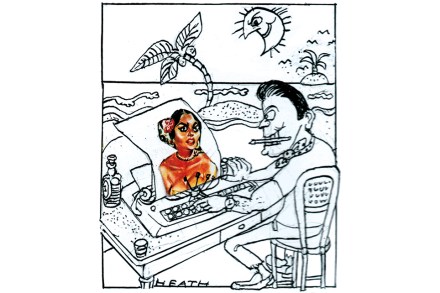
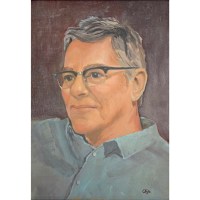
A world without Jeremy Clarke is a glummer place. The author of this magazine’s Low Life column for 23 years, who died on Sunday morning, was a spirited writer of the old school. He loved a rollicking good time, a beautifully turned phrase, a good gossip, casting an observant eye over life’s absurdities, and England. He despised the hypocrisy of the progressive middle classes, big egos and TV boxsets. He had quirkily conservative views, but friends of all classes and races, a deep knowledge of an unusual range of subjects, including rural matters, and a cheerful modesty that belied his talent as a writer.

TV dramas like Welcome to Wrexham are spoiling sport

Wrexham had never seen anything like it: thousands of fans cheering their team as an open-top bus made its way through the city’s streets. On board, Wrexham’s footballers celebrated their side’s promotion back to the English football league. The club’s star owners, Ryan Reynolds and Rob McElhenney, were there too – and with them, as usual, came the cameras. The rise of Wrexham has become the subject of a hit Disney+ documentary, Welcome to Wrexham. It’s a feel-good story about Ryan and Rob, two rich and handsome actors from the other side of the Atlantic, taking over a down-and-out club in a depressed industrial heartland and giving it hope. Wrexham is not the only football club to have let the cameras in.

Migration nation: Brexit has meant more immigration than ever

Manchester is desperate for workers. There are 40,000 jobs advertised in the city at the moment, at every pay grade. Ann Summers wants a stockroom assistant (£10.70 an hour), or you could invigilate exams at £14 an hour or post videos on TikTok for £20 an hour. Sellcheck Chemicals is offering up to £75,000 a year for a sales manager (‘No biology background needed, no previous experience necessary’). Even the army is offering trainee officers £34,000 after their first year. But ask any employer in the city what it’s like hiring and they’ll tell you: it’s a battle. What’s strange about this is the fact that though all these jobs are on offer, unemployed Mancunians don’t seem to want them.

Why mass shootings won’t change Serbia’s gun culture

Two mass shootings in Serbia have left 17 people dead, many of them children, and there are protests on the streets of Belgrade. Demonstrators blame Serbia’s populist president, Aleksandar Vucic, and so Vucic has his own series of anti-gun rallies planned and has ordered a swift crackdown on gun ownership, a ‘practical disarmament’. But Vucic has his work cut out for him. Weapons are embedded in Serbia’s culture and it’s hard to imagine a significant number of Serbians simply handing them over. In Serbia, the gun is a way of life. ‘It’s part of our tradition; in villages they fire in the air to celebrate a wedding or a baby’ When I worked in the Balkans as a journalist, a man felt underdressed without a Kalashnikov.

How far would you go to get your sick child a kidney transplant?

Here is your dilemma. Imagine you have a university-age daughter who has developed kidney failure. She needs a transplant. You know that the best results are obtained when the operation is performed at a transplant unit with access to the best immunosuppressive drugs, when the kidney is taken from a living donor, and especially when that donor is young and from a similar ethnic background to the recipient. Like most parents, you will go to almost any lengths to help your child – but would you break the law? The £7,000 reward offered for the kidney was equal to four years of earnings for the donor Ike Ekweremadu thought that the risks of breaking the law in the UK were worth taking to gain the best outcome for his daughter.

Europe is turning against net zero

The contrast couldn’t be greater. In Britain a wealthy cabinet minister goes on television to boast of how he is installing a heat pump in his home – something his government is proposing to force on millions of British homeowners over the next few years in spite of them costing many thousands of pounds more than a gas or oil boiler. Meanwhile, in France, the President makes a speech calling for a ‘regulatory pause’ on green issues in order to push for the ‘re-industrialisation’ of his country. So far, Britain and the EU have moved more or less in tandem on climate change – which is not all that surprising given that until three years ago Britain was a member of the EU and therefore within its regulatory orbit.

Lithuania’s PM: ‘If Russia is not defeated it will come for somebody else’

Vilnius In July, Lithuania’s Prime Minister Ingrida Simonyte will welcome Nato leaders to Vilnius for one of the most important summits in the alliance’s history. Top of the agenda will be how to help Ukraine push back Vladimir Putin’s forces. But a more thorny problem will be whether to formally offer membership to Kyiv – a move that would make Ukraine’s front lines Nato’s own. Simonyte believes that the war could have been avoided if Nato had accepted Ukraine and Georgia’s membership bids back in 2008. Before Putin invaded Ukraine last year, she says, ‘western leaders and western organisations were ready to abandon their positions every time Russia was pressing’.

Why British women are turning to Danish sperm donors

‘Hello, my current occupation is police officer,’ says Dex in a thick Danish accent. ‘It seems very adventurous and exciting to do, and to make a difference for the people I meet out in the world.’ Dex is just over 13 stone, around six feet tall, has very fair skin and blue eyes. His favourite animal is the dog. Dex is also a Danish sperm donor, and I’m listening to the beginning of an 11-minute voice-recording on his profile. On the website of the European Sperm Bank, which bills itself as ‘Europe’s leading sperm bank’ and is based in Copenhagen, there are hundreds of profiles like Dex’s available to British women. Create a free profile and, in under a minute, you can scroll through smiling baby pictures of Danish men as if looking for a new party frock.

Trump’s second act: he can still win, in spite of everything

Everyone knows F. Scott Fitzgerald’s famous line from the end of his unfinished novel The Last Tycoon: ‘There are no second acts in American lives.’ But Fitzgerald wasn’t talking about second chances. He meant that, unlike in a traditional play – where Act I presents a problem, Act II reveals the complications and Act III resolves it all – Americans want to skip Act II and go straight to the resolution. The more I think about it, the more I think the Joe Biden presidency is Act II – and Donald Trump is not the last tycoon. He’s Act III. He’s the next president. The campaign of lawfare against him has already begun to backfire Democratic strategists think otherwise.

In Kyiv, tech start-ups are thriving

What better cocktail to try in Kyiv than ‘Lesya Ukrainka’s Dream’? Born in 1871, Ukrainka was a fierce feminist, poet, titan of Ukrainian literature and the angel-faced symbol of independent nationhood. In this time of war, writers like Ukrainka and Taras Shevchenko, the great 19th-century poet persecuted by the Russians, a man who has come to define Ukrainian national identity and liberation, are all the rage. The last verse of Ukrainka’s poem ‘Contra Spem Spero’ (‘I hope against hope’) captures the national mood: Yes, I will laugh despite my tears, I’ll sing out songs amidst my misfortunes; I’ll have hope despite all odds, I will live! Away, you sorrowful thoughts!

The final countdown: Turkey is on a knife-edge

‘Kilicdaroglu’ is a pronunciation nightmare for the non-Turkish. Yet after this Sunday’s presidential elections, international news presenters, who have struggled for 20 years with President Erdogan’s soft ‘g’, might have to work harder to articulate the name of the social democrat leader of opposition. ‘You may call him Mr Kemal [his first name] until he wins,’ I’ve been saying to journalist friends. It’s the kind of simplification that people from complex, non-western countries are self-trained to give so our maddening realities can be better understood: ‘To feel Turkey, imagine the acute polarisation during the Brexit referendum continuing for 20 years. Add to that a far more ruthless Trump with political genius and Islamist aspirations.

The Anglican priests charged with exorcising evil spirits

Last month, a trailer for the new Exorcist film – the scariest trailer ever, apparently – was released. The Exorcist: Believer isn’t out until Friday 13 October – just in time for Halloween – but Hollywood movies about demons are legion. This one follows The Pope’s Exorcist (released on Good Friday), in which Russell Crowe is a maverick exorcist who doesn’t play by the book, but gets results – despite the pen-pushers at (Vatican) City Hall. The Reverend Canon Dr Jason Bray, the Bishop of St Asaph’s ‘deliverance minister’, will not be watching either film.

What will Charles III’s reign look like?

The last time a monarch acceded to the throne, her subjects had to wait ten months to hear her speak. Elizabeth II was only 25 and had her whole adult life before her. The public were more patient in those days and the media was an entirely different creature, moving at a slower pace.  It was not until Christmas Day 1952 that the British heard their Queen (by now 26) begin: ‘Each Christmas, at this time, my beloved father broadcast a message to his people in all parts of the world. Today I am doing this to you, who are now my people…’ In 2022, we had to wait all of 24 hours before hearing Charles III outline his vision for his reign. He did so in a speech which, by common consent, hit the right note (a YouGov poll days later gave it a 94 per cent approval rating).

The godfather of AI: why I left Google

Ten minutes before I meet Geoffrey Hinton, the ‘godfather of AI’, the New York Times announces he’s leaving Google. After decades working on artificial intelligence, Hinton now believes it could wipe out humanity. ‘It is like aliens have landed on our planet and we haven’t quite realised it yet because they speak very good English,’ he says. He also tells me that he has been unable to sleep for months. ‘It’s conceivable that the genie is already out of the bottle’ Hinton, 75, revolutionised AI not once but twice: first with his work on neural networks, computer architecture that closely resembles the brain’s structure, and then with so-called ‘deep learning’, which allows AI to refine and extract patterns and concepts on a vast quantity of data.

Will my coronation marching measure up?

Travelling to Ukraine on the President’s train is the most secure route into Kyiv. This is my fourth visit to the country since the invasion. Previously I accompanied Boris Johnson and Rishi Sunak. This time I am with Tim Barrow, our National Security Adviser. The continuity of access reflects the extraordinary trust between Britain and Ukraine. The train is punctual and with an aura of seasoned grandeur. The enforced lack of phones combined with a steady rhythm for ten hours aids reflection. I think back to travelling to Moscow with Ben Wallace before the invasion and a meeting with my Russian opposite, General Gerasimov. At the time we still hoped war could be averted. This conflict has been a disaster for the Kremlin.

The religious roots of the coronation

It is many years since anyone seriously entertained the doctrine expounded by Shakespeare’s Richard II: ‘Not all the water in the rough rude sea can wash the balm off from an anointed king. The breath of worldly men cannot depose the deputy elected by the Lord.’ Nevertheless, on Saturday King Charles III will be solemnly anointed in Westminster Abbey in a ceremony whose roots are ancient but whose meaning is fresh. Behind the screen, in a very personal act of commitment, the King accepts his calling from God The Israelites asked for a king so that they could be ‘like all the nations’. Anointed monarchs have a long history but today the rites surrounding the British monarch are unique in Europe.

Vials of ammonia, shaky scaffolding and sword fights: memories of Elizabeth II’s coronation

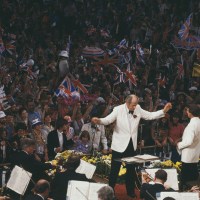
Lady Rosemary Muir was 23 when she received a letter from the Duke of Norfolk, the Earl Marshal, informing her that she had been chosen as one of the six maids of honour to assist the Mistress of the Robes in the coronation of Elizabeth II. That was in January 1953. From then until the coronation day in June, the maids of honour were the subject of many excited articles. The press dubbed them ‘the Lucky Six… envied by every other woman in the land’.  Envied they certainly were, but luck had little to do with it. Lady Rosemary tells me it was no surprise to her that she was appointed to be a maid of honour. ‘I was a duke’s daughter,’ she says as we look through her hefty album of coronation photographs and cuttings. ‘Why shouldn’t I be?