Features

Strewth! Australian culture is taking over Britain

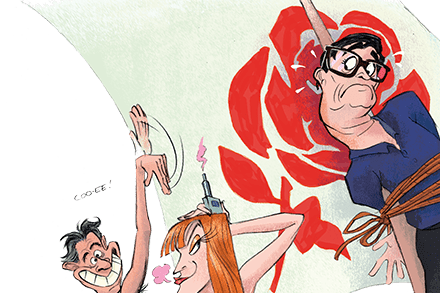
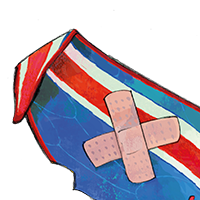
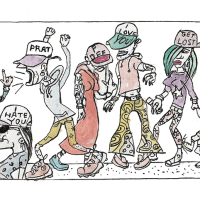
Catherine and Heathcliff. These are surely roles that every attractive British actor should aspire to. Why mope between auditions for years if you don’t think it could be your windswept hair decorating bus posters one day? So the British director Emerald Fennell’s casting of two Australians – Jacob Elordi and Margot Robbie – to play these parts in ‘Wuthering Heights’ feels unfair. But her decision is canny. Elordi and Robbie are both gorgeous, of course, but they also come bearing a new type of cultural clout. Their perfect hair and facial symmetry are nothing compared with the quirkiness of their being Australian, the aesthetic that’s seducing young Brits most of all. The first clue was about five years ago, when many British men started looking ridiculous.

Inside the daring plan to reclaim the Chagos Islands

Peros Banhos on the Chagos archipelago looks like your basic tropical island paradise: turquoise waters and golden sands, waves lapping on a palm-fringed beach. But step off the strip of sand into the wall of green behind, and you’re enveloped by mosquitoes. The old well you were counting on for water is a shallow puddle. And the silver fish between your feet dart past a net, despite not having seen one in 50 years. The jungle has grown over the old British colonial buildings, and the jungle is a harsh place. Four Chagos Islanders have been here more than a week, along with the man who brought them, Adam Holloway – former MP, ex-Guards officer, an adventurer seemingly from an earlier era. This is not, as the Foreign Office briefed journalists, ‘a political stunt’.

‘More than half our squad were executed’: Inside Russia’s rotten army

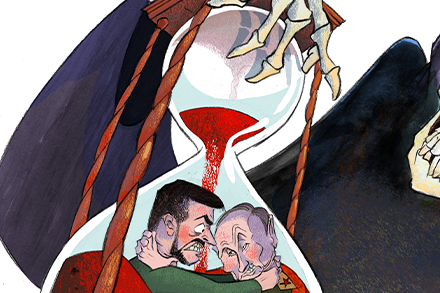
The Russians are on the warpath – and Europe is Vladimir Putin’s next target. That was Sir Keir Starmer’s alarming claim at the Munich Security Conference earlier this month. Britons ‘must be ready to fight, to do whatever it takes to protect our people, our values, and our way of life’, Starmer warned. Britain and Germany’s top military commanders delivered the same message in a recent article. Russia’s military posture ‘has shifted decisively westward’, wrote Air Chief Marshal Sir Richard Knighton and General Carsten Breuer. Soon the Kremlin ‘may be emboldened to extend its aggression beyond Ukraine’. Really? According to much western coverage in mainstream and social media, the Russian army is crumbling, corrupt and inept.

How to listen for alien life

For more than 60 years, scientists have been on the stealthiest stakeout in history. Using state-of-the-art listening devices, they’ve tapped into thousands of homes, waiting patiently for their targets to reveal their presence, and ultimately been rewarded with silence. If this covert activity were occurring in our own country, one might have become impatient and simply walked up and knocked down the door. But the targets are not living in our country, or even on our planet or in our solar system. Our persons of interest are aliens. This is Seti: the Search for Extraterrestrial Intelligence, focused on life on planets orbiting other suns. So far, we’ve found no sign of them.

The real reason VAR has ruined football

The two main harms of government regulation, to be balanced against any benefits, are cost and delay. But there is another harm, rarer but lethal when it happens. Sometimes regulation perversely increases risk by lulling the regulated business or people into a false sense of safety. I had this thought last weekend as I watched a football match on television. My beloved Newcastle United beat Aston Villa in the FA Cup fourth round, but the match made headlines because of five bafflingly bad decisions taken by the referee and his linesmen: failing to award two clear penalties, failing to give a red card for a dangerous tackle and failing to spot two offsides that led to goals. Four of the five decisions went against my team but that is not my point.

Just how bad are Nato’s armies?

Given the relative sizes of their economies, one might conclude that Russia would quake before the military might of Europe’s Nato members. Russia, the ninth-largest economy in the world, is up against the third, sixth, seventh and eighth in the shape of Germany, Britain, France and Italy. Yet the reality is that, militarily, it is the other way around. Russia has the world’s second-strongest military, while France comes sixth, UK eighth, Italy tenth and Germany 12th. To put a few figures on it, Russia has 1.32 million active service personnel, 560 fighter aircraft and 3,941 tanks ready for deployment. For Britain, the corresponding figures are 141,000, 67 and 187; for France 264,000, 178 and 342; and Italy 165,000, 62 and 142.

‘J.D. Vance was right’: Is Europe finally waking up?

Munich, Germany The organisers of the Munich security conference weren’t subtle. A large statue of an elephant stood in one of the lobbies. The logo on all official documents was an elephant, this time with bits of countries printed on it. A poster for an exhibition celebrating the meeting’s 60th anniversary had an image of an elephant in a stately room. Everyone understood the meaning of the elephant in the room: it was America’s disregard for Europe. At last year’s meeting, J.D. Vance had declared the biggest threat to Europe was not from Russia or China but ‘from within’. Europe’s leaders were becoming tyrannical, the Vice President argued, arresting citizens for exercising their free speech.

The truth about Britain’s hollowed-out armed forces

When Keir Starmer was told his pledge to raise defence spending to 3 per cent of GDP in the next parliament was not enough to fund his vision for the armed forces, as outlined in the strategic defence review (SDR), he put his head in his hands and snapped: ‘Why are you doing this to me? I thought this was costed!’ That striking image of a leader on the edge was widely talked about at the Munich Security Conference over the weekend. Three senior defence figures relayed it to me. Remove the self-pity and it is still a telling insight. The SDR, drawn up by George Robertson, the former Labour defence secretary, retired General Sir Richard Barrons and Fiona Hill, an adviser to both George W.

Who would Inspector Rebus support in the Scottish Premiership?

BBC Radio 4’s Today programme asks me to champion a favourite book and I choose Muriel Spark’s The Prime of Miss Jean Brodie. It is a subversive piece of work, elegant on the surface but vicious at its core. It is about Edinburgh between the wars and the effect approaching adulthood has on a group of schoolgirls. But above all it is about the dangerous allure of charisma. Miss Brodie, maverick and fantasist that she is, holds the fate of her young charges in her hands, such is the power of her personality. Coincidentally, my Radio 4 stint had been preceded by an appearance on BBC Radio Scotland to discuss the recently deceased author Allan Massie – an essayist not unknown to this magazine.

Revealed: David Lammy’s curious relationship with Guyanese Big Oil

Better not tell Ed Miliband, but in spring 2022 his then shadow cabinet colleague, David Lammy, appears to have struck oil. For the first time, The Spectator can tell the story of how, while serving as Britain’s shadow foreign secretary, Lammy was announced as the director of another country’s sovereign wealth fund – set up to (theoretically) channel newfound oil riches to its people, with a bit left over for the board. This was announced on 20 April 2022 in an official press release from the President of Guyana’s office about the Natural Resource Fund (NRF). The statement is still on the government website.

The gangs terrorising the countryside

Sergeant Rob Goacher was on patrol recently when the radio crackled with a tip-off. Two men were hare coursing – chasing and killing hares with greyhounds or lurchers – in the fields near Winterbourne Monkton, a small village in Wiltshire. When Goacher arrived, a silver Subaru with the exhaust hanging off edged out of a field and accelerated through the country lanes, hitting 60mph before reaching the M4. ‘The driver then suddenly decided to exit the motorway,’ says Goacher. ‘Over a verge, through a fence, and out through the farm. The field was full of cattle, which could have easily escaped onto the motorway. Then we’d be looking at a massive pile-up and fatalities.

‘Authority is like virginity. Once it’s gone, it’s gone’: Inside Keir Starmer’s downfall

Years ago, Peter Mandelson shared a key lesson with his protégé Morgan McSweeney. Reminiscing about his involvement in Labour’s 1987 general election campaign, he called it the ‘spray-paint election’. The manifesto was a ‘beautiful technicolour’ document but the tax-and-spend shibboleths of Old Labour remained, along with the policy of unilateral nuclear disarmament. ‘I spray-painted the old Ford Cortina,’ Mandelson told McSweeney, ‘but it was still a Cortina. Policy is at the heart of political communication.’ Only after the election – a second three-figure landslide defeat – did Labour launch a policy review, out of which New Labour emerged. Even then it took another decade to win power.

Apart from Mandelson, who is Labour’s biggest freebie lover?

Keir Starmer is Labour’s king of freebies. He promised to clean up politics, but has accepted more free stuff than all his party’s leaders since 1997 combined: more than £100,000 in tickets, accommodation and clothing. In 2024, the Prime Minister said it was ‘right to repay’ the cost of some freebies, and stumped up for six Taylor Swift tickets, four tickets to the races and some clothes for his wife (total value: £6,000). Where Starmer has led, his MPs have followed – including those who now might hope to succeed him. Eleven other Labour MPs (and Ed Davey) accepted Taylor Swift tickets courtesy of football clubs and music companies. Seven cabinet members took money from Lord Alli. Few have not watched a football match from complimentary box seats.

‘Yes, it’s that bad’: inside Oxford’s Saïd Business School

How do you get into the University of Oxford? It is a question asked by thousands of young people every year. In Martin Amis’s The Rachel Papers (1973), Charles Highway discovers that the key is to feign socialism and memorise a few book reviews. It turns out there is an even better ruse: the Saïd Business School. Saïd has, at best, a dubious origin story. In 1996 the project was forced through at Oxford’s Congregation, the university’s legislative body, despite concerns that naming a school after Wafic Saïd, known for his role as a ‘fixer’ in the al-Yamamah arms deal, in return for £20 million might not do wonders for the university’s reputation. Its first director departed before completing a single term.

How Andrew could save the royal family

The tsunami of Jeffrey Epstein material released this month has been both horrifying and gratifying. It makes clear the extent of Epstein’s penetration of world elites – potentially even at the direction of various foreign intelligence agencies – and that this is a story as much about national security as financial and sexual irregularities. The lack of any proper oversight of the royal family may have given both the Russian and Chinese intelligence services their entry point into the British Establishment. The depositions also confirm the accuracy of what I had discovered researching Entitled: The Rise and Fall of the House of York, which was published last August.

What explains the weird military hype around Al Carns?

If Keir Starmer resigned tomorrow, the Labour party would be thrown into confusion. None of its factions has an obvious candidate to replace him. Yet some Labour MPs and commentators think they have found a solution. Why not send for Al Carns, minister for the armed forces, a former Royal Marines colonel, and MP for Birmingham Selly Oak since 2024? Carns, 45, who was briefly a candidate for the party’s deputy leadership last year, has built up a modest social media profile, posting videos of himself hiking, working out at the gym and training with reservists. One video saw him challenge a fireman to an impromptu pull-up contest, which Carns won 30 to 18. With Westminster in disarray, many think that these stern military virtues are just what the country needs. Carns is not the first.

The new freakish shopping trend

On the fourth floor of Selfridges, in London, is the children’s toy department. Most of the vast space is given over to soft toys – mounds of synthetic fur, thousands of little beady eyes – and when I visited last Saturday afternoon the customers were almost all adults. I spent two hours there, standing by a tower of little Paddington bears, watching the shoppers in the queue for the till, and it was eye-opening. Almost no one was buying for a child. I saw two Chinese women with white toy lambs, a 17-year-old boy with a dragon, what looked like drug dealers queuing for Pokémon cards, and a genuinely troubling number of sad-looking women in their mid-twenties clutching long-eared toy bunnies made by a company called Jellycat.