Features

The hidden truth about our failing universities

Is it worth going to university? Since 1999, when Tony Blair declared higher education the answer to all society’s problems, it has been a question Britain prefers not to ask. Every September, hundreds of thousands of school leavers pack their bags, wait for their maintenance loan to arrive and head off to their chosen city to drink, go clubbing and occasionally hand in an essay. Does this well-trodden path leave young people better off? It’s almost impossible to find out, not because the information isn’t available but because the government won’t let us see it. The Department for Education knows very well what graduates can expect when they start looking for work.

Inside blockaded Cuba, life is getting odder by the day

It’s nearly two months since Donald Trump signed an executive order imposing a total oil blockade on Cuba, and life is becoming odder. At the weekend, in a down-island town called Moron, teenage kids burnt down the local Communist party headquarters. Meanwhile, here in Havana, we’re awaiting the arrival of the Irish hip-hoppers Kneecap at the head of a humanitarian relief armada carrying solar panels. I live in a rooftop apartment. At night, it’s a good spot from which to look out over a city that once sent up music and light but is now as dark as a desert. The oil blockade, designed to either force the bankrupt Communist government into major reform or the population to rise up against them, is worsening what were already terrible blackouts.

‘We don’t know what’s going on or why we’re doing this’: how Trump’s Iran gamble backfired

‘Donald Trump is a complicated person with simple ideas,’ said Kellyanne Conway, the former White House senior counsellor. ‘Way too many politicians are the exact opposite.’ It’s a good way of understanding the 45th and 47th US President and his extraordinary success. His turbulent personality causes mayhem, yet his political aims have remained constant, straightforward and popular. Decades ago, as a New York tycoon with a keen eye on international affairs, he identified three priorities for America: tackle the nation’s trade imbalances, force Nato allies to spend more on defence, and destroy terrorists. When it comes to realising those simple ideas, however, his more complex attributes emerge.

Revealed: Keir Starmer’s new plan to get closer to the EU

A Labour MP, reflecting on the problems the Prime Minister faces over the war in Iran, observed this week: ‘Keir got it right, but things keep going wrong.’ His point was that Starmer kept Britain out of the Israeli-American air strikes, a position popular both with the parliamentary Labour party and the electorate, yet the impact of that conflict has laid bare three serious problems at the heart of the British state. First, there has been a fracturing of relations between Starmer and Britain’s defence chief, Air Chief Marshal Sir Richard Knighton. Second is the vulnerability of the economy to energy price shocks. Third is Ed Miliband’s net-zero crusade, which has put further pressure on the cost of living, Starmer’s biggest domestic problem.

Those who believe in liberalism must now fight for it

I’m conscious that, just as the easiest way to lose an argument is to mention Hitler, so the easiest way to lose journalistic credibility is to invoke the 1930s. Yet the similarities to our own dismal decade are now too numerous to ignore. There is the same collection of morbid symptoms: the rise of strongmen, the collapse of the political centre, the intellectual organisation of political hatreds. Even more worryingly, there is the same sense of hurtling towards global conflagration. The similarities begin with the disintegration of the international order.

How the Germans saved the Telegraph

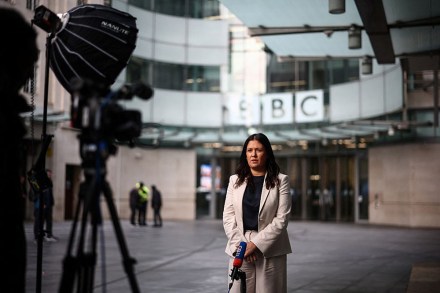
I spent my last year as editor of this magazine trapped on an auction block, hunting for a new proprietor. It was agony. There was a list of about 20 bidders for both The Spectator and the Daily Telegraph: the good, the bad and the really quite ugly. The ugliest of all – the government of the United Arab Emirates – ended up cutting a backroom deal for both titles. But parliament intervened and this magazine escaped, snapped up by a suitor who has been as good as his word on investment. The Telegraph, meanwhile, was left standing at the altar. Last week, after nearly three years of waiting, she was finally swept up by her own Mr Darcy – or, rather, Döpfner. The Berlin-based media giant Axel Springer has paid a handsome £575 million in cash for the newspaper.

How to master the left-wing brag

No one likes a blatant boaster. So, as adults, we learn that if we want to boast, we must be subtle about it. The way to show off without being loathed is to drop small details about your life into your conversation and your prose, to signal your taste, education, career achievements and social status. Doing this is tricky enough for right-wing people, who need to come up with subtle ways of letting others know, for example, that they can afford private school fees, went to Oxbridge, shop at Waitrose, own at least one home and go on holiday in Provence or Tuscany. Words and phrases such as ‘exeat’, ‘scraped through my Prelims’, ‘perfectly ripe avocados’, ‘basement kitchen’ and ‘bumping up through the olive grove’ do the work.

Kim Jong-un’s sister or daughter? Only one can survive…

As a birthday treat, a good father might take his ten-year-old daughter to the ballet or a Disney movie. Three years ago, North Korea’s ruling dictator Kim Jong-un (a.k.a. ‘Brilliant Comrade’) took his ten-year-old daughter Kim Ju-ae to the launch of an intercontinental ballistic missile. It was her first public outing. Subsequent kiddie treats have included visits to the mausoleum that houses the bodies of her grandfather, Kim Jong-il (‘the Dear Leader’), and great grandfather, Kim Il-sung (‘the Great Leader’). She also got to stand at military parades, inspect nuclear facilities and make an official visit to Beijing. In the North Korean media, Kim Ju-ae is referred to as the supreme leader’s ‘beloved’ or ‘precious’ daughter.

My addiction to playing the piano is driving everyone mad

From time to time, I’ve given some famous pianists a bit of a kicking in the arts pages of this magazine. You may be a Bach specialist, but that’s no excuse for sleepwalking through all six keyboard partitas in a marathon recital. Your Beethoven Diabelli Variations may be renowned, but don’t expect a rave review if you trap me in an intimate concert venue while you pound the keys like a pneumatic drill. You’d think, though, that a journalist who snipes at world-class soloists would have the sense to keep his own amateur playing to himself. And if he’s idiot enough to post a recording on social media, he should learn to take what he dishes out. Alas, I never learn. The older I get, the more addicted I become to playing an instrument that I have no hope of mastering.

‘Whose side are you on?’: How Keir Starmer alienated Britain’s allies over Iran

The American-Israeli attacks on Iran were publicly called Epic Fury, but behind the scenes it is Britain’s handling of the war which provoked that reaction – not just from Donald Trump but from the UK’s allies in the Gulf. A Labour peer was in Washington when the first missiles slammed into Tehran on Friday evening and Keir Starmer refused to voice support. A member of the Trump administration told the peer: ‘Britain used to not contribute that much, but you were a good ally. Now you’re contributing nothing and you’re not even a good ally.’ A version of events has quickly become established: a Prime Minister with a near-religious belief in international law hid behind the advice of his Attorney General, Richard Hermer, that the attacks were illegal.

Operation Epic Fury is already tearing the MAGA movement apart

When President George W. Bush invaded Mesopotamia in 2003, everybody laughed at Comical Ali, the bespectacled Iraqi information minister who kept insisting that the American ‘rats’ were doomed as Saddam Hussein’s regime collapsed around him. The world moved on. Iran is not Iraq, as President Donald Trump’s supporters are so fond of saying, and Bush-era ‘forever wars’ are no more. Plus, these days the comedy communications come from the American Commander-in-Chief. At the weekend, as missiles rained across the Middle East, Trump’s cabinet officials mostly avoided attention-grabbing interviews. The boss, however, embarked on his own heroic PR campaign.

I love Dubai. Get over it

I am in Dubai where we are doing our best to keep calm and carry on. Granted, the sudden instruction to ‘seek immediate shelter’ in the early hours of Sunday morning was unnerving, but with the exception of excitable ‘influencers’, few people are cowering in their basements. On Saturday evening, I’d hotfooted it to the Palm Jumeirah. When my kids told me the Fairmont hotel had been hit, I didn’t believe them. The idea that the mad mullahs would start lashing out in this direction seemed completely absurd. Though the Emiratis take a far dimmer view of Islamic extremism than our own craven British government, they are careful not to upset ‘brotherly’ neighbours. The UAE has prospered precisely because of this strategic restraint. Surely some mistake?

The uncomfortable truth about the new Mental Health Act

Three years ago, Nottingham University students Grace O’Malley-Kumar and Barnaby Webber, along with caretaker Ian Coates, were murdered by Valdo Calocane in a psychotic rampage. These were preventable deaths. Calocane should have been detained long before he went on his killing spree. The fact that he wasn’t is the consequence of a decade of progressive ideology in the NHS and police, who turned a blind eye to Calocane’s psychosis in part because he was a black man. By 2023, there could have been no doubt about his violent tendencies. In 2020, he was arrested after he attempted to force entry into his neighbour’s flat, believing (falsely) that his mother was being raped inside. Just 11 minutes after he was released on the same day, he attempted to force a woman’s door.

Iran’s tradition of martyrdom is key to understanding this conflict

One word stood out in the florid and overwrought announcement of the death of Iran’s Supreme Leader by a tearful state-television newsreader on 1 March: ‘Leader and Imam of the Muslims, His Eminence Ayatollah Seyyed Ali Hosseini Khamenei, on the path of upholding the exaltation of the sacred sanctuary of the Islamic Republic of Iran, drank the sweet, pure draft of martyrdom and joined the Supreme Heavenly Kingdom.’ The dreaded ‘m’ word – martyrdom – immediately takes anyone familiar with Muslim history back to a legendary 7th-century battlefield in central Iraq. In 680, the Prophet Muhammad’s grandson Husayn ibn Ali – regarded as the third Shia imam – faced a much larger army commanded by the Umayyad caliph Yazid I at the Battle of Karbala.

‘Happy Friday!’: resist the tyranny of faux niceness

Five people I never met wished me a Happy Friday last Friday by email. You can pretty much be wished a happy anything nowadays, except perhaps Easter, since this assumes you share in the joy of the Resurrection. The London lights now say Happy Ramadan. Actually, if I were wished a Happy Lent it’d be the equivalent of telling me ‘Happy Abstinence’. The point is it is one more notch in the creeping commodification of goodwill, the conformity of niceness. Happy Friday is a way for strangers to introduce themselves on a note of cheer, since they’re trying to get you interested in an event or a product. But they don’t know you. It’s the assumption that you’re already friends that’s so galling.

In bed together: The writers of HBO’s Industry on bankers and politicians

No TV show better encapsulates the nexus between money and power than Industry. The HBO drama sees investment bankers screwing, snorting and slogging their way to the top of English society. Now, in its fourth series, political intrigue is taking centre stage. Think House of Cards – but with more sex and better-remunerated hotties. Mickey Down and Konrad Kay, the co-writers of the show, explain when we chat that they wanted to ‘expand the canvas’ as Industry progressed. It initially focused on the ‘hermetically sealed’ world of the trading floor but has now expanded beyond. ‘Finance is linked to other spheres of influence,’ says Down. ‘Obviously finance and media have a transactional relationship. Finance and politics also have a transactional relationship.

‘It’s a Faustian pact’: Rachel Reeves is giving bankers what they want

The Epstein files lift the curtain on how power is exercised and influence traded by our financial elite. It is not a cheering sight. Business and economic gurus like the former US Treasury Secretary Larry Summers asking for dating advice from a convicted paedophile does not build confidence in the masters of the universe. Distasteful as these details are, the most telling insights into the predatory behaviour of the private-jet classes relate to how they exploit all of us, not just the vulnerable young women who catch their eye. Institutional logic does not explain Reeves’s love-in with the banks. They seem to have made a Faustian pact Peter Mandelson may blush at some of the personal details laid bare in his emails to Jeffrey Epstein.

Can Rupert Lowe stop Farage from becoming prime minister?

The crowded market place emerging on Britain’s right is bewildering. Nigel Farage and Reform UK appeared to have successfully colonised the space for positions more robust than those offered by the current Tory party. They have been ahead in the national opinion polls for months now. But the launch of Restore Britain, a new party founded by the former Reform MP Rupert Lowe, suggests that Farage himself now faces a threat on his exposed flank. No party to the right of Farage has posed a substantive electoral threat since the British National Party virtually disappeared in 2015. But that could be about to change. Restore claims to have 90,000 members. Lowe has a significant social media presence and the backing of Elon Musk.