Features

The EU vs the farmers

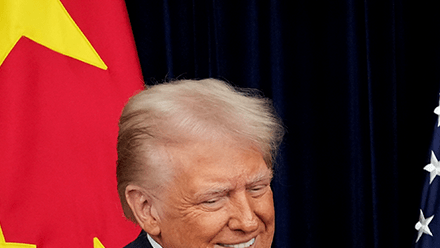
It was a weekend of mixed emotions for the European Union. There was the news from Donald Trump that he will impose a 10 per cent tariff on eight European countries in retaliation for their opposition to his plans to take control of Greenland. But on a brighter note, the EU finally signed the Mercosur trade agreement with several South American countries. The European Commission hailed it as the creation of ‘a free-trade zone of roughly 700 million people’, one which they promise will save EU companies more than €4 billion a year in customs duties. Ursula von der Leyen, the Commission president, said: ‘We choose fair trade over tariffs, we chose a productive long-term partnership over isolation.

‘Pray your boilers don’t fail’: the Church of England is in the grip of eco-zealots

It came to pass in 2020 that a decree went out from the General Synod that all the Church of England must be carbon net-zero by 2030. And this ruling was first made when Justin Welby was Archbishop of Canterbury. And all went to have a good hard look at their church heating systems, every one into his own vestry cupboard… How easy it is to issue a decree from on high; and how hard it is for the people on the ground to have to deal with its consequences.

The five Haldanean principles that could reshape Britain

If Reform get into government, there is one man they seem likely to turn to for guidance. He is an obscure figure, unknown to many, yet has acolytes across the political spectrum – from Dominic Cummings to Gordon Brown. His name is Richard Burdon Haldane and he died almost a century ago. It was recently reported in this magazine that Danny Kruger had been seen carrying ‘a well-thumbed copy’ of the most recent biography of Haldane. I wrote that book. In it, I describe how Haldane reshaped Britain in the early 20th century – and how, should others choose to follow his example, he might help to transform it again today.

A fogey’s guide to cryptocurrency

All innovations seem unseemly to fogeys. When bitcoin, the first of the cryptocurrencies, was launched in 2009, we dismissed it as a deplorable and transient phenomenon. Its inventor, who called himself Satoshi Nakamoto, would not reveal his real name. Perhaps he did not exist and whoever hid behind the pseudonym was having a joke at our expense. When Satoshi created the first bitcoin on 9 January 2009, he embedded within its code a headline from a recent Times: ‘Chancellor on brink of second bailout for banks.’ Crypto appeals to people who distrust banks, as well one may. ‘Never trust the bankers,’ Winston Churchill warned in old age. History suggests one can trust neither governments nor central banks to maintain the value of money.

Under 50? You’re never getting a state pension

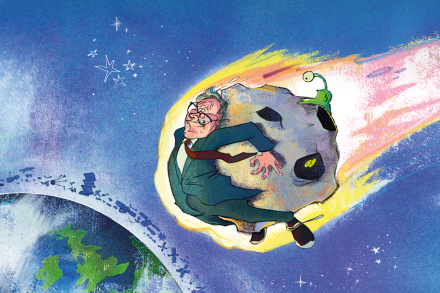
Last week the Bank of England was warned to prepare for a financial crisis triggered by the discovery of extraterrestrial life. But the really worrying scenario isn’t aliens. It’s us. A century ago the state pension as we know it was introduced. Taxes from employers and their staff were used to pay out benefits to the elderly once they hit retirement age. There was no means-testing, and this benefit for all removed the stigma associated with claiming welfare. It was a roaring success. But it won’t see another 100 years. It’s always been wrong to call it a pension. It’s a benefit paid out of current taxation like any other. There’s never been an investment pot built up or paid into. The state pension runs more like a Ponzi scheme.

Want to get rich? Invest like an American

Ramit Sethi wants to make you rich. He is not a household name in Britain, but the Stanford psychology graduate is one of the biggest personal finance influencers in the US. He hosts a successful podcast, Money for Couples, has written bestselling books and even has a Netflix show, How to Get Rich. All his projects share the same message: by changing your mindset and taking a few practical steps, you can power yourself toward prosperity. To British ears, his style might seem brash. It is financial advice with a substantial side of life coaching. But beyond the difference in tone, Sethi spreads a simple message rarely heard in finance columns or consumer advice TV slots in this country: that the best thing you can do for your money is to rapidly increase your income.

Is any other investment as good as gold?

Last year might have proved a good time to own shares in the chip-maker Nvidia, along with the booming American tech giants. Or a piece of the defence manufacturers as the world re-arms. Or to hold a position in some of the rapidly growing economies of South America or Asia, or even one of the hyped-up crypto currencies. There were plenty of places investors expected to make money over the past year. As it turned out, however, there was one asset that outpaced them all, even though it generates no income: gold, and to an even greater extent, its junior sibling silver. With government debt soaring out of control, the precious metals are more valuable than ever – and so long as that is true, they will keep on climbing. There is no question it was the stand-out asset of last year.

Iran’s cheerleaders are on borrowed time

Predictions ageing poorly is an occupational hazard for journalists and commentators. But few have gone as sour as those made by Roger Cooper in this magazine, in February 1979, days after the last Shah of Iran had fled. In a piece titled ‘Is Khomeini the leader for Iran?’, Cooper speculated that ‘the prospect… of an Iranian Islamic republic… must surely be more alluring to all but the most stubborn defenders of an ancient regime’. The Ayatollah, he suggested, offered Iranians ‘the chance to resume their true national and cultural identity’. No suggestion was made of imminent death squads, mass imprisonments or looming theocratic repression and economic hardship.  Cooper can be forgiven for failing to realise just how miserable the Islamic Republic would be.

The rule of the Ayatollahs is broken. What happens now?

‘Help is on the way,’ promised Donald Trump to the people of Iran defying the Islamic Republic. In the same social media post, the US President, characteristically light on detail, also urged Iranian protestors to take over the institutions of the Islamic Republic (presumably by force) and to keep a note of the names and numbers of their oppressors for retribution’s sake. Whatever these words presage – be it air strikes on Iranian Revolutionary Guard Corps (IRGC) and Basij facilities, or cyberattacks on Iran’s intelligence agencies, to blind the regime as the regime has blinded protestors by shutting down the internet – it remains to be seen if such an intervention will tip the balance in favour of the regime, the protestors, or simply chaos.

Iran’s useful idiots: British complicity in Tehran’s terror

It is still unclear what will happen next in Iran. I fervently hope the current protests will cause the tyrants of Tehran to fall. It would be ideal if they were replaced by an order that allowed the population of 90 million to choose who governs them and build a country that reflects joy, hope and modernity rather than Ali Khamenei’s brutal Islamist fever dream. I also know how unlikely that is. Revolutions tend to produce disorder and repression, not order and freedom. After the failure of the Constitutional Revolution in 1911, there was a decade of chaos, fragmentation and insurgency in Iran until Reza Khan seized power and founded the Pahlavi dynasty.

The Kremlin’s plan to create a new wave of Ukrainian refugees

What is the limit of Ukrainian civilians’ endurance? In nearly four years of relentless war, Ukraine’s people have faced summary executions, ‘drone safaris’ where unmanned aerial vehicles hunt people down city streets and constant bombardment of cities by swarms of drones and missiles. This winter their remarkable resilience faces its severest test yet as Russian forces reach a tipping point in their systematic attempt to knock out the country’s energy infrastructure. In each of the past three winters, Vladimir Putin has attempted to render Ukraine’s cities uninhabitable by plunging them into darkness and cold, without success. But this time it looks like the Kremlin’s campaign to weaponise winter may be succeeding.

Criminal candidates, grooming gangs and petrol bombings – welcome to Oldham

Everyone who’s anyone in Oldham knows Irish Imy. Born Mohammed Imran Ali in Dublin in 1980 and raised in Werneth in south-west Oldham, Imy is the borough’s recurring bad guy. He’s done time for assault, trafficking heroin and being the getaway driver for the murderer Dale Cregan, who shot three people and blew up their bodies with grenades in 2012. Naturally, Imy now wants to be a politician. He’s standing in this year’s local elections as an independent, promising to ‘Make Werneth Great Again’. His campaign is not regarded as insane. He may win. Imy is capitalising on the sense that this Greater Manchester borough is corrupt. People in Oldham say the local elections are rigged and believe that council seats are handed out through the South Asian biradari clan system.

Is Sarah Mullally really a fresh start for the Church of England?

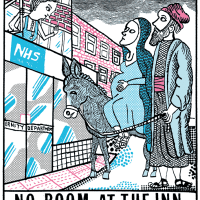
Between 1999 and 2004, Sarah Mullally, the current Bishop of London, was director of patient experience for NHS England. One complaint dominated the feedback she received from inpatients: everyone hated the undignified hospital gowns that gaped open at the back. Mullally identified this as an issue that could be addressed easily and cheaply. Later on, the designer Ben de Lisi even worked with the Design Council to develop a better gown with side fastenings. Yet if you are unfortunate enough to have to stay in hospital today, you will almost certainly find that you are offered the old draughty gown.

The joyless reading app being forced on my son

It was only recently that I fully appreciated how the books I read as a child formed me. A pregnant friend asked me about my parenting philosophy and I realised it amounted to ensuring my son would survive a tour of Willy Wonka’s chocolate factory. I never had the money of Veruca Salt’s daddy to indulge his every desire, but I came down hard on chewing gum, gorging on chocolate and, above all, staring at a screen.  Despite my son’s complaints that I was acting like a father from Victorian times, it seemed to have worked, and, as the Oompa--Loompas predicted, not being glued to a screen encouraged him to become a reader, out of boredom if nothing else. If the house was quiet, too quiet, I would usually find him reading a book in a corner.

Trump’s lessons for Europe

Donald Trump’s dramatic intervention in Venezuela has achieved much more than to bring a brutal, corrupt dictator and drug trafficker to justice in an American court of law, something which no amount of human rights declarations, international law or indictments in the international criminal court were able to achieve. It took President Trump deciding it was in America’s interests to helicopter Nicolas Maduro to face justice, and this is the awful truth that Europe’s political leaders are coming to terms with: Trump has the means and the will and they don’t. Europe’s growing geopolitical impotence in the world is becoming the issue now, and histrionics about Greenland is confirming this brutal reality. The future of Greenland is being misunderstood.

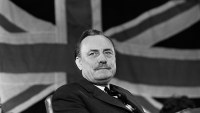
mandelson

‘We will use the power of democracy to blow you away’: Reform plots a path to No. 10

As he made his way to lunch on Monday, Danny Kruger, the former Tory MP who defected to Reform last year, could be seen clutching a well-thumbed copy of John Campbell’s biography of Lord Haldane, one of the forgotten heroes of British politics. Most British politicians in search of heroes look to Churchill or Attlee for inspiration. But as a reforming secretary of state for war and lord chancellor in the Liberal government before the first world war, Haldane ‘basically modernised the British state’, says Kruger. ‘He created the War Office and the Imperial Defence Committee, the Admiralty, the modern navy, the LSE and the RAF.’ Add to that the intelligence agencies, Imperial College London and the Territorial Army.

What Trump’s coup in Venezuela means for Iran

In a city awash with visual propaganda, one mural in Caracas is especially striking for the western visitor. In it, Jesus Christ stands alongside Imam Mahdi, a prophesied messianic figure who many Muslims believe will appear with him during the End Times to restore peace and justice to the world. There is only one Venezuelan – the late president Hugo Chavez – among the six smaller figures on the mural. Three are Iranian, including Qasem Soleimani, a commander in the Islamic Revolutionary Guard Corps elite Quds Force, killed by a US airstrike in 2020. One is an Iraqi commander killed in the same strike, and the last is Lebanese, Imad Mughniyeh, a founder of Islamic Jihad in Lebanon and number two in Hezbollah until his assassination in 2008.

Disrupt the world, deport the world – the ‘Donroe doctrine’ is about immigration

Invade the world, invite the world. That pithy phrase was invented in the 2000s by Steve Sailer, the right-wing writer, to mock the then bipartisan consensus which supported George W. Bush’s war on terror abroad while pushing open borders at home. Or, as Sailer also put it: ‘Bomb them over there and indulge them over here.’ Back then, such analysis was generally dismissed as the preserve of white supremacist cranks. Now, it’s fair to say that Sailerite thinking animates the spirit of the second Donald Trump administration. Disrupt the world, deport the world. That’s the order of the day. Since America’s stunning attack on Venezuela last weekend, almost everybody has had a stab at revealing Trump’s real intentions – including, naturally, Trump and his talking heads.