Features

Starmer must drop this terrible Troubles bill

As we mark another anniversary of the Good Friday Agreement, we should be less inclined to celebrate and more disposed to worry. What was achieved on 10 April 1998 was remarkable. It worked not because it resolved everything, but because it deliberately did not, allowing former enemies to move forward without settling every question of the past. Yet it depended on consistent political leadership to embed its spirit into a society divided by grievance. That leadership is now faltering, with the risk of the past being weaponised in ways the Agreement was designed to avoid. The struggle for a united Ireland continues. One of the Agreement’s greatest achievements was to move it from the gunman to the ballot box. But legitimacy cuts both ways.

De Gaulle or nothing: lessons from the General

The first time I set foot in the White House as a Labour political adviser, in spring 2024, to see a then all-powerful Jake Sullivan as the US National Security Adviser, I went as an Atlanticist. By my final visit to the West Wing in January, accompanying David Lammy as his aide to see J.D. Vance, I was an Anglo-Gaullist. In between lay the humiliation of Chagos, twists and turns over Ukraine, surprise American strikes on Iran and the realisation that our closest ally, the superpower we had built our entire security around, had become erratic, emotional and unpredictable. When Labour came to power, I truly believed the country had been suffering mainly from Tory problems. I learnt the hard way that our instability stemmed mostly from British problems. And this brought me to Gaullism.

Is time up for Viktor Orban?

For a country of ten million people that spent most of the 20th century occupied and impoverished, Hungary today is thriving. This, in the eyes of his supporters, is down to the 16-year rule of Viktor Orban. Hungary’s Prime Minister has, to use his phrasing, aimed to create an ‘illiberal democracy’. He has reformed the country’s judiciary, given tax breaks to mothers to increase the birth rate and zealously resisted the EU’s refugee policies. The last is illustrated by the 140-mile fence along the Serbian border constructed during the 2015 migration crisis. Proud border guards tell you that 1.1 million migrants have been kept out in a decade. Nevertheless, Orban faces his toughest election yet when Hungarians go to the polls this Sunday.

Let teenage boys discover the English countryside

When I was four, the progressive teachers at my primary school thought it would be wise to teach us how to type on a keyboard. When it was my turn to key out the phrase ‘Biff and Chip’ on the computer, they discovered, to their horror, that I was already capable of effortless touch typing. I have been using computers, and by extension the internet, since before my earliest memories were formed. Not only did I grow up online, I did so during the early 2000s when there were virtually no safeguards or restrictions on what children could access. I pirated my first film, Star Wars: Episode III – Revenge of the Sith, at the age of seven and bought my first (sadly wasted) bitcoin at 13.

Religion has been resurrected in British politics

British history is littered with elections and Elections. The first type, common or garden elections, are fought with prosaic issues at their core. Readers might remember the 2001 general election, which saw such pressing topics as the fate of Kidderminster hospital pushed to the fore. The 1865 general election was also considered uneventful by contemporaries. Even contests nominally involving major changes can be just ‘elections’. The tedium of 2024, featuring cynical electoral bribery, with the result a foregone conclusion and the stated policy platforms of the two main parties largely similar, is a prime example. What, then, are the other type: the Elections?

Gen Z are turning to the Book of Common Prayer

‘No one pretends that modern services will fill the churches. But adult converts ought to be able to step naturally into being worshippers. How absurd that a convert should be warned to undergo cultural orientation before he comes to church.’ These words of the arch-reformer Colin Buchanan in 1979 sum up the views of that post-1960s generation, who believed that all the prayer and thought which Anglicans had inherited was alien to the new generation. It was thought so alien, in fact, that a full cultural orientation would be needed to persuade people to come to church. Modernity was the answer to most questions, and most especially: ‘How do we get the young to come to church?’ Fifty years later, I am not sure anyone would call this experiment a success.

Russia has its eyes on Svalbard

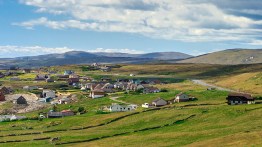
Svalbard The quiet hillside by Longyearbyen’s church gives visitors to the capital of Norway’s Svalbard archipelago an austere but beautiful panorama of the bay that cradles the town. Tall, sharply steep mountains, blanketed with snow, collide with the blue-grey waters of the Arctic below. From that hillside, I watched the quiet bustle of Longyearbyen. Since Donald Trump threatened Nato with the biggest crisis in the alliance’s history by stating his desire to take control of Greenland in the name of US ‘national security’, Svalbard’s residents have been uneasily looking westward. The US President has repeatedly claimed that only he can prevent the island, which is just 185 miles from Svalbard, being used as a staging post for an attack on the West by Russia or China.

Britain must recognise Somaliland

Somalia has been a byword for failed statehood and violence for so long that the calm of Somaliland, its neighbour to the north-east, feels almost miraculous. In contrast to Mogadishu, the bustling streets of Hargeisa, Somaliland’s capital, aren’t patrolled by grim-faced soldiers. Government offices aren’t huddled behind blast walls and protected by foreign troops. You can wander into a restaurant and enjoy camel steaks (a national speciality) without worrying about al-Shabaab terrorists. It is a former British colony which, for 30 years after independence, was joined to what had been Italian Somaliland.

How Pope Leo XIV is quietly reshaping the Vatican

On the afternoon of Easter Sunday last year, Pope Francis was driven through St Peter’s Square in an open-topped Popemobile. A few weeks earlier he had nearly died from pneumonia, so pilgrims were thrilled to watch him blessing babies. They told journalists that it was a miracle to see the 88-year-old Argentinian in such good shape. At 9.45 the next morning the Vatican announced that Francis had just died from a stroke. And so began the preparations for a conclave that elected the second pope from the Americas. Cardinal Robert Prevost – ‘Bob’ to his friends – was a Chicago-born dual citizen of the United States and Peru. Until 2023 he’d been bishop of the Peruvian diocese of Chiclayo.

How the Green party abandoned its environmental roots

In the summer of 1972, Lesley Whittaker walked into a pub in rural Warwickshire. She had something for her husband Tony. It was a copy of Playboy magazine. In that issue, there was an interview with the biologist Paul R. Ehrlich, who died this month aged 93. In it, he repeated the thesis of his 1968 book The Population Bomb, where he wrote that ‘in the 1970s hundreds of millions of people will starve to death’. There were simply too many of us. Worldwide famine was imminent. Lesley and Tony were terrified. Along with a local businessman, Michael Benfield, and his future wife, Freda Sanders, they talked about it over pints at the Bridge Inn, becoming known as a ‘Gang of Four’. Over several months, they roped in 39 others, and set up the People party in 1973.

The UAE and Oman could be the big winners from the Iran war

Sixty years ago, I first gazed out on the Strait of Hormuz from the Musandam peninsula of Oman. I was there as private secretary to my godfather, Selwyn Lloyd, who had been Britain’s foreign secretary during the Suez Crisis. The previous evening our host, Sultan Said bin Taimur, the ruler of Oman for nearly 40 years, commented gloomily: ‘When two fish are fighting in these waters, the British are behind it.’ I estimate that I must have made at least 250 visits to the Gulf states in the intervening six decades.

Organised crime is targeting artisanal food

Organised crime has a new focus: high-end food production. The latest victim is Wildfarmed, a UK-based, regenerative flour business co--founded by one half of the band Groove Armada. Last month, 50 tons of its flour were stolen, disguised as a wholesale order for the French supermarket E. Leclerc. In an audacious move, the fraudsters asked for the wording on the bags to be translated into French. Wildfarmed obliged. The 1kg bags – all 50,000 of them – were loaded into containers ready for export. Then they vanished. Wildfarmed’s disco-ball neon branding makes it a surprising target. But the real question is not how anyone hides a haul of hard-to-miss flour bags, but whether this theft is a bellwether.

Brussels is making your perfumes worse

‘Heliotropin,’ said the Frenchman mournfully. I was midway through lunch in Mayfair with Benoit Brosseau, whose father, Jean-Charles, created the fragrance Ombre Rose, and who now leads the company of the same name. I had asked the question I always put to fragrance people, in the full knowledge it will make them either sad or furious: how do they cope with Ifra, the Brussels-based regulatory, or representative, body of the fragrance industry? One of the latest in the list of ingredients Ifra may be curbing is based on heliotrope, which not only gives a powdery aspect to scent, but conjures up the elusive smell of cherries. (If you know that marvellous, evocative Guerlain scent L’Heure Bleu, that has it.) M. Brosseau was fed up.

The clandestine side of Roger Scruton

Sir Roger Scruton is remembered by most people as a conservative philosopher. Softly spoken and thoughtful in conversation, he was brave and unconventional in his views. Few things are as unconventional as being a convinced and articulate conservative. It cost him advancement in the academic world. But he was admired, liked and even loved by many. And today his work continues to be influential. But there was a part of Scruton’s life that is not well-known. It was clandestine. This secret life is currently being commemorated and honoured in an exhibition in Brno, the historic and rather beautiful second city of the Czech Republic. It is a two-and-a-half-hour train journey from Prague unless you are willing to face a direct flight on Ryanair.

Frugal chic, the movement changing the way women shop

It is, apparently, a novel concept in our age of overconsumption, that life can still be enjoyable even if you don’t have stupid money. ‘Frugal chic’ is the new lifestyle trend summed up by the 25-year-old influencer Mia McGrath, who coined and trademarked the term, as ‘living luxuriously while spending intentionally’. Frugal chic supposedly teaches young women – whose financial literacy typically lags behind young men’s – how to make their money go further with practical advice on investing and saving.

‘I don’t want this state that I love to become the country I left’: Steve Hilton on why he’s running to be California governor

‘I don’t want this state that I love to become the country I left,’ Steve Hilton tells the lunch meeting of Southern California Republican Women. Knives and forks rattle on porcelain as the perfectly coiffured ladies down cutlery to clap. Remarkably, Hilton, the former director of strategy under David Cameron, has topped virtually every poll for governor of California since he launched his campaign in April last year. Hilton has leant into the West Coast aesthetic and spirit. Once the rebel of Downing Street in T-shirts and stockinged feet, today he sports a tech-bro beard, more bracelets and beads on his wrists than Prince Harry, and has the top three buttons of his white shirt undone. British by birth, he has renounced his citizenship and become an American.

The rise of the pocket money app

I am standing in the village Co-op with my eight-year-old daughter when she asks, inevitably, to be bought a magazine. As most parents will know, magazine is a generous term for this iteration: a collection of sorry pages whose sole purpose is a vehicle for plastic toys. I say no, but then she blindsides me. ‘Fine, I’ll pay for it with my pocket money,’ she declares, whipping out her pre-paid card like a good capitalist. As I slip the packet of fags I have bought for myself into my pocket, I realise that I am morally snookered. For is she not free to spend her pocket money as she likes? And am I not free to spend my money as I like? Libertarians, all. Most of us born before the advent of digital banking will have firm ideas about pocket money.

The taxman is coming for the self-employed

Spare a thought for Mrs McClafferty & Co. Like thousands of small business owners, she has spent years managing things the old-fashioned way: jotting down figures in a Silvine cash book, stuffing receipts into a shoebox and sorting it all out when the tax return comes around. But according to HMRC, taxpayers like her are partly responsible for a £24 billion black hole in UK tax receipts. Which means the taxman is coming for them. If you are self-employed and had an income of more than £50,000 last year, get ready for Making Tax Digital (MTD). From 6 April, you will have to file an income and expenses update four times a year, then an adjustment, then the annual return. You must use HMRC-approved software to do it all.