Features

Survival of the hottest: evolution’s fun side has been long overlooked

The theory of evolution is dominated by the utilitarian logic of natural selection: adapt or die, survival of the fittest. But consider that ‘fit’ has two meanings these days: ‘healthy’ but also ‘hot’. There is another evolutionary mechanism that scientists have taken a longer time to appreciate – seduction by the hottest, rather than survival of the fittest. It generates very different and much stranger outcomes. Perhaps even the big brains of human beings evolved as seduction devices more than survival aids. When an animal selects a mate, it can shape the future of its species just like breeders of dogs shape different breeds. Sexual selection through mate choice is the ‘fun’ version of evolution, able to generate random, arbitrary and bizarre innovations.

Could Trump’s tariffs be good news for British wine-lovers?

Professional Englishmen and women – doctors, accountants and even journalists – could once afford to drink first-growth claret like Château Latour on a regular basis. In 1972, when the Daily Telegraph’s Guide to the Pleasures of Wine was published, Pomerol was still an obscure corner of Bordeaux, known for offering ‘very good value’. Those days are long gone. Prices began to take off in the 1980s, with Auberon Waugh blaming ‘American millionaires looking to impress their guests’. The 1982 Bordeaux vintage was highly lauded by a then-unknown young lawyer called Robert Parker Jnr who would go on to become the most influential wine critic in the world. After this, anything Parker recommended became unaffordable to most British wine-lovers.

What modern Britain should learn from Charles I

Next week marks the 400th anniversary of the accession to the throne of Charles I. This moment began what was described in England’s greatest work of history, 1066 and All That, as the ‘Central Period of English History… consisting in the utterly memorable Struggle between the Cavaliers (Wrong but Wromantic) and the Roundheads (Right and Repulsive)’. It is worth marking this accession because the constitutional and religious drama of the Civil War still plays itself out in our political and public imagination. ‘I judge a man by one thing,’ said Isaac Foot, the father of Michael. ‘Which side would he have liked his ancestors to fight on at Marston Moor?

Does China have Vatican City in its sights?

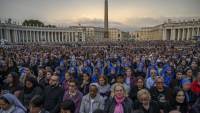
Last Sunday the Vatican released the first photograph of Pope Francis since his ordeal began. He was wearing a stole around his neck, indicating that he had concelebrated mass in the chapel of the Gemelli hospital. Admittedly, all he had to do was raise his hand and whisper a few words of consecration, but it would have been impossible to take such a photo a week earlier, when Vatican-watchers were checking their phones hourly to discover whether the See of Peter had become vacant. Francis is still very ill, of course, and everyone noticed that the picture was taken from behind, perhaps to hide his oxygen tube. The image was touching but unintentionally symbolic.

What Five Eyes does – and doesn’t – see

In the famous ‘Rainbow Portrait’ of Elizabeth I her gown is embroidered with eyes and ears, a reference to her efficient surveillance of the threats to the emerging nation state that was Tudor England. ‘Five Eyes’ is the modern equivalent of the concept but applied to the general security of the Anglosphere: the UK, the US, Canada, Australia and New Zealand. For an alliance that was originally one of listeners more than watchers, it might have been more correctly called ‘Five Ears’, but that name would hardly have conveyed its permanent vigilance.

It’s time for Rachel Reeves to stop gambling

Next Wednesday Rachel Reeves will stand up in the House of Commons to deliver what she is calling her ‘spring forecast’. As so often with political language, everyone in Westminster knows it is no such thing, just as there was nothing ‘mini’ about Kwasi Kwarteng’s Budget of September 2022. The ‘spring forecast’ will be an emergency Budget, and the reasons for it reveal a surprising truth about the Chancellor of the Exchequer: she is an inveterate gambler. Unless everything turns out to be a brilliant exercise in expectation management, the worst-kept secret in Whitehall is that Reeves has already broken her ‘iron-clad’ fiscal rules.

Ukraine is just one part of Trump’s Great Game

Washington D.C. For Donald Trump and Vladimir Putin, it’s a case of today Ukraine, tomorrow the world. In their much-hyped telephone call this week, the Russian leader didn’t appear to give much away: a step towards a sort-of ceasefire, a prisoner swap and a few other bits and bobs. But Putin knows that Trump wants a lot more than just an agreement on the Donbas. Settling the most significant conflict in Europe since the second world war is merely a prelude to a much bigger deal in the Holy Land, a truly historic arrangement that could satisfy the Donald’s desire to be thought of as a peace legend. That’s why Trump sent Steve Witkoff, his special envoy to the Middle East, to Moscow to pre-negotiate with Putin last week.

‘Austerity is back’: Inside Labour’s emergency budget 

Dominic Cummings may have left Whitehall but his spirit lives on. Pat McFadden, the Chancellor of the Duchy of Lancaster, has repurposed Cummings’s call for ‘weirdos and misfits’ as a plea for ‘innovators and disruptors’. Downing Street this month launched an ‘AI Ideas’ competition in pursuit of bright sparks. A hackathon will follow. In No. 10 and 11, aides channel Cummings’s language as they talk of acting as an ‘insurgent’ government. ‘We’re all Dom now,’ says one government figure. In one area, Cummings’s influence on the new government is most apparent: the diagnosis of a failing state. Keir Starmer’s chief aide Morgan McSweeney has never met Cummings, but these days they share an analysis of what has gone wrong in Britain.

Debunking the myths about the ECHR

This year the European Convention on Human Rights and its Strasbourg court are 75 years old – the age at which British judges are obliged to retire. Is it time for Britain to retire from this ageing institution? Not according to the Attorney-General, Lord Hermer, a former human rights lawyer, who recently pledged that under Labour Britain would never leave. Apologists for the ECHR invariably turn to myths to make their case, foremost of which is the creation myth. The ECHR, they say, was a British invention. It was inspired by Winston Churchill and drafted by David Maxwell Fyfe. It codified historic British rights and the UK was the first country to ratify it.

The ‘physician associate’ will see you now…

There is a war being waged in NHS hospitals. On one side are overstretched junior doctors in understaffed wards. On the other: physician associates (PAs) or, to use the more disparaging term, ‘noctors’.   Since 2003, non-medical graduates have been able to gain entry to hospital wards and GP practices if they complete a two-year clinical course that leaves them a ‘physician associate’ or ‘anaesthesia associate’. At first, PAs were rare – ten years ago there were fewer than 150 in England. Since the pandemic, however, the numbers have exploded. There are now approximately 4,000 PAs working in England and Wales.  PAs are supposed to help doctors with the time-consuming administrative work.

Massacre of the innocents: the return of sectarian persecution in Syria

No one covers up their war crimes any more. They film them, celebrate them, post them on X. So we have videos from Syria this week showing Islamist fighters making terrified Alawite men get on their hands and knees and howl like dogs. In one video, the victims crawl along a street spattered with blood and gore as a bearded gunman clubs them with a wooden pole. The camera comes to rest on half a dozen bodies. Then we hear rifle shots. There has been a massacre of Alawites in Syria this past week: hundreds of civilians have been killed. The killings were perpetrated by the armed groups that put Syria’s new President, Ahmed al-Sharaa –formerly the militia leader known as Abu Mohammed al-Jolani – in power. For some, the true face of the country’s new rulers has been revealed.

Why does the beheading of Christians not make headlines?

The Congolese chapter of Islamic State has a ruthless way of stopping outsiders reporting their presence to the authorities. Under the edicts of their founder, Jamil Mukulu, who once lived as a cleric in London, anyone who strays across them in their forest hideouts should be killed on sight. ‘Slaughter him or her, behead them immediately,’ Mukulu once commanded. ‘Never give it a second thought, do not hesitate.’ His acolytes take him at his word, even when it’s not just one hapless villager who runs into them, but dozens. Last month, they beheaded 70 Christians in Mayba in the eastern Congo, according to the Catholic charity Aid to the Church in Need, which campaigns on behalf of persecuted Christians worldwide.

Save Syria’s Christians

David Lammy, the Foreign Secretary, and Marco Rubio, US Secretary of State, had rather tellingly different responses to the latest wave of violence in Syria. Lammy deplored the ‘horrific violence’ but failed to address where that violence was coming from. Rubio, by contrast, stated clearly that ‘radical Islamist terrorists’ were targeting minorities in Syria, including Alawites, Christians and Druze. Rubio is right. While precise numbers are difficult to ascertain, it appears that, according to a source verified by the Hungarian government’s State Secretariat for the Aid of Persecuted Christians – the only one in the world – up to 3,000 people may have been killed, the majority of them innocent Alawite civilians. A number of Christians have also been killed.

The Gen-Z fliers obsessed with maximising their air miles

Oscar, 26, joins me on Google Meet from Buenos Aires, having arrived earlier that day from New York – by way of a few hours in Mexico City and Panama. Just five days ago, he was in London. ‘New York was just going to be a weekend trip for a conference, but then I thought while I’m in America, I might as well head south and here I am.’ It’s a far cry from Wales, where his family lives. Yet this itinerary is barely a ripple in Oscar’s relentless travel schedule. His nonstop approach to flying places him firmly within a new tribe of Gen-Z frequent fliers – mostly men – who treat globe-trotting like a real-life computer game. Their obsession? Maximum air miles for minimal money. The destination itself is secondary; the point is simply to keep moving.

Why is the NHS pushing pregnant women towards sterilisation?

It was a routine antenatal appointment. I’d done it twice before and knew the format. The obstetrician runs through the risks of an elective caesarean (ELCS). We agree a date, I sign the forms, then make a plea for adequate pain relief after the surgery, which I know will be ignored. So I was blindsided by her opening gambit. ‘Why don’t we tie your tubes when we’ve got the baby out?’ she said, or something similar – I don’t recall the exact words, but I do remember the heat in my chest, the confusion and fear. ‘What?’ ‘It’s your third child, isn’t it, so why don’t we tie your tubes at the same time?’ She wouldn’t drop it, ignoring my every assertion that I did not want this done to me.

The anti-genius of William McGonagall, history’s worst poet

‘Not marble nor the gilded monuments of princes,’ wrote Shakespeare, ‘shall outlive this powerful rhyme.’ To be a great poet, as the Stratford man knew, is to be immortal. But there’s another way to achieve immortality through verse – and that is the route taken by William McGonagall, the ‘worst poet in history’, who was born 200 years ago this month. His star, I’m pleased to say, shows no sign of fading. He has, as is only proper, an adjective. You can be Keatsian, Eliotian, Homeric. Or, like most of us when we sit down to write a poem, you can be McGonagallesque. His name is so much a byword for doggerel that a version of him – William Rees-McGonagall – is a Private Eye running joke to this day. It’s not nothing to be the worst poet in history.

Jonathan Bowden: my eccentric school friend who became a far-right hero

When my old school, Presentation College, Reading, was demolished a decade ago, the Labour council desperately searched for famous old boys after whom they could name streets on the housing estate that replaced it. This was a challenge. According to the local newspaper, ‘names rejected include one in recognition of Mike Oldfield, the musician behind ground-breaking prog rock album Tubular Bells’ – rejected by Oldfield, I assume, since he hated the school. They settled on Bowden Row, ‘in honour of political philosopher and Presentation alumnus Jonathan Bowden’. I wonder if the residents of the handsome semi-detached houses know anything about Bowden. The council didn’t.