Richard Dearlove

Richard Dearlove is Chair of Board of Trustees of University of London and a former head of the British Secret Intelligence Service (MI6).

Britain’s national security must not be sacrificed to net zero

From our UK edition

Those who, like myself, experienced life behind the Iron Curtain understand instinctively that centrally planned economies beholden to an ideology do not bring benefit to the majority of the population on whom they are imposed. A few top-level individuals prosper, but the citizen finds himself and his aspirations crushed by the diktats of central government. The state itself is similarly confined by a set of ideas which are presented as self-evident truths which constrain its policy--making and exclude challenge. That Iron Curtain model describes pretty accurately the UK’s energy policy, driven as it is by the ideological pursuit of net zero and the diktats required to implement it.

What Five Eyes does – and doesn’t – see

From our UK edition

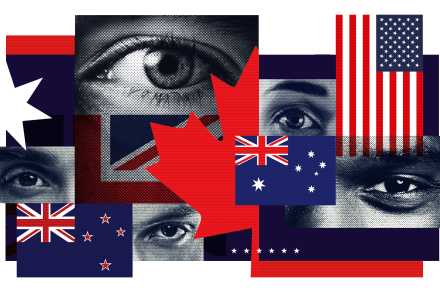
In the famous ‘Rainbow Portrait’ of Elizabeth I her gown is embroidered with eyes and ears, a reference to her efficient surveillance of the threats to the emerging nation state that was Tudor England. ‘Five Eyes’ is the modern equivalent of the concept but applied to the general security of the Anglosphere: the UK, the US, Canada, Australia and New Zealand. For an alliance that was originally one of listeners more than watchers, it might have been more correctly called ‘Five Ears’, but that name would hardly have conveyed its permanent vigilance.

How Cold War Czechoslovakia became a haven for terrorists

From our UK edition

Cold War Prague hid its historic charms under a veil of grime and dilapidation. But, as we learn from this deeply researched and scholarly study, it was still a favoured destination for international terrorists, mostly Palestinians, after the 1968 Soviet invasion. They liked its hotels, its proximity to the West, its medical facilities, the tolerance and support of its security authorities and the quality of its light-arms manufacturing. Communist Czechoslovakia (CSSR) boasted relatively efficient security and intelligence services (generically referred to as the Stb). They were scrupulous record- keepers, and Stb archives, released after the Velvet Revolution with minimal expurgation, remain among the most complete of any former Warsaw Pact nation.

How our pro-Brexit group was hacked by Russia

From our UK edition

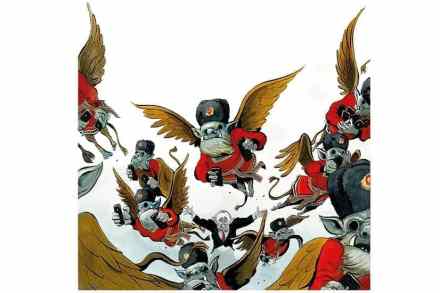
Britain is not at war with Russia but in cyberspace Russian activity against Ukraine and its allies is unrestrained, as I have recently found. Indeed, it is flattering 18 years after my retirement as head of MI6 to be still considered a worthwhile target of a cyber-attack by the Kremlin. The story of how I and a small group of pro-Brexit individuals were hacked by the Russian state and accused of plotting to overthrow the British government begins in 2017. A number of citizens, concerned that the Brexit vote of 2016 was being subverted, met in a pub to see whether they could do something about it. As a joke, they nicknamed this ‘Operation Surprise’ after the pub we were in.