Features

I was told I was too middle-class to adopt

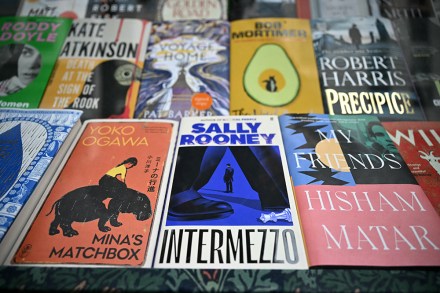
Too many books? Yes, we had too many books. That’s what our social worker told us when we were being assessed to see whether we were suitable parents to adopt a baby from China back in 1996. It seemed to us, a middle-class, well-educated couple, an extraordinary statement and so it appeared to our friends and acquaintances. But that was, and is still to some extent, the credo at work in assessing potential adoptive parents. A significant number of social workers continue to believe that a child should be matched as closely as possible with the social class and ethnic background of the adoptive parents, even if that means children being held in institutional care far longer than is good for them.

Are you Ramadan-ready?

‘Are you Ramadan-ready?’ That was the poster in Sainsbury’s advertising its delicious range of fast-breaking foods (rice was one). And the striking thing about it was… the ‘you’. That ‘you’ means the normal customer, the default Sainsbury’s shopper. Same with the email I got from the swanky Belgravia hair salon I used to visit: Here, we understand that Ramadan is a time of reflection, renewal and spiritual focus – and we also know how important it is to take a moment for yourself amid the busy days of fasting and prayer. That’s why we are delighted to announce that our salon will be open late during Ramadan, offering evening appointments so you can indulge in a little luxurious self-care after Iftar [the fast-breaking meal after sundown].

Meet the Zoomer Doomers: Britain’s secret right-wing movement

One of the striking aspects of the AfD’s success in the German elections was the party’s popularity among the young, especially men under 25: one in four voted for the hard-right movement. Support for bracingly conservative positions among Gen-Z men isn’t just a German phenomenon, however. In Westminster and beyond, a new breed of young right-wing influencers is seeking to shift our politics. Meet the Zoomer Doomers. They use acerbic posts to humiliate the defenders of the status quo, in a strategy known as ‘from posting to policy’. Terms such as ‘Boriswave’ – which refers to the net migration figure that spiked at 900,000 under Johnson’s leadership – first appeared within this network.

The strange beauty of the vigil for the Pope

Steady rain during the day stopped just before Monday’s evening prayers for Pope Francis in Saint Peter’s Square. A line of cardinals sat on a platform, an ageing politburo in black and scarlet. A couple of thousand of the faithful and the curious stood below. Vatican gendarmes, wearing kepis and carrying sidearms, directed people to their places. The Swiss Guard were not on duty. Their gaudy, striped uniforms would anyway have been too exuberant for the occasion, a tenth night in hospital for the Pope, dangerously ill with double pneumonia at the age of 88. Floodlights illuminated the great baroque façade of the most famous building in Christendom. Cobblestones glistened; fountains shimmered. There was a nasty chill in the air.

Nigel’s gang: Reform’s plan for power

A year ago, Reform party aides found themselves in a cramped office in Victoria, London, bickering about chairs. ‘There weren’t enough seats to go around,’ recalls a staffer. These days there are no such issues. Leading in the polls and with five MPs in tow, Nigel Farage’s party has moved to Westminster’s Millbank Tower. This 1960s block peering over the Thames is where Tony Blair’s landslide victories were fought for and won; the new tenants are intent on dismantling most of his legacy as they plot a path to 10 Downing Street. Look at any opinion survey and Reform is hard to dismiss. Having won 14 per cent of the vote in last year’s general election, the party consistently leads in the polls.

Why is there no campaign to free novelist Boualem Sansal?

Paris What possible crime has the award-winning novelist Boualem Sansal committed that merits being locked away for three months now by the Algerian police? Listen to the Algerian government – and its cheerleaders on social media – and theanswer appears to be that he is at best a stooge for the French far right, at worst an outright traitor. Friends of the man paint another picture: a gently spoken free-thinker with the courage to speak his mind. Sansal, who is 80 and suffers from cancer, was arrested at Algiers airport on 16 November as he got off a plane from Paris. He has been in an Algiers prison ever since, with visits to hospital for treatment. His Parisian lawyer, François Zimeray, has still not been given a visa, so the charges are unclear.

In the footsteps of Cecil Rhodes

In a scrubby paddock on the edge of Bulawayo, I walked up to a half-broken leatherwood tree growing in a tangle of old barbed wire. It looked no different to a million tough trees across Zimbabwe, the still-beautiful, still-friendly country which remains the most wonderful place in Africa. But this tree is exceptional: it is listed as a national monument. Beneath it, in October 1888, a concession was agreed which led Lobengula Khumalo, King of the Ndebele, to lose his lands to a consortium led by Cecil Rhodes. It’s disputed what Lobengula thought he was agreeing to when he made his mark on the treaty.

Is Britain funding organisations that wish us harm?

Frivolous state funding isn’t only going to chancers, the plain lucky and the devious, but also to those who would see Britain – and the West – come to harm. Just over a year ago, the National Secular Society (NSS) compiled a dossier for the Charity Commission which called for 44 charities that had ‘fuelled anti-Semitism and division’ and shown support for ‘Hamas and other anti-western actors’ to be investigated. In every case these organisations have kept their charitable status. The charities in the dossier have the stated purpose of ‘the advancement of religion for the public benefit’. In the NSS’s view, this is being used as cover for political agendas and extremist views – while the groups receive tax breaks and state funding.

How far-right might Germany go?

In the Thuringian city of Weimar, opposite the theatre where the National Assembly hashed out Germany’s constitution in 1918, stands the museum of the history of the Weimar Republic. ‘A spectre is rising in Europe – the spectre of populism,’ a plaque reads. ‘Forces long thought overcome seem to be returning to threaten the basis of democracy. The Weimar Republic and its neighbours knew the phenomenon only too well.’ It’s a warning that will be weighing on the mind of Friedrich Merz, the leader of the conservative Christian Democratic Union (CDU) party and the man who will probably become Germany’s next chancellor. The federal election this Sunday is the culmination of a messy and fraught campaign.

I was convinced by the cholesterol sceptics

It’s never a good thing when your cardiologist sounds alarmed on the phone. Come in tomorrow, he said: we’ll get you on the table. He wasn’t talking about cracking my chest, thank Christ, but threading a wire in through a vein to get a look at the heart, blow up a tiny balloon to stretch the artery, and maybe leave behind a metal tube or three. I wasn’t keen on that last part. Then I thought: serves me right. I should have avoided all those bacon sandwiches and steaks fried in butter. ‘The wages of sin is death.’ Probably should have taken the statins, too. But if you are, understandably, unwilling to take a fistful of pills every day for the rest of your life, there are some medical mavericks to confirm your decision.

How China exploits the West’s climate anxiety

In the fight against climate change, China loves to present itself as the world’s White Knight. Armed with wind turbines and solar panels, EVs and batteries, it will rescue us from oblivion if only we would let it.  There’s no shortage of western politicians, academics and organisations who are happy to go along with the idea that China is an ally in the global green revolution. The argument, broadly put, is that whatever our differences on other things (trifles such as security, economics and human rights), surely we can agree on saving the planet. Rachel Reeves seemed to reach that conclusion when she returned from her visit to Beijing last month.

Get real: the harsh lessons of our new world disorder

Sir Roger Scruton may not be the Prime Minister’s favourite author. Apparently Keir Starmer prefers Victoria Hislop. But as he prepares to travel to Washington next week, the PM could scarcely spend his time more wisely than burying his nose in The Uses of Pessimism – and the Dangers of False Hope, one of Scruton’s most powerful works. ‘Hope untempered by the evidence of history is a dangerous asset,’ says Scruton. ‘And one that threatens not only those who embrace it, but all those within range of their illusions.’ That is the correct, pessimistic, cast of mind with which to approach not just the war in Ukraine, and America’s ongoing commitment to Europe, but to international affairs overall.

Smoking is sexy again

It’s a summer’s day in Suffolk, some time in 1992. My best friend Rebecca and I are both 14 and lying on our backs in a field. We have a packet of ten Silk Cut between us, and we are practising blowing smoke rings that will make us irresistible to boys. Everyone we fancy smokes: Slash, Kate Moss, half the Lower Sixth at the boys’ grammar school. It might be 40 years since Richard Doll and Austin Bradford-Hill made the link between smoking and lung cancer, but we don’t care. There’s Brad Pitt in Thelma and Louise with his cowboy hat and a Marlboro Red. Johnny Depp – smoking in every sense – in just about everything. It is, durrrr, a truth universally acknowledged that pretty much anyone looks hotter with a cigarette.

The dark heart of South Africa’s Expropriation Act

Cape Town How damaging will South Africa’s Expropriation Act be? The legislation, which allows the state to seize private property without compensation, was signed late last month by President Cyril Ramaphosa. The act is consistent with the Marxist ideology of the South African Communist party, an ally of the ruling African National Congress (ANC). It’s claimed it will ‘redress the results of past racial discrimination’ and ‘undo the legacy of apartheid’ (among other platitudes). The reality, however, is that this legislation will likely do nothing to help the country’s majority black population who live in grinding poverty.

Will ‘The Seeker’ find the truth about the Covid lab leaks?

At the Royal Calcutta Turf Club, where ghosts of British nabobs look out over the racecourse, my neuroscientist wife spoke to an audience of businessmen in support of Robin Sengupta, a pioneering Newcastle neurosurgeon. He has founded a world-leading Institute of Neurosciences in Kolkata where richer patients subsidise poorer ones. After a morning meeting doctors and patients, he showed us the land where an ambitious new medical school will soon emerge from the rice paddies and crayfish farms.

The mysterious life of John R. Bradley

Working at The Spectator brings you into contact with intriguing people. One who stands out is John R. Bradley. He started writing for this magazine in 2011 in the wake of the Arab Spring, having accurately predicted the Egyptian uprising three years earlier in his 2008 book Inside Egypt: The Road to Revolution in the Land of the Pharaohs. If the West had assumed that democracy would follow the revolution, John believed otherwise, and instead suggested that Islamism would triumph across the Middle East. He quickly became an invaluable contributor to The Spectator. ‘The situation has developed almost exactly along the lines that John R. Bradley predicted,’ wrote Fraser Nelson in 2011. John’s knowledge of the Middle East was impressive.

Does Trump deserve the Nobel Peace Prize?

Donald Trump told reporters this week that he deserved the Nobel Peace Prize for helping to free some of the Israeli hostages in Gaza. But, he went on, ‘they’ll never give it to me’. Trump’s chances of putting on white tie and tails in Oslo have receded to a distant speck with his plan to Make Gaza Great Again – by removing the Palestinians.  This proposal may have doomed the brittle ceasefire and jeopardised further hostage releases. It has made the prospect of a deal between Saudi Arabia and Israel vanishingly small. It might also end up destabilising Jordan and Egypt. But the agent of chaos in the Oval Office is doubling down and no one, least of all Trump, knows how this will end.