Features

Britain’s energy crisis: when will the lights go out?

The day Margaret Thatcher died was also the day Britain nearly ran out of gas. In late March, it was reported that stored reserves were down to just two days’ supply. As the cold spell continued, the BBC even reported the names of ships bringing liquefied natural gas from Qatar, each cargo representing six hours’ worth of urgently awaited heat and power for the nation: the Mehaines had just docked at the Isle of Grain, the Zarga had been sighted approaching Milford Haven. The worst-case scenario was that the last gasometer would be flat by 8 April, and since a third of UK electricity generation relies on gas, that would, or might, have meant temporary blackouts for businesses in some areas in order to maintain supply to homes, schools and hospitals.

Michael Wharton: A Peter Simple life

He was fascinated by the Welsh, whom he listed, along with walking and gardening, as one of his three recreations in Who’s Who, something that alarmed those few Welshmen he actually met. One of them, the political columnist Alan Watkins, who had been sturdily on the run from his race for most of his working life, said of him, ‘He’s mad, the man’s quite mad.’ The journalist Peter Simple, who wrote a column for almost 50 years in the Daily Telegraph and the centenary of whose birth is on 19 April, was almost as fascinated by the Tibetans, a people, he told me, who had forever solved the problems of political philosophy by reducing the subject to two propositions, ‘It is the custom’ or ‘It is not the custom’.

Snooker is the world’s most skilled, absorbing, tactically subtle sport. Give it a break!

The greatest event in the sporting calendar is on us once more: the World Professional Snooker Championship. With an opening sentence like that you’re probably expecting one of those ironically post-modern ‘let’s go slumming with the plebs’ pieces. Well don’t. I’m serious. Snooker is criminally undervalued. The next two weeks in Sheffield offer the finest entertainment sport can provide. Yes, yes, I know the arguments. ‘Not a proper sport if you can play it while smoking a fag.’ Well that applies to cricket, as anyone who’s seen Phil Tufnell in a charity match can tell you. ‘Just a pub game.’ No, that’s pool. You try getting a 12 foot by 6 foot table into a boozer.

Cecil Parkinson, Charles Powell, John Simpson and Steve Hilton remember Margaret Thatcher

Cecil Parkinson: Underestimated – but unbowed Even among Mrs Thatcher’s original shadow Cabinet, there were those who simply did not believe that she would be capable of dealing with the problems of a declining country. To a man they were wrong. Each underestimated the determination of Margaret Thatcher. She did not regard the manifesto on which she had been elected as a set of pledges designed merely to win an election and to be abandoned when the going got tough. She intended to honour hers: to reduce the role of the state; to transfer power to the people. Trade union members were given the right to elect their leaders at regular intervals and to vote before being called out on strike.

Will the Guardian and the Independent kill the Grand National?

Over the past few years a new trend has emerged in British journalism. Our trade has become over-run with reporters or columnists who are not quite what they seem. They pretend to report objectively on events. In practice the true loyalty of these campaigning reporters or columnists is not just to their readers. Sometimes covertly, sometimes furtively, they also further the agendas of political parties and interest groups. This confusion of loyalties is a notorious problem at Westminster, but is now spreading beyond the political desks of national newspapers. Last weekend’s reporting of the Grand National was a very troubling example of the muddling of categories between straightforward reporting and campaigning journalism.

Richard Dawkins has lost: meet the new new atheists

The atheist spring that began just over a decade ago is over, thank God. Richard Dawkins is now seen by many, even many non-believers, as a joke figure, shaking his fist at sky fairies. He’s the Mary Whitehouse of our day. So what was all that about, then? We can see it a bit more clearly now. It was an outpouring of frustration at the fact that religion is maddeningly complicated and stubbornly irritating, even in largely secular Britain. This frustration had been building for decades: the secular intellectual is likely to feel somewhat bothered by religion, even if it is culturally weak. Oh, she finds it charming and interesting to a large extent, and loves a cosy carol service, but religion really ought to know its place.

Why are lefties so sycophantic to Margaret Thatcher?

I’ve been scratching my head for the past half hour trying to work out how I would react if I were a Conservative MP and a BBC reporter stuffed a microphone in front of me and told me that Arthur Scargill had just died. I know I wouldn’t punch the air, but a syrupy tribute? I think not. It would go something like this: ‘I’m sorry to hear that. Scargill was a charismatic leader to his followers but one whose legacy was to destroy the industry he loved, and all for his own ego.’ Would I expect to be hauled over the coals for saying that? Surely it is not unreasonable to react to the death of a political figure with a genuine assessment of their foibles. Yet the left’s reaction to the death of Lady Thatcher was bizarrely schizophrenic.

The kibbutz goes capitalist

Galilee: The last time I was here, the kibbutz was filled with sunburnt, muscular, sweaty Israelis covered in dark curly hair, driving Jeeps, so handsome I’d spill my Jaffa orange juice down my white cheesecloth culottes when they spoke to me. Then, Kfar Hanassi, in northern Galilee, a grenade’s throw from the Golan Heights, had 600 or so members, and cleaved to the lofty-lefty ideals of the collective: everyone gave what they could, in the words of the kibbutz movement, and got what they needed. No one owned a house, everyone ate the same thing together in the dining room (yoghurt, hummus, eggs, more yoghurt, more hummus). After dinner, everyone attended plenary meetings to discuss the security fence, or dance to an Irish-Israeli fiddle band.

Diarmaid MacCulloch: Am I anti-Catholic?

Does being gay make you a better historian? ‘Immensely, immensely,’ says Diarmaid MacCulloch. ‘From a young age, four or five onwards, I began to realise that the world was not as it pretends to be, there are lots of other things there. You learn how to listen to what is being half-said or implied, and that’s a transferable skill.’ MacCulloch knows what he’s talking about. He’s Professor of the History of the Church at Oxford and one of Britain’s most distinguished living historians. In academic terms, he’s on a par with David Starkey, who also happens to be gay. Like Starkey, MacCulloch is a Tudor specialist who has branched into other areas and television work.

How NHS health tourism is costing us billions: a surgeon’s story

When David Cameron proposed toughening the rules that govern foreign nationals being treated for free by the National Health Service, he faced — as one might expect — a barrage of criticism. The Prime Minister was accused of tilting at windmills. The threat exists only in the minds of xenophobes, said his critics. The actual levels of abuse are minimal, so why is he scaremongering? A few weeks earlier, I had written a piece for The Spectator from a different perspective; that of an cancer specialist who has spent his career in the NHS. I wrote for one reason only: that I cherish the NHS, and wish to stop its abuse. My piece focused on the actual nature of the abuse, how it is carried out and why so little of it is detected.

Why is Nelson Mandela’s health a state secret?

When President Jacob Zuma reassures a journalist, as he did last week, that Nelson Mandela’s condition is improving slightly, the entire world sighs with relief. Yet it has become hard to get trustworthy information about the man the world most admires. Mandela’s wife Graça doesn’t seem to be so involved in the key decisions about him any more. Instead, the occasional morsels of information which the world eagerly seizes on come largely from politicians. More strangely still, the South African government hasn’t let anyone know which hospital is treating him.

Why I fear for my daughter

To listen to many disability pressure groups, adult social care for people with learning disabilities is being slashed by a heartless government. What few of them want to tell you, however, is that the government is spending far more than it needs to on looking after adults with learning difficulties, as well as exposing many to cruelty and exploitation, thanks to an ideological obsession with placing them in ordinary housing rather than the communities in which many have lived for decades. I have an interest to declare: I have a daughter with learning difficulties who in two years’ time will qualify for adult social care.

Forget Cyprus, the real savings robbery is in Britain

There are many reasons that the fate of Cyprus is being followed so closely in Britain. One is sympathy for those who are about to pay the price for the sins of a banking sector that was at one point seven times the size of the island’s economy. Another is shock at how the island, to which Britain granted independence just 53 years ago, now finds itself caught between Berlin, Moscow and Brussels. But the real lesson of Cyprus can be applied closer to home: when governments run out of money, they come after other people’s. Everyone is looking at Cyprus and asking: how safe are my savings? In Cyprus, at least, when the government decides to help itself to people’s savings, it’s called theft. In Britain, it’s called ‘quantitative easing’.

Beauty, philanthropy and Auckland Castle

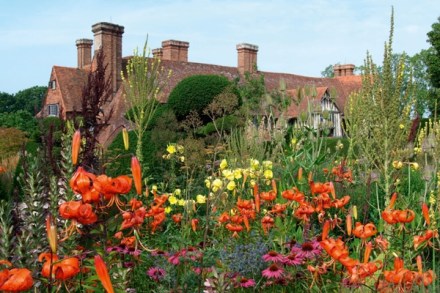
Three years ago, on an Ignatian retreat in Wales, two of the staff were taken ill — a priest and a kitchen maid, Maria. At Eucharist, we were given regular updates on the progress of the priest, but radio silence when it came to Maria. Inwardly furious, I raged at the inequality: ‘Who will look after the little guy?’ I thought. A rhetorical question to God is apt to bring about a practical answer, and I determined to change the course of my life, from working in finance to striving for regeneration in the deprived areas of the north-east of England. But to my great surprise I find myself occupied with bringing the Bishop’s Palace at Auckland Castle back to life.

The Russian desecration of London

Now that his old arch-enemy, Boris Berezovsky, has bitten the dust, Roman Abramovich can devote his full attention to another bête noire — London’s terraced houses. In his £10 million plan to knock together three houses, worth £100 million, in Chelsea’s Cheyne Walk, the oligarch is raising the roof, ripping out internal floors and walls, and burrowing two floors down into the courtyard. He is also ripping out two staircases. Russian expats may hanker after the steppes but they don’t like British stairs. The cement mixers will whirr for three years in one of London’s loveliest streets.

Celebrity fun vs scared joy

Easter is the season of rebirth and renewal. It is hard to renew ourselves, not because we are weak and tempted only, but because our pleasure-seeking culture pours scorn on all the old ways of sacrifice, and conceives fulfilment as fun. ‘Have fun’ has replaced ‘Fare well’ as the good wish of parting, and everything on which our happiness depends has been veiled by a mask of instant pleasure. You don’t have to be a philosopher or a theologian to recognise that pleasure and happiness are not the same. There are wicked pleasures, destructive pleasures, addictive pleasures, despicable pleasures: but there is no such thing as wicked, destructive, addictive or despicable happiness.

Why do people talk nonsense in public

There’s something about the word located that makes me want to slit throats. Not that I’m a naturally furious chap, not a bit of it. But located makes me want to shoot a puppy. The safety instructions are ‘located’ at the end of the carriage. The life-jackets are ‘located’ under the seats. They needn’t be located. They just are. The life-jackets are under the seats. The information desk is on the ground floor. I want to take a huge red pen to the world and start deleting. The curious thing is that everybody — even health-and-safety officers — can talk properly in a pub. By properly I don’t mean that they’ll necessarily use the subjunctive perfectly or distinguish between disinterested and uninterested.

Why The Spectator won’t sign the Royal Charter

Whatever else is said about David Cameron’s hand-ling of press regulation, there can be no doubt that the deal he struck on Monday demonstrated masterful sleight of hand. Just days earlier, his differences with Ed Miliband and Nick Clegg had seemed irreconcilable and the Prime Minister was heading for defeat in the Commons. But then, overnight, everyone united around a compromise: a state regulator which insisted it was no such thing. It was the political equivalent of Magritte’s ‘Ceci n’est pas une pipe’; Britain’s first piece of legislative surrealism. The Royal Charter’s ornate, 17th-century language is part of the obfuscation. It begins: ‘To all to whom these presents shall come, greeting!