Features

Watch out Eurocrats, here come the Pirates!

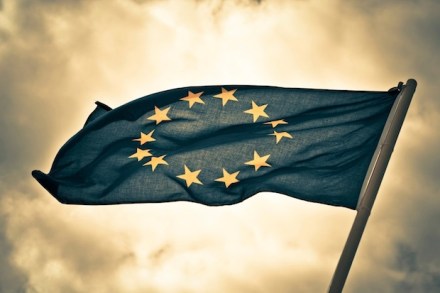
I once shared a car to the airport with a French MEP, a member of the Front National (FN). He spoke that very correct French which, across the Channel, serves in place of accent as a social signifier. He casually mentioned that the Holocaust couldn’t have happened, at least not on the scale claimed: the volume of the ovens, he creepily explained, was insufficient. The European Parliament has always had its fair share of extremists, eccentrics and outright, drooling loons. With the FN then polling at 6 per cent, there seemed no need to treat any of its MEPs seriously, so I took to avoiding that one. Now his party is set to win the next European election. But it’s not just madmen on the rise.

David Cameron on tax, coalition, ‘green crap’ and Team Nigella

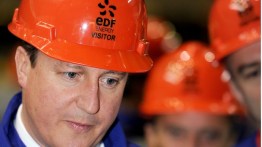
It’s 9.30 a.m. on a Friday and David Cameron is about to head for his Oxfordshire constituency and work from home. This is precisely the habit that his Cabinet Office minister, Francis Maude, is trying to beat out of the civil service, but the Prime Minister has a reasonable claim to some downtime. In the past five days he has met 150 businessmen and toured four Chinese cities. This morning, he has paid a visit to Tech City, London’s answer to Silicon Valley, and travelled to South Africa House to pass on his condolences following Nelson Mandela’s death. His last appointment, which will last for as long as it takes to drive to Beaconsfield service station, is an interview with The Spectator.

Garry Kasparov: How Putin’s poker game makes fools of the West

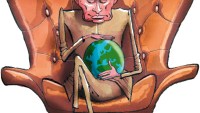
In chess you see everything. Every piece of information you need is available on the board, so what is being tested during a game is your ability to process all that information. In politics things are different: we never have all the information. People often compare politics to chess, but in fact politics is more like a game of cards, poker perhaps, in which winning means relying on guts, instincts and strength. Which is why, in the terrible international game being played over Syria, Vladimir Putin is currently the master. Although — as I will explain — his winning streak may not last, at least for the time being he has outplayed all his opponents, largely because President Obama and other western leaders have left the game wide open for him.

Friends, soulmates, rivals: the double life of Francis Bacon and Lucian Freud

Francis Bacon and Lucian Freud are likely to go down together in art history. If the link had not already been set in cement, it certainly became so at Christie’s New York last month, when Bacon’s ‘Three Studies of Lucian Freud’ (1969), a three-part portrait of his friend and colleague, went for $142.4 million or a whisker less than £90 million, thus becoming the most expensive work of art ever sold at auction. Perhaps that was a freakish figure — I suspect Lucian would have thought so — but it remains dizzying fact that a figurative painting, done in London within the past 45 years, and born out of a friendship forged in raffish Soho bars and clubs, should have attained such a value.

‘The pure pleasure of annoying people’ – Peregrine Worsthorne at 90

Sir Peregrine Worsthorne isn’t much looking forward to his 90th birthday on 22 December. ‘It’s awful,’ he cries. ‘It makes me so angry Diana Athill writing about the joys of old age. My eyes, teeth, heart — everything starts to go. Keeping alive becomes a full-time job. I’m so lucky to have a much younger wife. If I was on my own, I’d crumble. But as they say, it’s better than the alternative.’ Worsthorne is speaking in the high Gothic drawing room of the old rectory in Hedgerley, Buckinghamshire, where he lives with his second wife, the architectural writer Lucy Lambton. Over lunch, he says to Lucy, ‘My brain isn’t working!

Norman Tebbit: My recipe for a contented Christmas dinner

As the principal cook in our household, I take the view that the Christmas Day cook should not be left isolated in the kitchen slaving over the hot stove whilst everyone else is making merry in the sitting room. The true purpose of Christmas can be served at Midnight Mass the night before, and the old pagan midwinter feast can be celebrated on Christmas Day, cooks and diners all together. So to hell with the messy business of basting turkeys or draining fat off geese. Go for a casserole which can be prepared and part-cooked earlier in the day and returned to finish cooking for the last 30 minutes.

Norman Stone: From Syria to Iraq, the mess of the first world war is with us still

The European statesmen who went to war in 1914 were extremely well-educated men. Churchill staggered Roosevelt as he could quote reams of quite obscure poetry; the secretary of state for war translated German philosophy; the French president’s brother was a revered mathematician; General von Hindenburg read Faust on campaign (even Corporal Hitler had his Schopenhauer). The only exceptions were probably the aristocrats of the Vienna cabinet, whose definition of scholarship was that it was what one Jew copied down from another. But that world gave us 1914, and a whole set of amazingly bad judgments. No war in modern times has been launched with such a vast failure of cognition.

Ahmed Rashid: The five things that must go right for Afghanistan to prosper

 Lahore   From Washington to Kabul and in every capital in between, governments, armies, intelligence agencies and the media are asking what will happen in Afghanistan next year when the US and Nato finally leave after 12 years fighting a war they did not win. Despite the enormous amount of intelligence available, the truth is that nobody knows, not even the Afghans. The best predictions can only be based on knowing what is going right, what is going wrong and what can be done to minimise the dangers of things getting worse. For more than a year we have been deluged with the so-called success story of the military transition — the handing over of security to the 350,000-strong Afghan army and police — as western forces pull out.

Five years ago, I was pronounced dead in Afghanistan. This is what I’ve learned since

Just over five years ago, I was pronounced dead on the front line in Afghanistan. I had collapsed with acute heatstroke in temperatures of 52°C during a military foot patrol. I am a reporter not a soldier, but for four minutes, as a medic attempted to restart my stopped heart, I was a category A. That’s Army speak for ‘goner’. Six days later, as much to my own surprise as to that of the incredible soldiers who saved my life, I walked out of Selly Oak Hospital in Birmingham on my father’s arm and into the cool of an English late summer’s evening. It was starting to rain. Cars were beeping on a nearby dual carriageway. The smell of cut grass mingled with that of an overflowing bin on which a seagull was solemnly picking at a kebab.

Quentin Letts: Why hymns are the true voice of England

When all seems too gloomy to endure, I take myself up to the British Camp in the Malverns, there among the windblown tufts and Iron Age ditches. With the rain lashing and my trousers flap-flapping like two Spithead flags, I lean on the gale and claim my birthright: to hum hymns of England and think of our forefathers. The Camp, by legend the fort of gallant Caractacus, is this kingdom’s greatest hill. At 1,110 feet it is not the tallest. It is not the broadest, sharpest, steepest or most remote. But from that ridged summit (a wedding cake, say some, though from boyhood I’ve thought of it as an enormous nipple) you can see far into the three-choir counties: Gloucester, Worcester and Hereford. Hymnshire. At Christmas we go all gooey over carols.

P.D. James: Who killed the golden age of crime?

In 1934, in her preface to an anthology of short detective stories, Dorothy L. Sayers wrote, ‘Death in particular seems to provide the minds of the Anglo-Saxon race with a greater fund of innocent amusement than any other single subject.’ And, to judge by the worldwide popularity of this essentially innocent genre, it is not only the Anglo-Saxon race who are addicted to murder and mystery. It was in the so-called Golden Age between the two world wars that the genre flourished so imaginatively and successfully that it seemed that everyone who could put together a coherent narrative was tempted to join this fascinating and lucrative game. The Oxford academics in particular seemed to be writing mainly to amuse themselves and each other.

The ‘friends’ of others: how Facebook makes stalkers of us all

It’s become a given: we are all stalkers now. Thanks to Google, Twitter, Facebook and the fact that absolutely nobody seems to have the faintest idea about privacy settings, it is easier to keep track of people on the other side of the world than ever it was to snoop on a village neighbour from behind the safety of a lace curtain. But a strange and sinister new phenomenon has begun to emerge. Call it secondary stalking. Even the stalkers are being stalked now. This was brought home to me the other night when I was having dinner with one of my closest friends, who I will call Andrew (gay, as it happens, so no romantic implications in what follows).

iSPY: How the internet buys and sells your secrets

You probably have no idea how much of yourself you have given away on the internet, or how much it’s worth. Never mind Big Brother, the all-seeing state; the real menace online is the Little Brothers — the companies who suck up your personal data, repackage it, then sell it to the highest bidder. The Little Brothers are answerable to no one, and they are every-where. What may seem innocuous, even worthless information — shopping, musical preferences, holiday destinations — is seized on by the digital scavengers who sift through cyberspace looking for information they can sell: a mobile phone number, a private email address. The more respectable data-accumulating companies — Facebook, Google, Amazon — already have all that.

Notes on … Christmas markets

Question: what do you call several dozen pop-up shops, all freshly popped up together at the one time of year when they might actually be useful? Answer: a Christmas market. Once upon a time Christmas markets, like many English Christmas traditions, were something we borrowed from Germany but did a little less well. And if you enjoy Glühwein and sugared pretzels, there are plenty of those ones still around, often run by borrowed Germans. (I have fond memories of the one in Old Market Square, Nottingham, and there’s a nice London specimen on the South Bank by the Royal Festival Hall.) If you’re in search of imaginative gifts, however, there’s a new breed of market that may prove rather more helpful.

The Frogs of war

What happened to the cheese-eating surrender monkeys? Just over a decade ago, the French, having refused to join the allied adventure in Iraq, were the butt of every hawkish joke. (Remember ‘Freedom fries’? Oh how we laughed.) Now, as America and Britain are beating a retreat from the world stage, France has turned into the West’s most reliable interventionist. Its President, the disaster-prone François Hollande, rattles his sabre at any despot or war criminal who dares to stand in the way of liberté, egalité, or fraternité. American neoconservatives — the War Party in Washington — have turned Francophile as a result. ‘Vive la France!

Shalom, I’m Santa — how to be Father Christmas in diverse North London 

Twenty of us are gathered in the management suite of a shopping centre to learn about benchmarking grotto deliverables, exceeding customer expectations and, inevitably, Elf-and-Safety. Most are tiny teenage girls; they will be the elves. I gravitate to the only other middle-aged man. ‘Santa?’ he asks, nodding in the direction of my stomach. I nod back towards his. It’s 1 November. It couldn’t have been any earlier, as some of the elves have been engaged as scary monsters until Hallowe’en. Not all of them — department store ghouls don’t drive sales quite like Father Christmas — although my fellow Santa had been a Cannibal Killer at a farm shop. He’s been a Santa for 15 years.

How our company was nearly bullied to death by a desperate RBS

‘So RBS say we are in breach of our loan agreement?’ asks the chairman, looking at me over his glasses in that way he has. We have arrived at that moment when we cease to be ignorant of the finely crafted double-speak involved in dealing with RBS. How, in skilled hands, a loan agreement can become a loan removal agreement; how an ‘arrangement fee’ can become an ex-gratia donation to the bank as things are disarranged; and don’t get me going on the ‘commitment fee’. We paid all these costs and thought them worthwhile for a seven-year €40 million facility from a reputable lender, and it was cheaper than equity — much cheaper. Or so we thought at the time, in our ignorance.

The 2013 Michael Heath Award for cartooning

The winner of the first ever Michael Heath award for cartooning is Len Hawkins. One of his drawings appears below. He receives an original drawing by Michael Heath, a bottle of Spectator gin, a year-long contract with The Spectator and a pair of handmade shoes from John Lobb, who kindly sponsored the competition.