Andrew Haldenby

The government has found new momentum for NHS reform

From our UK edition

The PM’s first policy speech in this Parliament was devoted to the NHS and marked a big shift in tone compared to the election.  The campaign message was somewhat defensive, majoring on the extra spending that the Conservatives would provide (and leading some to ask where the extra £8 billion a year was coming from).  11 days after the election, the message was very different. 'The NHS must step up,' said Cameron.  His key phrase was 'There is no choice between efficiency savings and quality of care'. That was an unsubtle rejoinder to the health leaders who had been arguing, even during the election campaign itself, that much more money and staff must come. Since then ministers have kept up the momentum.
Private companies can deliver exactly what the NHS needs

From our UK edition

The end of the private management of Hinchingbrooke Hospital is not a dagger in the heart of NHS competition and reform. It does not mean, as the BBC’s business editor wrote today, that a private business cannot run an acute hospital (which is an extraordinary statement given that such businesses routinely do so in other countries). Competition is at the heart of the NHS England Five Year Forward View (5YFV), which all major political parties have supported. The degree of successful private sector delivery in and around health is often underestimated. The much-used figure is that 6 per cent of the NHS budget is spent on private providers (i.e. just over £6 billion a year). That obscures the fact that some parts of the NHS use the private sector much more extensively.

How France’s left-wing government learned to love austerity

From our UK edition

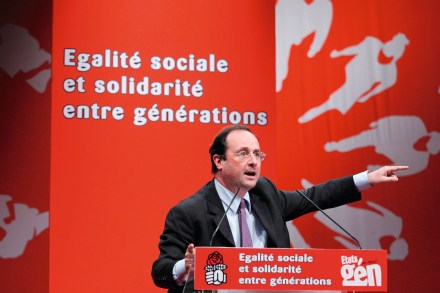
For years, George Osborne cut a rather lonely figure on the European stage. He was portrayed as the only major statesman who advocated austerity. But finally he has some company. Another European leader has burst away from the pack and is promising to freeze all welfare benefits for a year, cut health spending, cut taxes — and to be honest with the people by saying that ‘we cannot live beyond our means’. The Chancellor can derive much pleasure from the fact that his new ally is François Hollande. Until now, the French president has been the great hope of Keynesians the world over. He revelled in this celebrity. He was out to prove that, with just one more push from the government, the economy could be launched upwards.

The government has been the author of its troubles

From our UK edition

In his Spectator column this week, James Forsyth painted a picture of a government taken by surprise by enemies who have, in effect, ambushed them - the civil service, the civil service's lawyers and the European Union in particular. Clearly the government is frustrated by the “forces of conservatism” and the “enemies of enterprise”, but the difficult truth is that a lot the government's problems are of its own making, and in its own hands to put right. When it comes to the civil service, the government hasn't simply inherited an uncooperative Whitehall. It has strengthened its position, as a conscious policy decision. Francis Maude said it in terms at one of Reform’s post-election conferences.

Reforming government: the Cabinet Office

From our UK edition

Last week Reform published its 2011 scorecard of the Coalition Government’s public service reform programme. Following the articles on the health, welfare  and education reforms, Andrew Haldenby, Reform’s Director, discusses the Cabinet Office.   The Prime Minister has put the Cabinet Office in the vanguard of his efforts to reform public services.  The Cabinet Office Structural Reform Plan gives the Cabinet Office responsibilities to reform the Civil Service, create more competitive public sector markets and reduce inefficiency” (through the operation of the Efficiency and Reform Group).  These are major objectives on which the success of the wider programme depends.

Hutton points the way forward on pensions

From our UK edition

John Hutton's interim report on public sector pensions today will go down as one of the most important moments in the public service reform story.  John Hutton doesn't just set out the principles for putting public services on a sustainable footing, although he does do that (by explaining the inadequate levels of contributions into these schemes).  More importantly, he confronts head-on the problem that public sector pensions pose for the opening up of public services to competition. One of the key reasons that many companies have waited on the sidelines of the public sector for years is the disparity between public and private pensions.

What you need to know ahead of the Spending Review: making the right defence cuts

From our UK edition

This is the latest in our series of posts on the Spending Review with Reform. A list of previous posts can be found here. The debate on the defence budget has become one of the most fiercely contested in recent days.  Over the weekend, editorials in both The Times and The Daily Telegraph agreed that defence was different because it wasn’t just a matter of cuts in the short term, it was also a matter of the UK’s strategic defence needs for years ahead.  Building on a report by the House of Commons Defence Select Committee, they raised concerns that the Government is forcing through the Strategic Defence and Security Review (SDSR) - and that and any cuts would be misplaced as a result.

How the unions oppose the achievement of more for less

From our UK edition

The TUC’s attack on a leading public sector reformer, reported today, was designed to embarrass him and discredit the idea of reforming the public sector.  In fact, it has shown that they will oppose any change to the public sector workforce, even if it results in a better service for the public.   According to reports (here and here), TUC staff yesterday handed out copies of the transcript to Reform’s conference on public sector productivity.  They highlighted a quote from the presentation by Tony McGuirk, the chief fire officer of the Merseyside Fire and Rescue Service (FRS), that, “we’ve got some bone idle people in the public sector”.  Tony McGuirk apologised for the tone of his remarks this morning.

A lesson from New Zealand

From our UK edition

This is the next of our posts with REFORM looking ahead to the Spending Review. Earlier posts were on health, education, the first hundred days, welfare, the Civil Service and international experiences (New Zealand, Canada, Ireland). Ruth Richardson, the former reforming Finance Minister of New Zealand, set the benchmark for the Spending Review in a lecture for Reform on Wednesday evening. The coalition Government has framed the Review in the right way – as a chance to reshape and redefine the role of government rather than just shave a few percentage points off the existing structure with all its structural flaws. Ruth Richardson explained what that should mean, addressing each of government’s roles as spender, tax collector, asset owner and law maker.

What you need know ahead of the Spending Review – Civil Service

From our UK edition

This is the fifth of our posts with Reform looking ahead to the Spending Review. The first four posts were on health, education, the first hundred days and welfare.   What is the budget? The Civil Service accounts for 527,000 out of the total 6.1 million people employed in the public sector (as at March 2010).  The total annual cost of employing these civil servants is approximately £13 billion.   Where does the money go? Mostly on people. The Civil Service headcount has grown by nearly 5 per cent in the last decade from 504,000 in 1999.

What you need know ahead of the Spending Review – Health

From our UK edition

With this autumn’s Spending Review set to be one of the most important moments in the life of the coalition government, Coffee House has linked up with the think-tank Reform to investigate what could – and should – be in the final document. This first post, by Reform’s director Andrew Haldenby, is the first in a series of “What you need to know” summaries, looking at each of the main policy areas – in this case, health. Other posts will cover specific policies, examples from abroad and Reform events. We’re delighted to get the ball rolling… What is the budget? The NHS is the biggest public service budget in England by far.

Slice not structure

From our UK edition

Two weeks ago, when launching the Spending Review, George Osborne called for a once-in-a-lifetime debate about the shape of government in the UK.  He implied that there is a right and a wrong way to cut the deficit.  It would be right to cut spending by addressing the structural causes of the deficit - i.e. public sector inefficiency and the UK's unwillingness to cut its pensions and health entitlements.  It would be wrong to leave the shape of public services and welfare unchanged, but limit their costs temporarily – “salami slice” – with public sector pay freezes for instance.

Alistair Darling needs to tell us that frontline services will be affected by cuts

From our UK edition

The credibility of the Chancellor’s Budget tomorrow depends on the policy changes that he announces for the public sector.  It won’t be enough for him just to announce a series of public spending totals that decline gracefully in the years to come.  Within some broad limits, anyone can do that.  What counts is whether he backs it up with practical ideas to target the big government costs, which lie in two places - benefits and the public sector workforce. In retrospect, the general election has fallen at the wrong time for the UK public finances.  Since early last year, the prospect of an early election has allowed the Government to put off the date of publication of its full plan to address the deficit.

What to do if you can’t tax or borrow out of trouble

From our UK edition

Today one Finance Minister in the British Isles cut spending, cut borrowing by 1 per cent of GDP compared to his last Budget and cut the national debt by 5 per cent.  It wasn’t Alistair Darling. Brian Lenihan cut Irish public spending by 7 per cent (equivalent to a £40 billion cut in the UK).  He cut the public sector headcount, pay, pensions for new entrants and unemployment and child benefits. Alistair Darling postponed the inevitable reckoning on the finances until the pre-election Budget, the post-election Budget or a currency or debt crisis if that comes first.  Brian Lenihan gave us the flavour of what that reckoning will be and how it will be argued.

Tackling the deficit

From our UK edition

Reform’s report, The Front Line, focused on the how of the public finance question – how to get the deficit down in practice.  We pointed out that since the public sector workforce accounts for around a third of the total government deficit, it should contribute a third of the reduction in the structural deficit.  That would mean reducing the costs of the public sector workforce by £30 billion, equivalent to a reduction of one million of the six million public sector jobs in the UK.  That would take public sector employment back to the levels of 1999 when the recent period of major spending increases began.

A Budget diary

From our UK edition

On Monday, Reform published its latest report - Back to black - showing that the crisis in the public finances demanded actual spending cuts, in 2010-11. The right cuts would kick start a programme of reform in the big spending areas of health, benefits, education and defence. In the Budget, the Chancellor revealed that the hole in the finance was even deeper - but actually increased public spending this year and next (by £11 billion in total, excluding spending affected by the recession). Higher taxes will be used to shore up the existing structure of services and benefits with all their problems and inefficiencies. Plus ça change, plus c'est la même chose.

Is this Government finally talking small government?

From our UK edition

I've just got back from the launch of The Lab, a new initiative by NESTA to increase innovation in public services (which I’m helping). Gordon Brown turned up, with John Denham and Liam Byrne, to give his blessing and to bang the drum for his own contribution today, the new White Paper by the Cabinet Office on public service reform. The opposition parties have been too quick to dismiss the White Paper.  They'd have been best advised to engage with it, as it tackles head-on one of the day's Big Questions: what should happen to the size of government in the wake of the recession? Most of the paper repeats the Government's strategy of higher public spending to get us through the downturn.