Features

No, women can’t have it all

You can’t accuse the redoubtable Anne-Marie Slaughter, president and CEO of the New America Foundation think tank, of giving up easily: she has arrived in London fresh from the World Economic Forum at Davos, where she slipped on the ice and broke her wrist, spending two days in a Swiss hospital. One arm is therefore out of action, and her voice is hoarse, but she is soldiering on through a dense thicket of meetings and interviews to talk about her new book Unfinished Business, on how the work-life balance is broken and how to fix it. The trigger for the book was a rare, traumatic moment when Slaughter was stopped in her tracks, back in 2011.

Game over | 28 January 2016

[audioplayer src="http://rss.acast.com/viewfrom22/whysexmatters-thedeathofsportandistheeusinkingwhetherbrexithappensornot-/media.mp3" title="Simon Barnes and Alex Massie discuss the crisis in sport" startat=830] Listen [/audioplayer]Like religion, sport can take any amount of passion in its stride. It’s indifference that’s the killer. Sport can be bubbling with incontinent hatred, poisonous rivalries, ludicrous injustice and the most appalling people doing the most appalling things: but as long as people still care, as long as the sporting arguments still echo, as long as newspapers are read from back to front, then sport’s future is safe.

Calling the shots

   Las Vegas They say that there are more guns in America than human beings and most of them seemed to be at Shot Show in Las Vegas last week. Shot (Shooting Hunting Outdoor Trade) Show — the firearms industry’s biggest shop window — occupied several floors of a building roughly the size of Wembley Stadium, wedged between a couple of casinos and a replica of the Grand Canal. Like a kleptomaniac at Harrods, I didn’t know what to try out first. I was momentarily torn between being Dirty Harry (at the Smith & Wesson stand, with the most powerful handgun in the world) and James Bond (I couldn’t find the Walther PPK, it seems to have given way to the PPQ).

Lashing out in all directions

   Washington People think a reckoning is needed. Big business and big banks need taking down a peg or two The best explanation for the Donald Trump phenomenon was given to me by a woman I met at one of his recent rallies. She’d spent the best part of three decades backing conventional Republican candidates. But, she said, ‘not again — not ever again’. A good politician, she said, does enough unpopular things to make a difference to the nation — but not so many that they couldn’t be re-elected. The mark of a good politician is ‘which unpopular causes they choose’. She had had enough of Republican politicians explaining to her that putting a time-limit on abortion was ‘too unpopular’.

Elite sport

England’s cricketers won a remarkable Test match inside three days in the bearpit of Johannesburg, a victory that put them 2-0 up in the four-match series, with only the final Test to play. It is a remarkable achievement by Alastair Cook’s team because, before a ball had been bowled, most judges expected South Africa, the No. 1 ranked team in the world, to claim another triumph by right. In particular it was a wonderful tribute to the public schools which sharpened the skills of the star players. Stuart Broad, who took six prime wickets for only 17 runs on that tumultuous third day, reducing South Africa’s second innings to rubble, was educated at Oakham. Joe Root, who scored a superb century to set up the bowlers, was a sixth-former at Worksop College.

Rise of the Norland nanny

The young nannies arriving for their morning lectures at Norland College in Bath make quite a sight. Although the road is empty, they bank up along the pavement waiting for the lights to change. They are in their winter uniform of brown hat and gloves, hair in a neat bun; some push old-fashioned Silver Cross prams with plastic babies in them. Eventually the green man appears and the nannies cross. These girls look as if they are being trained for a bygone era — and that is certainly part of their appeal — but they are well prepared for modern life. Founded in London in 1892, Norland College made its name providing nannies for British aristocrats and royals.

What Brexit looks like

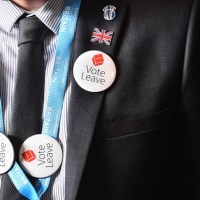
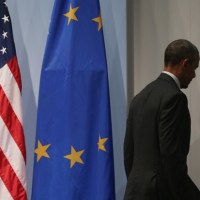
‘So what’s your alternative?’ demand Euro-enthusiasts. ‘D’you want Britain to be like Norway? Or like Switzerland? Making cuckoo clocks? Is that what you want? Is it? Eh?’ The alternative to remaining in a structurally unsafe building is, of course, walking out; but I accept that this won’t quite do as an answer. Although staying in the EU is a greater risk than leaving — the migration and euro crises are deepening, and Britain is being dragged into them — change-aversion is deep in our genome, and we vote accordingly. Europhiles know that most referendums go the way of the status quo, which is why their campaign is based around conjuring inchoate fears of change. What is the alternative?

High finance, low tricks

It amazes me, simply amazes me, that journalists aren’t all over these stories. Doesn’t it amaze you too?’ I’m in a plush room in a swanky central London hotel, in conversation with Michael Lewis. He is all fired up, leaning forward as he perches on the hard edge of the cushion-strewn sofa. He oozes incredulity, palms upward, shoulders raised. ‘I’m not saying there aren’t good financial journalists,’ he concedes. But the qualification seems half-hearted — and is quickly reversed. ‘The Wall Street Journal is a much worse newspaper than it was 20 years ago,’ he asserts, taking aim at the bible of US high finance. ‘The news side of the paper has the fingerprints of the finance industry all over it’.

Sweden’s shameful cover-up

   Stockholm It took days for police to acknowledge the extent of the mass attacks on women celebrating New Year’s Eve in Cologne. The Germans were lucky; in Sweden, similar attacks have been taking place for more than a year and the authorities are still playing catch up. Only now is the truth emerging, both about the attacks and the cover-ups. Stefan Löfven, our Prime Minister, has denounced a ‘double betrayal’ of women and has promised an investigation. But he ought to be asking this: what made the police and even journalists cover up the truth? The answer can be discovered in the reaction to the Cologne attacks. Sweden prides itself on its sexual equality and has even pioneered a feminist foreign policy.

Educating Pakistan

Pakistan society intended Seema Aziz to be a wife and mother. Her father arranged for her to get married at a young age, and by her early thirties she had a comfortable life as a Lahore housewife, married to a chemical engineer. Then she took charge of her own fate. In the late 1970s, well before the era of jihad, Pakistan was flooded with western products. People began wearing jeans and T-shirts, leading Seema to conclude that there was a market for high-quality Pakistani clothes produced locally. She opened her first shop in 1985, when she was 34, in Lahore’s ancient cloth market. Her family told her they were ashamed because she had gone into business, but her instincts were vindicated: the clothes flew off the shelves.

Brighton’s gone Brideshead

[audioplayer src="http://rss.acast.com/viewfrom22/projectfear/media.mp3" title="Julie Burchill and Tim Stanley discuss Brighton's Brideshead set" startat=1352] Listen [/audioplayer]My adopted hometown of Brighton and Hove has always had a somewhat well-to-do image, it’s fair to say. Though we have pockets of poverty, I was surprised by the size of the houses and gardens — room for a pony! — when I started going to house parties on the notorious Whitehawk estate. The old Cockney phrase ‘You think your aunt’s come up from Brighton!’ to denote a person who is free and easy with their money pays tribute to this agreeable state of affairs. But although B&H may appear affluent, it hasn’t really been posh since the Prince Regent pushed off.

Keynes’s big mistake

Some things are universally accepted as true. Water finds its own level; crumpets are best eaten in winter; and the England football team will not win the World Cup again, ever. On a par with these things, the most accepted part of economics is Keynesianism. Of course, John Maynard Keynes said lots of things about economics in between his many and varied sexual encounters. But, as is the way of the world, one of the things he said turned out to be particularly influential. It is so influential that it has gone around the world. It is repeated and relied upon by Japanese finance ministers, New York Times columnists, Nobel prize winners and anti-austerity demonstrators. It is in textbooks around the globe. It is on page 262 of the Edexcel Economics A-level text book.

Desperate state

The latest video from Isis introduces a new British executioner, a successor to ‘Jihadi John’, and it is a classic of the genre: bombastic, pompous, ridiculous yet terrifying. ‘O slave of the White House, O mule of the Jews,’ says a man in a ski mask, addressing David Cameron, ‘how strange it is that the leader of a small island threatens us with a handful of planes. Only an imbecile would dare to wage war against a land where the law of Allah reigns supreme.’ He has a cold, arrogant look in his eyes and brandishes a pistol held sideways, aping American ‘gangsta style’. Kneeling before him are five men in orange jumpsuits identified as ‘British spies’.

Rwanda’s new tragedy

Never lighthearted, my African political exile friend sounded particularly lugubrious on the line from Washington. His voice was low and pensive. For the past few months, he said, he’d been hearing of plans hatched by the regime back home for his assassination. ‘They are very gruesome, very gruesome indeed.’ It was not the first time. In the past he’d always passed the details on to the FBI, which had also called him up several times when they thought he was in danger. This time he hadn’t bothered. ‘I always ask them: ‘What are you doing to protect me?’ and they say, ‘Well, if you see anything suspicious, call 911.

The painful truth for Ruth

Minority sects are often more interesting, and more colourful, than their more popular rivals. That must explain why the Scottish Tories continue to be the subject of so much fascination. Barely a month passes without someone, somewhere, asking if this — at long last — is the moment for a Scottish Tory revival. Spoiler alert: it never is. Logic says that at this year’s Scottish parliament elections, things should be different. It is generally agreed that Ruth Davidson, the party leader in Scotland, had a ‘good independence referendum’; generally agreed, too, that after Nicola Sturgeon, she might be the most impressive politician in Scotland.

Sticking to his guns

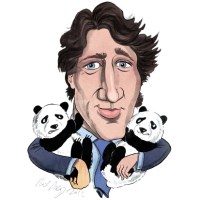
Whenever there’s another mass shooting in America, like the massacre in San Bernardino last month, I think immediately of my Uncle Bill in Texas, a retired military man, practising Catholic, Republican, NRA member, community volunteer and civil libertarian who lives in a gated community with my Aunt Bev (a retired nurse) on the outskirts of Houston. Uncle Bill likes to email me redneck jokes in the hope of getting my progressive Canadian dander up. Here’s a recent one: The premier of Ontario is jogging with her dog along a nature trail. A coyote jumps out and attacks the premier’s dog, then bites the premier. She calls animal control. Animal control captures the coyote and bills the province $200 testing it for diseases and $500 for relocating it.

Public trans sport

I had just sat down on the top deck of a number 38 London bus when I saw him looking at me. He was black and wore a fake-fur coat and orange leggings. There were glittering rings on his fingers, fake diamonds around his neck and bright red lipstick on his lips. In his large hands, a mauve purse. He looked like the kind of Andy Warhol drag-queen who wiggled on the wild side of life back in the 1970s. He made strange chirping sounds and he batted his heavy eyelashes my way. I couldn’t tell if he was a touch crazy or just over-the-top camp. Then he smiled at me. Uh-oh, I thought. But I decided to be brave, so I gave him one of my big, anxious chimp smiles back. He then came over and plopped himself next to me. ‘Hi,’ he said, with a soft, low American purr.