Features

Big heads

The term ‘superhead’ was first used during the Blair government in 1998: an eye-catching word for a new breed of Superman-style headmasters or headmistresses, fast-tracked star teachers who would be parachuted into failing inner-city state schools and paid six-figure salaries to ‘turn them around’. It reaped rewards and can generally be considered a Good Thing. Sir Michael Wilshaw, for example, now chief inspector of schools, became known as ‘the hero of Hackney’ for transforming the academic record of Mossbourne Community Academy, built on the site of the totally-failed Hackney Downs School. Sometimes power went to the superheads’ heads and they were caught siphoning off funds to pay for their holidays.

How Bernie trumps Hillary

‘Anybody here got any student debt?’ asks Bernie Sanders halfway through his speech at a rally in a small university on Monday. He then starts conducting a fake auction. ‘What are some of the numbers you got? You? 35,000. You? 55,000? Who else? A young lady here… 100,000 dollars. You win! I don’t know what you win, but you win!’ The students all hoot and chant. ‘Bernie! Bernie! Bernie!’ Sanders cracks an avuncular smile, then starts talking again about how rich the rich are. It’s hard not to like Sanders. It’s hard not to ‘Feel the Bern’, as the mantra goes. He is 74 years old, and angry at the injustice of the world in a lovable old-codger way. The kids like that.

Turkey can’t cope. Can we?

[audioplayer src="http://rss.acast.com/viewfrom22/thenextrefugeecrisis/media.mp3" title="Laura Pitel and Migration Watch's Alanna Thomas discuss the second migrant crisis"] Listen [/audioplayer]In Istanbul, signs of the Syrian influx are everywhere. Syrian mothers sit on pavements clutching babies wrapped in blankets; children from Homs, Syria’s most completely devastated city, push their way through packed tram carriages begging for coins. Arabic adverts offer rooms for rent. It’s almost inconceivable how many Syrians Turkey has taken in as refugees — around 2.5 million of them so far. That’s almost three times the number who have sought refuge in Europe. And while the Turks are hospitable, Turkey has more than any country should bear.

A court of injustice

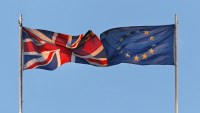
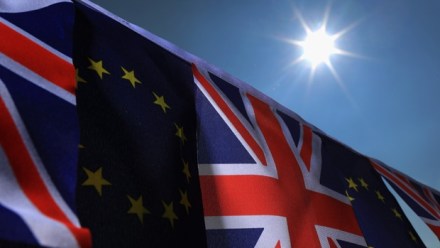
Last week Donald Tusk, President of the European Council, tabled proposals which the government hopes will form the basis of the UK’s renegotiated relationship with the European Union. Politically, the proposals may be just the job: a new commitment to enhance competitiveness, proposals to limit benefits to migrants, recognition that member states’ different aspirations for further integration must be respected, and creation of a ‘red card’ mechanism to block EU legislation. Legally, however, they raise more questions than they answer. This ought to have been an opportunity to look at the Court of Justice of the European Union, whose reach has extended to a point where the status quo is untenable.

Spring fever in Cologne

Last week the indigenous white population of Cologne took to the streets once again to celebrate their annual ‘Crazy Days’ spring carnival. I stepped out of the hotel at ten o’clock on the morning of the designated ‘women’s day’, wondering how the women of Cologne had reacted to the events of New Year’s Eve, and to Mutti Merkel waving in a million-plus young Muslims per year to pep up the flagging gene pool of the 10 million indigenous males aged 20–30. As the Economist magazine’s ‘World in 2016’ supplement, throwing off all pretence, so excitedly puts it: ‘There is only one last hurdle to Germany officially becoming a land of immigrants, and it is politics.

The gangs of north London

I covered another stabbing the other day, a particularly nasty one this time. An 18-year-old was repeatedly knifed in the stomach and beaten over the head with a baseball bat. Witnesses told me he’d been outside his mum’s tower-block flat in Islington, north London, when he was rushed by a group of about ten or 15 boys. He suffered serious head injuries and multiple stab wounds and was soon in hospital in a medically induced coma. By some miracle, he survived. Who would have committed such a brutal and pointless crime? A source told me police believed the attackers to be from two London gangs: the Hoxton N1 gang, whose turf is east of Kings Cross, and the Cally Boys, named for the Caledonian Road, which runs from Kings Cross north to Holloway.

All they need is Gove

Lately, people only have to look at me to splurge their deepest, darkest secret. Last May, they did a terrible thing. They voted Tory. Now they’re contemplating greater deviance: voting to leave the EU — if only, they say, the campaign was fronted by someone they could believe in. And who do they want? The answer surprised me. Theresa is no temptation, as it turns out, nor even Boris. No, it’s Michael Gove they fancy. Westminster types might read this and splutter, ‘What tosh! If there’s one thing we know about the British public, it’s that they hate him.’ But these are the experts who failed to predict the outcome of the general election. Whereas I was sure the Tories would win, simply from talking to my relatives.

Investment: Buy to lose

Take a quick look at the UK buy-to-let market and you might find it tough to understand exactly what it is that makes it so very popular. Dealing with tenants is difficult and boring. House prices have a horrible tendency to go down as well as up (Londoners — ask anyone living in the north of England about this). And rents have long been so low relative to prices that getting a worthwhile net yield is all but impossible after costs. Given this, you might wonder, why on earth would 14.5 per cent of all mortgage lending in the UK in the third quarter of last year have been to buy-to-let investors? Good question. The answer (as is the case with everything to do with modern money) is that it is all about leverage.

Investment: This dragon won’t bite

At the risk of sounding like Neville Chamberlain, how bizarre that we should be panic-selling our stock-market investments in reaction to the news of a slight economic slowdown in a faraway country to which we export little and whose direct investments in our own economy created fewer than 5,000 new jobs last year. Throughout the mini-crash of 2016, it has become received wisdom that a Chinese slowdown is threatening the global economy, spreading contagion to every corner of the globe. The fear manifested itself in a 3.

Investment: The great pension robbery

Scrapping the cuts to tax credits. Ring-fencing health care, and spending a few billion on a high-speed rail link from London to Birmingham. Despite all the howls of outrage from the left about austerity, for a country that was meant to be broke, we have a government that still throws around a lot of cash. Where’s it all coming from? If you have been saving for a pension, the answer is: probably from you. Over the past few years, George Osborne has become almost as skilful as Gordon Brown was at raising taxes without anyone noticing too much. Since his early and brutal rise in VAT, a tax that hits everyone every time they shop, he has put his revenue-raising measures into the small print. The self-employed have been stung with new ways of taxing their personal service companies.

Fighting over the crumbs

[audioplayer src="http://rss.acast.com/viewfrom22/fightingovercrumbs-euroscepticsandtheeudeal/media.mp3" title="James Forsyth and Vote Leave's Stephen Parkinson discuss Euroscepticsm"] Listen [/audioplayer]Eurosceptics could hardly have asked for more favourable conditions for a referendum. After barely surviving a financial crisis, the European Union has been overwhelmed by an immigration crisis — one made much worse by its failure to control its own borders. The European Commission seems determined to make itself even more unpopular in Britain, and is considering whether VAT should be levied on food and children’s clothes.

Hollande’s own emergency

The terrorist attacks of 13 November have had an enduring effect on people living in Paris and France’s other big cities. Hotel bookings and restaurant reservations are down, and some people will no longer go out in the evening. There have been several other minor terrorist outrages across the country since November, and tension — prompted by repeated government warnings — remains high. The campaign for the 2017 presidential elections will start in July, but François Hollande’s popularity, which soared after the Charlie Hebdo attacks a year ago, has been sliding again. Hollande’s polls rose slightly after he declared a state of emergency on 14 November.

Inside the new Navy

The Royal Navy is known as the Senior Service because of its illustrious history; Francis Drake and all that. But the days when it ruled the waves have long gone. In 1945 it had almost 900 warships and a million men. By the time of the Falklands War it was down to 70 warships and 70,000 men. Now it is less than half that, with more admirals than there are fighting ships. The arrival this year of HMS Queen Elizabeth, the much-heralded new aircraft carrier that has cost £6 billion (for 50-odd years of life), will draw unwelcome attention to the Navy’s significant manpower shortages. As one senior officer put it, the carrier will bring ‘new challenges, relearning old tricks perhaps, and some new — not least how to man it’.

A lesson in self-censorship

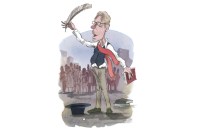
According to my former colleagues, history teachers in an urban English state school, anyone who votes for the Conservative party is ‘thick’, the British Empire was ‘unambiguously evil’ and capitalism leads to ‘mass inequality and misery for the vast majority of working people’. The only answer was, you guessed it, socialism. Yes, the cliché of the Little Red Book-carrying schoolteacher is alive and well. As the only right-of-centre teacher in the history department, I found lunchtime particularly galling. My colleagues would sit around denouncing the British empire, Michael Gove’s changes to the national curriculum and the government’s ‘ideologically driven’ attempts to cut the nation’s deficit.

Death on the NHS

I’ve never understood the phrase ‘died peacefully’. Two weeks ago I watched my mother die, in the very same NHS hospital where I watched my father die almost ten years earlier. There was nothing peaceful about it, at least from my unwanted ringside seat. The end — acute pneumonia providing the final nail in a soon-to-be purchased coffin — was painfully slow. It dragged on and on and on. She struggled for her last breaths and appeared distressed, confused and frightened to the end. The last time I had been to St Helier hospital in south London was September 2005, as my father slowly slipped away. Naturally the memories came flooding back. And so did confusion. Ten years is a long time, especially in the NHS.

Fear of the baby-snatchers

Baby George was born into a happy family. His mother and father love him dearly. He lives in a cottage in a pretty village, with a six-year-old sister who adores him, and his grandmother lives nearby. His parents both have good jobs and his nursery is filled with toys. By most measures, George has had a good start in life. It was only when his mother was diagnosed with post-natal depression that George’s prospects looked bleaker. Not because his caring mother was feeling blue, but because in this, paranoid, post-Baby P era, the authorities take no chances. The slightest whiff of a mother unable to cope, and they swoop down, ready to whisk the baby away. When Rosie first realised she was depressed, she assumed the doctor would be able to offer her advice about how to cope.

In defence of gender

[audioplayer src="http://rss.acast.com/viewfrom22/whysexmatters-thedeathofsportandistheeusinkingwhetherbrexithappensornot-/media.mp3" title="Melanie Phillips and Jacqui Gavin, a trans activist and civil servant, discuss gender"] Listen [/audioplayer]Once upon a time, ‘binary’ was a mathematical term. Now it is an insult on a par with ‘racist’, ‘sexist’ or ‘homophobic’, to be deployed as a weapon in our culture wars. The enemy on this particular battleground is anyone who maintains that there are men and there are women, and that the difference between them is fundamental. This ‘binary’ distinction is accepted as a given by the vast majority of the human race. No matter. It is now being categorised as a form of bigotry.

Turkey’s climate of fear

   Istanbul Few AK party supporters hanker after the Isis way of life: for many of them, it would be a death sentence Turkey is less and less a democracy, more and more a paranoid one-party state. If you don’t believe that, look at what happens to those who draw attention to the government’s failures and crimes. The editors of Cumhuriyet, a centre-left broadsheet, have been delivering their editorials from jail since November. A statement issued this month by the Izmir Society of Journalists claimed that 31 journalists were in prison while 234 were in legal limbo awaiting trial. Over the course of last year, they added, 15 television channels had been closed and 56 journalists refused accreditation.