Misti Traya

The axeman next door

From our UK edition

When I moved to London, my husband Henry gave me a copy of Kate Fox’s Watching the English: The Hidden Rules of English Behaviour. He was hoping the gift would avoid an awkward conversation about our cultural differences. As an American, I cannot think of anything more English than that. Fox’s chapter about introductions bothered me. The brash American approach: ‘Hi, I’m Bill from Iowa,’ particularly if accompanied by an outstretched hand and a beaming smile, makes the English wince and cringe. I had never known friendliness to be cringeworthy. I felt sorry for Bill from Iowa. I pictured him arriving in my neighbourhood and being scorned for enthusiastically introducing himself to strangers. Henry tried to explain. ‘We don’t talk to neighbours.

Pacific-sized love

From our UK edition

Grandpa turns purple in the sun. He says it is because we are Filipino, but my skin never colours that way. I watch him mystified as he calls to the pigeons. His whistles are strong and long and loud. They are all of his breaths pushed out, part Kools, part Budweiser, part Mentholyptus Halls. The wind scoops them up and makes them hers, using their smoky song to amplify her sound. Pigeons come flying home and Grandpa Melvin smiles. Some of them go straight to the coop and rest their tired wings. Air is thick in Hawaii, sticky sweet like mangoes, orchids and coconut milk. Other pigeons feast on the ground where Grandpa sprinkles seeds. Grandpa beckons, ‘Come here uku.’ I am not sure exactly what that word means, but it makes me feel loved.

Breast beating

From our UK edition

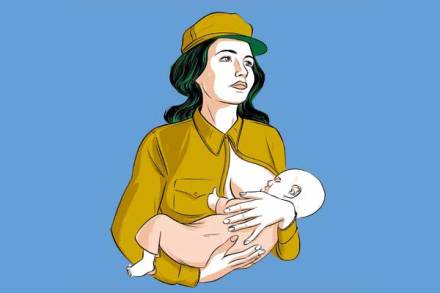
Recently, I took my baby daughter to the park. When I pulled out a bottle to feed her, some nursing mothers a couple of picnic blankets away stopped their conversation to gawp. They exchanged derogatory looks and clutched their suckling children closer to their bosoms. The message was clear. The sooner I left, the better. I have a similar experience in the park almost every day. Breastfeeding mothers see me bottle-feeding, and they disapprove. ‘Isn’t it sad?’ I overhead one woman saying. ‘Some mothers don’t understand the importance of breastfeeding.’ Some go further — they intimate that the connection I have with my bottle-fed daughter could never be as strong as the one they have with their child.