Features

A right mess | 28 April 2016

[audioplayer src="http://feeds.soundcloud.com/stream/261189280-the-spectator-podcast-the-wrong-right.mp3" title="Freddy Gray and Tom Slater discuss the state of the right" startat=22] Listen [/audioplayer] Is Boris Johnson turning into the thinking man’s Donald Trump? Just like the Donald, he’s got funny hair, charisma, and an appetite for women. He may not be as rich as Trump — although we were all impressed by his latest contribution to the Exchequer — but he makes up for that by having a much bigger vocabulary. He’s also able to get away with saying outrageous things because people think he’s entertaining.


The unlikely oilman

Algy Cluff is the longest-serving oilman in the North Sea. He was one of the first to drill for oil there, in 1972, and at the last government handout of drilling licences, two years ago, there he was again, making a handsome gas discovery. Now 76, he’s also the least likely oilman you can imagine. Tall, rangy, dressed in Savile Row pinstripes; he is no J.R. Ewing. His diffident, patrician voice is so gentle that I have to turn my tape recorder up to transcribe this interview. Cluff’s Who’s Who entry lists membership of 11 clubs. But there is no clubman stuffiness about him. He’s full of wonderful anecdotes, many of them involving The Spectator, which he owned from 1981 to 1985, before he became chairman for 20 years.

When novels kill

[audioplayer src="http://feeds.soundcloud.com/stream/261189280-the-spectator-podcast-the-wrong-right.mp3" title="Emily Rhodes and Lara Prendergast discuss the danger of books" startat=1095] Listen [/audioplayer] Who can forget the terrible climax of Howards End, when Leonard Bast is killed by a deluge of books? Death by books holds a horrible irony for poor Bast, as he had thought they were his salvation, seeking to escape ‘the abyss’ of poverty by reading Ruskin in the evening and trying to impress the middle-class Schlegel sisters by listing his favourite titles. Try as he might, he can only fail, as E.M. Forster shows books to be extremely treacherous: they don’t save Leonard Bast, they kill him.

Who needs governments?

On 26 October last year, the Spanish government shut up shop in preparation for a general election. This duly took place in December but then a strange thing happened: after all the build-up, the arguments, the posters and the television coverage, the result was… nothing. The various parties were so balanced, so mutually distrustful and ill-assorted that no government could be formed. Since last October, therefore, there has been no government in Spain. One can imagine that the average political correspondent would think this a terrible problem, maybe even a crisis. The Financial Times has referred to Spain ‘enduring’ months of ‘political uncertainty’. This is assumed to be a matter requiring furrowed brows and grave tones.

Prince and me

This is only interesting, well a bit interesting, because the poor man died last Thursday and for a few short days almost anything with the word Prince in it stands a chance of getting some traction. So forgive me if this feels a bit rushed. And opportunist. And exploitative. And attention-seeking. It’s all of those things because I’m cashing in. Obviously. If you want nothing more to do it with it, I can only applaud you. But for those of you who want to know more about the incredible untold story of my time with Prince, read on. I met him six years ago. Downstairs in his house in Los Angeles. A woman I was hopelessly in love with said, ‘Tom, come and say hi.’ I stepped forward. Prince shook my hand and said, ‘Hello Tom.

The fairytale factory

It’s one of the oldest stories of them all, deeply embedded in our nature and our culture. In some ways it’s the story that defines our humanity and we have told it a thousand times in a thousand different ways. It’s in the Bible with Joseph and his coat of many colours, it’s King Arthur pulling the sword from the stone, it’s the ugly duckling, Cinderella, Great Expectations, Moll Flanders and Jane Eyre. It’s Clark Kent becoming Superman, it’s Harry Potter leaving the cupboard under the stairs to become the greatest wizard of them all. It’s Rags to Riches. And it’s the tale of Leicester City. Sport retells all our most ancient and archetype-crammed stories and does so again and again, providing us with a living mythology.

How to save Conservatism

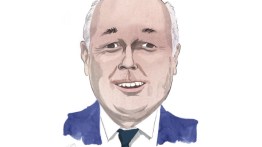
Iain Duncan Smith may have lost his job, but he has found a new whisky. It’s called Monkey Shoulder, and they became acquainted when he went to lie low in the Highlands after his resignation. When he went to buy a new bottle from Robertsons of Pitlochry he was told he’d have to wait a few days. ‘I told them not to worry, that I had more time on my hands. The man behind me said: “Yes, we know all about that — you were the talk of the town here for days.”’ It’s an example, he says, of how his resignation struck a far deeper chord than he imagined it would. ‘It has been very odd,’ he says. ‘There’s a huge number of letters and emails piling in, saying “thank you”.

A poem for Erdogan

At the end of last month, a German comedian appeared on German television and read a poem mocking Recep Tayyip Erdogan, the president of Turkey. Jan Böhmermann’s satire was directed, among other things, at the laws President Erdogan has been using to lock up his critics. Turkey — which David Cameron is still fighting to bring into the EU — now has some of the world’s most repressive speech laws. Numerous journalists have been arrested for ‘insulting’ President Erdogan and he has even been known to ban Twitter in the country when corruption allegations against him and his family have surfaced online. Yet until Mr Böhmermann came on the scene, one might have expected these lèse-majesté laws to remain in Turkey. Not so.

He speaks for America

[audioplayer src="http://feeds.soundcloud.com/stream/260046943-the-spectator-podcast-obamas-eu-intervention-the-pms.mp3" title="Janet Daley and Freddy Gray discuss Obama's overreach" startat=27] Listen [/audioplayer]You don’t like Barack Obama’s foreign policy? Fine, I don’t either. You are impatient to know who the next president will be? Me too. But if you think that the current American president’s trip to the UK this week is some kind of fanciful fling, or that his arguments against Brexit represent the last gasp of his final term in office, then you are deeply mistaken. In Washington, the opposition to a British withdrawal from the European Union is deep, broad and bipartisan, shared by liberal Democrats and conservative Republicans alike.

My wild place

When I suggested that I might build a little tin house in the subtropical rainforest of south-east Queensland, I was advised by well-meaning folk that this probably wasn’t a very good idea. The forest would close in over the house; mildew and algae would grow on everything including me; the sun would not get above the surrounding scarps on the eastern side till mid-morning, only to plummet out of sight behind the scarps on the western side halfway through the afternoon — not that I’d notice, being penned in perpetual gloom under the forest canopy. All true. And no one to talk to but spiders and snakes. There are certainly many spiders. I do talk to them, shout at them, actually, because when I do they flinch and try to run away.

Stress point

In the 1920s, the anthropologist Margaret Mead studied the people of New Guinea. She noticed that they hunted birds and squirrels but not flying squirrels. The tribesmen explained that they didn’t like flying squirrels: a thing should be either a bird or a squirrel. They wanted nothing to do with the dirty things. And while New Guineans of the 1920s were not leaders of scientific inquiry, Mead concluded that they were quite unstressed at work. Bear with me, because I think the flying squirrel may just be the answer to the stress epidemic that is killing us. Apparently, we’re dying of work-related stress. The media, psychologists and union leaders say that stress could soon be as deadly as cancer and heart disease.

The game of the name

You have to pity the Welsh woman who was last week prevented by the Court of Appeal from naming her daughter ‘Cyanide’. An unusual choice, admittedly. And the mother’s defence — Cyanide is a ‘lovely, pretty name’ because it was the drug Hitler used to kill himself ‘and I consider that this was a good thing’ — didn’t help. But given some of the names being foisted on kids these days, Cyanide almost seems sensible. Naming your child was once simple: you picked from the same handful of options everyone else used. But modern parents want exclusivity. And so boys are called Rollo, Emilio, Rafferty and Grey. Their sisters answer to Aurelia, Bartolomea, Ptarmigan or Plum.

Just join Germany

An argument you sometimes hear from those sitting on the Brence (the Brexit fence) is that it’s a pity the EU couldn’t have stayed the same as it was when we first joined it in 1973. Back then, say the Brence-sitters, it was a trading bloc with only nine members, which made sense. Greece wasn’t a member, nor were Spain and Portugal, never mind Lithuania, Latvia and all those other countries ending in vowels. But if we could go back to that better arrangement — play fantasy politics, as it were — would we, with hindsight, want it to include France and Italy, two of the original nine? Their economies are both now looking pretty rackety. In fact, isn’t there only one country in Europe with which we would want to be BFF (Best Friends Forever)?

The devil in footnote 351

Last week we reached the beginning of the end of the pontificate of Jorge Bergoglio — the ‘great reformer’ of the Catholic church who, it appears, has been unable to deliver the reforms that he himself favours. This despite being Pope. On Friday, he published a 200-page ‘exhortation’ entitled Amoris Laetitia, ‘The Joy of Love’ (or ‘The Joy of Sex’, as English-speaking Catholics of a certain vintage immediately christened it). This was Francis’s long-awaited response to two Vatican synods on the family, in 2014 and last year, which descended into Anglican-style bickering between liberals and conservatives. At the heart of the disputes lay the question of whether divorced-and-remarried Catholics could receive Holy Communion.

The politician’s daughter

Like millions of non-Americans hooked on the US election, I’m backing someone even though I don’t have a vote. I love Cruz and I’m not ashamed to say it. I’m not talking about the oleaginous Ted, but Caroline, his seven-year-old daughter. Caroline is that rare thing in politics — an actual human being. Her eyes glaze over in campaign videos as she’s forced to deliver a succession of facile lines. She ruins coordinated photocalls by making bunny ears behind her dad’s head and refusing to hug him for the cameras. She slumps, listening to endless mind-numbing speeches at never-ending rallies, very obviously bored out of her mind. She is the antithesis of Chelsea Clinton — so primped, every bit as ruthless as her mother.

The cult of clean

How clean are you? I ask not as a mother confessor. I’m not interested in the state of your soul. What I want to know is: how clean is your sock drawer? Your fridge? Your gut? These are the pressing questions of the new cult of clean. Its apostles urge us to divest ourselves of worldly possessions, to renounce ‘dirty’ food and alcohol and to dress in monkish grey or bleached white. Our sins are these: we have bought too much tat, eaten to filthy excess and stuffed our wardrobes with cheap, disposable rubbish. The clean cultist says no more. Everything must go. The most high and holy of the clean cultists is Marie Kondo, Japanese author of The Life-changing Magic of Tidying.

Caught in the tourist trap

There are few more beautiful places in this world than Bhutan in the eastern Himalayas. I know this because, right now, I am staring down the sub-tropical Punakha valley, gazing at an untouched rural landscape where singing women hoe the sunlit chilli fields. It’s glorious. And gloriously devoid of tourists. Though apparently Prince William and Kate are coming here in the next couple of weeks. I hope they don’t lower the tone. This unusual absence of tourists is down to a government policy.