Features

A sadder, wiser referendum

In June 1975, I was given the heavy responsibility of writing the Telegraph’s ‘light’ op-ed on the conduct of the first Euro-referendum campaign, which duly appeared on the day of the vote. My theme was that it had been the nicest possible stitch-up. ‘From the establishment and the respectable anti-establishment, from the Economist and the New Statesman, from the Lord Feather [of the TUC] and Mr Campbell Adamson [of the CBI], from Mr Wilson and Mr Heath, from the Royal Commission Volunteers to “Actors and Actresses for Europe”, the same advice, the same dire predictions of life outside the Market…’ It rings loud bells today.

The happiness police

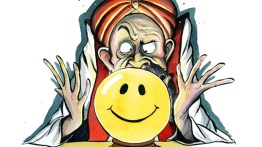
On a recent sodden weekend walk, I tried to cheer myself up by thinking: it’s not so bad. Not the slugs or the sky or the rain making its way down a gap between neck and waterproof. But I couldn’t do it. Losing heart, I turned back. Glump, glump, glump through the puddles. It rained through breakfast, lunch, tea and dinner. Same the next day. And the day after. I wore grey and sighed at the window. But I am aberrant. Melancholy is against the rules nowadays. I should have put on my yellow wellies, twirled my spotty umbrella, photographed myself in the garden and put it online with the hashtag #singingintherain. That’s what everyone else seems to be doing. If, like me, you are a natural Cassandra, then the present Pollyanna tendency is a trial.

Bear baiting

Oh those Russians. When they’re not beating up English football fans, they’re cheating at the Olympics. They occupy other countries and shoot down civilian airliners, then pretend it wasn’t them. They’re helping Assad win the Syrian civil war. They’re even driving up London house prices. There’s no infamy, apparently, of which Russians are not guilty. ‘OK — we did do all those things,’ admits a Moscow broadcaster friend, a little sheepishly. ‘But everyone else does them too! We’re the only ones to get punished, because everyone hates us.’ Since the annexation of Crimea in 2014, Russians have become the world’s official pariahs.

Abuse of justice

It’s easy to forget that laws are supposed to do something useful. Legislation is increasingly press-release law, which makes everyone feel good but causes havoc when applied to the real world. Take the mad, bad idea about to go out for consultation: ‘mandatory reporting’ will make it a crime for child and health professionals to fail to report signs of child abuse to the local authority. This would allow David Cameron to be seen to make a stand against child abuse, and which politician doesn’t want that? But what a mess it will make. Failure to report signs of abuse could be punishable by up to five years in prison. This raises the possibility that someone could be criminalised for their failure to report ‘abuse’ that was not in fact abuse.

Trump’s train wreck

If you think the Conservative party is in a bad way over Europe, spare a thought for the Republicans of Washington DC. Their presidential candidate is Donald Trump, and he’s a nightmare. The party can’t stand him, he can’t stand the party, and somehow they’re supposed to win an election together. The omens don’t look good. Even the influential Republicans who wish Trump well — and there aren’t many — can’t figure out how to get along with him. ‘I just have no idea how you get an idea into Trumpland,’ says Grover Norquist of Americans for Tax Reform, who is known as ‘the most powerful conservative in DC’. He adds, ‘In any campaign, the circle of trust shrinks as the campaign goes on.

Brexit’s bitter harvest

Nick Cohen and Fraser Nelson discuss The Spectator's decision to back Brexit: We British flatter ourselves that common sense is a national personality trait. Giddy Europeans may follow the abstract notions of dangerous leaders, but we could not be more different. We are a practical, moderate breed — if we do say so ourselves — who act according to the evidence, not fantastical theories. Let me see how this dear delusion is bearing up. It feels as if the Leave campaign will win the EU referendum. But even if Leave loses, it seems certain that it will perform so well as to produce an existential crisis in both our main parties. Our fabled common sense should also tell us that the British economy could have a crisis of its own.

Who to nudge next

‘For ten years or so, my name was “that jerk”,’ says Professor Richard Thaler, president of the American Economics Association and principal architect of the behavioural economics movement. ‘But that was a promotion. Before, I was “Who’s he?”’ Thaler has had to get used to putting noses out of joint. His academic research, initially controversial, sparked an entirely new branch of economics, and now governments are adopting his theories across the globe. But he met plenty of resistance along the way. ‘You get your ideas straight when you argue with those whose views are most different from yours,’ he says.

Dear diaries

I am a compulsive diarist and have been since I was 16. My daughter fantasises that even as a mad old lady in the attic I will still be tapping out my diary. I have to do it. If I don’t, I feel almost ill, as if I am only half living. Do I want my diaries published? Yes, I do, though I did not write them for that purpose. I am 66 and, due to the sheer number of words, they would fill 20 volumes. I feel that if they are not read, my life as a writer will have been wasted. The diarists with whom I most empathise were also compulsive, though I admire those who deliberately chronicle an important period of history.

An elegy for Oldham

My home town of Oldham is the sort of place people imagine when they think of ‘The North’. It has mill chimneys, redbrick terraced streets and a rain-swept football ground (the third highest in the country) where supporters of the perpetually struggling Oldham Athletic queue for hot Vimto or a bag of black peas. Oldham is now the most deprived town in England, according to the Office for National Statistics. Crime and unemployment are high; investment, wages and prospects generally are pitifully low. Boarded-up shops and dilapidated factories tell a sorry tale of economic woe. It wasn’t always like this. My family’s home, in the leafy suburb of Werneth, was in one of many large houses built around 1900 for the managers of the local textile mills.

All the Ins and Outs

We asked two of the most eloquent voices in the EU referendum debate to put their best arguments in the most condensed form — and gave them a few words to rebut each other.

The six best reasons to vote Remain

Like almost everyone, I’ve piled angrily into this fight. But as the debate nears resolution I feel ashamed of all my furious certainties. In the end, none of us knows, and we shouldn’t pretend to. So I’ll try now to express more temperately six thoughts that persist as the early rage subsides. From the first three you’ll see that I’m beginning to understand that for many the EU is now a whipping boy. ‘Europe’ has become for many what in other ages Rome, or communist plots, or America, or international Jewry, or big business represented: a conspiracy against us, an explanation. In the words of Cavafy’s poem ‘Waiting for the Barbarians’, ‘a kind of solution’. Europe has become a punchbag for our fears and frustrations.

The rise of groomzilla

We had been engaged for maybe three weeks before it became apparent I’d be the one throwing hysterical wedding-related hissy fits. In no time, I had turned from a reasonable sort of chap into a wailing, screaming princeling, demanding white-gloved waiters, palm trees and a grand entrance by vintage Rolls-Royce. Like the hideous creature that pops out of John Hurt in Alien, so groomzilla was born. At least, this is according to my soon-to-be wife. My soon-to-be mother-in-law now refers to me as The Dauphin, and there was a tussle over zebras. My point was, why shouldn’t we have a few scattered around the lawn, serenely grazing in the background, as 500 of our closest friends awaited my arrival, I mean, our arrival?

Five-star fantasy

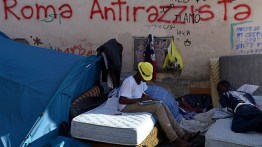
Tom Cruise is an exceptionally beautiful American man with an invincible smile, but he is a member of a cult called Scientology. Virginia Raggi is an exceptionally beautiful Italian woman with an invincible smile but she is a member of a cult called the MoVimento Cinque Stelle (M5S). I understand the attraction of cults in a world in which God has disappeared and our lives are so boringly bad and our political systems worse. But I have yet to come across a cult that does not engender disastrous mental problems. Last Sunday, the radiant Raggi, a 37-year-old lawyer with a small son and a big motorbike, easily won the most votes in the first round of the mayoral elections in Rome. She is expected to win the second ballot next Sunday.

Hillary’s other half

[audioplayer src="http://feeds.soundcloud.com/stream/268140526-the-spectator-podcast-brexit-strategy-what-would-the.mp3" title="Freddy Gray and Kate Andrews discuss Hillary Clinton" startat=662] Listen [/audioplayer] Women of the world unite! Back Hillary Clinton! Otherwise, prepare to be damned to that special place in hell that former Secretary of State Madeleine Albright insists exists ‘for women who don’t help each other’! Exclamation marks are crucial to discussing Hillary Clinton for President. If you don’t deploy one at the end of each sentence, people might think you’re hopelessly depressed that a woman is about to become leader of the free world. We’re supposed to be excited that a woman has just clinched the Democratic nomination.

An age of broken promises

An intelligent middle-aged, middle-class woman told me the other day that she plans to vote Leave on 23 June because she no longer believes a word that David Cameron says. She cited his pre-election pledges on repatriation of powers from Brussels, repeal of human right legislation and — of course — immigration. I said that, should she get her Brexit, the Prime Minister is likely to be supplanted by Boris Johnson, who conducts one-night stands with truth only on alternate wet Wednesdays. She was unmoved. She has convinced herself that Johnson the outsider, the roly-poly bundle of fun, Mr Feelgood, should be judged by different rules. He is not one of ‘them’, the political class, whom she perceives as having betrayed us all.

The snowflake factory

Another week, another spate of barmy campus bans and ‘safe space’ shenanigans by a new breed of hyper--sensitive censorious youth. At Oxford University, law students are now officially notified when the content of a lecture might upset them. In Cambridge, there were calls for an Africa-themed end-of-term dinner to be cancelled just in case it caused offence to someone somewhere. It all seems beyond parody. ‘What is wrong with these thin-skinned little emperors?’ we cry. But while we can harrumph and sneer at Generation Snowflake’s antics, we miss a crucial point: we created them. First, it is important to note that young people who cry offence are not feigning hurt — generational fragility is a real phenomenon.

Elephant in the room | 2 June 2016

To mark World Environment Day this Sunday, Angola will celebrate its zero-tolerance approach to the illegal wildlife trade — the third biggest illegal trade after drugs and arms. Angolans are seeking to rebuild their shattered elephant population in the face of the relentless trade in ivory. But the debate is marked by sharply opposing views, which tend to be centred on such spectacular stunts as the burning of government stockpiles of elephant tusks. Last month saw the greatest sacrifice of ivory there has ever been. Uhuru Kenyatta, president of Kenya, ignited a pyre 10 ft high and weighing more than 100 tons. Its assembly required the deaths of 6,700 elephants. That’s a lot of money going up in flames, smouldering for a good week until it’s destroyed.

If only they could vote…

[audioplayer src="http://feeds.soundcloud.com/stream/266976520-the-spectator-podcast-the-purge-of-the-posh.mp3" title="Camilla Swift and Green MEP Keith Taylor discuss an animal lover's case for Brexit" startat=1084] Listen [/audioplayer] We British have always had a strange relationship with animals. We spend £5 billion a year on our pets and it is often said that we love our dogs more than our children (perfectly understandable, in my book). It makes sense, then, that we have some of the world’s highest animal welfare standards. Our European neighbours don’t always have quite the same attitude. If we could ask our four-legged friends how they’d vote in the EU referendum, I’m pretty sure they’d woof, miaow or moo for ‘out’.