Features

Zero tolerance, zero sanity

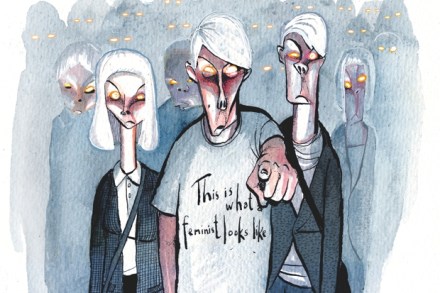
For 20 months, I stood accused of a hate crime: homophobically motivated common assault. The British Transport Police pursued my case with extraordinary zeal. So too did the Crown Prosecution Service. I was plunged into a world where common sense withered and died. The nightmare began when I was travelling home to London after a funeral in Kent. I was chatting with a friend on the train when a strange man started shouting at us from across the carriage. ‘Shut up!’ he yelled before accusing us of conducting a sexist and misogynistic conversation at high volume. This was, in his opinion, ‘offensive’. Brendan O'Neill and Kevin O'Sullivan discuss the real hate crime scandal: We were bemused.

We are not a hateful nation

Britain is in the grip of an epidemic, apparently. An epidemic of hate. Barely a day passes without some policeman or journalist telling us about the wave of criminal bigotry that is sweeping through the country. It’s been bad for years, they say, but has become worse since the EU referendum. Police forces tell us that hate crime has ‘soared’ in recent weeks; there’s been an ‘explosion of blatant hate’, according to some newspapers. Twenty-first-century Britain, it seems, is a pretty rancid, rage-fuelled place. Brendan O'Neill and Kevin O'Sullivan discuss the real hate crime scandal: If you feel this doesn’t tally with your experience of life in Blighty in 2016, you aren’t alone.

Brexit means sovereignty

We know what people voted against,’ say half-clever ­pundits, ‘but it’s far from clear what they voted for.’ Actually, it’s very clear: the ­British voted to leave the EU and take back control of their own laws. They didn’t ­dictate precisely what kind of deal we should have with our neighbours after leaving: that is for ministers to negotiate. But when Leave campaigners invited people to ‘take back ­control’, voters understood what that meant: legal supremacy should return from Brussels to Westminster. Remainers spent the campaign trying to suggest that the EU was just one among several international associations in which Britain participated.

My pedigree chum

The backlash has been brutal, unforgiving and, in common with the left’s reactions to so many things, almost hysterical in its hot-blooded fury. My crime? Starbucks shares? Casual racism? Advocating military action in North Korea? No, I have just bought a puppy, a pedigree puppy — and not just any pedigree, but an aristocratic-looking Cavalier King Charles spaniel — the apotheosis of canine privilege. Here’s a sample of some of the more printable rants from north London friends and colleagues. It makes dispiriting reading. ‘That dog looks very posh… what’s wrong with a mongrel?

Europe’s summer of terror

How is your Merkelsommer going? For now, Britain seems to be missing the worst. True, a couple of men of Middle Eastern appearance tried to abduct a soldier near his base in Norfolk for what was unlikely to have been an interfaith dialogue session. But Britain’s geographical good fortune, relative success in limiting weapons and our justified scepticism of the undiscriminating ‘open borders’ brigade mean that we have so far been spared the delights of what Angela Merkel’s growing army of critics refer to as her summer of terror. Douglas Murray and Haras Rafiq discuss Europe's summer of terror: It is now a fortnight since Mohammed Lahouaiej-Bouhlel shouted ‘Allahu Akbar’ and ploughed a truck along the Nice seafront, killing 84 people.

Trump ♥ Putin

Spy novels and James Bond movies; post-war Vienna and East Berlin; Manchurian candidates and Third Men. The pop culture of the Cold War era created a set of stereotypes about hostile foreign intelligence services, especially Russian intelligence services, and they still exist. We still imagine undercover agents, dead drops, messages left under park benches, microphones inside fountain pens. It’s time to forget all of that, because the signature Russian intelligence operation of the future, and indeed of the present, is not going to unfold in secret, but rather in public. It’s not going to involve stolen documents, but rather disinformation operations designed to influence democratic elections.

Enemies of history

At the start of the 21st century, no one felt the need to reach for studies of ‘third-period’ communism to understand British and American politics. By 2016, I would say that they have become essential. Admittedly, connoisseurs of the communist movement’s crimes have always thought that 1928 was a vintage year. The Soviet Union had decided that the first period after the glorious Russian revolution of 1917 had been succeeded by a second period, when the West fought back. But now, comrades, yes, now in the historic year of 1928, Stalin had ruled that we were entering a ‘third period’ when capitalism would die in its final crisis. As the Wall Street crash was only months away, this was not as fanciful as it seemed.

A few good books

It is a truth universally acknowledged that whenever ITV or the BBC decides — the latter usually with charter renewal in the near or middle distance — that it needs to make some of that World-Class Drama it’s so proud of, its thoughts turn to regency frocks, scruffy urchins, pea-soupy London, agreeable country houses and the incessant clip-clop of hoof on cobble. Classy costume drama — invariably based, for extra classiness, on classy fiction of the sort you might find in Penguin Classics — is one of our major exports. But in the range of its source material they consider, its makers are as blinkered as the inevitable horse that draws Mr Darcy’s inevitable carriage in the inevitable tracking shot round Pemberley.

What a shower

The fact that we get sun when we expect hail and hail when we expect sun provides those of us who live in Britain with a handy subject to cover the most awkward of conversational lulls. The weather forms the backbone of our national discourse — perhaps because our own personal observations and doom-laden predictions are about as likely to be as accurate as the official forecasts. Ariane Sherine and Lara Prendergast discuss why our weather forecasters just can't get it right: To look on the sunny side for a moment, perhaps this should cheer us. If we can’t predict what the weather is today, then perhaps — since we can do precious little about it — we should not be quite so alarmed about climate-change predictions.

What Trump is getting right

Freddy Gray and Scott McConnell discuss the American tragedy with Isabel Hardman: Almost anyone who has followed the US presidential selection process closely could realise what a brilliant campaign Donald Trump has conducted. He saw that in its self-absorption, the US political class had completely failed to grasp the extent of public anger at the deterioration of almost everything. American public policy has brought about the greatest sequence of disasters since the 1920s, when the liquor business was given to gangsters by Prohibition, followed by the equities debt bubble and the Great Depression.

Turkey’s continental drift

In Turkish the word ‘yurt’ has two definitions. It means ‘place’, ‘land’, ‘territory’, ‘homeland’. It could also indicate a round, portable tent, the likes of which have been used by nomadic tribes for centuries. In my imagination I have always liked to combine the two definitions, wondering if motherlands could be just as peripatetic as their people. I know, for one, that no matter how itinerant I might have been all my life, it follows me like a shadow, this sad motherland of mine. Turkey’s many problems occupy my mind, crush my chest, weigh down my soul, invade my dreams. Not only me, of course. There are so many who just cannot help worrying about this beautiful country.

The bust that wasn’t

It has been a month since the UK voted to leave the European Union — but something is missing. Where is the economic collapse? What of EUpocalypse Now? Where is the Brexageddon that we were promised? To the shock of many — not least business titans who bankrolled the Remain campaign — the instant collapse doesn’t seem to be happening. The UK economy is, for now at least, taking Brexit in its stride. The oft-predicted job losses? During the three weeks from 23 June, job listings were up 150,000 compared to the same period last year according to Reed Group, a recruitment consultant. ‘That’s an 8 per cent rise,’ says James Reed, its chairman. ‘The vote hasn’t affected things — people are still hiring.

Never gonna give EU up

June the 24th was a grim morning for Remain voters, and we’ve been working through the seven stages of grief ever since. Given that nobody has the faintest idea when, how or even if the UK will actually leave, acceptance is still some way off. But Remainers are a pragmatic bunch and many have now worked out that their own personal Brexit can be deftly avoided by taking another EU nationality. Likewise, UK citizens living in the EU, who have found to their horror that they are pawns in a very complex game of migrant chess between Theresa May and Jean-Claude Juncker, are concluding that now is a wise moment to complete the paperwork for residency or citizenship. So which variety of passport would we most like? Controversially, Belgium is the top of many Remainers’ wish lists.

Beat echoes

Laid out flat, running the length of the exhibition, the original scroll of Jack Kerouac’s On the Road forms the spine of the large Beat Generation show at the Pompidou Centre in Paris. Even for those familiar with the published version of the manuscript seeing this holy relic — the founding document for all sects of Beat worshippers — is a powerful experience. For about a minute. It’s everything else — the movies, the posters, the paraphernalia — that takes the time and generates an exhibition on such a tremendous scale. But how could it not sprawl? You start with the writers — Kerouac, Allen Ginsberg and William Burroughs — and before you know it there’s jazz, Neal Cassady, the Merry Pranksters, acid, you name it.

What wasps do for us

Dom Perignon, Pimms, Carling Black Label, Coca-Cola — one’s as good as the other, so far as they’re concerned. Even if they don’t manage to drown in the stuff, they spoil the taste for drinkers by creating panic out of all proportion to their size. They destroy the ardour of al-fresco lovers in an instant. They are the joy-killers: the destroyers of summer, determined to prove that the wild world is a plot against humanity. Is there anything good about wasps? Is their sole purpose in life to harass humans seeking the fleeting joys of summer? Does this black-and-yellow air force exist only to ruin the few fine days reluctantly given to us? If you garden, wasps are among your best friends.

May’s man of influence

Civil servants in the Home Office, even the senior ones, always felt a little nervous when walking towards Theresa May’s office. It wasn’t so much the meeting with the Home Secretary that they dreaded as the characters who lurked in the room directly outside hers. One senior official describes a typical scene: Fiona Hill, one of May’s special advisers, ‘sitting back, getting ready to go out with her stockinged feet on the desk, giving a civil servant an absolute rollicking’. May’s two other special advisers, Nick Timothy and Stephen Parkinson, were also forces to be reckoned with. Now, it seems, this team is being reassembled — to help her run Britain. All three have taken a break from government in the past couple of years.

She’s another Chamberlain

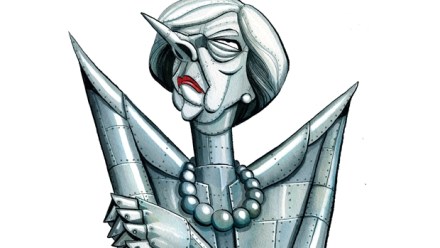
One name leapt off the text of Theresa May’s Birmingham speech, which began as the launch of her leadership campaign but morphed instantly into a programme for her government this week. It was that of Joseph Chamberlain, who was listed by the new Tory leader in her apostolic succession of great conservatives. It became clear as May developed the themes of her new Conservatism, moreover, that Chamberlain senior wasn’t being praised just because she happened to be speaking in Birmingham — the city he made into a worldwide symbol of great municipal government. She intended to follow in the footsteps of ‘Radical Joe’. And that could take her along very different paths from those trodden by both David Cameron and Margaret Thatcher.

‘She doesn’t do likes’

As Tory MPs gathered at St Stephen’s entrance in Parliament to await their new leader on Monday afternoon, a choir in Westminster Hall began to sing. The hosannas spoke to the sense of relief among Tory MPs: they had been spared a long and divisive nine-week leadership contest. A period of political blood-letting brutal even by Tory standards was coming to an end. The United Kingdom would have a new Prime Minister. More than relief, there was hope for the bulk of MPs who had previously not been marked out for advancement. Theresa May’s accession shows that the narrow rules which were thought to govern modern British politics are not hard and fast. May is not one of the shiny people. She isn’t a member of a gilded political set.