Features

Guilty displeasures

Strawberries. Ella Fitzgerald. Lying on the beach. They’re three of my ‘guilty displeasures’. You haven’t heard of the guilty displeasure? That’s because the concept hasn’t been invented yet. But it needs to be — and quick. The phrase ‘guilty pleasure’ is widely known. It was coined by the DJ Sean Rowley, who, not content with being the man on the cover of What’s the Story Morning Glory? by Oasis, applied a label to the songs we love despite them being uncool. The idea expanded, and now anything naff can be a guilty pleasure: chocolate spread, knitting, Countdown, you name it. But what about the opposite phenomenon, the supposedly cool things that we don’t like?

Turkey’s triumph

Update: Since this article was published Ahmet Davutoglu has resigned as Turkey’s Prime Minister. Reports suggest this comes as a result of a rift with President Erdogan caused by the increasingly ‘Presidential’ nature of Turkey’s politics. Is Turkey part of Europe? For most of our civilisation’s history, to have even asked such a question would have been to invite derision. The Ottomans were kept out of Europe not by some early-onset prejudice, but by the armies of Europe having to beat back their repeated invasions. The question became slightly more plausible a century ago with the rise of Ataturk and the modern Turkish state (one of the only successful efforts to reconcile the Islamic religion with state power).

How to save Labour

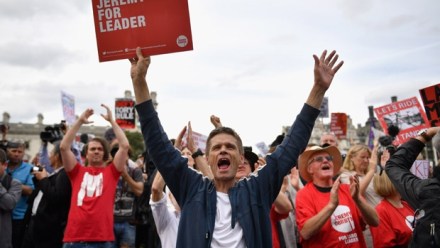
To say that the Labour party is in crisis because it is ‘too left-wing’ is to miss the point spectacularly. With eyes wide open, and all democratic procedures punctiliously observed, its members have chosen in their tens of thousands to endorse not ‘the left’, but an ugly simulacrum of left-wing politics. They have gone along with the type of left-winger who flourished in the long boom between the fall of the Berlin Wall and the great recession. The hypocrite who damns oppression, but only if it is committed by western countries. The pseudo-egalitarian who will condemn sexism and homophobia, but not the prejudices of favoured regimes and minorities. The fake anti-racist who will attack the ‘far right’ while echoing the fascist conspiracy theory.

A toe-curling tragedy

Zac Goldsmith spent almost every day out on the stump during his London mayoral campaign dressed in the formal dark suit he inherited from his father, and had recut on his death in 1997. At least that is what a member of his team told me as I was out observing proceedings one day. I think that detail was offered as a bit of journalistic ‘colour’ to show Zac’s sense of filial duty, but that was the only sense in which his painfully understated campaigning could be said to have owed anything to Sir James Goldsmith’s bombastic, manic style when he ran the Referendum party. Some political campaigns are failures; others are simply tragedies, and Zac Goldsmith’s falls into the latter category.

Let’s renew the EU

From the time of the French revolution, the Catholic Church has always encouraged relationships between nations that draw them together rather than divide them. It is for this reason that the Church has always been broadly supportive of the European Union, although with reservations. There will be many Catholics on both sides of the coming referendum. Many of us have concerns about recent developments in the EU, such as the official removal of the reference to the continent’s Christian history from the European Constitution a few years ago. The more general push towards secularisation troubles us, too. Recent popes have questioned the tendency to regard the goal of the EU as the optimisation of market forces.

The axeman next door

When I moved to London, my husband Henry gave me a copy of Kate Fox’s Watching the English: The Hidden Rules of English Behaviour. He was hoping the gift would avoid an awkward conversation about our cultural differences. As an American, I cannot think of anything more English than that. Fox’s chapter about introductions bothered me. The brash American approach: ‘Hi, I’m Bill from Iowa,’ particularly if accompanied by an outstretched hand and a beaming smile, makes the English wince and cringe. I had never known friendliness to be cringeworthy. I felt sorry for Bill from Iowa. I pictured him arriving in my neighbourhood and being scorned for enthusiastically introducing himself to strangers. Henry tried to explain. ‘We don’t talk to neighbours.

A right mess | 28 April 2016

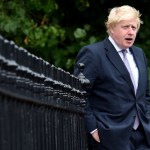
[audioplayer src="http://feeds.soundcloud.com/stream/261189280-the-spectator-podcast-the-wrong-right.mp3" title="Freddy Gray and Tom Slater discuss the state of the right" startat=22] Listen [/audioplayer] Is Boris Johnson turning into the thinking man’s Donald Trump? Just like the Donald, he’s got funny hair, charisma, and an appetite for women. He may not be as rich as Trump — although we were all impressed by his latest contribution to the Exchequer — but he makes up for that by having a much bigger vocabulary. He’s also able to get away with saying outrageous things because people think he’s entertaining.

The unlikely oilman

Algy Cluff is the longest-serving oilman in the North Sea. He was one of the first to drill for oil there, in 1972, and at the last government handout of drilling licences, two years ago, there he was again, making a handsome gas discovery. Now 76, he’s also the least likely oilman you can imagine. Tall, rangy, dressed in Savile Row pinstripes; he is no J.R. Ewing. His diffident, patrician voice is so gentle that I have to turn my tape recorder up to transcribe this interview. Cluff’s Who’s Who entry lists membership of 11 clubs. But there is no clubman stuffiness about him. He’s full of wonderful anecdotes, many of them involving The Spectator, which he owned from 1981 to 1985, before he became chairman for 20 years.

When novels kill

[audioplayer src="http://feeds.soundcloud.com/stream/261189280-the-spectator-podcast-the-wrong-right.mp3" title="Emily Rhodes and Lara Prendergast discuss the danger of books" startat=1095] Listen [/audioplayer] Who can forget the terrible climax of Howards End, when Leonard Bast is killed by a deluge of books? Death by books holds a horrible irony for poor Bast, as he had thought they were his salvation, seeking to escape ‘the abyss’ of poverty by reading Ruskin in the evening and trying to impress the middle-class Schlegel sisters by listing his favourite titles. Try as he might, he can only fail, as E.M. Forster shows books to be extremely treacherous: they don’t save Leonard Bast, they kill him.

Who needs governments?

On 26 October last year, the Spanish government shut up shop in preparation for a general election. This duly took place in December but then a strange thing happened: after all the build-up, the arguments, the posters and the television coverage, the result was… nothing. The various parties were so balanced, so mutually distrustful and ill-assorted that no government could be formed. Since last October, therefore, there has been no government in Spain. One can imagine that the average political correspondent would think this a terrible problem, maybe even a crisis. The Financial Times has referred to Spain ‘enduring’ months of ‘political uncertainty’. This is assumed to be a matter requiring furrowed brows and grave tones.

Prince and me

This is only interesting, well a bit interesting, because the poor man died last Thursday and for a few short days almost anything with the word Prince in it stands a chance of getting some traction. So forgive me if this feels a bit rushed. And opportunist. And exploitative. And attention-seeking. It’s all of those things because I’m cashing in. Obviously. If you want nothing more to do it with it, I can only applaud you. But for those of you who want to know more about the incredible untold story of my time with Prince, read on. I met him six years ago. Downstairs in his house in Los Angeles. A woman I was hopelessly in love with said, ‘Tom, come and say hi.’ I stepped forward. Prince shook my hand and said, ‘Hello Tom.

The fairytale factory

It’s one of the oldest stories of them all, deeply embedded in our nature and our culture. In some ways it’s the story that defines our humanity and we have told it a thousand times in a thousand different ways. It’s in the Bible with Joseph and his coat of many colours, it’s King Arthur pulling the sword from the stone, it’s the ugly duckling, Cinderella, Great Expectations, Moll Flanders and Jane Eyre. It’s Clark Kent becoming Superman, it’s Harry Potter leaving the cupboard under the stairs to become the greatest wizard of them all. It’s Rags to Riches. And it’s the tale of Leicester City. Sport retells all our most ancient and archetype-crammed stories and does so again and again, providing us with a living mythology.

A poem for Erdogan

At the end of last month, a German comedian appeared on German television and read a poem mocking Recep Tayyip Erdogan, the president of Turkey. Jan Böhmermann’s satire was directed, among other things, at the laws President Erdogan has been using to lock up his critics. Turkey — which David Cameron is still fighting to bring into the EU — now has some of the world’s most repressive speech laws. Numerous journalists have been arrested for ‘insulting’ President Erdogan and he has even been known to ban Twitter in the country when corruption allegations against him and his family have surfaced online. Yet until Mr Böhmermann came on the scene, one might have expected these lèse-majesté laws to remain in Turkey. Not so.

He speaks for America

[audioplayer src="http://feeds.soundcloud.com/stream/260046943-the-spectator-podcast-obamas-eu-intervention-the-pms.mp3" title="Janet Daley and Freddy Gray discuss Obama's overreach" startat=27] Listen [/audioplayer]You don’t like Barack Obama’s foreign policy? Fine, I don’t either. You are impatient to know who the next president will be? Me too. But if you think that the current American president’s trip to the UK this week is some kind of fanciful fling, or that his arguments against Brexit represent the last gasp of his final term in office, then you are deeply mistaken. In Washington, the opposition to a British withdrawal from the European Union is deep, broad and bipartisan, shared by liberal Democrats and conservative Republicans alike.

Obama’s overreach

[audioplayer src="http://feeds.soundcloud.com/stream/260046943-the-spectator-podcast-obamas-eu-intervention-the-pms.mp3" title="Janet Daley and Freddy Gray discuss Obama's overreach" startat=27] Listen [/audioplayer]Nobody could describe Donald Trump as lacking in self-confidence, but the billionaire egomaniac is emotional jelly compared with King Barack. Even before he won the Nobel peace prize, Obama was telling America that his elevation to the presidency would be remembered as ‘the moment when the rise of the oceans began to slow’. He doesn’t have Mr Trump’s gold-plated helicopter, private jet, penthouse and yacht. But when it comes to self-reverence and sheer hauteur there is no one to beat him.

My wild place

When I suggested that I might build a little tin house in the subtropical rainforest of south-east Queensland, I was advised by well-meaning folk that this probably wasn’t a very good idea. The forest would close in over the house; mildew and algae would grow on everything including me; the sun would not get above the surrounding scarps on the eastern side till mid-morning, only to plummet out of sight behind the scarps on the western side halfway through the afternoon — not that I’d notice, being penned in perpetual gloom under the forest canopy. All true. And no one to talk to but spiders and snakes. There are certainly many spiders. I do talk to them, shout at them, actually, because when I do they flinch and try to run away.

Stress point

In the 1920s, the anthropologist Margaret Mead studied the people of New Guinea. She noticed that they hunted birds and squirrels but not flying squirrels. The tribesmen explained that they didn’t like flying squirrels: a thing should be either a bird or a squirrel. They wanted nothing to do with the dirty things. And while New Guineans of the 1920s were not leaders of scientific inquiry, Mead concluded that they were quite unstressed at work. Bear with me, because I think the flying squirrel may just be the answer to the stress epidemic that is killing us. Apparently, we’re dying of work-related stress. The media, psychologists and union leaders say that stress could soon be as deadly as cancer and heart disease.