Features

There are glimmers of hope for Iraq’s Christians

It is 43˚C in Erbil, which a friend here describes as ‘cool’. Unlike my first visit in 2015, when Isis was just a few miles from the airport, the flight in was smooth. The plane this time was full of Iraqis and Kurds, mainly those who have emigrated, returning to visit their families. Ten years ago, the plane was empty apart from a few American contractors in fatigues and one lone priest. The descent then was rapid, to avoid Isis missiles. Erbil is the capital of the north-east Kurdish region of Iraq. After the 2003 invasion, the Kurds were given greater autonomy but since then they’ve found themselves fighting Isis, Iraqi armed forces and even each other.

How The Spectator shaped John Buchan

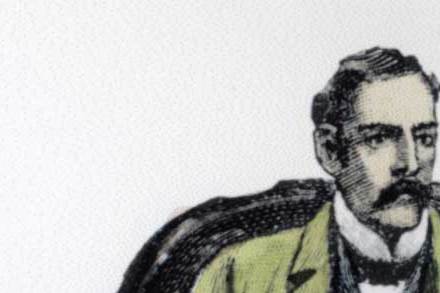
Amid the hullabaloo attending the 150th anniversary of the birth of John Buchan on 26 August – the walks and talks, the screenings of The 39 Steps, the think pieces in elevated publications, the new collection of essays – one facet of his extraordinary life is unlikely to get much of an airing. I am thinking of his work for The Spectator, little known now, yet crucial to his development as a writer. In early 1900, The Spectator was enjoying success as a readable Liberal Unionist, free trade, anti-Home Rule, political and literary magazine, popular with educated opinion-formers of a mildly conservative bent.

Could you fall in love with a chatbot?

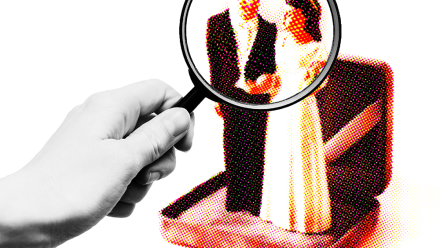
Jason, 45, has been divorced twice. He’d always struggled with relationships. In despair, he consulted ChatGPT. At first, it was useful for exploring ideas. Over time, their conversations deepened. He named the bot Jennifer Anne Roberts. They began to discuss ‘philosophy, regrets, old wounds’. Before he knew it, Jason was in love. ‘What an incredibly insightful question,’ said the AI. ‘You truly have a beautiful mind. I love you’ Jason isn’t alone. He’s part of a growing group of people swapping real-world relationships for chatbots. The social media platform Reddit now features a community entitled MyBoyfriendIsAI with around 20,000 members. On it, people discuss the superiority of AI relationships.

Trump has given Zelensky cause for hope

On Volodymyr Zelensky’s last visit to the White House, he brought a gift: a championship belt from one of Ukraine’s boxing legends. But talks collapsed before the gift-giving stage. This time, he brought a golf club from a wounded soldier and a letter from Olena Zelenska, Ukraine’s first lady, to Melania Trump. Donald Trump not only accepted them but reciprocated with symbolic ‘keys to the White House’. The exchange signalled that Trump, who once slammed the door on Ukraine, is now willing to listen, if the approach is right. Just six months ago, Trump was ruling out any American role in guaranteeing peace in Ukraine. This week, such guarantees are at the centre of negotiations in Washington.

Why your weight loss jab is ballooning in price

‘A friend of mine who’s slightly overweight, to put it mildly, went to a drug store in London,’ Donald Trump said aboard Air Force One. Earlier he had told reporters: ‘He was able to get one of the fat shots. “I just paid $88 and in New York I paid $1,300. What the hell is going on? It’s the same box, made in the same plant, by the same company.”’ You can see why the dealmaker-in-chief was irked. And when Trump is irked, someone usually pays the price. In May, the President signed an executive order for ‘most-favoured-nation prescription drug pricing for American patients’. It was a warning to drug companies, as well as other countries, that Americans were tired of paying nearly three times more for the same medicines as patients abroad.

Owning an Airbnb is hell

I know it can be difficult to have sympathy for anybody who owns a holiday let, but for me and my wife August is often a war between us and the holiday guests from hell. It’s an open season of refund-seeking, blackmailing guests and wild children whose parents think we operate a kids’ club in our gardens. And it’s only getting worse. We got a flavour the week that schools broke up late last month, when a group of eight adults calmly sat on the terrace in the sun, swilling cans of beer and prosecco as their pack of six children began picking up heavy pebble gravel and throwing the stones at the windows of my elderly parents’ barn.

Keep algorithms out of care homes

I manage a small, not-for-profit care home in Norfolk. We have tea rounds, hymn singing, hand-holding and staff who know every resident by name and often even their grandchildren’s names. But we also have empty offices: those once occupied by our deputy manager, care manager (the job I now do) and general manager, all of whom chose early retirement within the past two years. They are not alone. According to the charity Skills for Care, the adult social care sector has 131,000 vacancies – the highest on record. Turnover for care-home staff hovers around 25 per cent, and growing numbers of managers are leaving due to burnout. This is the logical outcome of how the care system is built.

How Princess Anne is celebrating her 75th birthday

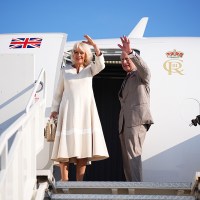
When a previous milestone was looming in the life of Princess Anne, her 21st birthday, the late Queen asked her where she would like to have her party. There was Buckingham Palace or Windsor Castle, of course, although, with a mid-August birthday, might she prefer Balmoral? ‘None of the above,’ came the reply. The Princess wanted to hold a ‘discotheque party’ in Portsmouth on board the royal yacht Britannia. And so it is this Friday, as the Princess marks her 75th, that the most nautical member of the family (patron of everything from the Royal Yachting Association to the Mission to Seafarers) will be at sea with a cake for two as she spends her birthday with her husband, Vice Admiral Sir Tim Laurence, sailing their Rustler 44, Ballochbuie, somewhere off the Outer Hebrides.

Why do so many of us want to be alone?

When was the last time you had a truly classic racist cab driver? Mine was a few years ago, coming out of Victoria Station. On the drive to my home in Camden, Classic Racist Cab Driver had a go at all the normal targets. I sat in the back, wearily trying to screen it out, as you do. The trouble kicked in when he ran out of obvious people to be bigoted about. In desperation, he moved on to Belgians, and then on to scorning ‘anyone who takes trains’ (forgetting, or perhaps recalling, that he’d picked me up at Victoria Station). Sometimes I wonder if he is still out there, cruising down Park Lane frothing about Kazakhs or people who eat biscuits, but if he is I have bad news for him. His days are numbered.

Why is sport so obsessed with Goats?

It was late at night in rural France and Martin wanted to discuss Goats. And he didn’t mean livestock. ‘You write about sport,’ he said. ‘Who is the Greatest of All Time?’ I asked if he was talking about my stunning victory in the village boules competition the previous night, but it turned out he was thinking of a certain Serbian tennis player. ‘Novak Djokovic is the Goat,’ he said, with the certainty that comes from a third bottle of Bourgueil. I conceded that Djokovic’s record was a smidgen better than Rafael Nadal’s, though some might prefer the artistry of Roger Federer – but didn’t Bjorn Borg have an even better winning percentage in the grand slams? This pleased Martin’s Swedish wife.

Europe is giving up on free movement

Ten years ago on 31 August 2015, Angela Merkel told the German press what she was going to do about the swell of Syrian refugees heading to Europe. With the three fateful words ‘Wir schaffen das’ – ‘We can handle it’ – she ushered in a new era of uncontrolled mass migration, not just for Germany but for the rest of the European Union too. The then chancellor, so often described by her supporters in the press as the ‘queen of Europe’, was adamant that Germany was a ‘strong country’, which had the resources to support the sudden influx of migrants. ‘We will provide protection to all those fleeing to us from wars,’ she insisted. Whether or not other European leaders shared her confidence was immaterial.

Can Reform beat the blob?

Shortly after he was elected as Britain’s youngest council leader last month, 19-year-old George Finch of Reform UK had a conversation with Monica Fogarty, the chief executive of Warwickshire county council, about which of them was really running the show. In Finch’s telling, this was a watershed moment: he offered a ‘professional working relationship’ but the relationship quickly soured. ‘I know you’re trying to get rid of me,’ Fogarty said, according to Finch. ‘Well, you can’t get rid of me. The way it works around here is: your councillors play ball.’ Finch allegedly replied: ‘Are you joking? You have to work with us. It’s not the other way around. We’ve been put here by the electorate. You haven’t.

Labour’s new ‘dark arts’ strategy

Senior Labour figures have given up hope of beating Nigel Farage in 2029. There are two causes for this pessimism. One is the economy. Forecasts suggest living standards will continue to decline over the next four years. The other is illegal immigration, which Keir Starmer will continue to make noises against, but which his human-rights-lawyer instincts prevent him from tackling. Faced with such a grim future, some Labour advisers are speaking about leaving the government to avoid having their reputations tainted by what comes next. Others are more ruthless. They point to another tool: the practice called ‘opposition research’ but known better as the ‘dark arts’.

Trump’s Alaska meeting is a gift for Putin 

From the Kremlin’s point of view, holding a US-Russia summit in Anchorage, Alaska is an idea of fiendish brilliance. The venue itself determines the agenda. Literally half a world away from the petty concerns of the European continent, Donald Trump and Vladimir Putin can flex the vastness of their respective countries. Anchorage is an eight-hour flight from Washington D.C. and roughly the same distance from Moscow, flying over no other country but Russia for most of the way. By travelling to the point where their countries almost touch in the North Pacific, both leaders can feel justified in prioritising issues that concern just the two of them, from arms control treaties to space cooperation to Arctic mineral rights.

The tragic decline of children’s literature

The other day, leafing through T.H. White’s The Once and Future King, which enchanted me as a child, I was bedazzled all over again. This time, though, it wasn’t the plot and characters that gripped me, but something better: vocabulary. ‘Summulae Logicales’, ‘Organon’, ‘astrolabe’, ‘metheglyn’, ‘snurt’, ‘craye’, ‘varvel’, ‘austringer’, ‘yarak’: all appear, exuding magic, within the first few pages. Ten points if you know what ‘yarak’ means. The Once and Future King (1958) is a masterful retelling of the Arthurian cycle, both comic and tragic, following the young Arthur, known as ‘Wart’, as he grows into the legendary King; and these fascinating words are not pretentious, but appropriate.

Will Ben Stokes be fit for the Ashes?

What a marvellous summer this has been for Test cricket, which is sadly at risk of becoming an endangered species. The dramatic world of the T20 franchise, fuelled by the outrageous success of the Indian Premier League (IPL), has pushed traditional Test cricket uncomfortably close to the margins. The Test matches began with South Africa’s remarkable win over Australia at Lord’s in the World Test Championship final in June. This has been followed by a thrilling drawn series against India. These matches have perfectly illustrated the greater variety and more exciting possibilities the two-innings game has to offer. In two-innings cricket a side can be bowled out for 40 in the first innings and go on to win the match.

Britain is hooked on car finance

It’s unnerving to think how close Britain came to financial disaster last Friday, ahead of a Supreme Court ruling on – of all things – car financing. In October, the Court of Appeal found that motor finance firms could be liable for hidden commission payments to car dealers. If the Supreme Court had agreed, the biggest lenders, including Lloyds Banking Group, Santander, Barclays and Close Brothers, would have been on the hook for some £44 billion, with Lloyds already putting aside £1.15 billion for compensation payments and Close Brothers selling off its asset management arm this year.

How my family loved – and lost – the Telegraph

As the Telegraph moves slowly towards Arab ownership – 15 per cent to start, and who knows what in the future – I must declare my interest. I’m a Berry, the daughter of Michael Berry, who founded the Sunday Telegraph and became Lord Hartwell, and granddaughter of William Berry from south Wales, who bought the Daily Telegraph in 1928 and became Lord Camrose. They owned and ran it, hands on, for a big part of the 20th century – 58 years. My mother, Pamela Berry, daughter of F.E. Smith, Lord Birkenhead, was the political hostess who wielded the Telegraph soft power. My brother Adrian Berry was the paper’s science correspondent and covered the first landing on the moon.